
After running countless stick welds on frames, brackets, and structural joints, I’ve learned pretty quickly that not all electrodes behave the same under the hood. That’s why 7018 welding rod specifications are something every serious welder needs to understand, especially if you’re doing structural or code work.
A lot of welders know 7018 as a “strong rod,” but get confused about why it needs special storage, what amperage range really works, or how it compares to other filler rods like 6013 or 6011. Details like metal thickness, joint prep, polarity, and arc control make a huge difference with this low-hydrogen electrode.
These specs matter in the real world because they directly affect penetration, weld strength, crack resistance, and overall safety. In this guide, I’ll break down the 7018 rod specs and show you how to use them for clean, reliable welds you can trust.
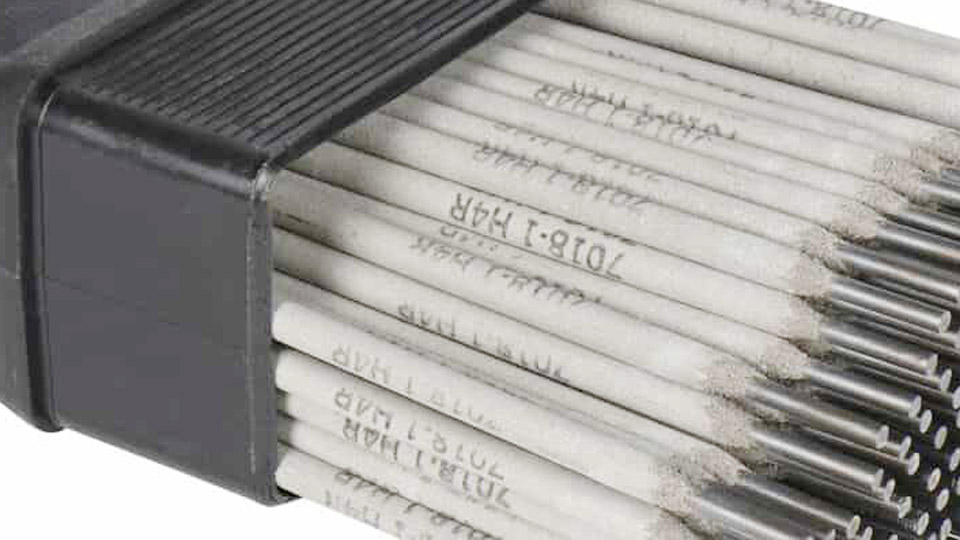
Photo by artcuisines
What Makes the 7018 Rod Stand Out in a Crowded Electrode Lineup?
Let’s start at the basics, because even seasoned pros sometimes overlook why this rod earns its keep. The 7018 is a low-hydrogen, iron powder electrode designed primarily for shielded metal arc welding, or SMAW—what most of us call stick welding. It’s classified under AWS A5.1 as E7018, where each part of that code tells a story about its performance.
Breaking it down: The “E” stands for electrode, straightforward enough. The “70” means the weld deposit has a minimum tensile strength of 70,000 psi, which is crucial for holding up under stress without snapping. Then there’s the “1,” indicating it’s versatile for all positions—flat, horizontal, vertical, or overhead.
No more swapping rods mid-job just because you’re climbing a ladder. Finally, the “8” points to its low-hydrogen coating with iron powder, which helps with smooth arcs and better deposition rates.
In my experience, that iron powder is a game-changer. It melts into the weld pool, boosting efficiency so you lay down more metal faster. I’ve used it on mild steels and low-alloy materials where hydrogen cracking could ruin a day’s work, and it delivers clean, x-ray quality welds that pass inspections without drama.
Think about those times you’ve dealt with porosity or slag inclusions; the 7018’s coating minimizes that by shielding the molten metal from atmospheric contaminants like oxygen and nitrogen.
But it’s not just about the code—it’s how it feels in your hands. The arc is quiet and stable, with minimal spatter that cleans up easy. I’ve tacked up offshore rig sections where wind and position fought me every step, and this rod’s forgiving nature kept things moving.
Decoding the Core Specifications: Strength, Size, and More
Diving deeper into the nuts and bolts, the 7018’s specs are what make it a staple for serious fabrication. Tensile strength clocks in at a minimum of 70,000 psi, but I’ve seen deposits hit 80,000 psi or more in controlled conditions.
Yield strength is around 58,000 psi, meaning it starts deforming under load without failing prematurely, and elongation typically exceeds 22%, giving the weld some flexibility to absorb impacts or vibrations.
The low-hydrogen aspect is huge—diffusible hydrogen levels are kept under 4 to 8 ml per 100 grams of weld metal, reducing the risk of underbead cracking in thicker sections. That’s why it’s perfect for high-restraint joints, like those in pressure vessels or bridges.
Electrode diameters range from 5/64″ up to 1/4″, but the sweet spots for most jobs are 3/32″, 1/8″, and 5/32″. Smaller ones like 3/32″ are great for thin materials or root passes, while 5/32″ handles heavier plate with better fill rates. Lengths are usually 14″ or 18″, giving you enough rod to work without constant stops.
Chemically, the deposit is low-carbon—around 0.07% C, with manganese at 0.87% and silicon at 0.61% for deoxidation and strength. It works on AC or DC electrode positive (DCEP), but I prefer DCEP for deeper penetration and a steadier arc.
One shop lesson I learned the hard way: Don’t skimp on checking the H4R or H8 suffix if your job specs it. That “H4R” means it’s moisture-resistant with hydrogen under 4 ml/100g, ideal for humid environments like coastal fabs.
Amperage Settings: Dialing In the Heat for Perfect Beads
Amperage is where a lot of welders trip up with 7018, but get it right, and your beads will stack like butter. Too low, and you’ll get poor fusion with a ropey appearance; too high, and you risk undercut or excessive spatter. Based on years of tweaking in the field, here’s a solid starting point.
I always recommend starting in the middle of the range and adjusting based on your machine’s feel and the material thickness. For instance, on a 1/4″ plate, I’ll crank up to the higher end for better penetration without burning through.
| Diameter | Amperage Range (DCEP/AC) | Typical Voltage | Best For |
|---|---|---|---|
| 3/32″ | 70-110 A | 22-27 V | Thin sections, root passes, vertical welds |
| 1/8″ | 90-160 A | 24-28 V | General purpose, flat/horizontal on medium plate |
| 5/32″ | 110-230 A | 25-31 V | Heavy fill, overhead on thicker materials |
| 3/16″ | 190-300 A | 25-31 V | High-deposition on large structures |
| 1/4″ | 310-390 A | 25-35 V | Massive builds, but watch for heat buildup |
These are shop-tested numbers—I’ve used them on Lincoln and Miller machines common in US shops. On AC, drop amps by 10-20% to avoid arc blow.
Pro tip: If your rod starts sticking, bump up the amps; if it’s splattering like crazy, dial it back and check your arc length—keep it short, about half the rod diameter.
In one job fixing a cracked excavator boom, I ran 1/8″ at 130A on DCEP, weaving slightly for full coverage. The key was preheating the base metal to 200°F to prevent cracking, something specs often overlook but experience demands.
When to Pull Out the 7018: Matching Rod to Job
Not every weld calls for 7018, but when it does, it’s because the stakes are high. Use it on carbon steels, low-alloy steels like A36 or A572, and even some cast steels where you need crack-resistant welds. It’s a champ for structural work—beams, frames, bridges—where codes require low-hydrogen deposits to avoid embrittlement.
In repair scenarios, like patching heavy machinery or farm implements, 7018 shines because of its medium penetration and excellent tie-in. I’ve fixed countless trailer hitches where moisture from the road could cause issues, and this rod’s low-hydrogen formula prevents delayed cracking.
Avoid it for dirty or rusty surfaces without cleaning—it’s not as forgiving as a 6010 for root passes on contaminated metal. Instead, pair it: 6010 for the root, 7018 for cap and fill. For high-strength needs, it handles up to 50,000 psi yield bases without issues.
Why choose it over, say, 7014? The 7014 is easier for beginners with its drag technique, but 7018 offers superior strength and x-ray quality for inspected jobs. In shipbuilding or power plants, it’s non-negotiable.
Step-by-Step Guide: Laying Down 7018 Welds That Last
Let’s walk through a typical butt joint on 3/8″ mild steel plate—something I do weekly. First, prep your joint: Bevel edges to 30 degrees each for a 60-degree V-groove, clean off mill scale, rust, or paint with a grinder. A clean joint means better fusion and less porosity.
Set up your machine: DCEP polarity, select 1/8″ rod, amps at 120-140. Strike the arc by scratching like a match, then maintain a short arc—drag the rod lightly if needed, but I prefer a slight weave for wider beads.
Step 1: Tack weld the pieces with short bursts to hold alignment, avoiding distortion.
Step 2: Run the root pass vertically if needed, using a slight upward motion to keyhole without burn-through.
Step 3: For fill passes, weave side-to-side about twice the rod width, pausing at edges for good sidewall fusion.
Step 4: Cap it off with a straight stringer or light weave for a smooth crown.
After each pass, chip slag thoroughly—7018’s slag peels easy if you let it cool a bit. Inspect for undercut; if present, grind lightly and reweld.
Safety note: Always wear your PPE—helmet, gloves, jacket. Fumes from the coating can be irritating, so ventilate or use a respirator in tight spaces.
I once rushed prep on a pressure vessel repair and ended up with inclusions that failed hydro test. Lesson: Take the time to grind and fit-up properly; it pays off.
Common Mistakes with 7018 and Quick Fixes
Even pros slip up. One biggie: Running too cold, leading to lack of fusion. Fix it by increasing amps and ensuring your travel speed isn’t too fast—aim for 6-8 inches per minute.
Another: Moisture pickup. If rods sit out, they absorb humidity, causing porosity or cracking. Bake them at 250-300°F for an hour before use. I’ve seen beginners store them in damp toolboxes; always use a rod oven for critical work.
Overheating the base metal causes distortion—use skip welding or clamps to control it. If you get undercut, slow your weave and angle the rod 10-15 degrees toward the direction of travel.
Porous welds? Check for drafts blowing the shield gas away, or dirty rods. A quick wipe with a clean rag helps.
In overhead positions, newbies often let the puddle sag—keep amps lower and use shorter rods for control. Practice on scrap; it’s how I got consistent.
Pros and Cons: Weighing the 7018 in Real Shop Terms
Like any tool, 7018 has its ups and downs. Here’s a balanced look:
Pros:
- High strength and ductility for demanding apps.
- All-position versatility saves time.
- Low spatter and easy slag removal speed cleanup.
- Excellent for x-ray quality welds in codes.
- Good deposition rates thanks to iron powder.
Cons:
- Requires dry storage to maintain low-hydrogen benefits.
- Less tolerant of dirty surfaces than cellulosic rods.
- Higher cost per pound than basic rods like 6013.
- Arc can be finicky on AC if not set right.
- Not ideal for very thin materials without skill.
Compared to 6011, which penetrates deep but leaves rough beads, 7018 gives a prettier finish with better mechanicals. For hobbyists, it’s worth the extra effort for pro results.
Machine Compatibility: Pairing 7018 with US Shop Staples
In American shops, 7018 runs great on inverter machines like the Miller XMT or Lincoln Power Wave. These handle the constant current needed for stable arcs. On older transformer units, stick to AC if DC isn’t available, but expect a bit more spatter.
For portable setups, like engine-driven welders from Hobart or ESAB, set to CC mode and monitor duty cycle—7018’s higher amps can tax smaller units. I’ve run it on a Ranger 305 at remote sites, adjusting for generator fluctuations.
Filler compatibility: Matches well with ER70S-6 wire if mixing processes, but stick to matching chemistry for low-alloy bases.
Joint Prep and Material Handling: The Unsung Heroes
Joint prep is make-or-break. For T-joints, fillet with a 45-degree angle; for laps, overlap at least 1″. Preheat thicker steels (over 1″) to 150-250°F to slow cooling and prevent cracks.
Handle materials gently—avoid dragging plates that could contaminate edges. For galvanized steel, grind off the zinc first; 7018 doesn’t like it.
In fabrication, like building a custom gate, I bevel and back-gouge for full penetration, then fill with 7018 for strength.
Safety First: Beyond the Basics with 7018
Welding’s risky, but 7018’s low-hydrogen coating means fewer fumes than some rods, still, extract them. UV rays from the arc can burn skin, so cover up. Electrical safety: Ground properly to avoid shocks.
I’ve had close calls with hot slag flying—always let welds cool before handling.
Comparing 7018 to Other Rods: When to Switch
Versus 6010: 6010 digs deep for roots but needs DC; 7018 fills better.
Versus 7014: Easier drag, but lower strength.
Versus 7024: High deposition flat-only; 7018 does all positions.
Choose based on job—7018 for versatility and quality.
Real Shop Anecdotes: Lessons from the Grind
Back in my apprentice days, I botched a beam weld with wet 7018—cracks everywhere. Rebaked and redid it right. Another time, on a pipeline, perfect settings gave beads that passed UT first try.
These stories remind me: Specs are guidelines; experience tunes them.
I’ve trained dozens, emphasizing practice. Start on flat, move to vertical—build confidence.
For hobbyists, 7018 elevates garage projects to pro level.
In industry, it’s code-compliant for AWS D1.1 structs.
Remember, rod burn-off rate: About 8-10 inches per minute at optimal amps.
Cost-wise, a 50-lb can runs $100-150, but saves on rework.
For students, master 7018 early—it’s foundational.
Wrapping Up
Knowing 7018 specs inside out turned potential disasters into solid fixes. You’ve got the guide to pick the right diameter, set your amps spot-on, and prep joints like a veteran. This knowledge equips you to tackle tougher jobs with confidence, reducing failures and boosting efficiency in your shop or on-site.
Always run a test bead on scrap matching your material—it’s the quickest way to dial in and avoid surprises mid-weld.
Can I Use 7018 on Rusty Metal?
Not ideally—clean it first for best results. If mild rust, grind or wire brush; heavy stuff needs more. Skipping this leads to porosity, but 7018 handles light contamination better than you think with proper technique.
What’s the Best Storage for 7018 Rods?
Keep them in a rod oven at 250-300°F after opening. If exposed, rebake at 600°F for an hour. This maintains low moisture, preventing hydrogen issues in your welds.
How Do I Fix Undercut with 7018?
Slow your travel, angle the rod toward the undercut side, and lower amps slightly. If it’s bad, grind smooth and reweld a cover pass—prevents stress risers.
Is 7018 Good for Beginners?
It’s forgiving once you get the hang, but start with easier rods like 6013. Practice arc starts and short lengths; the low spatter helps build skills fast.
What’s the Difference Between 7018 and 7018-1?
The -1 variant offers better impact toughness at low temps, like -50°F. Use it for cold-weather or high-impact apps; standard 7018 suffices for most.