
TIG welding different thickness metals is one of those skills that really tests your control and patience. I’ve run into plenty of projects where I had to join thin sheet metal to a thick plate — and trust me, it’s not as simple as just cranking the amps higher. The challenge is keeping the thinner metal from warping or melting while still getting enough penetration into the thicker piece. That’s where proper heat control, joint prep, and torch angle come into play.
Whether you’re working with stainless steel, aluminum, or mild steel, knowing how to balance your amperage, filler rod size, and arc length makes all the difference. In this guide, I’ll break down the techniques I use in the shop to TIG weld metals of different thicknesses — so you can get strong, clean, and professional-looking welds every time.
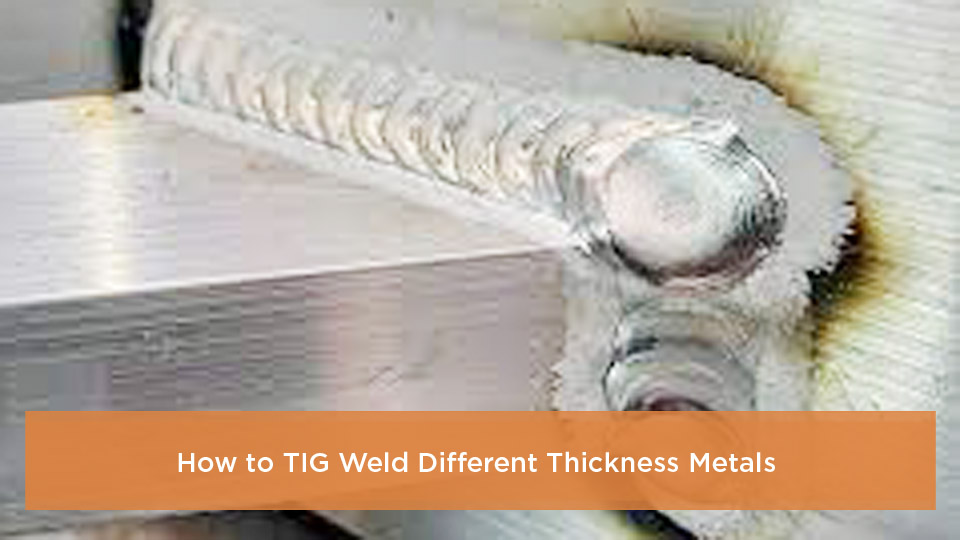
Image by chaluminium
Why TIG Welding Shines for Joining Uneven Metal Thicknesses
TIG welding, or Tungsten Inert Gas welding as it’s formally known, is my go-to process when dealing with metals of varying thicknesses because it gives you pinpoint control over the heat input. Unlike MIG or stick welding, where the heat can blast through thin sections too quickly, TIG lets you feather the pedal and manage the arc with precision.
This is especially handy for DIY welders or hobbyists who might be working on automotive parts, like welding a thin tube to a thick flange for a turbo manifold.
Think about it – the thick metal acts like a heat sink, sucking up all that energy, while the thin stuff heats up in a flash. If you don’t handle it right, you’ll end up with burn-through on one side and poor penetration on the other. But with TIG, you can direct the arc mostly toward the thicker piece, letting the puddle wash over to the thin side naturally.
I’ve used this on everything from mild steel brackets to stainless exhaust systems, and it always delivers strong, clean welds that meet US welding codes like those from AWS.
In the real world, this matters for safety and efficiency. A solid weld on mismatched thicknesses ensures your fabrication holds up under load, whether it’s a trailer hitch or a custom bike frame. It also cuts down on material costs – no need to match everything perfectly when you can blend them seamlessly.
Essential Gear You’ll Need Before Striking an Arc
Before we get into the nitty-gritty, let’s talk about the setup. You can’t TIG weld different thickness metals without the right tools, and I’ve learned the hard way that skimping here leads to frustration.
First off, you’ll need a reliable TIG welder. Something like a DC machine for steel or stainless, or an AC/DC unit if you’re tackling aluminum too. I prefer inverters like those from major US brands – they’re portable and handle variable amps well. Set it up with a foot pedal for amperage control; it’s essential when switching heat on the fly between thick and thin sections.
Gas is key – pure argon for most jobs, or an argon-helium mix if you need a hotter arc for thicker stuff. Flow rate? Aim for 15-20 CFH to shield the weld without turbulence.
Tungsten electrodes are your arc’s backbone. For general work, I go with 2% lanthanated (blue tip) – it’s versatile for DC and AC, and holds up at higher amps without spitting. Sharpen it to a needle point for precise control on thin metal. Size-wise, 3/32-inch is my sweet spot; it’s stout enough for thick plates but fine for delicate work.
Filler rods depend on the base metal – ER70S-6 for mild steel, 308L for stainless. Match the diameter to your weld size; 1/16-inch for thin stuff, stepping up to 3/32 for thicker joints.
Don’t forget safety gear. Auto-darkening helmet with at least shade 10, leather gloves, jacket, and respirator – TIG fumes aren’t as bad as stick, but ventilation is non-negotiable, especially in a small shop. And always have a fire extinguisher handy; hot metal sparks can ignite rags or oil.
One time, I was welding a thin aluminum sheet to a thick block without proper gloves – ended up with a nasty burn from radiant heat. Lesson learned: gear up fully, every time.
Prepping Your Metals: The Foundation of a Solid Weld
Prep work is where good welds start, especially with different thicknesses. Skip this, and you’ll fight contamination or poor fusion all day.
Cleanliness is everything. Use a wire brush or grinder to remove mill scale, rust, paint, or oil from both pieces, at least 1/2 inch back from the joint. For stainless or aluminum, acetone wipe-downs prevent oxidation. I’ve seen pros in US fabs use dedicated stainless brushes to avoid cross-contamination.
Joint design matters too. For thin to thick, a lap or fillet joint works best – it lets the thin piece sit on the thick one, reducing burn-through risk. Bevel the thick edge if needed for better penetration. Fit-up should be tight; gaps lead to bridging or weak spots.
If the thickness difference is extreme, like 1/16-inch to 1/2-inch, consider chamfering the thick side to even the heat distribution. And always tack weld first – small, spaced tacks hold everything aligned without warping the thin metal.
In my shop, I once prepped a mismatched steel joint poorly and ended up with undercut. Fixed it by grinding back and re-cleaning – time wasted, but the weld held strong after.
Selecting Tungsten, Filler, and Gas for Optimal Results
Choosing the right consumables can make or break your TIG weld on uneven thicknesses.
Tungsten: As I mentioned, lanthanated is great all-around. For DC on steel, thoriated (red tip) works too, but stick to non-radioactive options for safety. Sharpen to 20-30 degrees for a focused arc on thin metal; blunter for thick.
Filler rods: Compatibility is key. For carbon steel, ER70S-2 or -6; they flow well at lower heats. Stainless? 316L for corrosion resistance. Diameter: Smaller for thin (1/16-inch) to control the puddle; larger for thick to build up faster.
Gas: Argon shields reliably, but add 25% helium for deeper penetration on thick sections without cranking amps too high. Flow too low, and you’ll get porosity; too high, and it disturbs the puddle.
Semantic tip: Think about thermal conductivity – aluminum dissipates heat fast, so you might need higher amps or AC settings compared to steel.
I’ve experimented with different fillers on job sites; once used the wrong rod on stainless and got cracking. Always double-check compatibility charts.
Dialing In Machine Settings for Various Thickness Pairs
Settings are where the magic happens in TIG welding different thickness metals. No one-size-fits-all, but here’s a starting point based on my experience.
For amperage, base it on the thinner piece but adjust for the thick. Rule of thumb: 1 amp per 0.001-inch thickness for thin metal up to 1/8-inch. So, 16-gauge (0.060-inch) might start at 60 amps, but if paired with 1/4-inch, bump to 100-120 to penetrate the thick without melting the thin.
Pulse mode helps a lot – set pulse frequency to 1-2 Hz for heat control, peak amps higher for penetration, background lower to cool the thin side. For example, on stainless: peak 150A, background 50A.
Gas post-flow: 10-15 seconds to protect the hot tungsten and weld.
Joint type affects it too. Butt joints on thin need lower amps; fillets on thick-thin allow more heat.
Here’s a quick comparison table for common pairs (mild steel, DC TIG):
| Thickness Pair | Amperage Range | Tungsten Size | Filler Diameter | Notes |
|---|---|---|---|---|
| 16-gauge to 1/8-inch | 80-120A | 1/16-inch | 1/16-inch | Focus arc on 1/8-inch side |
| 1/8-inch to 1/4-inch | 120-150A | 3/32-inch | 3/32-inch | Use pulse for heat sink effect |
| 1/16-inch to 3/8-inch | 100-160A | 3/32-inch | 1/16-inch | Wash puddle from thick to thin |
| Aluminum 0.040 to 0.250-inch | 100-200A (AC) | 3/32-inch | 1/16-inch | Balance electrode for cleaning |
Always test on scrap – machine brands vary, and shop conditions like voltage matter.
I recall a fab job where I started too high on thin aluminum; blew a hole. Dropped amps, added pulse, and it fused perfectly.
Step-by-Step Guide: TIG Welding Thin Metal to Thick Metal
Imagine we’re in my workshop, and you’ve got a 16-gauge sheet lapping onto a 1/4-inch plate. Here’s how I do it.
Step 1: Prep and fit-up. Clean both, bevel the thick edge if butt joint, tack with low amps (50-70A) to hold.
Step 2: Set machine. Amps at 100-130, sharp tungsten, argon flow 15 CFH. Pedal ready.
Step 3: Strike the arc on the thick side. Get a puddle going there – it absorbs heat without issue.
Step 4: Add filler. Dip rod into the puddle, focusing heat on thick, letting it wash to thin. Move steadily, about 4-6 inches per minute.
Step 5: Control heat. Pedal down for thick, ease up near thin. If thin heats too much, pause or pulse.
Step 6: Finish the bead. Taper amps down to avoid craters. Post-flow gas.
Step 7: Inspect. Look for even fusion, no undercut or porosity. Grind if needed, but TIG usually looks good as-is.
For vertical welds, go downhill on thin-thick to use gravity. Practice this sequence on scrap; it’ll build your confidence.
On a custom rack, I welded thin tubes to thick bars. First try warped the thin; second, with better tacks and heat control, it was straight and strong.
Mastering Heat Control and Puddle Techniques
Heat management is the heart of TIG welding different thicknesses. The thick piece soaks it up, so direct 70-80% of your arc there.
Puddle watching: Keep it small and fluid. On thin, it forms fast – don’t linger. Use the “wash” technique: Build on thick, let it flow to thin.
Freehand vs. walking the cup: Freehand for flexibility on uneven joints; cup walking for stability on pipes.
For extreme differences, preheat the thick piece with a torch to even things out – but watch for distortion.
Common tip: Short arc length, 1/16-1/8 inch, for better control. Too long, and heat spreads, risking burn-through.
I’ve used this on exhaust fabs; once saved a job by pulsing to cool the thin flange while penetrating the thick header.
Avoiding Common Pitfalls When Welding Mismatched Thicknesses
Even pros mess up sometimes. Here’s what I’ve seen go wrong and how to fix it.
Burn-through on thin: Too much heat or lingering. Fix: Lower amps, focus on thick, use pulse.
Poor penetration on thick: Insufficient amps or wrong angle. Fix: Increase peak current, bevel joint.
Warping: Uneven heating. Fix: Tack more, weld in segments, clamp to table.
Undercut: Filler not enough at edges. Fix: Add more rod, slow travel on thin side.
Contamination: Dirty metal. Fix: Always clean thoroughly.
I once undercut a thin-thick joint because I rushed filler; ground it out, re-welded slower – good as new.
Handling Specific Materials: Steel, Aluminum, and More
Materials change the game. Mild steel is forgiving; set DC, 100-150A for thin-thick.
Stainless: Use AC or DC, purge with argon backgas for inside welds to avoid sugaring. Filler like 308L.
Aluminum: AC mode for cleaning action. Higher amps (150-250), balance toward electrode negative for penetration on thick.
For exotics like titanium, ultra-clean prep and helium mix for heat.
In US codes, like ASME for pressure vessels, match filler to base for integrity.
On a bike frame, I TIG’d thin chromoly tubes to thick lugs – low amps, precise dabs, no distortion.
Advanced Strategies: Pulsing, Multi-Pass, and Beyond
Once basics click, try pulsing: Alternates high/low amps to control heat input, ideal for thin-thick.
Multi-pass: For very thick, root pass low amps, then fill with higher.
Lay wire technique: For tight spots, lay filler in joint and melt it in – great for thin edges.
Pros of pulsing: Less distortion, better control. Cons: Slower, needs machine capability.
I’ve used multi-pass on heavy machinery repairs; root on thin side first, then build on thick.
Key Takeaways to Weld with Confidence
You’ve now got the tools to TIG weld different thickness metals like a pro. Remember, focus heat on the thick, control with the pedal, prep meticulously, and practice on scrap. This skill boosts your weld integrity, saves costs, and keeps projects safe – whether you’re a DIYer fixing a gate or a pro on a fab job.
You’re better prepared because you understand the why behind the how, building trust in your work. Always cool your tungsten slowly after welding to prevent cracking – dip in water only if it’s red hot, otherwise let air cool.
FAQs
What amperage should I use for TIG welding thin to thick steel?
Start with 1 amp per 0.001-inch of the thinner metal, then adjust up 20-30% for the thick side. For example, 16-gauge to 1/4-inch: 80-120A, testing on scrap.
How do I prevent burn-through on thin metal during TIG welding?
Direct the arc mostly to the thicker piece, use lower amps or pulsing, and move quickly over the thin section. Wash the puddle from thick to thin.
Is pulsing necessary for welding different metal thicknesses with TIG?
Not always, but it helps control heat on thin sections while penetrating thick. Set low frequency for beginners.
What filler rod is best for TIG welding stainless of varying thicknesses?
Use 308L or 316L, matching diameter to the thinner piece – 1/16-inch for thin, larger for build-up on thick.
Can I TIG weld aluminum of different thicknesses?
Yes, use AC mode, higher amps for thick, and balance for cleaning. Prep with stainless brush to avoid oxide issues.