
Welding body panels with flux core is one of those jobs that taught me patience real fast. The first time I tried it, I treated the sheet metal like any other weld — and instantly blew holes through it. Flux core runs hotter than MIG, and when you’re working with thin, delicate auto panels, that extra heat can warp the metal, distort the shape, and turn a simple patch into a headache.
That’s why understanding metal thickness, heat control, joint prep, and the right stop-and-go technique matters just as much as your wire feed speed or arc control. A lot of DIY welders think you can’t get clean, straight body panel welds without gas, but with the right approach, you absolutely can.
I’ll show you the practical, battle-tested methods I use in the shop to weld body panels using flux core without warping, burning through, or ruining the finish.
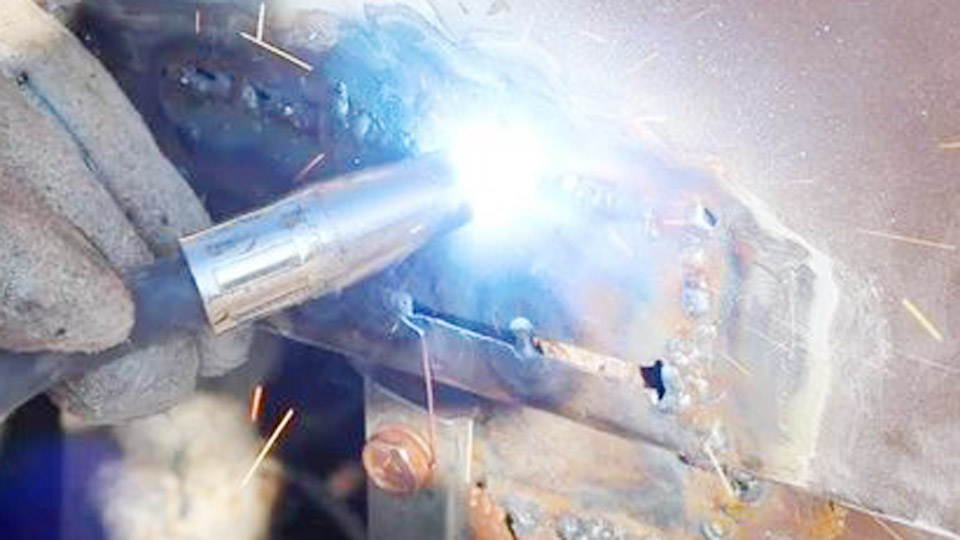
Image by yeswelder
What is Flux Core Welding and Why Use It for Body Panels
Flux core welding is a process where you use a tubular wire electrode filled with flux that melts during the weld, creating its own shielding gas to protect the molten metal from contaminants in the air. Unlike traditional MIG welding, you don’t need an external gas cylinder, which makes it super convenient for outdoor jobs or small garages without much ventilation setup.
For body panels, which are typically thin gauge steel around 18 to 22 gauge, flux core shines when you’re dealing with rust repairs or patching holes from accidents. Think about restoring an old Ford pickup or fixing fender damage on a daily driver—flux core gets the job done affordably.
I’ve used it on everything from quarter panels to floor pans, and it provides deep penetration that’s great for ensuring the weld bonds well to the base metal.
But why choose it over other methods? Cost efficiency is huge—no gas means no recurring refills that can add up to hundreds of dollars a year. It’s also portable; you can throw your welder in the truck and head to a job site without worrying about tanks.
In real-world scenarios, like when I was helping a buddy fix his trailer hitch on a windy day, flux core held up where gas shielding might have blown away. Just remember, it’s best for structural repairs rather than cosmetic ones, as the welds can look a bit rough before grinding.
Safety-wise, the flux produces more fumes, so always prioritize good ventilation. Weld integrity comes from proper technique—too much heat, and you’ll compromise the panel’s strength. Material compatibility is key; flux core works well with mild steel body panels common in US vehicles, but check for galvanized coatings that can cause issues.
Choosing the Right Flux Core Welder for Body Panels
Picking the right welder is like choosing the right tool for any job—it can make or break your results. For body panels, you want something with adjustable voltage and wire feed speed to dial in low heat settings and avoid burning through that thin metal.
I’ve sworn by multi-process welders like those from Eastwood or Lincoln that handle flux core alongside MIG if you decide to upgrade later. Look for models with at least 90 to 140 amps; anything lower might not give you the control you need, and higher can be overkill for sheet metal. Duty cycle matters too—aim for 20-60% at your working amps so it doesn’t overheat during longer sessions.
Wire size is crucial. Go with 0.030-inch flux core wire for most body work; it’s thick enough for good feed but not so heavy that it demands excessive heat. I’ve tried 0.035-inch on thicker frames, but it was too much for panels and led to distortion. Brands like Hobart or Lincoln make reliable E71T-GS wire that’s self-shielding and easy to source at any welding supply store.
Don’t skimp on accessories. A good nozzle for flux core improves visibility, and anti-spatter spray saves cleanup time. In my shop, I keep a spare ground clamp handy because a poor ground can cause erratic arcs. When to use a dedicated flux core machine? If you’re just starting out on a budget, it’s perfect for learning without the gas hassle.
Essential Tools and Materials for Flux Core Welding on Body Panels
Beyond the welder, gather tools that make the job smoother and safer. You’ll need an angle grinder with flap discs for prepping surfaces and grinding welds flush. A wire brush or sanding discs remove rust, paint, and mill scale—clean metal is non-negotiable for strong bonds.
For materials, stock up on sheet metal patches matching your vehicle’s gauge; auto parts stores carry 18-gauge steel sheets you can cut to size. Flux core wire, as I mentioned, plus welding gloves, a auto-darkening helmet, and flame-resistant jacket. I always have a fire extinguisher nearby because sparks fly, and leather aprons protect against spatter.
Clamps are your best friend for holding panels in place—magnetic ones work great on flat surfaces. A metal brake or shears for shaping patches ensure a tight fit. Why these? Poor prep leads to gaps, which invite burn-through. In one project, I forgot my clamps and ended up with a wavy panel from hand-holding—lesson learned.
Safety gear includes a respirator for fumes, especially in enclosed spaces. Ventilation fans or working outdoors keeps things safe. Cost-wise, you can kit out for under $200 beyond the welder if you shop smart at places like Harbor Freight.
Preparing Your Workspace and Panels for Welding
Setting up right prevents accidents and bad welds. Clear your workspace of flammables—I’ve had sparks ignite rags before, and it’s no fun. Good lighting helps spot imperfections, and a sturdy workbench supports the panels.
For the panels themselves, start by assessing damage. Cut out rusted areas with a cutoff wheel, leaving clean edges. Measure and cut your patch slightly oversized for overlap. Bend it to match contours using a hammer and dolly if needed.
Clean both sides thoroughly. Use a wire wheel to strip to bare metal, then wipe with acetone to remove oils. This ensures no contaminants weaken the weld. Joint prep is key—butt joints for flush repairs, lap joints for strength in hidden areas.
Why prep matters? Dirty metal causes porosity—tiny holes that compromise integrity. In a real job fixing a door skin, skipping this led to pinholes I had to grind out and reweld. Take your time here; it’s the foundation.
Step-by-Step Guide to Welding Body Panels with Flux Core
I’ll break this down like I’m showing you in person, step by step, so you can follow along.
First, set up your welder. Load the flux core wire, ensuring it’s feeding smoothly. Attach the ground clamp to a clean spot on the workpiece. Dial in settings—start low, around 15-18 volts and 50-70 inches per minute wire speed for 18-gauge metal. Test on scrap to adjust; too high voltage blows holes, too low gives poor fusion.
Position the panels. Clamp them securely with minimal gap—ideally zero, but up to 1/16 inch is okay. Use copper backing behind the joint if possible; it acts as a heat sink and prevents blowout. I keep scrap copper pipe flattened for this.
Start with tack welds. Hold the gun at a 10-15 degree angle, push technique for flux core. Pull the trigger for 1-2 seconds to spot weld every few inches. Jump around to distribute heat and avoid warping. If you see burn-through, lower voltage or increase stick-out to 1/2 inch.
Now, fill in with stitch welds. Weld short 1-inch beads, then move to another spot and let cool. This controls heat input. Keep a consistent travel speed—too slow piles up metal, too fast skips fusion. Watch the puddle; it should be smooth without excessive spatter.
After welding, chip off slag with a chipping hammer, then grind smooth with a flap disc. Check for cracks or holes—reweld if needed. For cosmetic finishes, apply body filler over the seam.
I remember my first patch on a fender—I tacked too close together and warped it badly. Cooling with compressed air between beads fixed it next time. Practice this sequence on scrap first.
Techniques to Avoid Burn-Through on Thin Sheet Metal
Burn-through is the nemesis of thin metal welding. The key is heat management. Use the lowest effective settings; I’ve found 14 volts works on super thin stuff with slow wire speed.
Longer stick-out diffuses heat—extend the wire 3/8 to 1/2 inch from the nozzle. Tack in bursts, and use a pulsing technique if your welder allows. Copper or aluminum backing pulls heat away; clamp it behind the seam.
Weld in short segments, alternating sides if possible. Let the metal cool to touch before continuing. If gaps are inevitable, fill with a thin scrap strip.
In practice, on a hood repair, I used wet rags as heat sinks around the weld zone—kept distortion minimal. Always test settings on similar gauge scrap.
Common Mistakes When Welding Body Panels with Flux Core and How to Fix Them
Even seasoned welders mess up sometimes. One biggie is not cleaning the metal—leads to porous welds. Fix by grinding back and recleaning.
Overheating causes warping or holes. Solution: Lower amps, shorter welds, more cooling time. I warped a quarter panel once by rushing; had to hammer it flat with a dolly.
Poor fit-up creates gaps that blow out. Always trim for tight joints; use clamps liberally. Excessive spatter? Check polarity—flux core needs DCEN (electrode negative).
Weak penetration from low settings—test welds and pull apart to check. Undercut, where the edge melts away, comes from wrong gun angle; keep it perpendicular.
Early on, I ignored slag removal and painted over it—peeled right off. Now, I always chip and brush thoroughly.
Tips for Optimal Machine Settings and Joint Prep
Settings vary by welder, but for a 120V machine on 20-gauge, try 16 volts and 60 IPM wire. Adjust based on sound—a steady sizzle, not popping.
For joint prep, bevel edges on thicker laps for better fusion. Degrease with brake cleaner, but ventilate well.
Pro tip: Mark your settings on the welder with tape for quick reference. In humid US climates, store wire dry to prevent rust.
For filler compatibility, match wire to base metal—E71T-11 for general steel. Test compatibility on scraps.
Pros and Cons of Using Flux Core for Body Panel Repairs
Let’s break this down in a table for easy scanning:
| Aspect | Pros | Cons |
|---|---|---|
| Cost | No gas needed, lower setup expense | Wire can be pricier than solid MIG |
| Ease of Use | Portable, works in wind | More spatter and slag cleanup |
| Weld Quality | Deep penetration for strength | Rougher appearance, potential porosity |
| Suitability for Thin Metal | Possible with practice | Higher heat risk of burn-through |
| Applications | Great for rust patches, frames | Not ideal for visible cosmetic work |
In my experience, pros outweigh cons for budget DIYers, but pros might prefer gas MIG for finesse.
Safety Considerations for Flux Core Welding in the Shop
Safety first—I’ve seen burns and eye flashes that could’ve been avoided. Wear ANSI-approved helmet, gloves, and long sleeves. Flux fumes are harsher, so use a respirator and exhaust fan.
Ground properly to avoid shocks. Keep a fire watch; sparks can smolder. In US codes like AWS, ventilation is mandated for indoor work.
Personal story: A spark hit my jeans once—flame-resistant gear saved me. Always have water or extinguisher ready.
Real-World Applications and Examples in US Welding Practices
In the States, flux core is common for farm repairs or trailer fixes where gas isn’t practical. I’ve used it on Chevy truck beds, patching rust per OEM guidelines for overlap joints.
For codes, follow AWS D1.3 for sheet steel—ensures compliance in professional shops. Students, practice on junkyard panels to build skills.
Hobbyists love it for custom fabs like bumpers. Industry workers use it for quick onsite fixes in auto shops.
Advanced Techniques for Professional Results
Once basics are down, try plug welding for hidden strength—drill holes, weld through. Or rosette welds for panels.
For distortion control, skip welding alternates heat. I’ve achieved near-seamless finishes by grinding and filling.
Machine tweaks: If your welder has inductance control, lower it for softer arc on thin stuff.
Conclusion
You’ve now got the full rundown on how to weld body panels using flux core—from setup to finishing touches. Key takeaways: Prioritize clean prep, low heat settings, and short welds to avoid common pitfalls like burn-through and warping. Understanding equipment choices, safety, and techniques means you’re equipped to handle rust repairs or custom patches with confidence, whether you’re a student learning the ropes or a pro tackling daily jobs.
This knowledge boosts weld integrity, saves costs, and ensures safer vehicles. Go ahead, grab that welder and start practicing on scrap—you’ll be amazed at what you can fix. Always use a copper spoon as backing for your first few tacks; it’ll save you from those frustrating holes and build your skills faster.
Can Flux Core Welding Be Used on Thin Automotive Sheet Metal?
Absolutely, but it requires careful control. Thin sheet metal like body panels is prone to burn-through due to the higher heat of flux core. Dial in low voltage around 15-18 volts, use 0.030-inch wire, and weld in short tacks with cooling breaks. Practice on scraps to get the feel.
What Wire Size Is Best for Welding Body Panels with Flux Core?
Stick with 0.030-inch diameter flux core wire for most body panel work. It’s versatile for 18-22 gauge steel common in cars. Thicker 0.035-inch works for frames but can be too hot for panels, increasing distortion risk. Always match to your welder’s capabilities.
How Do I Prevent Warping When Welding Body Panels?
Warping happens from uneven heat. Prevent it by tacking first, then stitching short 1-inch beads while jumping around the joint. Let the metal cool between welds, and use clamps or jigs to hold shape. Heat sinks like wet rags or copper backing help dissipate heat evenly.
What’s the Difference Between Flux Core and MIG for Body Panels?
Flux core is gasless, using flux in the wire for shielding, making it cheaper and more portable. MIG uses external gas for cleaner welds with less spatter, better for thin metal without burn-through. Flux core penetrates deeper but requires more cleanup; choose based on your setup and budget.
Are There Safety Risks Unique to Flux Core Welding on Vehicles?
Yes, the flux produces more fumes and spatter, so ventilation and a respirator are essential to avoid respiratory issues. Sparks can ignite fuel lines or interiors, so disconnect batteries and cover nearby areas. Always wear full PPE, and follow US welding codes for safe practices.