
Running into MIG welding problems is something every welder deals with, no matter how long you’ve been laying beads. I’ve had days where everything looked perfect — clean metal, good joint prep, fresh wire — and the arc still sputtered, popped, or refused to cooperate.
From wire feed issues and porosity to burn-back, lack of fusion, and erratic arc control, MIG can go sideways fast when even one small thing is off. And the frustrating part is that most of these problems come from simple causes like wrong voltage settings, contaminated metal, bad gas flow, or worn consumables.
Whether you’re welding thin sheet metal or thicker plate, understanding what’s causing the issue saves time, money, and a whole lot of headache. I’ll break down the most common MIG welding problems I see in the shop — and the exact fixes that get you back to smooth, clean, consistent welds.
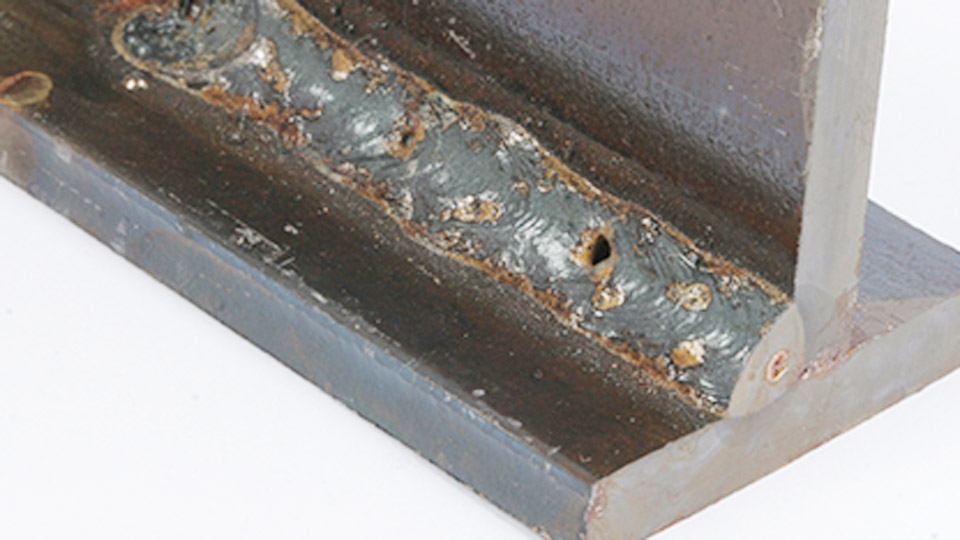
Image by hobartbrothers
Common MIG Welding Defects You Might Encounter
In my experience, most MIG welding problems stem from a handful of defects that show up again and again. These aren’t just cosmetic—they can weaken your joints, cause cracks down the line, or even lead to failures in structural work.
I’ve ruined plenty of pieces early on by ignoring the signs, but learning to spot and fix them turned things around. We’ll cover the big ones here, with causes rooted in technique, settings, or materials, and straightforward remedies to get you back on track.
Tackling Porosity in Your MIG Welds
Porosity is one of those MIG welding problems that drives everyone nuts—those little holes or bubbles in the weld bead that make it look pitted and unreliable. It’s basically gas pockets trapped in the molten metal as it cools, and it compromises strength big time, especially in load-bearing applications like trailer frames or pressure vessels. I’ve seen it happen on jobs where we were welding mild steel outdoors, and a sudden breeze wrecked the shielding.
Why does it occur? Often, it’s poor shielding gas coverage from low flow rates, drafts, or leaks in your hoses. Contaminated materials—rust, oil, paint, or even moisture on the wire—can release gases during welding. I’ve also caused it myself by holding the gun at too steep an angle or extending the wire stickout beyond half an inch, which lets air sneak in.
To fix it, start by checking your gas setup. I always aim for 20 to 30 cubic feet per hour (CFH) on the flow meter—bump it up in windy spots but watch for turbulence if it’s over 35 CFH. Clean your base metal thoroughly with a wire brush or grinder; degrease if needed, but skip harsh solvents that could leave residues. Keep your nozzle spatter-free and sized right for the job— a 5/8-inch inside diameter works for most hobbyist setups.
Here’s a quick step-by-step to troubleshoot porosity:
- Inspect and repair any gas leaks in the hose, gun, or regulator.
- Clean the workpiece and wire spool—store wire in a dry spot to avoid rust.
- Adjust your gun angle to 0-15 degrees push technique, keeping the arc on the puddle’s leading edge.
- Shorten stickout to 3/8 to 1/2 inch max.
- If it’s persistent, switch to a wire with more deoxidizers, like ER70S-6 for mild steel—it’s forgiving on dirty surfaces.
I remember a time when I was welding up a custom exhaust for a buddy’s truck, and porosity kept showing up. Turned out my cylinder was low, messing with the flow. A fresh tank and a wind block fixed it right away. Prevention beats cure—always test on scrap first.
Reducing Excessive Spatter
Excessive spatter—those hot metal droplets flying everywhere—is another common MIG welding problem that not only makes cleanup a pain but can also indicate deeper issues like unstable arcs. It sticks to your workpiece, tools, and even your clothes, increasing fire risks and wasting filler material. In pro shops, it eats into productivity with extra grinding time, and for DIYers, it’s just frustrating.
Causes? Dirty wire or base metal is a big one—rust or mill scale boils off and explodes. Wrong machine settings, like voltage too high or wire feed speed mismatched, push you into spray transfer mode unintentionally. I’ve caused it with long stickout or the wrong polarity—remember, solid wire MIG needs DCEP (electrode positive) for stability.
To dial it down, clean everything first: wipe the wire and grind the metal. Adjust your welder— for 0.035-inch wire on 1/8-inch mild steel, try 18-20 volts and 200-250 inches per minute (IPM) wire feed. Use anti-spatter spray on the nozzle, but sparingly.
Step-by-step fix:
- Verify polarity: DCEP for solid wire, DCEN for some flux-cored.
- Clean contact tip and nozzle; replace if worn.
- Shorten stickout to 1/2 inch.
- Lower voltage if spatter is explosive; increase if it’s globbing.
- Opt for argon-rich mixes like 75/25 argon/CO2 for smoother arcs on steel.
Once, on a fabrication job for farm equipment, spatter was coating everything. Switched to a fresh spool of ER70S-6 and tweaked the voltage down a notch—problem solved, and the welds looked pro.
Preventing Burn-Through on Thin Materials
Burn-through happens when you melt right through the base metal, leaving holes or craters, and it’s a killer for thin gauge work like auto body panels or sheet metal enclosures. It ruins parts, wastes time on patches, and can distort the whole assembly. As someone who’s patched more than a few mistakes, I know it often stems from too much heat on materials under 1/8 inch.
Main culprits: High voltage or slow travel speed letting heat build up. Poor joint fit-up amplifies it, as gaps act like heat sinks. Aluminum is especially prone due to its low melting point.
Avoid it by dropping your settings—for 16-gauge steel with 0.030-inch wire, go 15-17 volts and 150-200 IPM. Travel faster to spread the heat.
Steps to prevent:
- Prep joints tight—no gaps over 1/16 inch.
- Use pulse mode if your welder has it for controlled heat.
- Start with short tacks to hold position.
- Increase travel speed; aim for a steady pace without rushing.
- For aluminum, switch to 4043 filler and pure argon gas.
I burned through a motorcycle fender once because I cranked the heat like on thicker stock. Lesson learned: Always dial back for thin stuff and practice on scraps.
Fixing Lack of Fusion Issues
Lack of fusion, or cold lap, is sneaky— the weld looks okay on top but doesn’t bond properly to the base or previous passes. It leads to weak joints that crack under stress, a real issue in structural welding per US codes like AWS D1.1. I’ve pulled apart test pieces that failed because of this.
Why? Insufficient heat from low voltage/feed, fast travel, or wrong angle pulling the arc off the joint edges.
Remedy: Boost heat— for 1/4-inch steel, 20-22 volts and 300 IPM. Keep a 10-15 degree push angle.
Steps:
- Clean edges for good contact.
- Adjust parameters up; use synergic mode on modern welders.
- Slow travel slightly for better penetration.
- Weave if needed for wider joints.
A shop mate once had fusion issues on pipe; turns out his travel was too quick. Slowing down fixed it.
Achieving the Perfect Weld Bead Profile
Bad bead profiles—convex (ropy) or concave (sucked in)—affect appearance and strength. Convex lacks toe fusion; concave risks cracking. Gravity plays a role in vertical positions.
Causes: Wrong heat for position; high voltage makes pools too fluid.
Fix: For flat, 18-20 volts; vertical-down, lower to 16-18.
Steps:
- Match settings to position.
- Use proper gas—CO2 for deeper penetration.
- Practice stringers vs. weaves.
I’ve refined beads on handrails by tweaking speeds—flatter profiles every time.
Here’s a comparison table for bead issues:
| Issue | Cause | Solution | Example Application |
|---|---|---|---|
| Convex Bead | Low heat, fast travel | Increase voltage/feed, slow speed | Flat fillet welds on mild steel |
| Concave Bead | High heat, slow travel in vertical | Decrease voltage, faster speed | Vertical-down on thin sheets |
| Uneven Bead | Inconsistent technique | Steady hand, consistent angle | Auto repairs |
Wire Feeding Problems and How to Solve Them
Wire feeding glitches can halt your welding dead in its tracks, from stuttering arcs to complete jams. These MIG welding problems often trace back to equipment wear or setup errors, and they’ve cost me hours in downtime.
Dealing with Birdnesting and Burn Back
Birdnesting is when wire tangles at the drive rolls, like a bird’s nest, from too much tension or blockages. Burn back fuses wire to the tip from low feed speed or long stickout.
Causes: Worn liners, wrong tension, dirty tips.
Fix: Set tension so wire slips when pinched but feeds smoothly.
Steps:
- Clean or replace liner every 6 months.
- Use correct drive roll grooves for wire size.
- Check tip for wear; replace quarterly.
- Adjust brake on spool to prevent overrun.
I fixed a birdnest on a big job by blowing out the liner with compressed air—simple but effective.
Maintaining Your Drive Rolls and Liners
Drive rolls wear out, flattening grooves and slipping. Liners get kinked or dirty.
Pros: Regular checks prevent issues.
Cons: Ignoring leads to inconsistent welds.
Tips: Match rolls to wire—V-groove for solid, knurled for flux-cored.
Optimizing Your MIG Welder Settings
Getting settings right is half the battle against MIG welding problems. Modern US machines like Miller or Lincoln have charts, but experience fine-tunes them.
For mild steel: 0.035 wire, 1/4 inch—20 volts, 250 IPM, 25 CFH gas.
Anecdote: Dialed in settings for a gate; perfect beads, no defects.
Table of settings:
| Material Thickness | Wire Diameter | Voltage | Wire Feed (IPM) | Gas Flow (CFH) |
|---|---|---|---|---|
| 1/16 inch | 0.030 | 15-17 | 150-200 | 20-25 |
| 1/8 inch | 0.035 | 18-20 | 200-250 | 25-30 |
| 1/4 inch | 0.035 | 20-22 | 250-300 | 25-30 |
Adjust for aluminum: Lower volts, pure argon.
Material Preparation and Joint Setup Tips
Prep is key—skip it, and problems multiply. Clean metals, bevel thick joints (30-45 degrees for butt welds).
Tips: Use clamps for fit-up; no gaps.
For stainless: ER308L wire, tri-mix gas.
I’ve saved projects with good prep; poor fit once caused distortion.
Safety First When Troubleshooting
MIG welding problems aren’t just about welds—safety matters. Fumes from porosity fixes can be toxic; wear respirators. Spatter burns skin; use leather gear.
Tips: Ground properly to avoid shocks. Inspect cables.
In US shops, follow OSHA guidelines for ventilation.
To Wrap This Up
We’ve covered the major MIG welding problems from porosity to wire woes, with fixes that emphasize clean prep, right settings, and steady technique. You’re now better equipped to spot issues early, saving time, materials, and frustration whether you’re a hobbyist or pro. Always keep a log of your successful settings for different materials—it’ll speed up future jobs and build your confidence.
FAQ
Why is my MIG weld full of holes?
Those holes are porosity, usually from poor gas shielding or dirty materials. Check your flow at 20-30 CFH, clean everything, and shorten stickout to fix it quick.
How do I stop so much spatter in MIG welding?
Spatter comes from contamination or high settings. Clean wire and metal, drop voltage a bit, and ensure DCEP polarity for solid wire— it’ll smooth things out.
What’s causing my wire to jam in the MIG gun?
Jams like birdnesting happen from worn liners or wrong tension. Clean or replace the liner, adjust drive roll tension so the wire slips when pinched, and check for kinks.
How can I avoid burning through thin metal with MIG?
Burn-through is excess heat—lower voltage to 15-17 for thin stock, speed up travel, and use short bursts or pulse if available.
What settings should I use for MIG welding mild steel?
For 1/8-inch mild steel with 0.035 wire, try 18-20 volts, 200-250 IPM feed, and 25 CFH 75/25 gas. Test on scrap to tweak.