
Setting up a Lincoln 140 MIG welder the right way makes all the difference between fighting your machine and laying down smooth, consistent beads. I’ve seen plenty of people plug it in, load the wire, and start welding — only to deal with bird-nesting, poor penetration, or way too much spatter.
This little machine is capable of great welds, but only if the basics are dialed in, from wire selection and shielding gas to matching your voltage and wire feed speed to the metal thickness. Whether you’re welding mild steel, patching thin sheet metal, or switching between flux-core and solid wire, proper setup is key for clean arc control and strong joints.
Getting it right also saves time, wire, and frustration. In this guide, I’ll walk you through exactly how I set up a Lincoln 140 in the shop, so you can spend less time troubleshooting and more time welding with confidence.
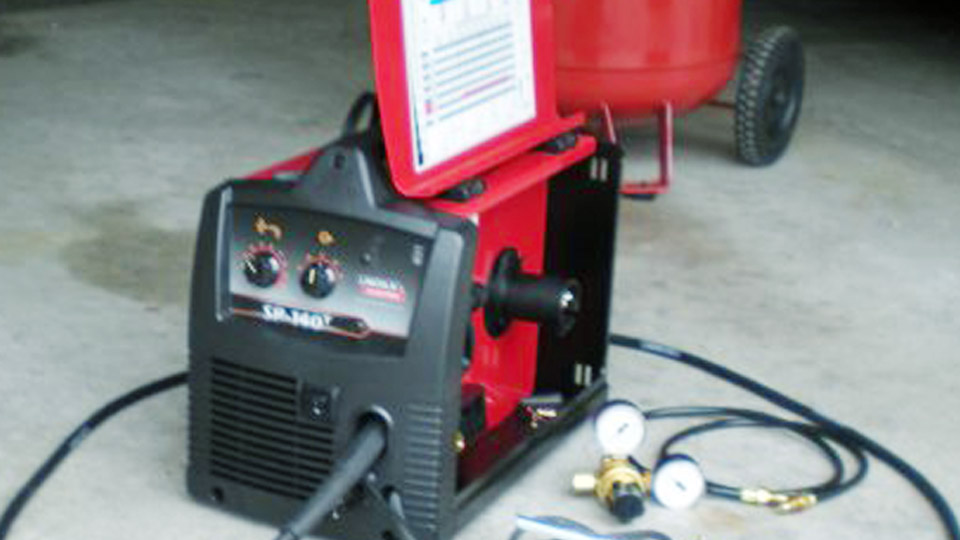
Image by mig-welding.co.uk
Unboxing Your Lincoln 140 MIG Welder
When that box arrives, it’s like Christmas in the workshop. I’ve unboxed plenty of these, and the Lincoln 140 series—whether it’s the Easy-MIG, Power MIG, Pro-MIG, or Weld-Pak model—comes packed with essentials to get you welding right away.
Start by laying everything out on a clean workbench to avoid losing small parts. You’ll find the main welder unit, which runs on standard 120-volt power, making it perfect for home shops without needing heavy-duty wiring.
Inside, expect the Magnum 100L welding gun with a 10-foot cable, contact tips in .025-inch and .035-inch sizes, a work clamp with cable, sample spools of MIG wire and flux-cored wire, drive rolls, nozzles for gas and gasless welding, a gas regulator with hose, and even a spindle adapter for your wire spools.
There’s usually an instructional DVD or manual too, but I’ll break it down here like I’m showing you in person. If anything’s missing, double-check the packing list—I’ve had a tip or two roll under the bench before.
This unboxing step is crucial because familiarizing yourself with the parts builds confidence. For instance, the gun is your main tool, and those contact tips wear out fast if mismatched to your wire size. Take a moment to inspect for damage from shipping; a bent cable once cost me an afternoon of troubleshooting.
Assembling the Components
Assembly on the Lincoln 140 is straightforward, no fancy tools needed beyond maybe a screwdriver. First, find a stable, level spot for the welder—away from flammable stuff and with good ventilation, since welding kicks up fumes.
Start by connecting the welding gun. Slide the gun cable through the front panel opening, tighten the thumbscrew on the brass connection for a solid electrical contact, and plug in the trigger control pins.
I’ve found that a loose connection here leads to intermittent arcs, so give it a firm twist. Next, attach the work clamp to one of the output terminals inside the machine— we’ll talk polarity soon.
If you’re using a cart, mount the welder securely now. I always recommend one for mobility in tight spaces. Assembly takes about 15 minutes if you’re methodical, and it’s your first line of defense against operational hiccups.
Connecting the Welding Gun Properly
The gun is the business end, so let’s focus here. The Magnum 100L comes pre-assembled, but ensure the liner is clean— that’s the tube inside that guides the wire. If it’s clogged from the factory (rare, but it happens), blow it out with compressed air.
Connect the gun by aligning the 4-pin connector and pushing until it clicks. Test the trigger by powering on the machine (unplugged from wire for now) to hear the feed motor hum. In my early days, I skipped this and ended up with no wire feed mid-weld—lesson learned: always dry-run connections.
Attaching the Work Clamp and Grounding
Grounding is non-negotiable for safe, effective welding. The work clamp cable plugs into the opposite terminal from the gun. Clamp it directly to your workpiece or a clean metal table connected to it. Poor grounding causes erratic arcs, like when I tried welding far from the clamp and got nothing but sparks.
For US shop practices, follow NEC guidelines—ensure your outlet is grounded too. I’ve seen pros overlook this and face shocks; keep it close to your weld area for best results.
Installing the Wire Spool
Wire installation is where many newbies trip up, but get this right and your welds will flow smoothly. The Lincoln 140 handles 8-inch spools, up to 10 pounds, which is plenty for hobby work.
First, open the side panel and mount the spool on the spindle, using the adapter if needed. Orient it so the wire feeds from the top— this prevents tangles. Thread the wire through the inlet guide, into the drive rolls, and out through the gun liner. Close the pressure arm and adjust tension just enough to prevent slippage without crushing the wire.
I’ve ruined spools by over-tightening, leading to birdnesting— that’s when wire loops everywhere. Start light and increase as needed.
Choosing the Right Wire for Your Project
Wire choice depends on your job. For mild steel, .025-inch solid wire with gas shielding works great on thin stuff like auto panels, while .035-inch flux-cored is better for thicker, rusty metal without gas. Lincoln’s SuperArc L-56 for MIG or NR-211-MP for flux-cored are reliable starters.
Consider material compatibility: stainless needs specific wire to avoid cracking. In fabrication, I match wire to base metal strength for integrity. Pros: Flux-cored penetrates deeper; cons: more spatter to clean.
Loading and Feeding the Wire
To load, release the pressure arm, insert the wire end (straightened first), and jog the trigger to feed it through the gun—aim for 4 inches sticking out. Trim to 3/8-inch stickout. If it jams, check drive roll alignment.
A tip from my shop: Practice feeding without power to feel the path. Common fix for feeding issues—clean the liner regularly, especially after flux-cored runs.
Setting Up Shielding Gas for MIG Welding
If you’re going gas-shielded MIG, gas setup elevates your welds from okay to professional. The Lincoln 140 includes a Harris regulator and hose for argon/CO2 mixes.
Secure your cylinder upright, chain it to prevent tipping—safety first. Attach the regulator, connect the hose to the machine’s gas inlet, and set flow to 30-40 CFH. Open the valve slowly, facing away.
For CO2, you might need an adapter. Test for leaks with soapy water. I’ve skipped gas on flux-cored jobs outdoors where wind blows it away, but for clean indoor work on thin steel, gas reduces porosity and improves bead appearance.
Deciding Between Gas-Shielded and Flux-Cored Welding
Gas-shielded MIG shines for cosmetic welds on clean metal—think automotive repairs. It uses 75/25 argon/CO2 for mild steel, costing more but yielding less spatter.
Flux-cored is gasless, ideal for dirty or thick materials, like farm fixes. Pros: Portable, deeper penetration; cons: Slag cleanup. I switch based on the job—gas for precision, flux for ruggedness.
Understanding Polarity and Drive Rolls
Polarity flips with process: Positive for MIG (gun to positive terminal), negative for flux-cored. The machine makes it tool-less—swap leads inside.
Drive rolls match wire: Smooth for solid, knurled for flux-cored. Install by opening the arm, swapping rolls (dual-track on some), and securing. Wrong roll? Expect poor feeding.
In my experience, ignoring polarity led to globular arcs—always check the door chart.
Machine Controls and Initial Settings
The Lincoln 140 keeps it simple with two knobs: Voltage for arc heat, wire feed speed (WFS) for deposition rate. Output ranges 30-140 amps, WFS 50-500 ipm.
Start with the door decal settings—for 1/8-inch mild steel with .035 flux-cored, try voltage C, WFS 5. Adjust while welding: Too hot burns through, too cold lacks penetration.
I dial in on scrap: Listen for that steady sizzle, watch the puddle. For students, practice varies settings to feel differences.
Safety Precautions Before Welding
Before flipping the switch, gear up. ANSI-approved helmet with shade 10-13, leather gloves, long sleeves, and boots. Ventilate—fumes from zinc-coated steel are nasty.
Ground everything, keep cylinders secure, and remove flammables. I’ve seen sparks ignite rags; a fire extinguisher nearby is smart. Follow OSHA-like practices in your shop for peace of mind.
Step-by-Step Guide to Your First Weld
Ready? Power on, set polarity for your wire. Clamp work, position gun at 15-20 degree angle, 3/8-inch stickout.
Trigger to start arc, move steadily—push for MIG, drag for flux. Release to stop. Grind slag if flux-cored.
My first weld was ugly, but practice on coupons builds skill. For joints: Prep with bevels on thick stuff, ensure fit-up.
Common Mistakes and How to Fix Them
New welders often wrong polarity—fix by swapping leads. Poor grounding? Clean clamp area.
Blowing holes in thin metal? Lower voltage, faster travel. Birdnesting? Adjust tension down.
I once welded with dirty wire—porosity everywhere. Clean prep is key.
Recommended Settings for Different Materials
Here’s a quick table based on my trials and decal charts:
| Material Thickness | Wire Type/Size | Voltage Setting | WFS (ipm) | Gas Flow (CFH) | Notes |
|---|---|---|---|---|---|
| 24-gauge sheet metal | Solid .025″ | A-B | 200-300 | 20-30 (75/25) | Stitch weld to avoid warp |
| 1/8″ mild steel | Flux-cored .035″ | C | 250-350 | None | Drag technique for penetration |
| 3/16″ stainless | Solid .030″ | D | 300-400 | 30-40 (Tri-mix) | Clean thoroughly, push angle |
| 1/4″ aluminum (with spool gun) | .035″ 4043 | C-D | 350-450 | 25-35 (100% Argon) | Optional spool gun needed |
Pros of these: Tailored for strength. Cons: Overheat thins.
Troubleshooting Common Issues
No arc? Check power, connections, breaker. Wire not feeding? Clean liner, right tension.
Unstable arc: Adjust settings, replace tip. Gas issues: Verify flow, leaks.
I’ve fixed jams by blowing out the gun—preventive maintenance saves time.
Maintenance Tips for Longevity
Vacuum the interior monthly, clean nozzles after use. Change liners after 300 pounds of wire.
Store dry, check cables for frays. Regular care keeps it reliable, like my old unit still humming after years.
Wrapping Up
You’ve now got the know-how to set up your Lincoln 140 MIG welder confidently, from assembly to fine-tuning settings. This prep means stronger, safer welds that hold up in real applications, whether fabricating brackets or repairing tools.
You’re better equipped to pick the right wire or process, avoiding costly errors. Always weld on scrap first to dial in—it’s saved me more times than I can count.
FAQ
What wire size is best for welding thin sheet metal with a Lincoln 140?
For thin stuff like 20-24 gauge, go with .025-inch solid wire and gas shielding. It prevents burn-through better than thicker wire. Start low on voltage, around A-B, and use stitch welding. I’ve found it gives clean beads without warping if you keep travel speed up.
How do I switch from MIG to flux-cored on my Lincoln 140?
Swap polarity—positive for MIG, negative for flux-cored. Change to knurled drive rolls and a gasless nozzle. Disconnect gas if using it. Test on scrap; I once forgot the roll swap and had feeding nightmares.
What’s the ideal gas flow rate for MIG welding mild steel?
Aim for 30-40 CFH with 75/25 argon/CO2. Too low causes porosity, too high wastes gas. In windy spots, bump to 50 CFH. From my outdoor jobs, consistent flow means smoother arcs and less cleanup.
Why is my weld bead popping or inconsistent?
Could be dirty metal—always wire brush. Or wrong settings: Too high voltage for thickness. Check stickout at 3/8-inch. I’ve fixed this by cleaning the tip mid-session; spatter buildup kills consistency.
Can the Lincoln 140 handle aluminum welding?
Yes, with an optional spool gun like the K2532-1. Use .035-inch 4043 wire and 100% argon. Settings around C-D voltage, 350-450 ipm WFS. It’s not ideal for thick aluminum, but great for hobby repairs—I’ve patched boat parts successfully.