
Electron beam welding (EBW) is a high-precision fusion welding process that uses a focused beam of electrons to join materials. This advanced welding technique operates in a vacuum environment and offers unique capabilities for both industrial manufacturing and specialized applications. Understanding the advantages and disadvantages of electron beam welding helps manufacturers determine when this process provides the best solution for their welding needs.
What is Electron Beam Welding?
Electron beam welding works by accelerating electrons through a high voltage field and focusing them into a concentrated beam. When this electron beam strikes the workpiece, kinetic energy converts to heat energy, creating temperatures up to 25,000°F (13,900°C). This intense heat melts the base materials, forming a weld pool that solidifies into a strong joint.
The process requires a vacuum chamber to prevent electron scattering and oxidation. Modern electron beam welding systems feature computer-controlled beam manipulation and precise positioning systems. For professionals studying welding techniques, resources like Welding: Principles and Applications provide comprehensive coverage of advanced welding processes including electron beam technology.
The electron beam can be precisely controlled in terms of power, focus, and travel speed, making it suitable for welding materials ranging from thin foils to thick sections.
Major Advantages of Electron Beam Welding
Superior Weld Quality and Precision
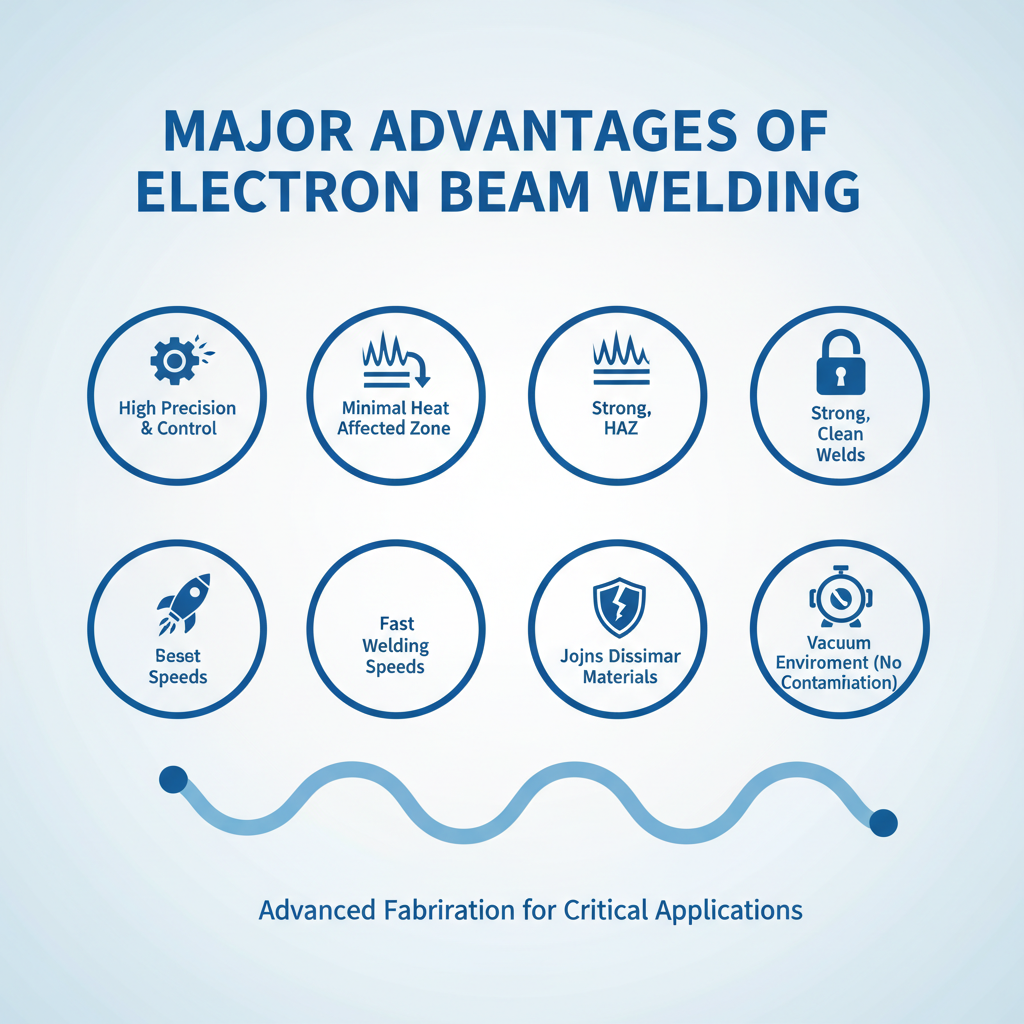
Electron beam welding produces exceptionally high-quality welds with minimal distortion. The concentrated heat source creates narrow heat-affected zones, preserving the mechanical properties of base materials. This precision makes EBW ideal for aerospace components, medical devices, and electronic assemblies.
The process achieves excellent penetration-to-width ratios, often creating welds that are deeper than they are wide. This characteristic allows for single-pass welding of thick sections while maintaining precise control over the weld geometry.
Exceptional Material Compatibility
One significant advantage is the ability to weld dissimilar metals that are difficult or impossible to join using conventional methods. Electron beam welding successfully joins materials with different melting points, thermal conductivities, and metallurgical properties.
The vacuum environment prevents oxidation and contamination, making it possible to weld reactive metals like titanium, zirconium, and refractory alloys without flux or shielding gas.
High Welding Speeds and Efficiency
Electron beam welding achieves faster travel speeds compared to many conventional welding processes. The concentrated energy input allows for rapid heating and cooling cycles, increasing productivity in manufacturing environments.
The process can weld materials ranging from 0.001 inches to several inches thick in a single pass, eliminating the need for multiple weld passes and reducing overall production time.
Minimal Heat Input and Distortion
The focused electron beam delivers energy precisely where needed, minimizing heat input to surrounding areas. This controlled heating reduces thermal distortion, residual stresses, and metallurgical changes in the heat-affected zone.
Components maintain dimensional accuracy and require minimal post-weld machining or straightening operations.
Key Disadvantages of Electron Beam Welding
High Equipment and Operating Costs
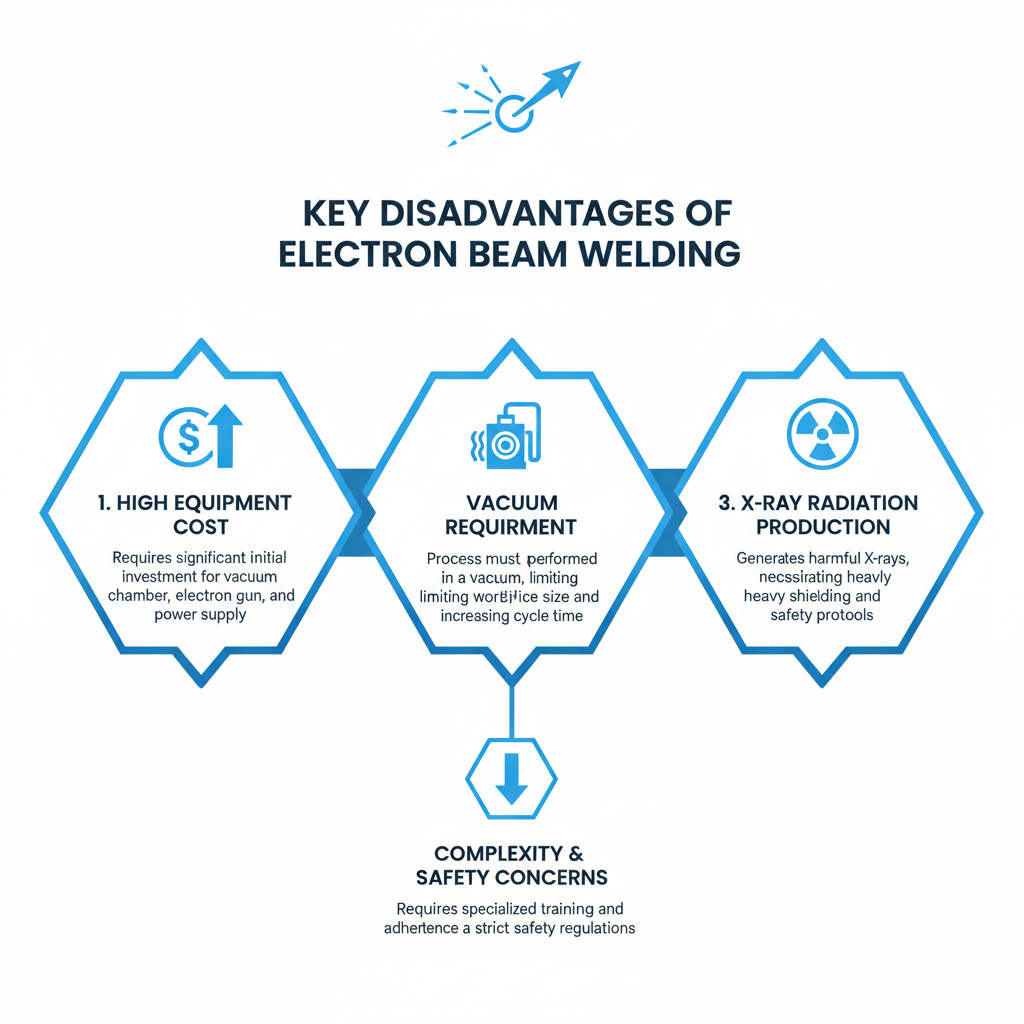
Electron beam welding systems require significant capital investment. The complex equipment includes high-voltage power supplies, vacuum systems, electron guns, and sophisticated control systems. Maintenance costs are also substantial due to the specialized components and technical expertise required.
Operating costs include electricity consumption for the high-voltage systems and vacuum pumps, plus regular replacement of consumable components like filaments and focusing systems.
Vacuum Requirement Limitations
The need for a vacuum environment restricts workpiece size to the dimensions of the vacuum chamber. Large assemblies may require special handling or alternative welding processes. Achieving and maintaining vacuum conditions also adds time to the welding cycle.
Vacuum requirements make it impossible to perform field welding or repairs on installed equipment, limiting the process to shop environments.
Complex Setup and Operation
Electron beam welding requires highly skilled operators with specialized training. The process involves complex parameter selection including accelerating voltage, beam current, focus position, and travel speed. Welding Metallurgy and Weldability offers detailed technical information for professionals working with advanced welding processes and metallurgical considerations.
Joint preparation must be extremely precise, with tight fit-up tolerances and clean surfaces. Any contamination or gap variations can significantly affect weld quality.
Safety and Radiation Concerns
The high-voltage systems and X-ray generation during operation require comprehensive safety protocols. Operators need specialized training in radiation safety and emergency procedures. Facilities must meet strict regulatory requirements for radiation shielding and monitoring.
Regular safety inspections and radiation surveys are mandatory, adding to operational complexity and costs.
Applications Where Electron Beam Welding Excels
Aerospace Industry
Aircraft and spacecraft components benefit from the precision and quality of electron beam welding. Critical applications include engine components, structural joints, and fuel system assemblies where weld integrity is paramount.
The ability to weld exotic alloys and achieve consistent quality makes EBW essential for aerospace manufacturing.
Medical Device Manufacturing
Medical implants, surgical instruments, and diagnostic equipment require the biocompatibility and precision that electron beam welding provides. The clean vacuum environment and minimal heat input preserve material properties critical for medical applications.
Electronics and Semiconductor Industry
Electronic components, hermetic seals, and precision assemblies benefit from the controlled heating and minimal distortion characteristics of electron beam welding. The process can join thin materials without damaging sensitive electronic components.
Comparing Electron Beam Welding to Other Processes
When compared to laser welding, electron beam welding offers deeper penetration and lower equipment costs but requires vacuum conditions. TIG welding provides more flexibility and lower setup costs but cannot match the precision and penetration capabilities of EBW.
Resistance welding is faster for simple joints but lacks the versatility and quality characteristics of electron beam welding for complex assemblies.
Making the Right Choice for Your Application
Consider electron beam welding when your application requires:
– Exceptional weld quality and precision
– Deep penetration in thick materials
– Welding of reactive or dissimilar metals
– Minimal heat-affected zones
– High-value components justifying the process costs
Avoid electron beam welding when:
– Component size exceeds vacuum chamber capacity
– High production volumes require faster cycle times
– Budget constraints limit equipment investment
– Field welding or repairs are necessary
Conclusion
The advantages and disadvantages of electron beam welding make it a specialized process best suited for high-quality, precision applications. While the superior weld quality, material compatibility, and minimal distortion provide significant benefits, the high costs, vacuum requirements, and operational complexity limit its use to specific industries and applications.
Understanding these trade-offs helps manufacturers make informed decisions about when electron beam welding provides the best solution for their welding challenges. For applications requiring the highest quality standards and where the benefits justify the costs, electron beam welding remains an invaluable manufacturing process.
Success with electron beam welding depends on proper equipment selection, operator training, and careful consideration of the process limitations alongside its remarkable capabilities.