Cut metal edges can be sharp, uneven, and difficult to finish cleanly without the right hand tool. The best deburring tools remove burrs quickly while helping you avoid scratches, gouges, and unnecessary rework.
This roundup compares 10 options, including compact single-blade tools, replaceable HSS blade systems, countersink combinations, and kits suited to metal, plastic, wood, and 3D-printed parts.
Best 10 Deburring Tools for Cut Metal Edges Picks for 2026
Dual-Edge Sheet Metal Specialist
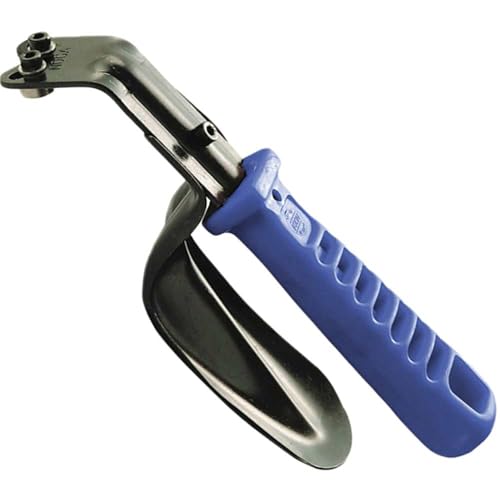
- Deburrs both sheet-metal sides simultaneously
- N80 HSS blade covers 0–12 mm
- Guarded handle with reversible blade
Best For: Thin sheet metal and general ferrous or nonferrous edge work
Compact HSS Blade Kit

- Includes 11 M2 HSS blades
- Blades are tempered to HRC 62–64
- Lightweight 3-ounce design
Best For: Portable metal deburring with replaceable blades
Finger-Friendly Ceramic Option

- Rust-free zirconium oxide ceramic blade
- Works on metal, plastic, and 3D prints
- Auto-retracting design with safety cap
Best For: Thin edges and mixed metal, plastic, or prototype finishing
Versatile Swivel-Handle Kit

- 360° swivel follows curves and inside diameters
- Includes 11 hardened M2 HSS blades
- Handles metal, pipe, PVC, and 3D prints
Best For: Multi-material edge finishing and pipe cleanup
Double-Edge Efficiency
DB1000 Double Edge Cutting Deburring Tool

- Removes burrs from both sheet-metal sides
- Reversible, rotatable round blades
- Guarded handle for hand protection
Best For: Fast two-sided sheet-metal deburring
Versatile Maker Kit

- Includes 12 HSS replacement blades
- 360-degree head follows irregular edges
- Works on metal, PVC, resin, and 3D prints
Best For: Mixed-material workshop and maker projects
Expanded Finishing Set
AFA Deburring Tool and Two Countersink Reamers

- Includes 11 HSS deburring blades
- Adds two 90-degree countersink reamers
- Swivel head handles uneven surfaces
Best For: Deburring plus countersinking and hole finishing
Best Value Kit

- Two tools and 10 replacement BS1010 HSS blades
- Handles metal, PVC, pipes, and 3D-printed plastic
- Ergonomic aluminum grip with blade case
Best For: DIY, plumbing, and general workshop cleanup
Best for Heavy-Duty Variety
Red 16-Blade HSS Deburring Tool

- 16 mixed HSS and cobalt HSS blades
- Includes blades for stainless steel and small holes
- Thick knurled aluminum handle for control
Best For: Frequent metalwork, machining, and mixed-material projects
Best for DIY Precision
QWORK Rotary Blade Deburring Kit

- 10 rotary HSS blades plus a countersink blade
- 360-degree rotation for edges and drilled holes
- Pen and hex handles for controlled grip
Best For: DIY, makers, and plastic or soft-metal cleanup
Dual-Edge Sheet Metal Specialist – Noga DB1000
The Noga DB1000 is a focused option for deburring tools for cut metal edges, especially thin sheet metal. Its N80 HSS blade handles ferrous and nonferrous materials, while the design can remove burrs from both sides of sheet metal in one motion.
Best For: Thin sheet metal, small ridges, internal threads, key seats, and keyways where two-sided deburring is useful.
Pros:
- Simultaneously deburrs both sides of sheet metal.
- N80 high-speed steel blade suits general-purpose work on ferrous and nonferrous materials.
- Rotatable and reversible round blades support longer use.
- Handle includes a safety guard for hand protection.
Cons:
- The listed blade range is 0–12 mm, so it is a specialized rather than universal tool.
- For corners, the manufacturer recommends using only one blade.
Choose the DB1000 when sheet-metal productivity and controlled handling matter more than a broad assortment of blade styles. The included DB handle, handguard, and N80 blades make it a ready-to-use dedicated solution.
Compact HSS Blade Kit – AFA Tooling Aluminum Handle
This AFA Tooling kit is a practical pick for deburring tools for cut metal edges when replaceable blades and a lightweight aluminum handle are priorities. It includes M2 HSS blades tempered to HRC 62–64 for work on stainless steel, aluminum, and hard metals.
Best For: Users who want a compact deburring setup with multiple industrial-grade replacement blades for detailed metal edge work.
Pros:
- Includes 11 M2 high-speed steel blades.
- Blades are tempered to HRC 62–64 for wear resistance.
- Designed for stainless steel, aluminum, and hard metals.
- Light 3-ounce tool weight supports portable use.
Cons:
- The supplied notes do not specify a handguard or blade-swivel mechanism.
- Blade range and compatibility with plastics are not stated.
Its main advantage is the supply of hardened M2 HSS blades in a small package. It is worth considering for metal-focused work where keeping spare blades available is more important than added handle features.
Finger-Friendly Ceramic Option – Slice 10482 Deburring Tool
The Slice 10482 broadens the usual use of deburring tools for cut metal edges to include plastic and 3D-printed parts. Its zirconium oxide ceramic blade is designed for thin materials, does not rust, and is paired with a nylon handle, safety cap, and auto-retracting design.
Best For: Sheet-metal edges, injection-molded plastics, 3D-printed prototypes, and users seeking a lightweight, non-sparking cutting option.
Pros:
- Ceramic blade never rusts and is rated to last 11 times longer than metal.
- Suitable for metal and plastic edges, including 3D-printing cleanup.
- Auto-retracting, finger-friendly design includes a safety cap.
- Lightweight nylon handle offers left- or right-handed use and blade storage.
Cons:
- The ceramic blade is intended for thin materials, limiting heavy-duty applications.
- Only one tool is included.
This is a strong choice when material versatility and safety-oriented handling are central concerns. The oil-free, non-sparking, and non-conductive characteristics also make it distinctive among compact deburring options.
Versatile Swivel-Handle Kit – AFA Tooling Red Handle
This AFA Tooling kit combines a knurled CNC-machined aluminum handle with a 360° swivel mechanism, making it a flexible choice among deburring tools for cut metal edges. The included M2 HSS blades are intended for metals, pipe cleanup, PVC, and 3D-print finishing.
Best For: Machinists, plumbers, makers, and 3D-printing hobbyists working across metal, pipe, plastic, and curved or internal edges.
Pros:
- Includes 11 M2 HSS blades tempered to HRC 62–64.
- 360° swivel helps the blade track curves, holes, edges, and inside diameters.
- Knurled red anodized aluminum handle supports a stable grip.
- Works with stainless steel, copper, brass, aluminum, PVC, sheet metal, and 3D prints.
Cons:
- The supplied dimensions make it less compact than the 3-ounce AFA model.
- Its broad material range may be more capability than needed for simple sheet-metal work.
For varied edge-finishing tasks, the swivel mechanism and substantial handle provide useful control beyond a basic fixed deburring tool. The spare-blade storage case also helps keep the 10 replacement blades organized.
Double-Edge Efficiency – DB1000 Double Edge Cutting Deburring Tool
For deburring tools for cut metal edges, the DB1000 stands out by removing burrs from both sides of sheet metal at the same time. Its round blades can be rotated or reversed, while the guarded handle adds protection during use.
Best For: Sheet-metal work where simultaneous two-sided deburring and faster straight-edge chamfering are useful.
Pros:
- Deburrs both sides of sheet metal simultaneously.
- Rotatable and reversible round cutting blades support extended use.
- Guarded DB handle helps protect the hand.
- Two round-hole blades can speed straight-edge chamfering.
Cons:
- Its specialized double-edge design may be less suitable for general-purpose, multi-material work.
- The supplied notes focus on sheet metal rather than curved or irregular edges.
The DB1000 is a focused choice for sheet-metal users who value speed and two-sided cutting-edge cleanup in one pass.
Versatile Maker Kit – 12-Blade HSS Deburring Tool
If you need deburring tools for cut metal edges across more than one material, this kit combines a metal handle with 12 HSS replacement blades. The rotating cutter head offers 360-degree flexibility for metal, PVC, resin, and 3D-print cleanup.
Best For: Machinists, plumbers, makers, and hobbyists who work with metal, plastic, PVC, resin, or 3D-printed parts.
Pros:
- Includes 12 wear-resistant HSS blades for continued work.
- Tool-free, spring-loaded blade changes reduce downtime.
- 360-degree rotating head handles curved, contoured, and irregular edges.
- Full-metal handle supports a firm, controlled grip.
Cons:
- The broad material compatibility may be more than needed for strictly sheet-metal tasks.
- Replacement blades add individual parts to store and manage.
This is the most adaptable option of the three, especially when a single deburring tool needs to move between metal and nonmetal projects.
Expanded Finishing Set – AFA Deburring Tool and Two Countersink Reamers
This AFA Tooling set combines deburring tools for cut metal edges with two 90-degree countersink hand reamers. It includes a swivel head, HSS blades, and a knurled aluminum handle for smoothing uneven surfaces and finishing circular openings.
Best For: Professionals and DIYers who want one kit for edge deburring, countersinking, and enlarging openings in metal, plastic, or wood.
Pros:
- Includes one installed blade plus 10 BS1010 replacement blades.
- Swivel head helps follow uneven surfaces.
- Two HRC62-64 90-degree reamers support countersinking and hole enlargement.
- Knurled aluminum handle and protective case aid control and storage.
Cons:
- Its additional reamers may be unnecessary if you only need edge deburring.
- The set is larger and heavier than a single basic deburring tool.
Choose this set when hole finishing matters alongside edge cleanup; its extra reamers make it a broader workshop solution than a dedicated edge tool.
Best Value Kit – Two-Handle HSS Deburring Set
If you need deburring tools for cut metal edges across common household, plumbing, or workshop projects, this two-piece kit offers a practical starting point. It includes two aluminum-handled tools and 10 replacement BS1010 high-speed steel blades for cleaning freshly cut metal, pipe, and plastic edges.
Best For: DIY users, plumbers, and general workshop cleanup involving brass, steel, aluminum, copper, PVC, and 3D-printed parts.
Pros:
- Includes two deburring tools plus 10 replacement BS1010 HSS blades.
- Works on metal edges, pipe materials, auto parts, gears, and 3D-printed plastic.
- Ergonomic aluminum handles provide a secure, comfortable grip.
- Includes a case for storing the extra blades.
Cons:
- The supplied notes do not specify blade compatibility beyond the included BS1010 style.
- Designed as a hand tool, so larger jobs may require more manual effort.
This is a useful all-around option when you want spare blades and two handles for routine edge cleanup. Its broad material compatibility makes it especially convenient for mixed home and workshop tasks.
Best for Heavy-Duty Variety – Red 16-Blade HSS Deburring Tool
For deburring tools for cut metal edges that need to handle varied materials, the AFA Tooling set stands out for its mixed blade selection. It combines 16 HSS blades, including cobalt options for stainless steel and hard metals, with a thick knurled aluminum handle for controlled use.
Best For: Machinists, plumbers, HVAC technicians, auto mechanics, and makers working with steel, stainless steel, aluminum, plastics, and small holes.
Pros:
- Includes 16 mixed blades for standard metals, hard metals, and holes down to 1.5 mm.
- Uses cobalt HSS blades for stainless steel and other hard materials.
- Thick 0.72-inch knurled aluminum handle supports control and stability.
- 360-degree rotating blades suit metalwork and 3D-print cleanup.
Cons:
- The larger blade selection may be more than casual users need.
- Blade performance depends on choosing the appropriate blade type for the material.
With three blade types and a substantial handle, this is the most versatile choice of the group for users who regularly switch between ordinary metals, stainless steel, small holes, and 3D-printed materials.
Best for DIY Precision – QWORK Rotary Blade Deburring Kit
When choosing deburring tools for cut metal edges on lighter-duty projects, the QWORK kit provides a flexible hand-tool setup. It includes 10 rotary HSS blades, a countersink blade, and pen- and hex-style handles for cleaning burrs from plastic, wood, soft metals, and steel.
Best For: DIY users, makers, and shop tasks involving plastic, aluminum, copper, silver, wood, and drilled or cut edges.
Pros:
- Complete kit includes 10 rotary blades and one countersink blade.
- 360-degree blade rotation supports flexible edge and hole cleanup.
- Aluminum alloy and silicone handles offer multiple grip shapes.
- Easy blade changes use a compressible mounting head.
Cons:
- The supplied notes position the 47 mm blades primarily for plastic and soft metals.
- Users seeking heavy-duty hardened-metal work may prefer a more specialized blade set.
This kit is a practical choice for makers who value easy blade changes and varied grip options. The included countersink blade also adds flexibility for drilled-hole cleanup beyond standard edge deburring.
How We Picked the Best Deburring Tools for Cut Metal Edges
We focused on the features that matter when choosing Deburring Tools for Cut Metal Edges: blade material, handle design, replacement-blade availability, edge access, versatility, and likely day-to-day durability. The selection includes both straightforward tools for occasional repairs and larger kits for users who work across different materials or need multiple blade options.
HSS blades are particularly useful for metal because they generally hold an edge better than basic utility blades. However, blade count alone does not determine performance. A secure blade mount, comfortable grip, controlled rotation, and easy replacement can matter just as much during repeated work.
Quick Comparison
| What to compare | Best suited to |
|---|---|
| Compact single-tool designs | Occasional edge cleanup and toolbox carry |
| Multiple HSS blades | Frequent use across metal, plastic, and printed parts |
| Double-edge or reversible designs | Faster access to varied edges and longer service life |
| Countersink-equipped kits | Deburring holes as well as straight cut edges |
| Two-tool or larger blade sets | Shared workshops and users who want spare capacity |
Key Buying Factors for Deburring Tools for Cut Metal Edges
Blade Quality and Compatibility
Look for HSS blades when working primarily with steel, aluminum, or other metals. Check the blade shape and mounting system before buying replacement parts; proprietary or unusual fittings may limit future options.
Handle Control
A knurled or molded handle can improve grip, especially when gloves, coolant, or oily parts are involved. Aluminum handles tend to feel rigid and durable, while thicker plastic handles may be more comfortable for occasional use.
Access and Edge Type
Consider whether you are cleaning straight sheet edges, inside corners, holes, tubing, or irregular profiles. Rotary blades are versatile, but a countersink blade may be more efficient for holes. Double-edge tools can also help when approaching an edge from different directions.
Replacement Capacity
Extra blades reduce downtime and make a kit more practical for regular fabrication. Still, confirm that the included blades match your materials and that replacements are available independently.
Who Should Buy Which Deburring Tools for Cut Metal Edges?
Choose a compact single-blade tool if you need an inexpensive solution for occasional home, repair, or hobby work. A multi-blade HSS model is a better fit for makers, machinists, and fabricators who regularly deburr metal and want flexibility across plastics or 3D-printed parts.
Pick a double-edge design when speed and access are priorities, particularly for repetitive edge finishing. If your projects include drilled holes, countersinks, or mixed workshop tasks, a kit with countersink blades offers more capability than a basic edge-only tool. For shared workspaces or frequent production use, prioritize secure construction, comfortable handling, and a generous supply of compatible replacement blades over the highest advertised blade count.