Accurate angles can make the difference between a clean weld fit-up and hours of correction. The best digital angle finders for metal fabrication help you check bevels, verify joints, transfer measurements, and inspect work quickly in the shop or on-site.
This roundup compares compact electronic levels, stainless-steel protractors, magnetic gauges, laser-assisted models, and longer multi-purpose finders. Use the guide below to match the tool’s measuring range, display, construction, and handling features to your fabrication workflow.
Best 10 Digital Angle Finders for Metal Fabrication Picks for 2026
Best Magnetic Pipe Gauge
Klein 935DAG Digital Angle Gauge
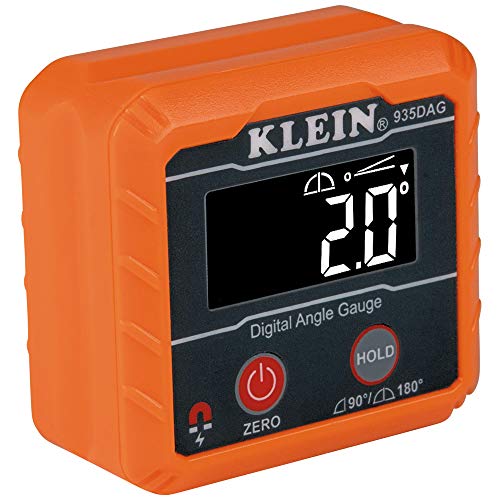
- 0–90° and 0–180° measurement ranges
- Magnetic base with V-groove pipe alignment
- Auto-rotating, reverse-contrast display
Best For: Hands-free angle checks on magnetic pipe and conduit
Best Stainless Steel Protractor
GemRed 82305 Digital Angle Finder

- Stainless steel ruler and protractor combination
- ±0.3° stated accuracy
- Locks at any angle for reading
Best For: General metal layout requiring angle and length measurement
Best Audible Angle Alert
Klein 935DAA Digital Angle Gauge

- LED and audio target-angle alerts
- Rare-earth magnetic base with V-groove edges
- IP54 water- and dust-resistant design
Best For: Quick angle setup on magnetic pipe and conduit
Best Lightweight Rule Gauge
GemRed 82305 Aluminum Protractor
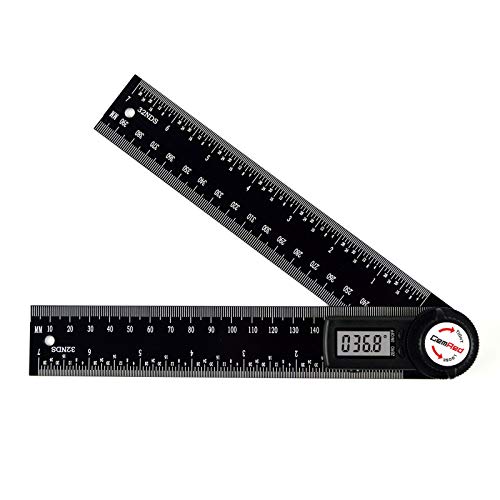
- Lightweight 4.2-ounce aluminum construction
- Integrated ruler and digital protractor
- ±0.3° stated accuracy with angle locking
Best For: Portable general-purpose metal layout work
Versatile Precision Pick
Klein Tools 935DAF Digital Angle Finder

- Measures angles, lengths, and miter cuts
- Machined edges rated to +/- 0.2 degrees
- Bright display with rust-resistant ruler
Best For: Compact, multipurpose angle and miter-saw measurements
Large-Display Choice
LEXIVON LX-DAF7 Digital Angle Finder

- 360-degree inside, outside, and reverse readings
- Extra-large LCD with 0.05-degree resolution
- Includes rugged zippered storage pouch
Best For: Detailed layouts requiring broad angle coverage and visibility
Simple Manual Option
General Tools Stainless Steel Protractor
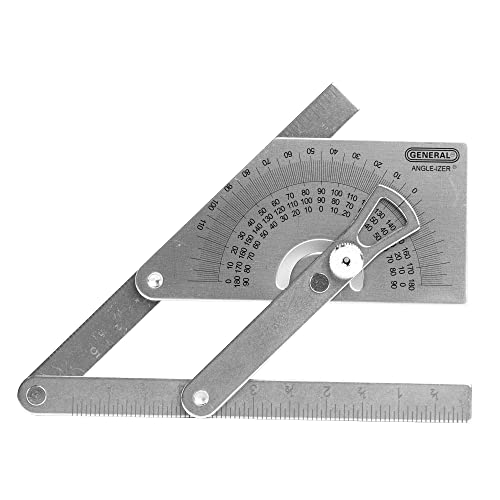
- Measures inside, outside, and slope angles
- Stainless steel design with locking nut
- Battery-free 0-180-degree manual scale
Best For: Basic angle transfer and battery-free shop measurements
Laser-Ready Magnetic Pick

- Four-sided strong magnets
- Dual laser lines and leveling
- ±0.2° accuracy with 0.05° resolution
Best For: Portable magnetic angle checks and laser-guided alignment
Blade-Style Layout Tool

- 8-inch stainless steel blade
- Full LCD with reverse-angle readout
- Sliding bevel for interior and exterior angles
Best For: Traditional angle transfer and layout work
Long-Rule Precision Pick

- 10-inch anodized aluminum rule
- XL LCD with 0.05° resolution
- 360° range and angle-lock knob
Best For: Detailed layout requiring a longer measuring edge
Best Magnetic Pipe Gauge – Klein 935DAG Digital Angle Gauge
For digital angle finders for metal fabrication, the Klein Tools 935DAG combines angle measurement with level functionality in a compact format. Its magnetic base and V-groove edges make it practical for positioning on ferromagnetic pipe, conduit, ducts, and other rounded or flat metal surfaces.
Best For: Hands-free angle checking and relative-angle measurements on pipe, conduit, and other magnetic fabrication surfaces.
Pros:
- Measures 0–90 and 0–180 degrees and supports zero calibration for relative angles.
- Strong magnetic base supports hands-free use on ferromagnetic surfaces.
- V-groove edges help align the gauge on conduit and pipe.
- Reverse-contrast, auto-rotating display improves viewing in low light or upside-down positions.
Cons:
- Its ABS plastic housing may be less suited to heavy impacts than an all-metal tool.
- The supplied details do not specify a water- or dust-resistance rating.
The 935DAG is a versatile choice when fabrication work involves both angle layout and leveling. Its extended 180-degree range is also useful when accounting for springback during conduit bending.
Best Stainless Steel Protractor – GemRed 82305 Digital Angle Finder
GemRed 82305 Digital Angle Finder Protractor Stainless Steel 7inch 200mm | Black Button
Check Price On AmazonIf you want digital angle finders for metal fabrication with a ruler built in, the GemRed 82305 pairs a stainless steel measuring arm with a digital protractor. It is designed for inside and outside angles, while its etched scales and locking function support repeatable layout work.
Best For: Fabricators who need a compact ruler-and-protractor combination for marking and checking angled workpieces.
Pros:
- Stainless steel rulers provide a durable measuring surface.
- Laser-etched measurements are intended to remain clear with use.
- Rated accuracy is ±0.3 degree for general project work.
- Locks at any angle for easier reading and transfer.
Cons:
- It does not include a reverse-angle or reverse-display function.
- The 7-inch design may provide less reach than a larger fabrication rule.
- It requires a CR2032 battery.
The GemRed 82305 is a practical choice when angle measurement and length measurement need to happen in one operation. Its stainless steel construction and locking hinge suit general layout tasks, though it lacks specialized magnetic or pipe-gripping features.
Best Audible Angle Alert – Klein 935DAA Digital Angle Gauge
Among digital angle finders for metal fabrication, the Klein Tools 935DAA stands out when setting a target angle quickly matters. Its LED and audio angle alert indicates how close the gauge is to the desired angle, while rare-earth magnets and V-groove edges help secure it to metal surfaces.
Best For: Fast target-angle setup on magnetic pipe, conduit, and shop or jobsite surfaces.
Pros:
- LEDs and audio indicate proximity to the desired angle.
- Measures and sets angles and can also function as a digital level.
- Rare-earth magnets provide a secure hold on magnetic surfaces.
- IP54 water- and dust-resistance rating supports jobsite use.
Cons:
- The supplied details do not state the measurement range or accuracy.
- It is intended for magnetic surfaces, so it may not secure to nonmagnetic metals.
- Audio alerts may be less useful in loud fabrication environments.
The 935DAA is a strong fit for repetitive setup work where visual and audible feedback can speed alignment. Its IP54 rating adds practical durability, and the V-groove design helps it sit on rounded stock.
Best Lightweight Rule Gauge – GemRed 82305 Aluminum Protractor
For digital angle finders for metal fabrication that also handle basic layout measurements, the aluminum GemRed 82305 offers a lightweight ruler-and-protractor design. Its black ruler, white scales, locking function, and stated ±0.3-degree accuracy support clear angle and length checks.
Best For: Portable layout work where low weight and an integrated measuring rule are priorities.
Pros:
- Aluminum construction weighs 4.2 ounces.
- Measures inside and outside angles with a ruler-and-protractor format.
- Black ruler and white scales are designed for easier length reading.
- Locks at any angle for convenient readout and transfer.
Cons:
- It does not provide a reverse-angle or reverse-display function.
- Aluminum may be less resistant to abuse than stainless steel.
- The supplied details do not mention a magnetic base or pipe-specific groove.
This version is a useful lightweight alternative to the stainless steel model for general fabrication layout. Choose it when portability matters more than magnetic attachment or heavy-duty construction.
Versatile Precision Pick – Klein Tools 935DAF Digital Angle Finder
For metal fabrication layouts that involve angle checks and miter cuts, the Klein Tools 935DAF is a practical choice among digital angle finders for metal fabrication. It measures inside and outside angles, lengths, and miter saw cut angles, with machined ruler edges rated to +/- 0.2 degrees.
Best For: Fabricators who want one compact tool for angle measurement, length checks, and miter saw setup.
Pros:
- Measures inside and outside angles, lengths, and miter saw angles.
- Machined ruler edges provide stated +/- 0.2-degree precision.
- Bright white LED display and deeply etched markings improve readability.
- Metallic ruler construction is designed to be durable and rust resistant.
Cons:
- Its 8.55-inch length may be less suitable for very large assemblies.
- Battery powered, requiring one AAA battery.
The 935DAF stands out for combining digital angle functions with a ruler and miter-saw calculations. It is a strong all-around option when portability and multiple measurement modes matter.
Large-Display Choice – LEXIVON LX-DAF7 Digital Angle Finder
The LEXIVON LX-DAF7 is built for detailed layout work where a large display and broad measuring range are useful. Its 7-inch anodized aluminum rule covers 360 degrees, while the four-button interface supports zeroing, holding, flipping, and reverse-angle readings.
Best For: Metalworkers who prioritize a large display, full-angle measurements, and protected storage between jobs.
Pros:
- 360-degree range supports inside, outside, and reverse-angle measurements.
- Extra-large LCD provides 0.05-degree resolution.
- Laser-etched inch and millimeter markings support layout work.
- Includes a heavy-duty zippered pouch for tool protection.
Cons:
- Its stated accuracy is +/- 0.3 degrees, less precise than some alternatives listed here.
- The 7-inch rule may provide less reach than a longer measuring tool.
With its angle lock, simple controls, and reverse-angle function, the LX-DAF7 offers a straightforward workflow for fabrication measurements. The included pouch is especially useful for keeping the aluminum rule protected in a busy shop.
Simple Manual Option – General Tools Stainless Steel Protractor
The General Tools model 39 is a manual alternative for fabricators who prefer a straightforward stainless steel angle finder. It measures inside, outside, and sloped angles from 0 to 180 degrees and uses a locking nut to hold shapes for transfer to a miter saw.
Best For: Shops needing a durable, battery-free tool for transferring odd angles and checking basic layouts.
Pros:
- Measures inside, outside, and sloped angles.
- Stainless steel, four-piece design includes a locking nut.
- Opposing black graduations cover 0 to 180 degrees.
- Useful for construction, cabinet-making, and fine carpentry tasks.
Cons:
- It has no digital display or electronic angle readout.
- Manual graduations may require more interpretation than a digital tool.
- It does not provide the length and digital calculation functions listed for the other options.
For users who do not need batteries or digital readouts, this stainless steel protractor offers a durable, uncomplicated way to capture and transfer angles. Its locking design makes it useful for odd-angle work around the shop.
Laser-Ready Magnetic Pick – Compact Digital Angle Finder
For digital angle finders for metal fabrication, this compact gauge stands out with strong magnets on all four sides, making it convenient for positioning on compatible metal surfaces. It combines angle measurement, leveling, and dual laser lines in one rechargeable tool.
Best For: Fabricators who want a compact magnetic gauge for angle checks, leveling, and laser-guided alignment.
Pros:
- Four-sided magnets help hold the tool firmly against the measuring object.
- Measures through 360° with ±0.2° accuracy and 0.05° resolution.
- Dual red laser lines support horizontal and symmetrical layout work.
- Backlit, auto-flipping LCD and hold function aid use in dim or awkward spaces.
Cons:
- The laser output is Class II and rated below 5mW, so it is intended for layout assistance rather than long-range industrial projection.
- Its compact size may offer less reach than a longer-blade protractor.
This is a versatile choice when magnetic mounting and laser alignment matter as much as angle measurement. Its rechargeable design, IP54 rating, and included belt-loop storage bag add practical portability.
Blade-Style Layout Tool – General Tools Digital T-Bevel
Among digital angle finders for metal fabrication, the General Tools T-bevel offers a familiar sliding-blade format for transferring interior and exterior angles. Its 8-inch stainless steel blade and full LCD make it useful for layout work where a physical edge is helpful.
Best For: Users who prefer a traditional sliding T-bevel for transferring and checking angles during layout.
Pros:
- 360-degree stainless steel blade supports interior and exterior angle transfer.
- Large LCD provides a clear digital readout.
- Four controls provide hold, reverse-angle, display-flip, and clear-readout functions.
- Impact-resistant ABS handle and included CR2032 battery support practical jobsite use.
Cons:
- It does not include a bubble level or magnetic mounting features in the supplied specifications.
- The 8-inch blade may provide less reach than a longer digital protractor.
- Automatic shutoff helps conserve the battery but may interrupt extended measuring sessions.
This model is best understood as a digital sliding bevel rather than a magnetic inclinometer. It is a straightforward option for transferring angles and preparing cuts, especially when the blade-style layout process fits your workflow.
Long-Rule Precision Pick – LEXIVON 10-Inch Digital Gauge
For digital angle finders for metal fabrication, the LEXIVON LX-DAF10 pairs a 10-inch anodized aluminum rule with a large LCD. Its 360-degree range, angle-lock knob, and reverse-angle function support detailed inside, outside, and reverse measurements.
Best For: Fabricators who want a longer aluminum rule and a large display for detailed angle layout.
Pros:
- 10-inch/250mm anodized aluminum rule includes laser-etched inch and millimeter markings.
- 360-degree measurement range supports inside, outside, and reverse angles.
- XL display provides 0.05° resolution.
- Four-button interface includes zero, hold/flip, reverse, and power controls.
Cons:
- The stated accuracy is ±0.3°, which is less precise than some competing specifications.
- No magnetic mounting or laser function is listed in the supplied specifications.
- The longer rule is less compact than a small handheld angle gauge.
Choose this model when reach, readable markings, and a substantial aluminum rule are priorities. Its serial-numbered testing and rugged zippered pouch add confidence for repeated workshop or jobsite use.
How We Picked These Digital Angle Finders for Metal Fabrication
We focused on tools suited to practical metalworking tasks rather than general-purpose novelty gauges. The selection includes electronic levels, hinged protractors, T-bevel designs, magnetic angle gauges, and laser-equipped models. We considered measurement range, readability, blade length, material quality, portability, magnetic holding ability, and how useful each design is for layout, fit-up, bevel checking, and inspection.
Because published specifications and included accessories vary, confirm the manufacturer’s stated accuracy, battery type, calibration procedure, and operating range before buying. A tool with a familiar interface and dependable zeroing procedure is often more useful than one with the most features.
Quick Comparison
| Best for | Look for | Recommended style |
|---|---|---|
| General shop work | Simple controls, clear LCD, dependable calibration | Electronic level or compact angle gauge |
| Flat stock and weld fit-up | Magnetic base, strong contact surfaces | Magnetic digital angle finder |
| Transferring angles | Hinged blade and locking mechanism | Digital protractor or T-bevel |
| Large parts and longer layouts | Longer stainless or aluminum blades | 8- or 10-inch model |
| Hard-to-see measurements | Large display, hold function, or laser | XL-display or dual-laser gauge |
Key Buying Factors for Digital Angle Finders for Metal Fabrication
Accuracy, Resolution, and Calibration
Check both the stated accuracy and the display resolution. Resolution tells you how finely the reading changes; accuracy tells you how close it is to the actual angle. For repeatable fabrication, look for easy zeroing, a calibration function, and clear instructions. Recheck calibration after drops, battery changes, or major temperature changes.
Construction and Contact Surfaces
Metal fabrication is hard on tools. Stainless-steel blades resist shop wear, while aluminum models can offer lower weight and corrosion resistance. Examine the blade joints, hinge, base, and LCD protection. Flat, rigid contact surfaces matter when checking stock, fixtures, saw setups, and welded assemblies.
Magnets, Lasers, and Display Features
Magnets can hold a gauge against steel while you position material, but they should not replace clamps when safety or precision is critical. Backlit or oversized displays improve readability, and hold functions help when the screen is difficult to view. Lasers can speed alignment and projection, although they add complexity and are most useful when the projected reference is visible.
Blade Length and Portability
Short gauges are convenient for toolboxes and tight spaces. Longer blades span wider stock and make it easier to transfer or compare angles, but they take up more room and may be less comfortable for one-handed work. Choose the smallest size that fully covers your typical parts.
Who Should Buy Which Digital Angle Finders for Metal Fabrication?
Choose a compact electronic level or angle gauge if you mainly verify machine setups, workpieces, and small joints. Select a hinged digital protractor or T-bevel when transferring an angle from a template, existing part, or fixture is central to your workflow. A magnetic model is preferable for hands-free checks on ferrous material, while a laser-equipped gauge suits alignment tasks where a projected reference saves time.
For frequent fabrication involving larger tubing, plate, or structural components, consider an 8- or 10-inch blade. For mobile repair work, maintenance, and general shop use, a smaller 7-inch or compact design is easier to carry. Whichever model you choose, pair it with good surface preparation, stable workholding, and periodic verification against a trusted reference.