
Choosing the best gas for MIG welding mild steel is one of those decisions that quietly affects everything—from how smooth the arc feels to how much cleanup you’re stuck with afterward. After plenty of time running MIG on brackets, frames, and structural pieces, it’s clear that shielding gas plays a huge role in arc control, penetration, and bead appearance.
A lot of welders get confused comparing straight CO₂ to mixed gases, or wondering why their welds look harsh even when voltage and wire feed speed seem right. Compared to flux core or TIG welding, MIG relies heavily on the right gas blend to protect the puddle and control spatter, especially across different metal thicknesses.
Getting this choice right matters for weld quality, strength, and overall cost-efficiency. I’ll break down which MIG gas works best for mild steel and why it makes such a noticeable difference in real-world welding.
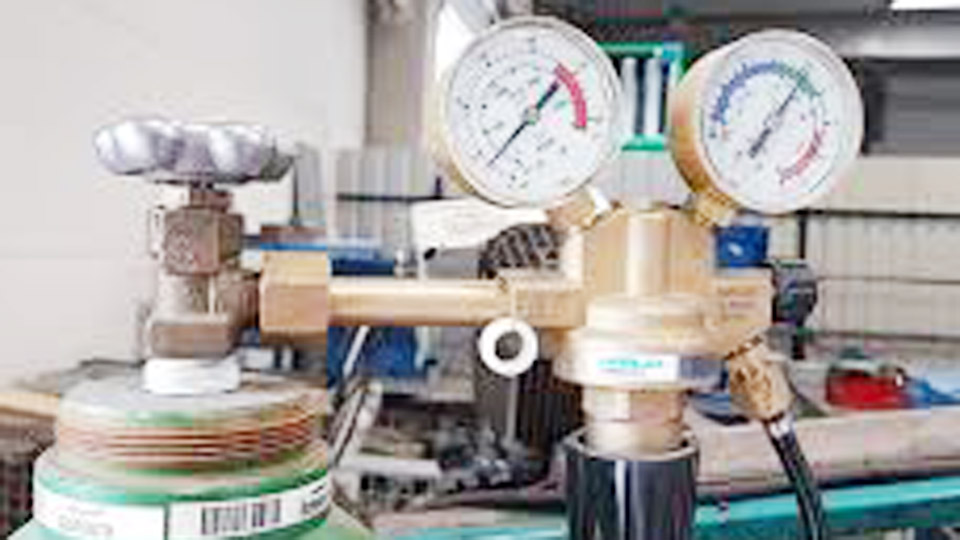
Image by weldingmastermind
Why Shielding Gas Matters in MIG Welding Mild Steel
You’re laying down a bead on 1/8-inch mild steel, and instead of a smooth, consistent arc, you’ve got spatter flying everywhere, or worse, pores weakening the joint. That’s often the gas talking. In MIG welding, the shielding gas protects the molten weld pool from atmospheric contaminants like oxygen and nitrogen, which can cause oxidation, porosity, or brittle welds.
For mild steel—the workhorse material in everything from auto repairs to structural fab—getting this right means better arc stability, reduced distortion from excess heat, and welds that pass visual and strength tests without extra grinding.
From my time training apprentices, I’ve seen how the wrong gas leads to real problems. Too much spatter means more cleanup time, increasing your risk of burns or eye strain.
Poor penetration might mean a joint fails under load, like on a trailer hitch. And let’s not forget cost: Rework eats into materials and time, especially if you’re billing by the hour.
On the flip side, the right gas minimizes rod burn-off (or wire, in MIG terms), lets you dial in amperage for cleaner results, and even improves safety by reducing fumes. It’s not theory; it’s what keeps projects on track in a busy shop.
Breaking Down the Basics of MIG Gases for Mild Steel
Before we get into specifics, let’s talk about what these gases are and how they behave. MIG welding uses a continuous wire electrode fed through a gun, with gas flowing out to shield the arc. For mild steel, we’re mostly dealing with inert and active gas mixes—argon being inert (stable, no reaction), and CO2 being active (adds energy to the arc).
What Exactly Does the Shielding Gas Do?
The gas creates a protective envelope around the weld pool, pushing away air that could contaminate it. Argon provides a smooth, stable arc with low spatter, but it’s pricier and doesn’t penetrate as deeply on its own. CO2 ramps up the heat for better fusion on thicker stock but can make the arc erratic, leading to more spatter.
Mixes blend these for balance. In practice, I always check the gas flow—too low, and you get porosity; too high, and you’re wasting gas while risking turbulence that sucks in air.
From shop floors I’ve worked on, the gas also influences your technique. A stable mix lets you weave or push the gun smoothly without the arc wandering.
It’s crucial for joint prep too: Clean edges and proper fit-up amplify the gas’s effectiveness, reducing the chance of defects like undercut or lack of fusion.
The Most Common Gases and Mixes for Mild Steel
I’ve tested everything from pure gases to fancy tri-mixes, but for mild steel, it boils down to a few reliable options. Pure argon? Skip it—it’s for aluminum or stainless, and on steel, it gives shallow penetration and unstable arcs. Oxygen-heavy mixes are niche for high-speed production. Stick to argon-CO2 blends or straight CO2 for everyday work.
The Top Pick: 75/25 Argon/CO2 Mix for MIG Welding Mild Steel
If I had to name the best gas for MIG welding mild steel, it’s hands-down the 75% argon/25% CO2 mix, often called C25. This is what I reach for 80% of the time in my shop, whether I’m welding thin sheet for a toolbox or thicker plate for brackets. It’s versatile, forgiving, and delivers results that look pro without much fuss.
How C25 Works and Why It’s Ideal
C25 combines argon’s stability with CO2’s penetrating power. The argon keeps the arc smooth and reduces spatter, while the CO2 adds heat for good fusion. In action, you’ll hear that steady “frying bacon” sound—a sign of a happy arc. It excels in short-circuit transfer mode, common for mild steel up to 1/4-inch thick, where the wire touches the pool repeatedly.
From my experience, C25 minimizes distortion on thinner materials because it doesn’t overheat as aggressively as pure CO2. I’ve used it on 16-gauge mild steel for auto panels, getting flat, clean beads that blend seamlessly without warping the sheet.
When to Use C25 in Your Projects
This mix shines for general fabrication, repairs, and hobby work. Think building a workbench frame, fixing exhaust pipes, or welding farm gates—jobs where you want low spatter for less post-weld grinding. It’s great for beginners too, as the stable arc forgives minor technique slips, like inconsistent travel speed.
In pro settings, I’ve seen it used for structural mild steel in shops adhering to AWS standards, where bead appearance matters for inspections. If you’re running a multi-process machine like a Miller Multimatic, C25 pairs perfectly with ER70S-6 wire for all-around performance.
Practical Tips for Running C25
Set your flow rate to 25-35 cubic feet per hour (CFH)—I start at 30 and adjust based on wind or position. Use a 3/8-inch nozzle for good coverage without restricting access. For wire, go with 0.030-inch diameter on most home machines; it handles 100-200 amps well. Amperage-wise, for 1/8-inch steel, aim for 140-160 amps with 18-22 volts—test on scrap to dial it in.
One lesson from the shop: Always purge the line before starting. Open the valve briefly to clear air, or you’ll get porous starts. And if you’re outdoors, use a wind screen—I’ve lost good welds to a breeze blowing away the gas shield.
Pros and Cons of C25
Pros: Low spatter means quicker cleanup; excellent bead profile with good wetting at the toes; versatile for thin to medium stock; reduces fume generation for better shop air.
Cons: Costs more than pure CO2 (expect $50-70 for a 40-cubic-foot refill); not ideal for very thick materials where deeper penetration is needed without spray transfer.
To visualize the difference, here’s a comparison of weld beads using varying CO2 contents in argon-based gases—notice how higher CO2 can roughen the bead, while balanced mixes like C25 keep it smooth.
Pure CO2: A Budget-Friendly Alternative for Tough Jobs
Sometimes, the best gas isn’t the fanciest—it’s the one that gets the job done affordably. Pure CO2, or C100, is my go-to when budget’s tight or I’m welding thicker mild steel where penetration trumps appearance.
How Pure CO2 Performs on Mild Steel
CO2 is reactive, breaking down in the arc to provide carbon and oxygen that boost heat and penetration. The arc is hotter and more forceful, great for fusing into 1/4-inch-plus stock. But it’s spattery—expect blobs that stick to the nozzle and workpiece.
I’ve used it for heavy repairs, like welding cracked plow frames, where the extra bite ensures solid joints without preheating. On thinner stuff, though, it can burn through if you’re not careful with settings.
When Pure CO2 Makes Sense
Opt for CO2 on budget projects or when spatter isn’t a deal-breaker, like structural fab in a farm shop. It’s common in industrial settings for its low cost—half the price of C25 per refill. If your machine’s rated for it (most are), it’s a solid choice for short-circuit mode on mild steel.
One anecdote: I once ran out of C25 mid-job on a gate repair. Switched to CO2, cranked the wire speed a bit, and finished strong—spatter scraped off easy, and the weld held for years.
Shop Tips for Welding with CO2
Flow rate: 20-30 CFH, as it’s denser than argon mixes. Use ER70S-6 wire with silicon deoxidizers to handle the oxidation.
Amperage: Bump it up 10-20% from C25 settings—say 150-180 amps for 3/16-inch steel at 19-23 volts. Clean the nozzle often; spatter builds fast.
Pros: Deep penetration for thick materials; cheapest option; readily available at welding supply stores.
Cons: More spatter and smoke; rougher bead appearance; unstable arc on low settings, tricky for thin sheet.
Exploring Other Gas Mixes for Specialized Needs
While C25 and CO2 cover most bases, other blends have their place. For instance, 80/20 argon/CO2 offers a bit more stability than C25, ideal for spray transfer on thicker mild steel. I’ve used it for production runs, where the flatter bead reduces cleanup.
90/10 is for high-end work, like automotive frames, with even less spatter but higher cost. Tri-mixes (argon/CO2/oxygen) add oxygen for better wetting, but they’re overkill for standard mild steel—save them for stainless or high-speed lines.
Here’s a quick comparison table to break it down:
| Gas Mix | Best For | Penetration | Spatter Level | Cost (per 40 CF refill) | Example Amperage Range (0.030″ wire, 1/8″ steel) |
|---|---|---|---|---|---|
| 75/25 Argon/CO2 (C25) | General fab, thin to medium stock | Good | Low | $50-70 | 140-160 amps |
| 100% CO2 | Thick stock, budget jobs | Excellent | High | $25-40 | 150-180 amps |
| 80/20 Argon/CO2 | Spray transfer, production | Very Good | Very Low | $55-75 | 150-170 amps |
| 90/10 Argon/CO2 | Thin sheet, low distortion | Moderate | Minimal | $60-80 | 130-150 amps |
This chart draws from standard US machines like Lincoln or Hobart—always check your manual.
For a broader look at gas selection, this chart shows mixes by material and process.
Pairing Your Wire, Amperage, and Settings with the Gas
The gas is only half the equation—match it to your wire and machine settings for top results. For mild steel MIG, ER70S-6 wire is king; it’s got extra deoxidizers to fight contamination.
Choosing Wire Diameter
0.023″ for thin sheet (under 1/8″): Low amps (80-120) to avoid burn-through, pairs well with high-argon mixes.
0.030″ for all-around use (1/8-1/4″): 120-200 amps, versatile with C25 or CO2.
0.035″ for thicker stock: 150-250 amps, needs CO2’s punch.
In my shop, I keep spools of each—switch based on the job.
Dialing In Amperage and Voltage
Start with manufacturer charts, then tweak. For C25 on 1/4″ mild steel, 180-220 amps at 22-26 volts. With CO2, drop voltage 1-2 points to tame the arc. Travel speed: 10-15 inches per minute for fillets; slower for butts.
Joint prep: Bevel edges on thick stock for better penetration. Clean with a grinder—rust or mill scale loves to cause porosity, no matter the gas.
Step-by-Step Guide to MIG Welding Mild Steel with the Right Gas
Here’s how I approach a typical job, like welding a mild steel bracket.
- Prep the material: Grind edges clean, clamp for tight fit-up. Degrease if oily.
- Set up the machine: Load ER70S-6 wire, attach gas bottle (C25 for most). Set polarity to DCEP.
- Adjust settings: For 3/16″ steel, 160 amps, 20 volts, wire speed 300 IPM. Flow: 30 CFH.
- Test weld: Run a bead on scrap. Adjust for smooth arc—no popping or wandering.
- Weld the joint: Hold the gun at 15-20° angle, push technique for better gas coverage. CTWD: 3/8-1/2 inch.
- Inspect and clean: Check for porosity or cracks. Grind spatter if needed.
- Post-weld: Let cool slowly to avoid distortion. Paint for corrosion protection.
This process has saved me from bad days more times than I can count.
Common Mistakes Even Pros Make (and How to Fix Them)
Beginners often crank the gas too high, thinking more is better—it just wastes cylinder and causes turbulence. Fix: Stick to 25-35 CFH, use a flowmeter gauge.
Pros sometimes ignore nozzle maintenance. Spatter buildup blocks gas flow, leading to porous welds. Tip: Anti-spatter spray and regular cleaning.
Another pitfall: Wrong wire for the gas. Using ER70S-3 with CO2? It’ll glob up. Switch to S-6.
I once had a trainee use pure argon on steel—welds looked pretty but failed a bend test. Lesson: Always match gas to material.
For bad welds from low amperage (cold laps), bump it up and ensure clean joints. High amps causing burn-through? Lower and increase travel speed.
Keeping Safe with MIG Gases in the Shop
Safety isn’t optional—I’ve seen close calls. CO2 and argon are non-toxic but displace oxygen; ventilate well to avoid asphyxiation. Store cylinders upright, chained, away from heat.
Wear PPE: Helmet with proper shade (10-13 for MIG), gloves, jacket. Fumes from mild steel aren’t as bad as galvanized, but use a respirator for long sessions.
Check hoses for leaks—soap water test. And never weld in confined spaces without monitoring air quality.
Reflecting on Gas Choices for Better Welds Ahead
After all these years slinging wire, I’ve come to appreciate how a simple gas choice elevates your work from functional to flawless. You’ve now got the insights to pick C25 for clean, versatile results or CO2 for heavy-duty savings, along with settings and tips to make it stick.
This knowledge arms you against common headaches, letting you focus on the build rather than the fix. Always run a test bead before the real deal—it’ll save you material and frustration every time.
FAQs
What if my MIG welds have too much spatter on mild steel?
Spatter often points to gas issues—check for low flow or contamination. With C25, clean the nozzle and ensure 30 CFH. If using CO2, that’s normal; switch to C25 for less, or apply anti-spatter gel. Adjust voltage down slightly for smoother arcs.
Can I use the same gas for MIG welding mild steel and stainless?
Not ideally. C25 works for mild steel but oxidizes stainless. For stainless, grab a tri-mix like 90/7.5/2.5 argon/CO2/helium. I’ve mixed in a pinch, but results suffer—dedicated gases pay off.
How do I know if my shielding gas flow is right?
Listen to the arc: Hissing means too high, popping means too low or contaminated. Use a flowmeter and aim for 25-35 CFH. Test by welding—if porosity shows, increase flow or check for drafts. In my shop, I verify with a cigarette lighter flame near the nozzle; it should bend but not blow out.
What’s the best wire size for MIG mild steel with C25 gas?
For most home jobs, 0.030-inch ER70S-6. It handles 1/8-1/4 inch stock at 140-180 amps. Thinner? Go 0.023-inch to avoid burn-through. Thicker? 0.035-inch for better feed and penetration.
Does wind affect my MIG gas choice for outdoor mild steel welding?
Absolutely—wind disperses gas, causing porosity. Stick with C25 for better stability, and use screens or tents. I’ve welded fences in breezy fields; doubling flow to 40 CFH helps, but shelter is key. Avoid CO2 outdoors; it’s more prone to issues.