
One of the most common questions I hear from new stick welders is do you push or pull when stick welding, and the confusion makes sense. Stick welding feels very different from MIG or TIG, where pushing the puddle is often the norm.
With stick, technique matters a lot more because your arc control, slag behavior, and penetration are all tied to travel direction. In most cases, stick welding is done with a pull (drag) technique, which helps keep the slag behind the puddle and lets you see the weld pool clearly.
Getting this right isn’t just about looks—it affects penetration, fusion, and overall weld strength, especially on thicker metal thicknesses and structural joints. Stick around, and I’ll break down when to pull, when pushing might make sense, and how to choose the right technique for cleaner, stronger stick welds in real-world jobs.
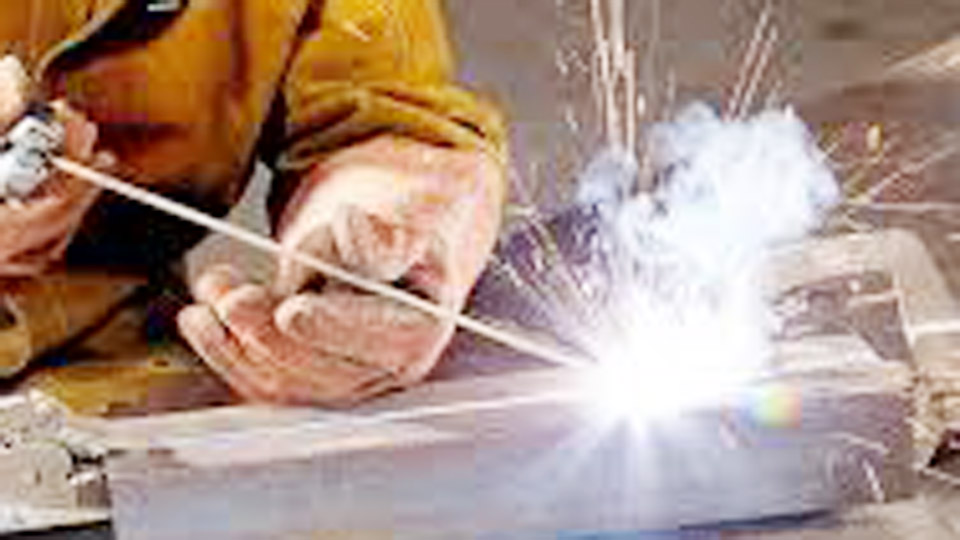
Image by I See You Don’t Know Shit About Welding
The Fundamentals of Stick Welding and Electrode Manipulation
Stick welding, or Shielded Metal Arc Welding (SMAW), is one of the most versatile processes out there. You strike an arc with a coated electrode, and as it melts, it creates a weld pool while the coating produces slag and gas to shield the molten metal from contaminants.
The way you move that electrode—pushing it forward into the puddle or pulling it back—changes how the arc behaves and how the weld turns out.
Pushing and pulling aren’t just random motions; they’re techniques that influence bead shape, penetration depth, and overall weld quality.
In my shop, I always tell new trainees that mastering this starts with understanding your setup: the rod type, machine settings, and the material you’re working on.
What Pushing Looks Like in Practice
Pushing means you’re moving the electrode forward, away from the completed weld, like shoving the puddle ahead. The rod angle is typically 10-15 degrees tilted toward the direction of travel, pointing into the unwelded joint.
This technique works by directing the arc force ahead, which helps widen the bead and reduce penetration slightly. I’ve used it on thinner materials where too much heat could blow through, like 16-gauge sheet metal on automotive repairs.
It gives a flatter, smoother appearance with less buildup, which is great for cosmetic welds or when you need to minimize distortion.
When to push? It’s ideal for vertical-up welds or when using rods like E6010 that thrive on a whipping motion to control the slag. Why? Because pushing keeps the slag from rolling into the puddle prematurely, reducing inclusions.
In a real job, say welding brackets on a trailer frame, pushing helps if you’re dealing with rusty steel— it cleans the surface better as you go.
Shop tip: Start with a lower amperage, around 80-100 amps for a 1/8-inch rod, to avoid burning through. Watch the puddle; if it’s too fluid and spreading wildly, ease up on the push angle.
The Pull or Drag Technique Explained
Pulling, often called dragging, involves tilting the electrode back toward the completed weld, at about 10-20 degrees, and pulling it along like you’re dragging a rake. The arc is directed backward, which digs deeper into the base metal for better penetration.
This is my go-to for flat or horizontal positions on thicker plates, like 1/4-inch steel in structural fabrication. It builds a narrower, taller bead with more fusion, perfect for load-bearing joints.
How it works: The backward angle concentrates the heat, melting more base metal and ensuring the weld ties in solidly without cold laps.
Use pulling when you need strength over aesthetics, such as repairing heavy machinery parts. Why? It handles higher amperages better, say 120-150 amps on a 5/32-inch E7018 rod, and the slag tends to self-clean as you go, saving time on chipping.
From experience, pulling shines on downhill welds too, where gravity helps the puddle flow. But beware: on overhead positions, it can lead to slag dripping into your face—always wear that full leather jacket and helmet.
Practical advice: Maintain a consistent travel speed; too slow and you’ll get excessive buildup, too fast and penetration suffers. I once dragged too quickly on a pipeline section and ended up with undercut—fixed it by slowing down and increasing the weave slightly.
Deciding Between Push and Pull: Real Factors from the Field
No one technique rules them all; it depends on the job at hand. I’ve switched mid-weld on complex assemblies, pushing for the root pass and pulling for the cap to balance penetration and appearance.
Consider the position first: flat and horizontal favor pulling for depth, while vertical and overhead often need pushing to control the puddle against gravity. Material thickness plays a huge role too—push on anything under 1/8-inch to avoid burn-through, pull on heavier stock for solid fusion.
Electrode type is key. Cellulose-coated rods like E6010 or E6011 are designed for pushing with a whip-and-pause motion, great for root passes in pipe welding. Low-hydrogen rods like E7018? They perform better with a slight drag, especially in all-position work.
Why does this choice matter? Wrong technique leads to defects like lack of fusion, which I’ve seen cause failures in farm implements under load. Safety-wise, pushing reduces spatter in some cases, keeping your workspace cleaner and reducing burn risks.
How Joint Type Influences Your Approach
Butt joints on flat plate? Pull for deep penetration. T-joints or fillets? Pushing can help fill the corner evenly without undercutting the vertical leg.
In my workshop, prepping the joint right makes all the difference—bevel edges at 30 degrees for better access, and clean off mill scale with a grinder. For stainless steel, I always push with E308 rods to minimize carbide precipitation and distortion.
Anecdote: On a custom gate job, I pulled on the frame but pushed on the decorative elements to keep them flat. Saved me from warping and extra grinding.
Matching Technique to Material and Environment
Mild steel forgives mistakes, but aluminum or cast iron? Push gently with specialized rods to control heat input. In windy outdoor conditions, common in US construction sites, pulling with a tighter arc helps shield the gas better.
Shop lesson: Beginners often push everything, leading to shallow welds that crack under stress. Pros might over-pull, causing excessive heat and distortion—balance it with practice on scrap.
Step-by-Step: Mastering the Push Technique
Set your machine to DC electrode positive (DCEP) for most rods—Lincoln or Miller welders are staples in US shops.
- Select your electrode: For pushing, grab a 1/8-inch E6013 for smooth arcs on clean metal.
- Amp it up: Start at 90 amps, adjust based on rod burn-off—too hot and it sticks, too cool and the arc sputters.
- Strike the arc: Scratch or tap method, then lift to 1/8-inch length.
- Angle and move: Tilt forward 15 degrees, push at 10-15 inches per minute. Use a slight weave for wider beads.
- Watch and adjust: If slag inclusions appear, increase the push speed. End by filling the crater to avoid cracks.
I’ve taught this to students who struggled with vertical welds—pushing uphill with pauses lets the puddle solidify, preventing sags.
Troubleshooting: If the bead is ropy, your angle’s too steep—flatten it out.
Step-by-Step: Perfecting the Pull Technique
For dragging, switch to E7018 on DCEP.
- Choose diameter: 3/32-inch for finer work, up to 3/16-inch for heavy plates.
- Settings: 110-140 amps; test on scrap to dial in.
- Initiate arc: Same as push, but maintain a shorter arc length for control.
- Drag along: Back angle 20 degrees, travel at 8-12 inches per minute. Straight stringer or slight weave.
- Monitor: Deep penetration shows as a keyhole in the puddle—too much and you undercut.
On a repair job for a bulldozer blade, pulling gave me the strength needed without adding filler excessively.
Fix common issues: Spatter? Lower amps or clean the rod tip. Porosity? Check for moisture—bake low-hydrogen rods if needed.
Common Pitfalls and Shop Fixes for Push vs. Pull
Everyone messes up at first. Beginners push too hard, creating wide but shallow beads that lack strength—fix by practicing arc length control.
Pros might pull on thin material, blowing holes—switch to push and drop amps by 20%.
I’ve burned through galvanized steel by pulling aggressively; lesson learned: always remove zinc coating first to avoid fumes.
Another mistake: Ignoring rod angle consistency, leading to uneven beads. Use a mirror or video your welds to self-critique.
Safety note: Wrong technique increases arc blow on DC machines—use AC for magnetic materials if needed.
Pros and Cons: Pushing vs. Pulling in Stick Welding
To make it clear, here’s a comparison based on my field notes:
| Aspect | Pushing | Pulling |
|---|---|---|
| Penetration | Shallower, good for thin metals | Deeper, ideal for thick plates |
| Bead Appearance | Flatter, smoother, less buildup | Narrower, taller, more convex |
| Spatter Control | Generally less, cleaner workspace | More potential, requires steady hand |
| Slag Handling | Keeps slag behind, easier removal | Slag leads, self-cleans in some rods |
| Positions Suited | Vertical up, overhead | Flat, horizontal, downhill |
| Heat Input | Lower, reduces distortion | Higher, can warp if not managed |
| Beginner Friendliness | Easier to learn for control | Requires practice for arc stability |
| Typical Rods | E6010, E6011 | E7018, E7016 |
This table has saved me time explaining to trainees. Pros of pushing: versatility in positions, less fatigue on long runs. Cons: Might need multiple passes for strength.
Pulling pros: Stronger joints, faster on flat work. Cons: More distortion risk, harder in awkward spots.
Choose based on the job—I’ve mixed them on multi-pass welds for the best of both.
Electrode Selection and Amperage Ranges for Optimal Results
Picking the right rod diameter ties into your technique. For 1/16-inch rods, push at 40-70 amps on thin sheet; pull at 50-80 for slightly thicker.
1/8-inch: Push 75-125 amps, pull 90-140. 5/32-inch: Push 110-160, pull 130-200.
Compatibility: Match rod to base metal—E6013 for mild steel pushing, E7018 for low-alloy pulling.
Amperage tips: Too low and the rod sticks—bump it up. Too high? Excessive spatter—dial back. On US machines like the Miller Thunderbolt, use the tap settings for quick adjustments.
Joint prep: Clean to bright metal, bevel for full penetration. For fillet welds, pull on the root, push on caps.
Real example: Welding A36 steel beams—pull with 1/8-inch E7018 at 120 amps for deep tie-in, no defects.
Advanced Tips for Material-Specific Techniques
On cast iron repairs, push with nickel rods like ENi-CI at 80-100 amps to minimize cracking—preheat to 500°F.
Stainless: Push E309 at 90-130 amps to control heat, avoid sensitization.
Aluminum stick welding? Rare, but push with E4043 at lower amps, AC current.
In humid shops, store rods in ovens—moist E7018 pulls poorly, leading to hydrogen cracks.
Anecdote: Fixed a leaky exhaust by pushing on thin tubing—pulling would’ve distorted it beyond repair.
Troubleshooting Bad Welds from Technique Errors
Undercut from over-pulling? Fill with a push pass at lower amps.
Porosity in push welds? Check for drafts disrupting the shield—move to a sheltered spot.
Cracks? Often from rapid cooling after pulling—use pre/post-heat on high-carbon steels.
I’ve salvaged jobs by grinding out defects and rewelding with the opposite technique for balance.
Safety always: Fumes from wrong rod handling can be toxic—ventilate, use respirators.
Wrapping Up
Getting push or pull right isn’t about rigid rules—it’s about feeling the arc and adapting to the metal’s response. You’ve now got the tools to assess your setup, choose wisely, and avoid those frustrating do-overs that eat into your time and materials.
Whether you’re a hobbyist patching a fence or a pro on a deadline, this knowledge equips you to produce welds that last, saving money and boosting confidence. Always run a test bead on scrap matching your workpiece—tweak your push or pull there before committing to the real thing. It’ll make you look like a wizard in the shop.
FAQs
Can you stick weld vertically by pushing or pulling?
Vertical welding shines with pushing, especially uphill. Tilt 10-15 degrees forward, use a whip motion with E6010 rods at 100-120 amps. Pulling downhill works for speed but risks sagging—reserve it for thin materials with tight control.
What amperage should I use for pushing a 1/8-inch rod?
Aim for 80-110 amps on mild steel to keep penetration shallow and avoid burn-through. Test on scrap; if the rod burns unevenly, bump it up slightly. For pulling the same rod, go 100-130 amps for deeper fusion.
Why do my welds have too much spatter when pulling?
Excess spatter often comes from high amps or long arc—shorten to 1/8-inch and drop 10-20 amps. Clean your workpieces thoroughly; rust or oil amplifies it. Switch to anti-spatter spray if needed, but technique refinement usually fixes it.
Is pushing better for beginners in stick welding?
Yes, pushing offers more control and forgiveness on arc starts, making it easier to learn bead consistency. Start on flat positions, then move to vertical. Once comfortable, incorporate pulling for versatility.
How does electrode coating affect push vs. pull?
Cellulose coatings like E6010 favor pushing for their digging action and gas production. Rutile or basic coatings like E7018 handle pulling better, with smoother slag release. Match coating to technique for optimal rod burn-off and weld quality.