
One of the first technique questions that comes up with SMAW is do you push or pull stick welding, and it usually pops up after a weld doesn’t penetrate the way it should. Stick welding isn’t as forgiving as MIG, so travel direction, rod angle, and arc control play a big role in how the bead turns out.
Many welders coming from MIG or flux core instinctively try to push the puddle, only to end up with slag issues and poor fusion. Factors like electrode type, metal thickness, joint prep, and welding position all affect the right approach.
Getting this technique right matters because it directly impacts penetration, slag coverage, and structural strength. In this guide, I’ll explain when to push, when to pull, and how to use proper stick welding technique for clean, reliable welds.
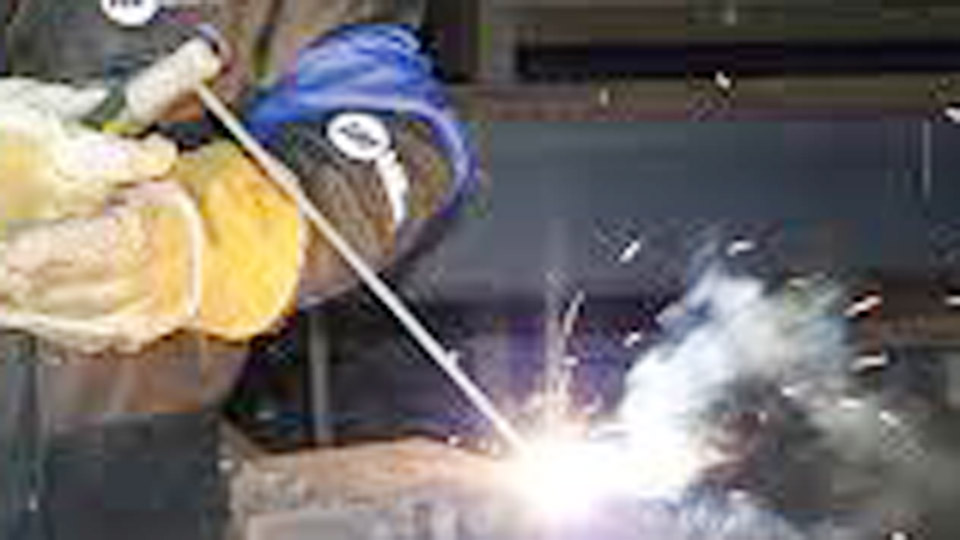
Image by codinter
The Basics of Stick Welding Technique
Stick welding involves striking an arc with a flux-coated electrode, melting it into the base metal to form a joint. The flux creates a shielding gas and slag that protects the weld from contamination. Your rod angle and travel direction dictate how the arc behaves—too steep, and you get undercut; too shallow, and penetration suffers.
Pushing means advancing the electrode ahead of the weld pool, like shoving it forward. Pulling, on the other hand, means dragging it behind the pool as you move. In most cases, pulling is the way to go because it lets the slag float to the top naturally, reducing inclusions that weaken the weld.
Why does this matter in your shop? On a repair job for a trailer hitch, say, pushing could lead to poor fusion, causing the hitch to fail on the highway.
I’ve seen it happen—a buddy pushed a 7018 rod on mild steel, ended up with porosity, and had to grind it all out. Pulling ensures deeper penetration and a smoother bead, saving you electrode burn-off and reducing distortion on heat-sensitive parts.
What Pushing the Electrode Really Looks Like
Pushing in stick welding tilts the rod away from the direction of travel, typically at a 10-15 degree angle forward. The arc force pushes the molten metal ahead, which can help in certain scenarios but often leads to issues.
It works by forcing the weld pool to spread out more, sometimes giving a wider bead. But here’s the catch: the slag tends to get trapped under the pool, creating inclusions that show up on X-rays or bend tests. I’ve tried pushing on vertical uphill welds with cellulosic rods like 6010, where it can help control the puddle on pipes, but even then, it’s finicky.
Use pushing sparingly, like when you’re welding in tight corners or need to fill a wide gap quickly. On a job welding rebar for concrete forms, pushing helped me bridge a uneven joint without burning through, but I wouldn’t make it my default.
Why? It increases spatter, which sticks to your workpiece and helmet, and can cause arc instability if your amperage isn’t spot-on.
Practical tip: If you’re pushing, crank your amperage up 10-15% higher than normal to maintain arc length—say, 130-140 amps on a 1/8-inch 7018 instead of 120. Watch for red-hot rod tips; that’s a sign you’re pushing too hard and risking rod freeze.
What Pulling the Electrode Involves
Pulling, or dragging, points the rod back toward the completed weld at about 10-20 degrees. You lead with the arc, letting the pool follow naturally.
This technique excels because it allows better visibility of the puddle—you see what’s happening in real time. The slag trails behind, protecting the cooling weld without getting mixed in. In my experience, pulling gives consistent penetration, especially on flat or horizontal positions.
It’s ideal for most structural work, like fabricating brackets or repairing machinery. On a recent shop project fixing a skid steer bucket, pulling a 7014 rod at 100 amps on 1/4-inch plate delivered a flat, clean bead with no undercut.
Why use it? It minimizes distortion by concentrating heat, which is crucial on thinner gauges where warping can ruin a part.
Shop-floor advice: Maintain a short arc, about the diameter of your rod, and travel at a steady speed—too slow, and you build up excess weld; too fast, and you get ropey beads. If you’re new, practice on scrap: strike the arc, establish the puddle, then drag smoothly while weaving slightly for wider coverage.
When to Pull for Best Results
Pulling shines in overhead, horizontal, and flat positions where gravity helps the slag flow away. For mild steel repairs, it’s my go-to for avoiding inclusions.
Think about welding a gate hinge: pulling ensures deep root penetration without blow-through. I’ve pulled on everything from automotive frames to boiler plates, and it consistently reduces rework time.
Use it when penetration is key, like on thick sections or high-stress joints. For example, on A36 steel, pulling a 3/32-inch 6013 at 80-100 amps gives a smooth finish with minimal cleanup.
Why pull over push? It burns the rod more efficiently, extending your stick-out time and cutting costs on electrodes. In a busy shop, that adds up—I’ve saved bundles by not wasting half-rods to spatter.
Tip from the trenches: On dirty or rusty metal, pull with a slight side-to-side weave to burn off contaminants. If you notice the arc wandering, check your ground clamp—poor connection mimics bad technique.
Situations Where Pushing Makes Sense
Pushing isn’t all bad; it has its place in vertical or out-of-position welding, especially with rods designed for it.
For instance, on pipe welding with 6010, pushing uphill can help stack beads without sagging. I once pushed on a downhill root pass for a natural gas line—it allowed faster travel and better tie-in.
Use pushing when you need a convex bead for cosmetic reasons, like on visible architectural work. But limit it to electrodes with high cellulose content, as they handle the forward force better.
Why choose it? In confined spaces, pushing lets you maneuver without contorting your body, reducing fatigue on long jobs.
Early in my career, I pushed a 7018 on flat plate and got slag pockets—had to chip and re-weld. Now, I only push if the joint demands it, and I always test on scrap first.
Pro tip: If pushing, reduce your travel speed by 20% to let the pool catch up, and use a longer arc to avoid digging in.
Common Mistakes in Push vs. Pull Decisions
Even seasoned welders slip up here. Beginners often push because it feels intuitive, like painting a wall, but that leads to shallow welds.
One frequent error: ignoring rod type. A low-hydrogen 7018 hates pushing—it needs drag to prevent cracking in high-strength steels.
Pros sometimes pull too aggressively on thin sheet, causing burn-through. I’ve done it—welded a patch on a truck bed at 110 amps, pulled too fast, and poked holes.
How to fix? Grind out defects, re-prep the joint with a bevel, and restart with lower heat. For porosity from wrong technique, switch to pulling and add deoxidizers if needed.
On a farm repair, a trainee pushed on galvanized steel, creating toxic fumes and weak spots. We halted, ventilated, and switched to pull with proper PPE—lesson: technique affects safety too.
Avoid by matching technique to material: pull on clean mild steel, consider push on coated or alloyed stuff only if tested.
Electrode Selection and Compatibility
Choosing the right rod is half the battle in deciding push or pull. Stick electrodes come in diameters from 1/16 to 5/16 inch, each suited to specific amps and techniques.
For general work, E7018 is king—low hydrogen, great for pulling on structural steel. Run a 1/8-inch at 90-140 amps DC positive for deep penetration.
E6010, with its digging arc, tolerates pushing on rusty pipes—3/32-inch at 70-110 amps.
Compatibility matters: match rod to base metal. For stainless, use 308L; for cast iron, nickel-based like 99Ni.
Shop insight: Store rods in a dry oven at 250°F to prevent moisture pickup, which causes hydrogen cracking regardless of technique.
Mistake fix: If your weld cracks, it’s often from wrong rod—switch to a matching filler and pull for better fusion.
Amperage Ranges for Push and Pull
Amperage controls heat input, arc stability, and bead shape. Too low, and the rod sticks; too high, and you get undercut.
For pulling with 7018 1/8-inch on 1/4-inch plate: 110-130 amps DC. This gives good penetration without excessive spatter.
Pushing the same rod? Bump to 130-150 amps to compensate for the forward angle.
On thinner 16-gauge: pull at 70-90 amps with 3/32-inch 6013 to avoid warping.
Table for quick reference:
| Electrode | Diameter | Pull Amps (DC+) | Push Amps (DC+) | Best For |
|---|---|---|---|---|
| E6010 | 3/32″ | 70-100 | 80-110 | Pipes, rusty metal |
| E6013 | 1/8″ | 90-120 | N/A (avoid) | Sheet metal, smooth beads |
| E7014 | 1/8″ | 100-140 | 110-150 | General fab, easy slag removal |
| E7018 | 5/32″ | 140-180 | 150-200 | Structural, high strength |
| E308L | 3/32″ | 60-90 | 70-100 | Stainless steel |
Adjust based on machine—older Lincoln tombstone welders run hotter than modern inverters. Test on scrap: if the bead is convex and smooth, you’re golden.
Joint Preparation Tips for Better Welds
No technique saves a poorly prepped joint. Cleanliness is key—grind off rust, paint, or mill scale to bare metal.
For butt joints, bevel edges at 30 degrees for full penetration when pulling.
On lap joints, pull along the overlap to fuse both pieces evenly.
In tight spots, chamfer for access. I’ve prepped hundreds of joints; skipping this leads to cold laps that fail under load.
Material handling: Clamp pieces to prevent movement, and tack weld first. For aluminum (though rare in stick), use AC and pull gently.
Safety note: Always wear leather gloves, helmet with #10 shade, and respirator in confined areas—fumes from wrong technique can build up fast.
Step-by-Step Guide to Pulling Technique
Here’s how I teach trainees to pull for a basic fillet weld.
- Set your machine: DC electrode positive, amps per rod size—say 120 for 1/8″ 7018.
- Prep the joint: Clean, bevel if needed, position pieces.
- Strike the arc: Tap or scratch method, hold short arc.
- Establish puddle: Pause 2-3 seconds for fusion.
- Drag the rod: 15-degree back angle, travel 1/8″ per second, weave if wide.
- Maintain consistency: Watch slag form behind, adjust speed.
- End the bead: Backstep to fill crater, chip slag when cool.
Practice on 1/4″ mild steel scraps. If spatter flies, lower amps; if rod sticks, increase.
For pushing variant: Tilt forward, but follow similar steps—useful on verticals.
Pros and Cons of Each Approach
Pulling pros: Deeper penetration, less slag inclusion, better control, efficient rod use.
Cons: Slower on some positions, requires good visibility.
Pushing pros: Faster travel, wider beads, good for gaps.
Cons: Higher spatter, inclusion risk, arc instability.
In shop terms, pulling wins 80% of jobs—I’ve tallied it on fab runs. For pros, mix based on need; for DIY, stick to pull until confident.
Safety Considerations in Technique Choice
Welding isn’t forgiving—wrong push/pull can amplify risks. Pushing increases spatter, which can burn skin or start fires.
Always ground properly to avoid shocks, especially on damp floors common in US shops.
Fume extraction: Pulling often produces less smoke, but use ventilation anyway—OSHA mandates it for hex chrome in stainless.
PPE basics: Auto-darkening helmet, flame-resistant jacket, steel-toe boots. I’ve seen arc flash from unstable pushes; don’t skimp.
If welding overhead, pull to control drips—molten metal hurts.
Real-World Applications in US Shops
In American fabrication, stick welding fixes tractors in rural Iowa or builds rigs in Texas oil fields.
For a gate repair: Pull 6013 on square tubing at 90 amps for clean, strong joints.
On heavy equipment: Pull 7018 on dozer blades to withstand impacts.
DIY example: Garage hobbyist welding a bumper—pull for simplicity, avoid push-induced weaknesses.
Lessons from the field: On a bridge repair crew, we pulled exclusively for code compliance—pushes failed inspections.
Fixing Bad Welds from Wrong Technique
Spot a wavy bead? Likely fast pull—slow down next time.
Porous weld: From push inclusions—grind out, re-weld pulling.
Cracks: Hydrogen from moist rods or wrong angle—dry store and drag properly.
I’ve reworked dozens: Use dye penetrant to check, then V-groove defects before filling.
Prevent with pre-heat on thick stock—200°F for chrome-moly.
Wrapping Up
Mastering push versus pull transformed my work from passable to reliable. You’ve got the tools now to assess your setup, choose the right rod, and apply technique that holds up under real loads.
Whether you’re a student practicing beads or a pro on deadline, remembering rod angle impacts everything from safety to finish quality equips you to tackle jobs with confidence. Always weave slightly on pulls for multi-pass welds—it ties layers seamlessly and boosts strength without extra heat.
Can I switch between push and pull mid-weld?
Sure, but only if needed for position changes. On a long seam, start pulling flat, then push vertical if sagging occurs. Test transitions on scrap to avoid weak spots—consistency is better for most joints.
What rod works best for beginners learning pull technique?
Go with E6013—forgiving arc, easy slag removal. Run 3/32″ at 70-90 amps on mild steel. It pulls smoothly, helping you focus on angle without fighting the rod.
Does AC vs. DC affect push or pull choice?
DC positive favors pulling for deeper penetration; AC works for both but with more spatter on pushes. For US home welders like the Hobart Handler, stick to DC pull for cleaner results unless welding aluminum.
Why do my pulls cause undercut on edges?
Usually from high amps or steep angle. Drop 10-20 amps, tilt to 10 degrees, and weave wider. On thin edges, use stringer beads instead of weaving to control heat.
Is pushing ever required for certain materials?
On high-alloy steels or downhill pipes, yes—with 6010 or 6011. It digs roots better. But for standard mild steel, pulling suffices and reduces defects.