
Robotic welding has revolutionized manufacturing with its exceptional precision and consistency. Modern robotic welding systems can achieve accuracy levels of ±0.1mm to ±0.5mm, making them significantly more precise than manual welding operations. This level of accuracy translates to higher quality welds, reduced material waste, and improved production efficiency across various industries.
Robotic welding systems typically achieve accuracy levels of ±0.1mm to ±0.5mm, with repeatability within ±0.05mm to ±0.2mm under optimal conditions. This precision is significantly higher than manual welding, which usually achieves accuracy within ±2mm to ±5mm. The exact accuracy depends on factors like robot design, programming precision, environmental conditions, and maintenance schedules.
Robotic Welding Accuracy Standards
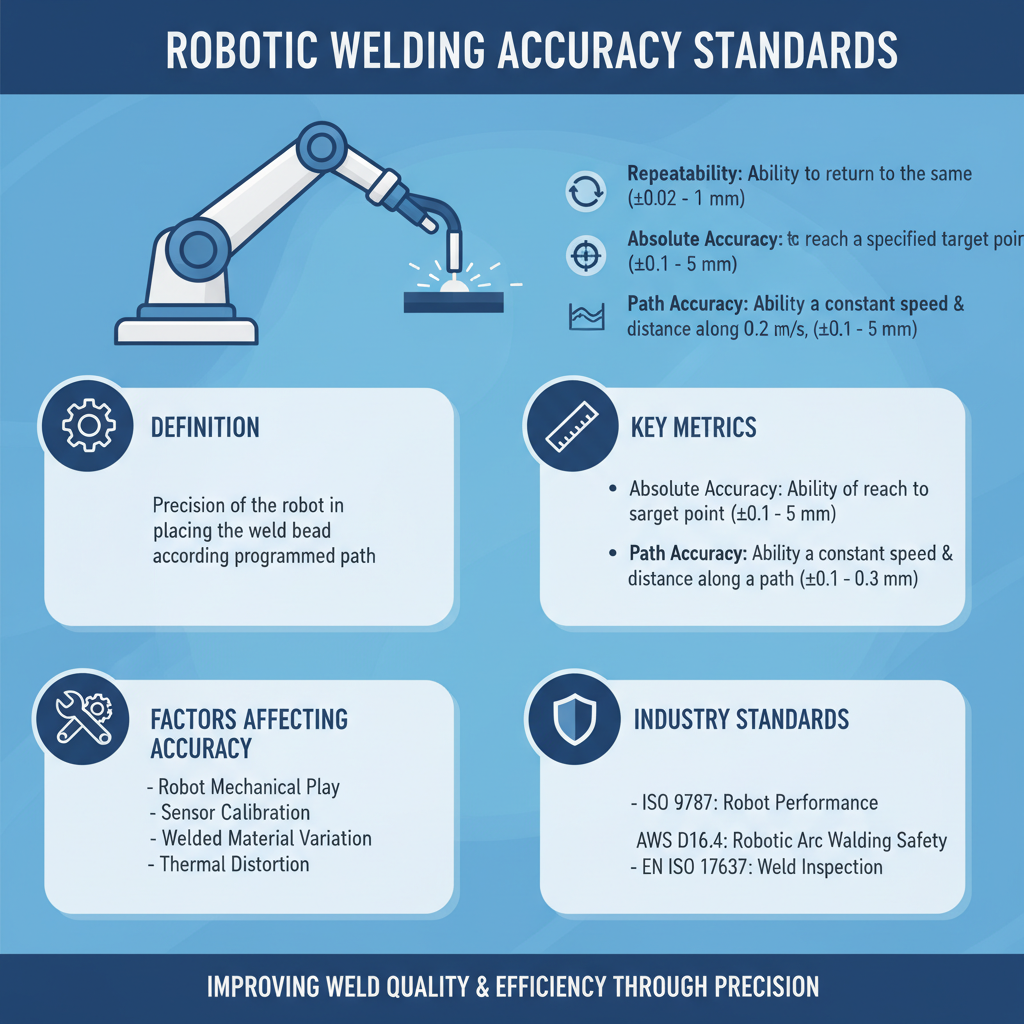
Robotic welding accuracy refers to how closely the robot can position its welding torch to the intended location and maintain consistent weld parameters throughout the process. The accuracy of robotic welding systems depends on several key factors including robot design, programming precision, and environmental conditions.
Most industrial robotic welding systems achieve repeatability within ±0.05mm to ±0.2mm under optimal conditions. This means the robot can return to the same position with incredible consistency, ensuring uniform weld quality across thousands of identical parts.
The KUKA KR QUANTEC series, for example, demonstrates exceptional accuracy in heavy-duty welding applications, with repeatability specifications of ±0.06mm. This level of precision enables manufacturers to maintain tight tolerances even in high-volume production environments.
Factors Affecting Welding Accuracy
Several variables influence the overall accuracy of robotic welding systems:
– Robot mechanical precision: The physical construction and calibration of the robot arm
– Programming accuracy: How precisely the welding path is defined and programmed
– Fixture quality: The consistency and accuracy of part positioning systems
– Environmental stability: Temperature variations and vibrations that may affect performance
– Maintenance schedules: Regular calibration and upkeep of robotic systems
Measuring Robotic Welding Precision
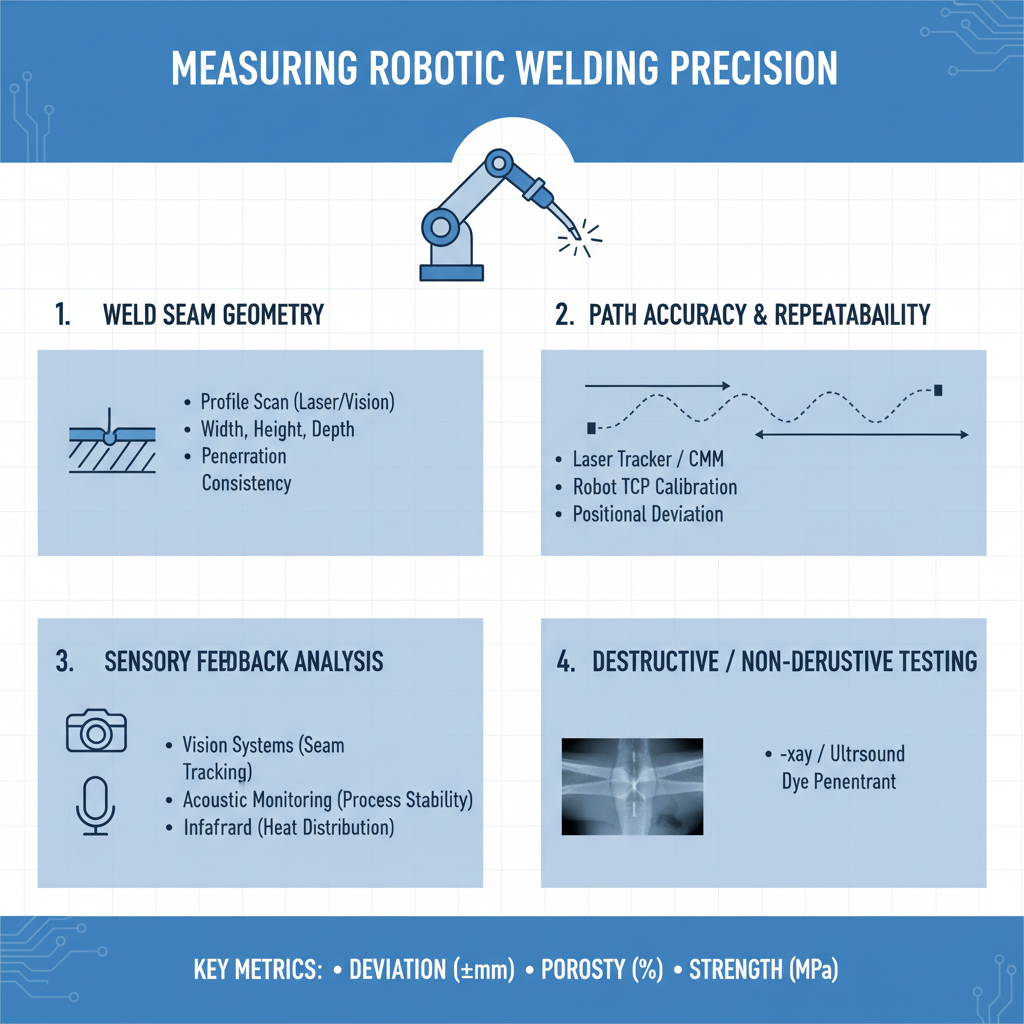
Robotic welding precision is typically measured using several key metrics that help manufacturers evaluate system performance and maintain quality standards.
Repeatability vs. Accuracy
Repeatability measures how consistently a robot returns to the same programmed position. Most modern welding robots achieve repeatability within ±0.1mm, which is crucial for consistent weld quality.
Accuracy, on the other hand, measures how closely the robot’s actual position matches the commanded position. While repeatability is generally higher than absolute accuracy, both metrics are important for welding applications.
Path Accuracy
Path accuracy determines how precisely the robot follows the programmed welding trajectory. This is particularly important for complex weld geometries where slight deviations can affect weld penetration and appearance.
Advanced robotic systems use sophisticated motion control algorithms to maintain smooth, accurate paths even at high welding speeds. The path accuracy typically ranges from ±0.2mm to ±0.5mm depending on the robot model and application requirements.
Comparison: Robotic vs. Manual Welding Accuracy
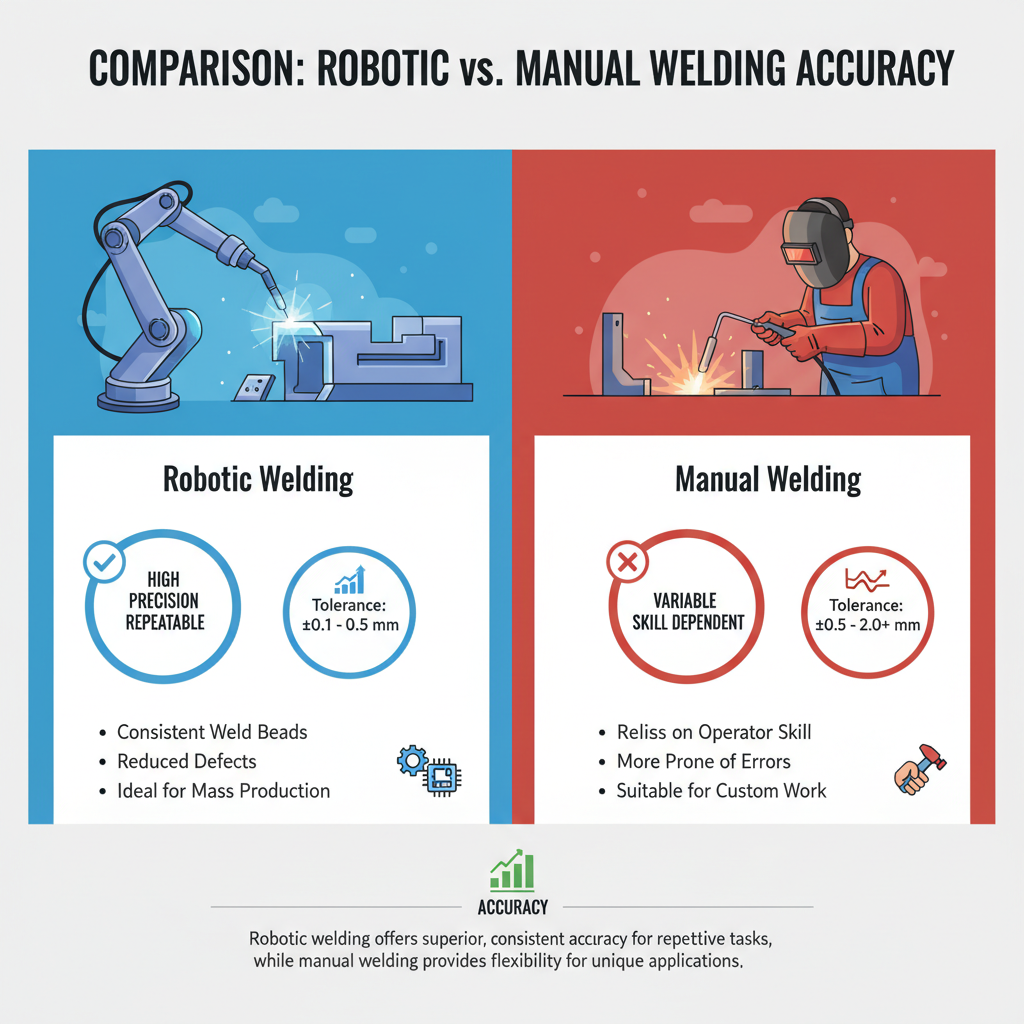
The accuracy difference between robotic and manual welding is substantial and measurable across multiple parameters.
Positional Accuracy
Manual welders typically achieve positional accuracy within ±2mm to ±5mm, depending on skill level and working conditions. Even highly skilled welders struggle to match the consistent precision of robotic systems, especially during long production runs.
Robotic welding systems maintain their accuracy throughout extended operation periods, while human welders may experience fatigue-related accuracy degradation over time.
Weld Parameter Consistency
Robotic systems excel at maintaining consistent welding parameters including:
– Travel speed: Robots maintain programmed speeds within ±1-2%
– Arc length: Consistent electrode-to-workpiece distance
– Wire feed rate: Precise control of filler material delivery
– Heat input: Uniform energy distribution along the weld
The ABB IRB 1520ID welding robot exemplifies this consistency, featuring integrated dress packs and precise motion control that ensures repeatable welding parameters across thousands of cycles.
Quality Metrics
Studies show that robotic welding typically achieves:
– 95-99% first-pass weld quality rates
– Reduced porosity and inclusion defects
– More consistent penetration profiles
– Lower rejection rates compared to manual welding
Factors That Enhance Robotic Welding Accuracy
Several technological advances and best practices contribute to improved robotic welding accuracy in modern manufacturing environments.
Advanced Sensor Integration
Modern robotic welding systems incorporate various sensors to enhance accuracy:
Vision Systems: Cameras and laser scanners help robots locate weld seams and adjust positions in real-time. These systems can compensate for part variations and fixture tolerances.
Seam Tracking: Laser-based seam tracking systems allow robots to follow weld joints with sub-millimeter accuracy, even when parts don’t match the programmed path exactly.
Touch Sensing: Contact sensors help robots locate part surfaces and edges, improving initial positioning accuracy.
Offline Programming
Sophisticated offline programming software enables precise path planning and simulation before actual welding begins. This approach reduces programming time and improves path accuracy by allowing detailed optimization of robot movements.
Adaptive Control Systems
Modern robotic welding systems feature adaptive control capabilities that automatically adjust welding parameters based on real-time feedback. These systems can compensate for variations in:
– Material thickness
– Joint fit-up
– Heat buildup
– Wire stick-out distance
Real-World Applications and Accuracy Requirements
Different industries have varying accuracy requirements for robotic welding applications, influencing the selection and configuration of welding systems.
Automotive Industry
Automotive manufacturers typically require welding accuracy within ±0.3mm for body panel assembly and ±0.5mm for structural components. The high-volume nature of automotive production makes robotic welding accuracy crucial for maintaining quality while meeting production targets.
Spot welding robots in automotive applications achieve positioning accuracy of ±0.1mm, ensuring consistent nugget formation and joint strength across thousands of weld points per vehicle.
Aerospace Applications
Aerospace welding demands the highest accuracy levels, often requiring precision within ±0.1mm or better. Critical components like fuel tanks, engine mounts, and structural assemblies rely on robotic welding systems that can maintain these tight tolerances consistently.
Heavy Equipment Manufacturing
Heavy equipment welding typically allows for slightly larger tolerances, with accuracy requirements ranging from ±0.5mm to ±1.0mm depending on the component. However, the consistent quality provided by robotic systems still offers significant advantages over manual welding in these applications.
Shipbuilding Industry
Marine welding applications often involve large structures where absolute positional accuracy is less critical than consistent weld quality. Robotic systems in shipbuilding focus on maintaining proper penetration and avoiding defects rather than achieving extremely tight positional tolerances.
Optimizing Robotic Welding Accuracy
Manufacturers can implement several strategies to maximize the accuracy of their robotic welding operations and maintain consistent quality over time.
Regular Calibration Procedures
Systematic calibration schedules help maintain robot accuracy throughout the system’s operational life. Most manufacturers recommend monthly accuracy checks and annual comprehensive calibrations.
Calibration procedures typically include:
– TCP (Tool Center Point) verification
– Base coordinate system alignment
– Joint encoder verification
– Mechanical backlash assessment
Environmental Control
Maintaining stable environmental conditions significantly impacts robotic welding accuracy. Temperature fluctuations can cause thermal expansion in robot structures, affecting positioning precision.
Recommended environmental controls include:
– Temperature stability within ±5°C
– Minimal vibration from nearby equipment
– Adequate ventilation for consistent air density
– Protection from electromagnetic interference
Fixture Design and Maintenance
High-quality fixtures are essential for achieving optimal welding accuracy. Fixtures should provide:
– Repeatable part positioning within ±0.1mm
– Adequate clamping force without part distortion
– Easy loading and unloading for operators
– Regular maintenance and calibration schedules
Future Trends in Robotic Welding Accuracy
Emerging technologies continue to push the boundaries of robotic welding accuracy, offering new possibilities for precision manufacturing applications.
Artificial Intelligence Integration
AI-powered welding systems can learn from previous welds and automatically optimize parameters for improved accuracy. Machine learning algorithms analyze weld quality data to predict and prevent accuracy issues before they occur.
Enhanced Sensor Fusion
Next-generation robotic welding systems combine multiple sensor types to create comprehensive real-time feedback systems. This sensor fusion approach enables unprecedented accuracy levels by compensating for various sources of error simultaneously.
Collaborative Welding Systems
Collaborative robots designed for welding applications offer new opportunities for combining human skill with robotic precision. These systems can achieve high accuracy while maintaining the flexibility needed for small-batch production.
Conclusion
Robotic welding accuracy has reached impressive levels, with modern systems achieving repeatability within ±0.1mm and path accuracy better than ±0.5mm in most applications. This precision far exceeds manual welding capabilities and continues to improve with advancing technology.
The accuracy of robotic welding systems depends on multiple factors including robot design, programming quality, environmental conditions, and maintenance practices. By understanding and optimizing these factors, manufacturers can achieve consistent, high-quality welds that meet even the most demanding accuracy requirements.
As sensor technology, artificial intelligence, and control systems continue to evolve, robotic welding accuracy will likely improve further, opening new possibilities for precision manufacturing across various industries. The investment in robotic welding technology pays dividends through reduced rework, improved quality, and increased production efficiency.