
Reading a Miller welder serial number is essential for identifying your equipment’s age, model specifications, and warranty status. Miller Electric Manufacturing Company uses a specific serial number format that contains valuable information about when and where your welder was manufactured. Understanding how to decode these serial numbers helps you access proper documentation, order correct replacement parts, and verify your equipment’s authenticity.
Miller welder serial numbers are typically 8-10 characters long and located on metal nameplates attached to the welder’s frame, front panel, or wire compartment door. The serial number format includes a letter prefix indicating the manufacturing year (A=1990, B=1991, etc.) followed by numbers representing the month and production details. You can decode the manufacturing date by identifying the year letter and subsequent month numbers to determine your welder’s age and specifications.
Miller Serial Number Format and Location
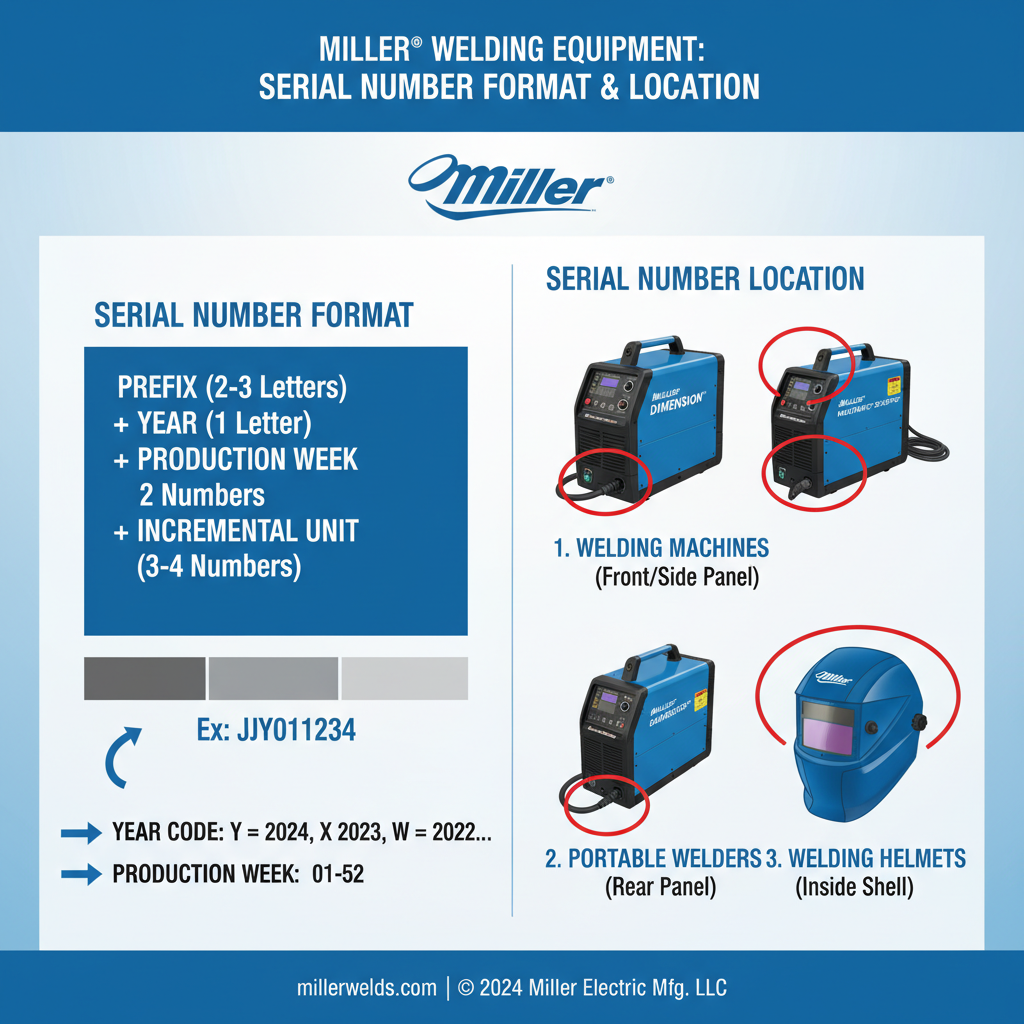
Miller welders feature serial numbers that follow a standardized format, typically consisting of letters and numbers that indicate manufacturing details. The serial number location varies by model but is commonly found on a metal nameplate attached to the welder’s frame or housing.
Most Miller serial numbers contain 8-10 characters combining letters and numbers. The format generally includes a letter prefix followed by numerical digits that represent production codes and manufacturing dates. Some newer models may have longer serial numbers with additional coding for enhanced traceability.
To locate your serial number, check these common areas:
– Front or side panels of the welder housing
– Inside the wire compartment door
– On the transformer housing
– Bottom or back of the unit
– Control panel area
The Miller Millermatic 252 typically displays its serial number on a nameplate located on the front lower section of the unit, making it easily accessible for identification purposes.
Decoding the Manufacturing Date from Serial Numbers
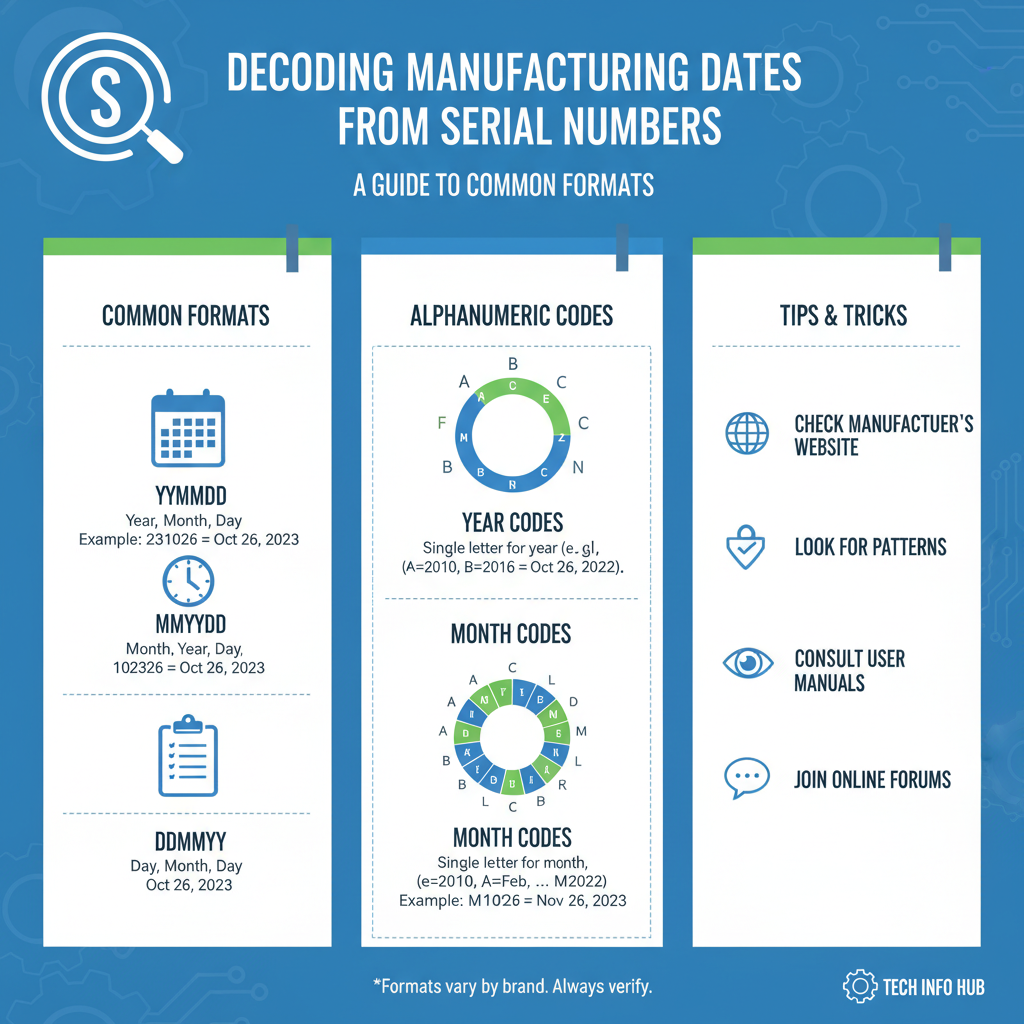
The manufacturing date is encoded within Miller serial numbers using a specific system that has evolved over the years. Understanding this dating system helps determine your welder’s age and production era.
For Miller welders manufactured after 1990, the date code typically appears in the first few characters of the serial number. The format often uses a letter to represent the year, followed by numbers indicating the month or production sequence.
Year Code System
Miller uses an alphabetical system where each letter corresponds to a specific year:
– A = 1990, B = 1991, C = 1992, and so on
– After reaching Z, the system may restart or use double letters
– Some models use numerical year codes in later positions
Month and Production Codes
Following the year indicator, additional numbers often represent:
– Manufacturing month (01-12)
– Production week or day
– Factory location code
– Shift identifier
For example, a serial number beginning with “M05” might indicate manufacturing in 2002 (M) during the fifth month (05).
Model Identification Through Serial Number Analysis
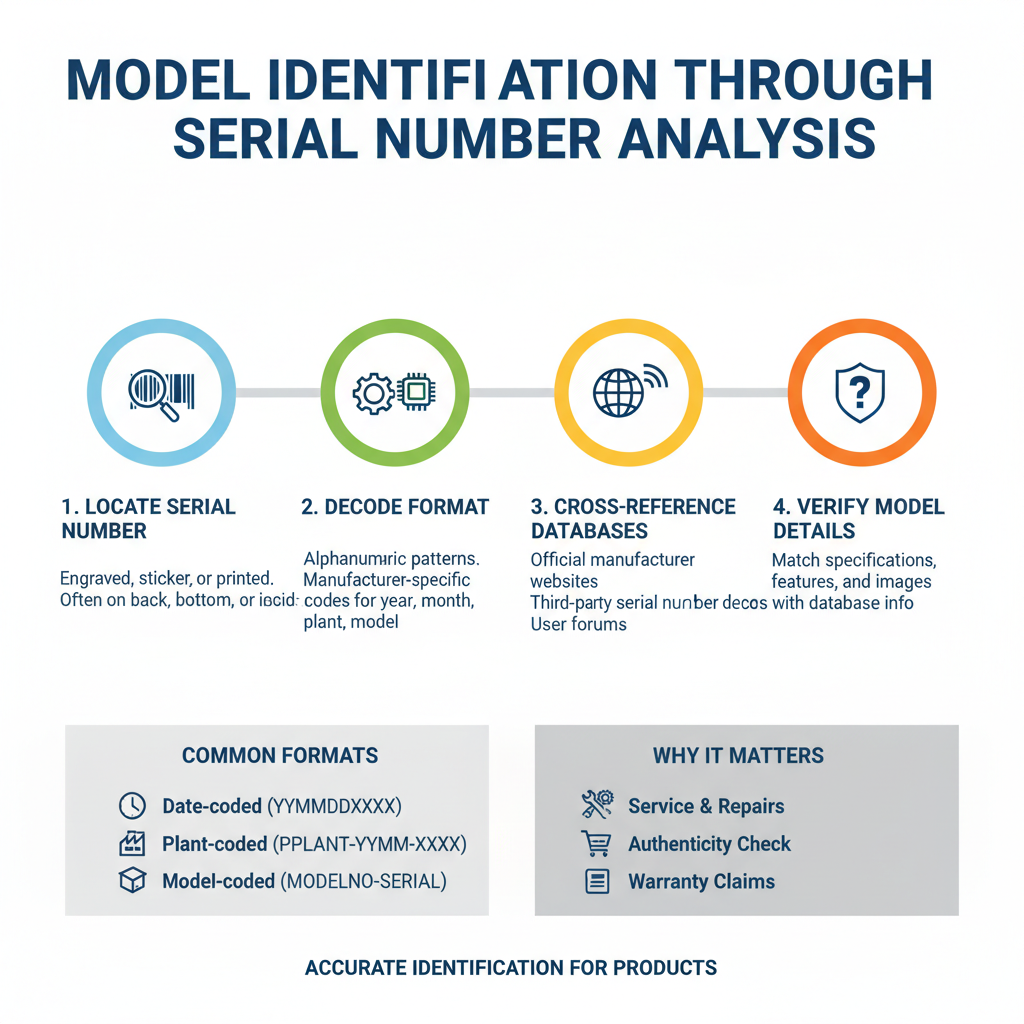
Miller serial numbers contain model-specific information that helps identify the exact welder type and its specifications. This coding system ensures each unit can be traced back to its original configuration and capabilities.
The model identification typically appears in the middle section of the serial number or as a separate model code nearby. Different Miller product lines use distinct coding patterns:
Stick Welders
Miller stick welders often include power output indicators within their serial numbers. These codes help identify amperage ratings and duty cycles specific to each model.
MIG Welders
MIG welder serial numbers frequently contain wire feed specifications and voltage requirements. The Miller Millermatic 211 incorporates specific coding that identifies its auto-set features and input voltage capabilities.
TIG Welders
TIG welder serial numbers may include information about AC/DC capabilities, pulse functions, and advanced control features.
Multi-Process Units
Multi-process welders have more complex serial number systems that indicate all available welding processes and their respective specifications.
Production Location and Factory Codes
Miller operates multiple manufacturing facilities, and serial numbers often include codes indicating the production location. These factory codes help track quality control measures and manufacturing standards specific to each facility.
Common Miller production facilities include:
– Appleton, Wisconsin (primary manufacturing)
– International facilities for global markets
– Contract manufacturing locations
The factory code typically appears as a letter or number within the serial number sequence. This information proves valuable for warranty claims and technical support, as different facilities may have specific production notes or updates.
Understanding production location codes also helps identify any region-specific modifications or certifications that may apply to your welder. International models might include additional safety certifications or voltage specifications required for specific markets.
Using Serial Numbers for Parts and Service
Your Miller welder serial number serves as the primary identifier for accessing correct replacement parts, service manuals, and technical support. Miller’s parts system relies heavily on serial number accuracy to ensure compatibility.
Parts Identification Process
When ordering replacement parts:
1. Provide the complete serial number to Miller dealers
2. Verify the model name matches your unit
3. Cross-reference part numbers with your specific production date
4. Confirm voltage and amperage specifications
Service Documentation Access
Miller maintains extensive service documentation tied to serial numbers:
– Wiring diagrams specific to your production date
– Software versions for digital models
– Calibration procedures
– Troubleshooting guides
Warranty Verification
Serial numbers enable warranty status verification:
– Manufacturing date confirmation
– Warranty period calculation
– Authorized dealer verification
– Service history tracking
The Miller Dynasty 210 utilizes its serial number system for accessing advanced diagnostic information and software updates specific to each unit’s production specifications.
Common Serial Number Issues and Solutions
Several challenges may arise when reading or interpreting Miller welder serial numbers. Understanding these common issues helps ensure accurate identification and proper service access.
Faded or Damaged Nameplates
Environmental exposure can make serial numbers difficult to read:
– Use adequate lighting and magnification
– Clean the nameplate gently with appropriate solvents
– Take clear photographs for reference
– Contact Miller with partial numbers for assistance
Multiple Number Locations
Some Miller welders display several identification numbers:
– Serial numbers (primary identification)
– Model numbers (specification reference)
– Part numbers (component identification)
– Date codes (manufacturing stamps)
Always use the designated serial number, not model or part numbers, for identification purposes.
Format Changes Over Time
Miller has modified serial number formats throughout different production eras:
– Early models may use different coding systems
– Acquired product lines might retain original numbering
– International models may include additional characters
– Special editions could have unique identifiers
Digital Display Models
Modern Miller welders with digital displays may show serial numbers electronically:
– Access through menu systems
– Verify against physical nameplates
– Record both electronic and physical numbers
– Update software may affect display format
Registration and Documentation Best Practices
Proper documentation of your Miller welder serial number ensures optimal support and service throughout the equipment’s lifetime. Establishing good record-keeping practices from the beginning saves time and effort later.
Initial Registration Steps
Upon acquiring a Miller welder:
1. Photograph the serial number nameplate clearly
2. Record the complete serial number in multiple locations
3. Register the unit with Miller Electric
4. File warranty documentation with serial number reference
5. Create a maintenance log tied to the serial number
Ongoing Documentation
Maintain comprehensive records including:
– Service dates and performed work
– Replacement parts with serial number references
– Software updates or modifications
– Performance issues or repairs
– Operator training records
Digital Record Keeping
Modern documentation methods offer enhanced accessibility:
– Cloud-based storage for serial number photos
– Digital maintenance logs with search capabilities
– Automated warranty tracking systems
– Mobile apps for quick serial number access
Conclusion
Reading a Miller welder serial number requires understanding the company’s coding system and knowing where to locate these important identifiers on your equipment. The serial number provides crucial information about manufacturing date, model specifications, production location, and service requirements. By properly decoding and documenting your Miller welder’s serial number, you ensure access to correct replacement parts, appropriate service documentation, and valid warranty coverage. Whether you own a basic stick welder or an advanced multi-process unit, maintaining accurate serial number records supports optimal equipment performance and longevity. Take time to locate, photograph, and record your Miller welder’s serial number as part of your regular equipment maintenance routine.