
Pipeline welders in Texas earn between $65,000 and $120,000 annually, with experienced professionals commanding up to $150,000 in specialized roles. Location, certification level, and project type significantly impact compensation.
Texas stands as the epicenter of America’s energy infrastructure, creating unprecedented demand for skilled pipeline welders. The state’s vast network of oil, gas, and petrochemical pipelines requires continuous maintenance, expansion, and new construction. This demand translates directly into competitive wages that often exceed national averages.
Current Pipeline Welder Salary Ranges in Texas
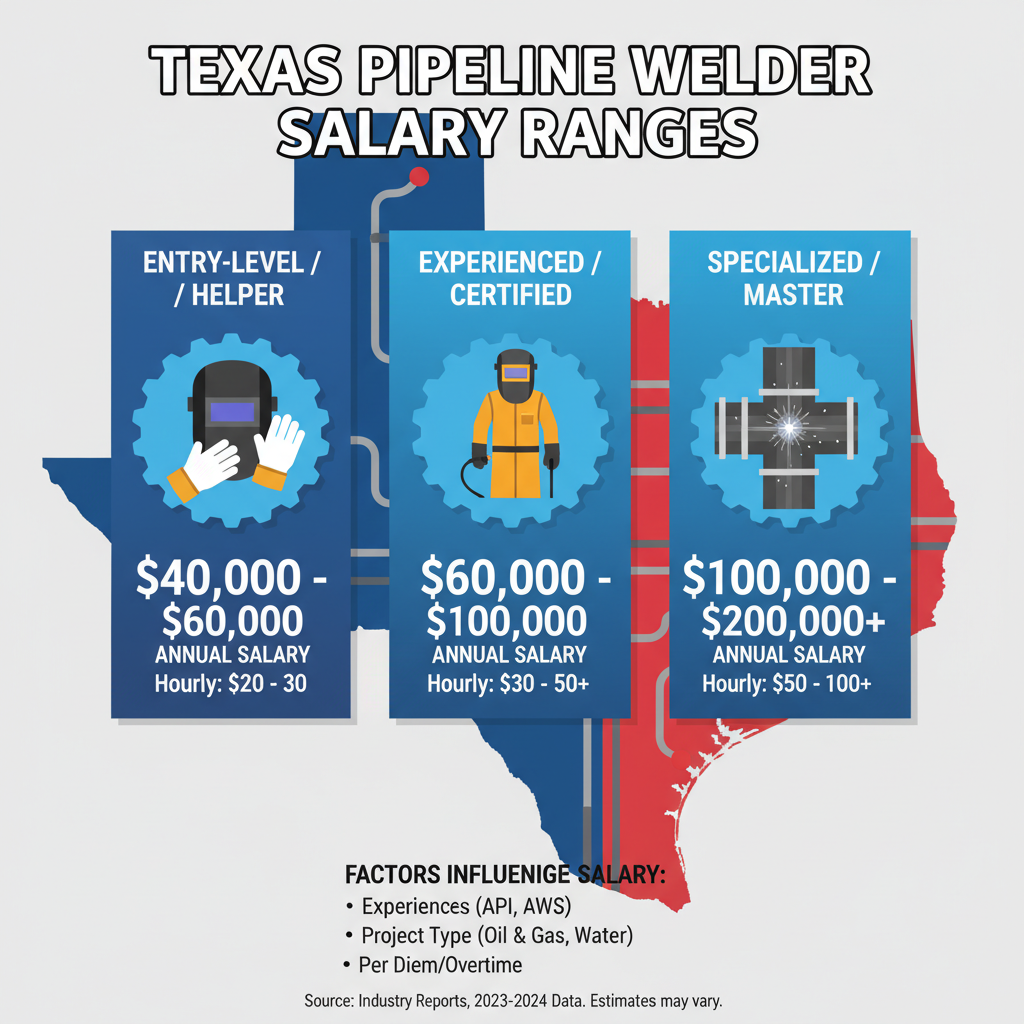
The compensation landscape for pipeline welders varies dramatically across Texas regions. Metropolitan areas like Houston command premium rates due to refinery density and offshore connections. Rural pipeline projects often offer higher per-diem compensation to attract skilled workers to remote locations.
Entry-level pipeline welders typically start between $45,000 and $55,000 annually. These positions require basic welding certifications and minimal field experience. Most entry-level roles involve assisting experienced welders and performing routine maintenance tasks under supervision.
Mid-level welders with 3-7 years experience earn $65,000 to $85,000 annually. These professionals handle independent welding assignments and may supervise junior team members. Specialized certifications in processes like TIG (Tungsten Inert Gas) or stick welding command additional premiums.
Senior pipeline welders with extensive experience earn $90,000 to $120,000 annually. Master welders with specialized certifications can exceed $150,000, particularly on high-pressure transmission lines or offshore platforms.
| Experience Level | Annual Salary Range | Hourly Rate | Common Certifications |
|---|---|---|---|
| Entry Level (0-2 years) | $45,000 – $55,000 | $22 – $26 | Basic AWS D1.1 |
| Mid-Level (3-7 years) | $65,000 – $85,000 | $31 – $41 | AWS D1.1, API 1104 |
| Senior Level (8+ years) | $90,000 – $120,000 | $43 – $58 | Multiple AWS, API certifications |
| Master/Specialist | $120,000 – $150,000+ | $58 – $72+ | Advanced certifications, inspection |
Geographic Salary Variations Across Texas
Houston metropolitan area leads compensation due to its concentration of refineries and petrochemical facilities. Pipeline welders here earn 15-25% above state averages. The proximity to Port of Houston creates additional opportunities in marine pipeline work.
Dallas-Fort Worth region offers competitive salaries driven by natural gas distribution networks and industrial facilities. Welders here typically earn slightly below Houston rates but benefit from lower living costs and diverse project opportunities.
West Texas, including the Permian Basin, provides exceptional earning potential during boom periods. Remote location premiums and per-diem allowances can push total compensation above metropolitan areas. However, work availability fluctuates with oil prices and drilling activity.
East Texas pipeline corridors offer steady employment with major transmission lines crossing the region. Salaries align closely with state averages, but consistent project availability provides stable income streams.
Factors Influencing Pipeline Welder Compensation
Certification level represents the primary salary determinant. American Welding Society (AWS) D1.1 certification serves as the industry standard for structural welding. API 1104 certification specifically addresses pipeline welding requirements and commands premium rates.
Essential Certifications for Maximum Earning Potential:
– AWS D1.1 Structural Welding Code
– API 1104 Pipeline Welding Standard
– AWS D1.5 Bridge Welding Code
– ASME Section IX Pressure Vessel Welding
– 6G Position Certification (all-position welding)
Project type significantly affects compensation structures. New pipeline construction typically offers higher hourly rates but shorter duration employment. Maintenance and repair work provides steadier income with slightly lower hourly compensation.
Travel requirements often include substantial per-diem allowances. Remote pipeline projects may offer $100-200 daily allowances covering meals and lodging. These allowances can effectively double take-home pay during project assignments.
Union membership through organizations like the United Association (UA) provides access to higher-paying projects and comprehensive benefits packages. Union pipeline welders often earn 20-30% more than non-union counterparts but face potential work interruptions during labor disputes.
Industry Demand and Employment Outlook
Texas pipeline infrastructure continues expanding to accommodate growing energy production and export capabilities. The state’s position as a major LNG export hub drives demand for specialized pipeline welders capable of handling cryogenic applications.
Renewable energy integration creates new opportunities as natural gas pipelines support grid stability during renewable energy intermittency. This trend ensures continued demand for skilled pipeline welders throughout the energy transition period.
Current High-Demand Specializations:
1. High-pressure transmission line welding
2. Offshore platform pipeline connections
3. Cryogenic LNG pipeline systems
4. Corrosion-resistant alloy welding
5. Automated welding system operation
Retirement demographics within the welding workforce create additional opportunities. Approximately 30% of current pipeline welders will reach retirement age within the next decade, creating significant skill gaps that drive wage premiums.
Benefits and Total Compensation Packages
Beyond base salaries, pipeline welders receive comprehensive benefits packages that significantly enhance total compensation. Health insurance, retirement contributions, and paid time off add substantial value to employment offers.
Travel-intensive positions often include company-provided transportation, lodging, and meal allowances. These benefits can add $15,000-25,000 annually to effective compensation while reducing personal expenses.
Overtime opportunities are abundant in pipeline work due to project deadlines and weather-related scheduling constraints. Time-and-a-half rates for hours exceeding 40 per week can increase annual earnings by 25-40% during busy periods.
Equipment allowances cover personal protective equipment, welding tools, and specialized safety gear. Companies typically provide $2,000-5,000 annually for equipment purchases and maintenance.
Career Advancement Pathways
Pipeline welding offers clear advancement opportunities for dedicated professionals. Welding inspectors earn $75,000-110,000 annually while maintaining regular schedules and reduced physical demands. Inspection roles require additional certification through organizations like the American Welding Society or API.
Welding supervisors and foremen earn $85,000-125,000 annually while overseeing project teams and ensuring quality standards. These positions combine technical expertise with leadership responsibilities and project management skills.
Independent contracting provides the highest earning potential for experienced welders. Successful contractors can earn $150,000-250,000 annually but assume responsibility for equipment, insurance, and business development activities.
Professional Development and Skill Enhancement
Continuous learning drives career advancement in pipeline welding. New welding processes, materials, and safety standards require ongoing education and certification maintenance. Professional development investments typically yield 10-15% salary increases within two years.
Advanced certifications in specialized areas command significant premiums. Underwater welding certification can increase earning potential by 40-60% for offshore pipeline work. Robotic welding operation skills become increasingly valuable as automation adoption accelerates.
Frequently Asked Questions
What certifications do I need to become a pipeline welder in Texas?
AWS D1.1 and API 1104 certifications are essential. Most employers require 6G position certification demonstrating all-position welding capability. Additional certifications in specific processes or materials increase earning potential.
How much can traveling pipeline welders make?
Traveling welders earn base salaries plus per-diem allowances of $100-200 daily. Total compensation often reaches $100,000-140,000 annually including travel benefits and overtime opportunities.
Is pipeline welding dangerous work?
Pipeline welding involves inherent risks including high-pressure systems, confined spaces, and hazardous materials. Proper training, safety equipment, and adherence to protocols minimize risks. Safety violations can result in immediate termination and industry blacklisting.
What’s the job outlook for pipeline welders in Texas?
Excellent long-term prospects driven by infrastructure expansion, maintenance needs, and workforce retirements. Energy transition creates new opportunities in renewable integration and carbon capture pipeline systems.
How long does it take to become a certified pipeline welder?
Basic certification requires 6-18 months of training and practice. Achieving journeyman-level skills typically takes 3-5 years of field experience. Master-level expertise develops over 10+ years of diverse project exposure.
Pipeline welding in Texas offers exceptional career opportunities for skilled professionals willing to meet industry demands. The combination of competitive salaries, comprehensive benefits, and strong job security makes this field attractive for long-term career development. Success requires dedication to continuous learning, safety excellence, and technical skill advancement. Those who invest in proper training and certification can expect rewarding careers with above-average compensation throughout their working years.