
Are you considering a career as a union pipeline welder and wondering about the earning potential? Pipeline welding offers some of the highest wages in the welding industry, especially for union workers who enjoy better benefits and job security.
Union pipeline welders typically earn between $75,000 and $120,000 annually, with experienced professionals making up to $150,000 or more. Hourly rates range from $35 to $65, plus overtime opportunities that can significantly boost total compensation.
Here’s what this comprehensive guide covers:
• Average salaries and hourly rates for union pipeline welders
• Factors that influence your earning potential
• Regional pay differences across the United States
• Benefits and perks beyond base salary
Average Union Pipeline Welder Salaries
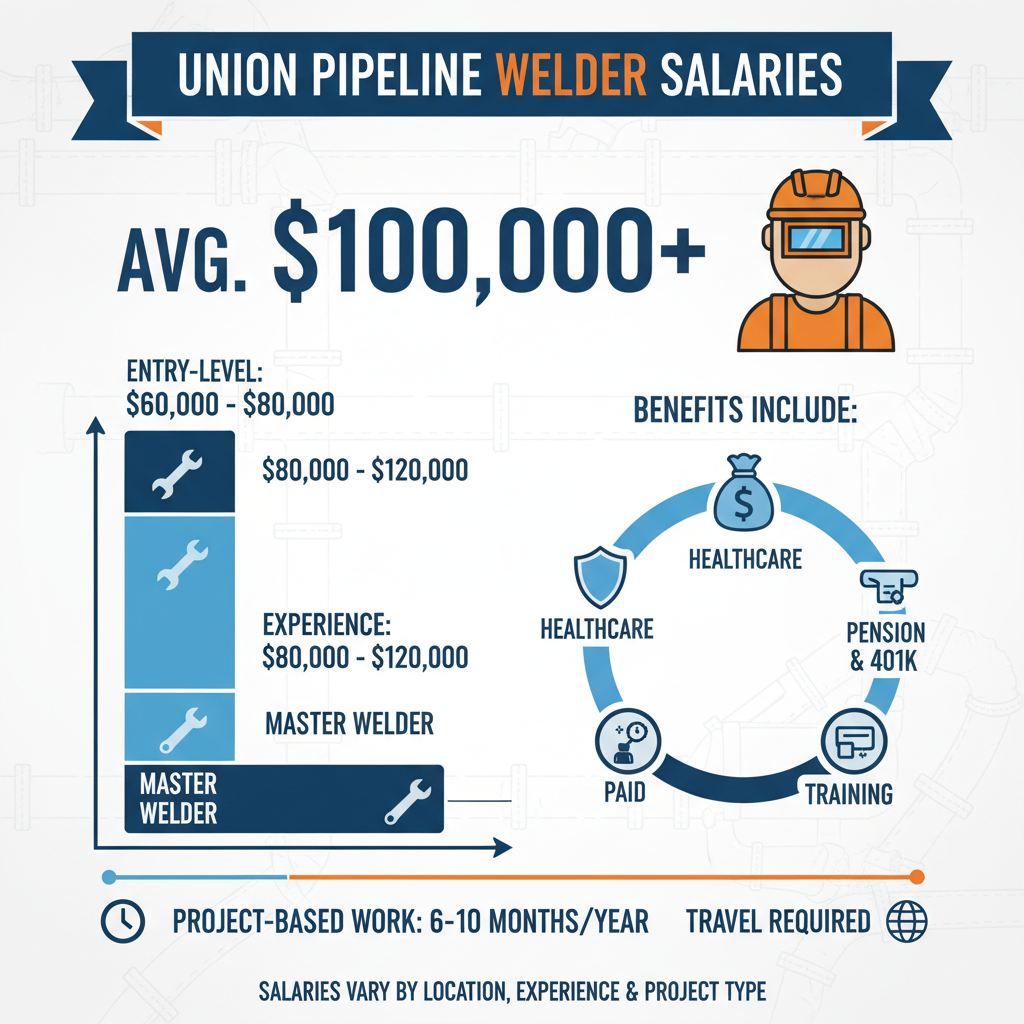
Union pipeline welders command premium wages compared to their non-union counterparts. The structured pay scales and collective bargaining power of unions ensure competitive compensation packages.
Annual Salary Ranges:
• Entry-level: $65,000 – $85,000
• Experienced: $85,000 – $120,000
• Senior/Specialized: $120,000 – $150,000+
Hourly Wage Breakdown:
• Apprentice welders: $25 – $35 per hour
• Journeyman welders: $40 – $55 per hour
• Master welders: $55 – $65+ per hour
These figures represent base pay before overtime, which is common in pipeline work. Many welders work 60-80 hour weeks during peak construction seasons, significantly increasing their total earnings.
Key Factors Affecting Union Pipeline welder Salary
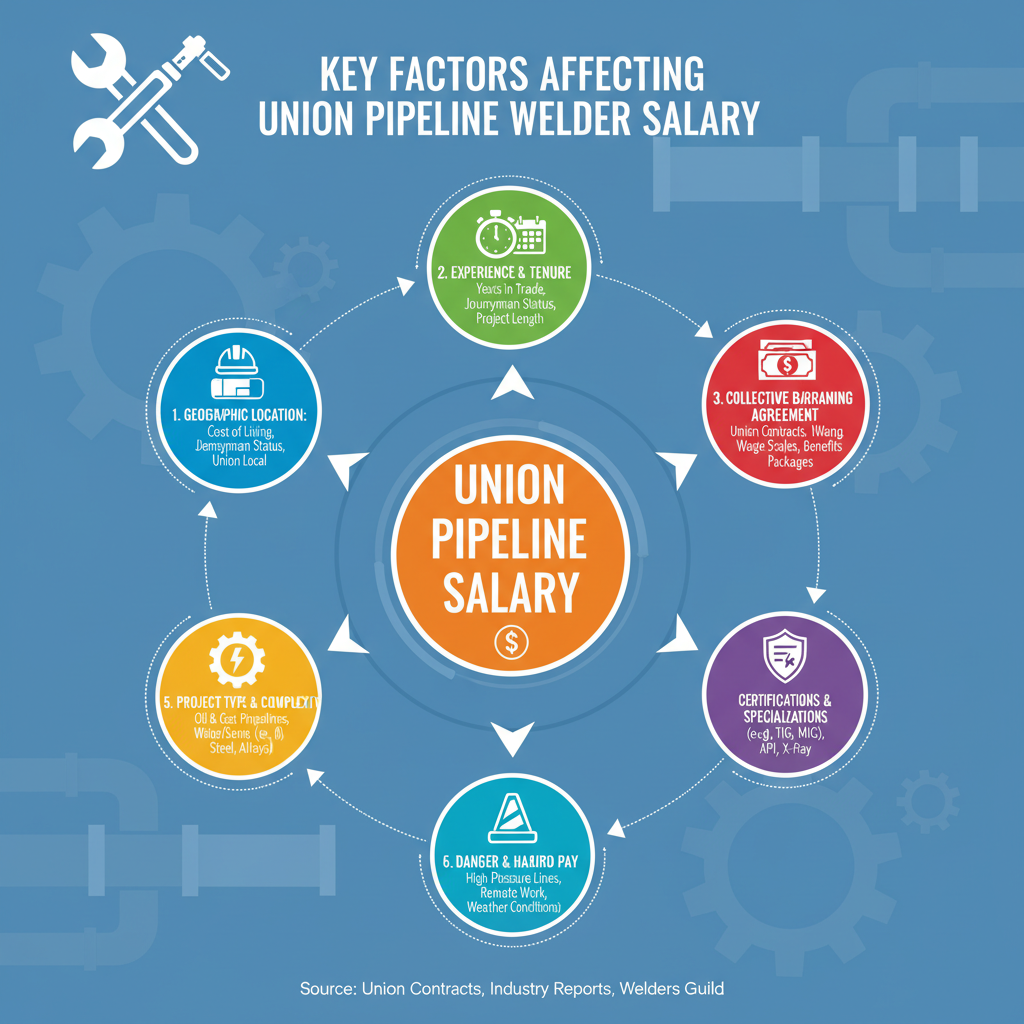
Several important factors determine how much you’ll earn as a union pipeline welder. Understanding these variables helps you maximize your earning potential.
Experience Level:
• 0-2 years: Starting wages with apprentice rates
• 3-5 years: Journeyman status with full union scale
• 5+ years: Premium rates for specialized skills
Certifications and Skills:
• AWS D1.1 structural welding certification
• API 1104 pipeline welding certification
• X-ray welding qualifications
• Specialized processes (TIG, stick, flux-core)
Project Type and Complexity:
• Cross-country transmission pipelines: Highest pay
• Distribution systems: Moderate pay
• Maintenance and repair work: Standard rates
• Offshore or remote locations: Premium rates
Regional Salary Differences
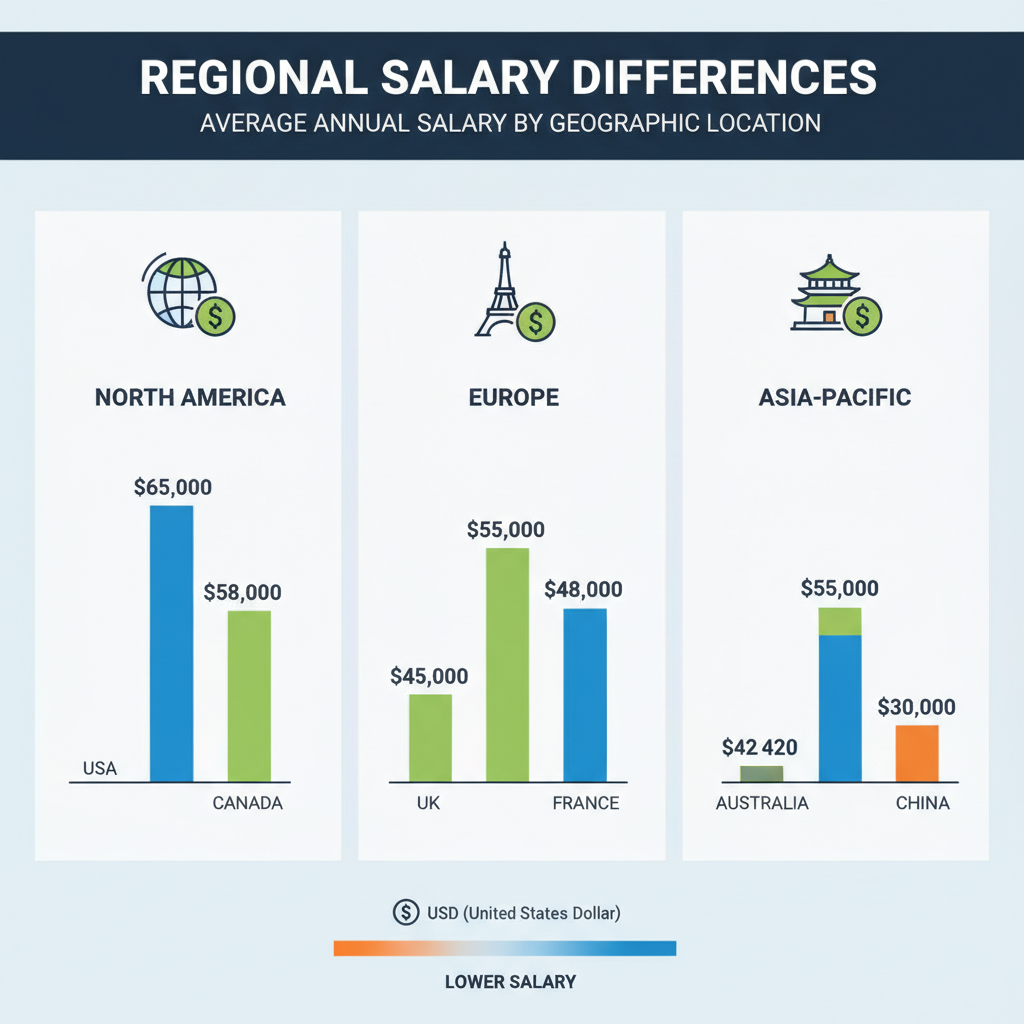
Location plays a crucial role in determining union pipeline welder salaries. Different regions offer varying pay scales based on local demand, cost of living, and union agreements.
| Region | Average Annual Salary | Hourly Rate Range |
|---|---|---|
| Texas Gulf Coast | $95,000 – $130,000 | $45 – $62 |
| North Dakota | $85,000 – $115,000 | $40 – $55 |
| Alaska | $100,000 – $140,000 | $48 – $67 |
| Pennsylvania | $80,000 – $110,000 | $38 – $53 |
| California | $90,000 – $125,000 | $43 – $60 |
| Oklahoma | $75,000 – $105,000 | $36 – $50 |
High-Paying States:
• Alaska: Remote location premiums
• Texas: Major pipeline hub with constant projects
• North Dakota: Oil boom driving demand
• Wyoming: Natural gas pipeline expansion
Factors Behind Regional Differences:
• Local union agreements and scales
• Cost of living adjustments
• Project availability and competition
• State regulations and safety requirements
Union Benefits Beyond Base Salary
Union membership provides significant additional value beyond hourly wages. These benefits often add $15,000 to $25,000 in annual value to your total compensation package.
Health and Welfare Benefits:
• Comprehensive medical insurance
• Dental and vision coverage
• Life insurance policies
• Disability protection
Retirement Benefits:
• Defined benefit pension plans
• 401(k) with employer matching
• Annuity programs
• Early retirement options
Additional Perks:
• Per diem allowances ($50-$100 daily)
• Travel reimbursement
• Tool allowances
• Training and certification funding
Overtime and Travel Opportunities
Pipeline welding offers exceptional overtime earning potential. Most projects operate on accelerated schedules, creating abundant overtime opportunities.
Typical Work Schedules:
• 10-12 hour days, 6-7 days per week
• Seasonal work with intensive periods
• Project-based employment lasting 3-12 months
Overtime Calculations:
• Time and a half after 8 hours daily
• Double time after 12 hours or on Sundays
• Holiday pay at premium rates
Travel Work Benefits:
• Per diem for meals and incidentals
• Hotel or camp accommodations provided
• Mileage reimbursement
• Flight costs covered for distant projects
Many welders strategically plan their careers around high-paying travel assignments, earning $150,000+ annually through overtime and per diem benefits.
Career Progression and Earning Potential
Union pipeline welding offers clear advancement paths that lead to higher earnings. Understanding these progression routes helps you plan your career development.
Entry Level (0-2 years):
• Apprentice programs with structured pay increases
• On-the-job training with experienced welders
• Basic certification requirements
Journeyman Level (2-5 years):
• Full union scale wages
• Independent work assignments
• Specialized skill development
Advanced Positions (5+ years):
• Lead welder or foreman roles
• Quality control inspector positions
• Welding supervisor opportunities
• Independent contractor status
Specialization Opportunities:
• Underwater welding: $100,000 – $200,000+
• Nuclear facility work: Premium security clearance pay
• Aerospace applications: Precision welding premiums
• Inspection and testing: Stable year-round employment
Common Challenges and Considerations
While union pipeline welding offers excellent pay, it’s important to understand the challenges that come with this career path.
Physical Demands:
• Long hours in challenging weather conditions
• Heavy lifting and awkward positioning requirements
• Exposure to fumes and safety hazards
Work Schedule Realities:
• Irregular employment between projects
• Extended time away from home
• Seasonal work patterns in some regions
Career Sustainability:
• Physical toll increases with age
• Need for continuous skill updates
• Economic cycles affecting project availability
Financial Planning Considerations:
• Irregular income requiring careful budgeting
• Need for emergency funds between projects
• Health insurance during unemployment periods
Frequently Asked Questions
How much do union pipeline welders make starting out?
Entry-level union pipeline welders typically start at $25-$35 per hour as apprentices, earning $50,000-$70,000 annually. Pay increases rapidly with experience and certifications.
Do union pipeline welders work year-round?
Work availability varies by region and specialization. Some welders work seasonally with winter layoffs, while others find year-round employment through diverse project types and travel assignments.
What certifications increase pipeline welder salaries?
API 1104 pipeline certification, AWS D1.1 structural certification, and X-ray welding qualifications command premium rates. Specialized process certifications (TIG, flux-core) also increase earning potential.
How does union pay compare to non-union pipeline welding?
Union welders typically earn 20-30% more than non-union counterparts, plus significantly better benefits. Union scale rates provide standardized, competitive wages across projects.
Can pipeline welders make six figures?
Yes, experienced union pipeline welders regularly earn $100,000+ annually through base wages, overtime, and per diem benefits. Top earners with specialized skills can exceed $150,000.
What’s the job outlook for union pipeline welders?
The outlook remains strong due to aging infrastructure replacement, natural gas expansion, and renewable energy pipeline projects. Skilled welders will continue seeing strong demand.
Do pipeline welders get benefits while unemployed?
Union members often maintain health benefits between projects through union trust funds. Some unions provide supplemental unemployment benefits and job placement assistance.
Key Takeaways
• Union pipeline welders earn $75,000-$150,000+ annually with strong overtime opportunities
• Regional differences significantly impact salary ranges, with Alaska and Texas offering top pay
• Union membership provides valuable benefits worth $15,000-$25,000 annually beyond wages
• Career progression from apprentice to journeyman to specialist increases earning potential substantially
• Overtime work and travel assignments can boost annual income by 30-50%
• Certifications like API 1104 and AWS D1.1 command premium rates
• Physical demands and irregular schedules are important career considerations
Final Thoughts
Union pipeline welding offers exceptional earning potential for skilled tradespeople willing to work in demanding conditions. The combination of high hourly rates, abundant overtime, comprehensive benefits, and travel opportunities creates one of the most lucrative careers in the welding industry. Success requires dedication to skill development, physical stamina, and flexibility for travel assignments, but the financial rewards make it an attractive career path for many welders seeking maximum earning potential.