
The exact thickness depends on the panel’s function, vehicle type, and manufacturer specifications. Modern vehicles often use varying thicknesses within the same panel for optimal strength-to-weight ratios.
Automotive sheet metal typically ranges from 0.6mm to 2.0mm (0.024″ to 0.079″) thick, with most exterior body panels measuring between 0.7mm and 1.2mm. Structural components like door frames and pillars use thicker metal, while outer panels like fenders and doors use thinner gauges for weight reduction.
Understanding automotive sheet metal thickness is crucial for anyone involved in car repair, restoration, or manufacturing. Whether you’re a professional mechanic, body shop technician, or automotive enthusiast, knowing these specifications helps you select proper tools, plan repairs, and understand vehicle construction.
This guide covers the standard thickness ranges for different car body panels, factors that influence these measurements, and practical applications for this knowledge in real-world automotive work.
Standard Thickness Ranges by Panel Type
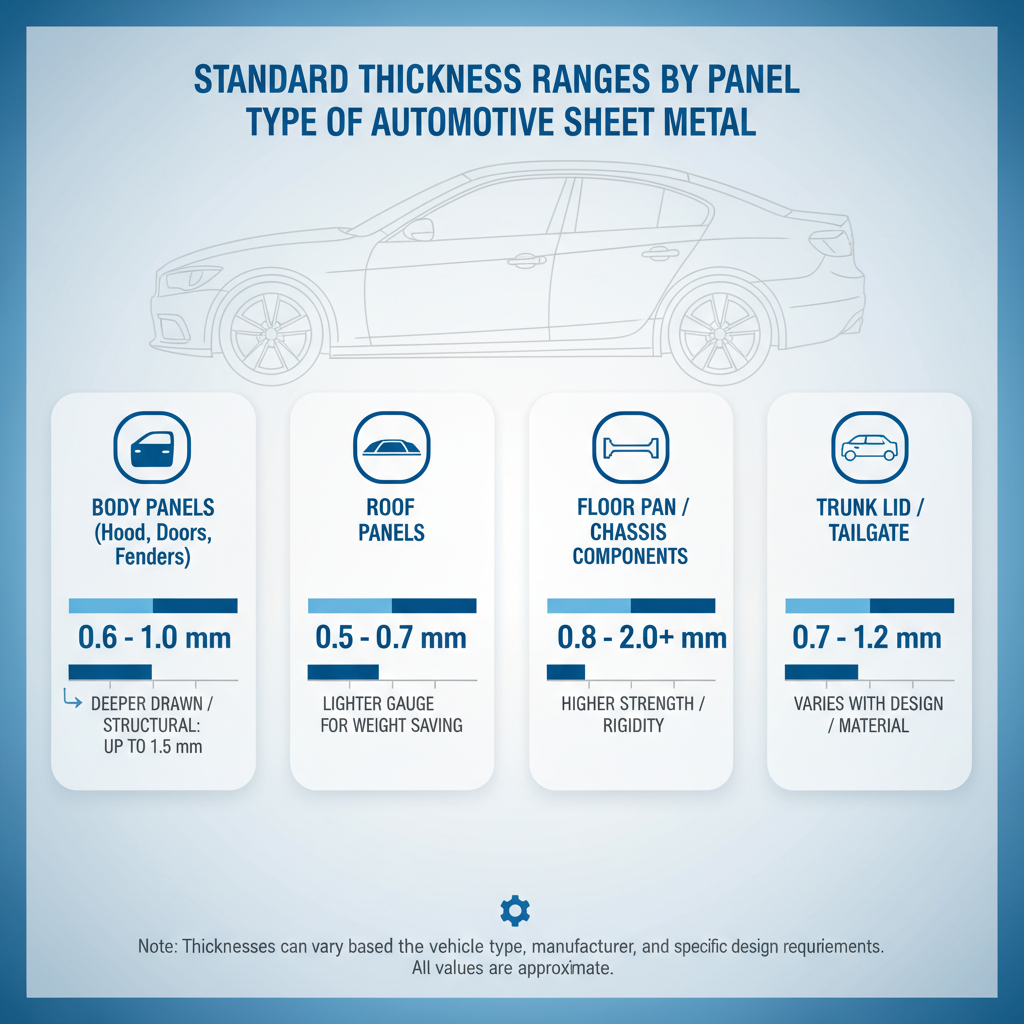
Different automotive panels serve various purposes, requiring specific thickness ranges for optimal performance. Outer body panels prioritize weight savings and formability, while structural components focus on strength and safety.
Exterior Body Panels:
– Hood: 0.7-0.9mm (0.028-0.035″)
– Fenders: 0.7-0.8mm (0.028-0.031″)
– Doors (outer skin): 0.7-0.9mm (0.028-0.035″)
– Trunk lid: 0.7-0.9mm (0.028-0.035″)
– Quarter panels: 0.8-1.0mm (0.031-0.039″)
Structural Components:
– Door frames: 1.2-1.6mm (0.047-0.063″)
– A-pillars: 1.4-2.0mm (0.055-0.079″)
– B-pillars: 1.6-2.0mm (0.063-0.079″)
– Roof panels: 0.7-0.9mm (0.028-0.035″)
– Floor pans: 0.8-1.2mm (0.031-0.047″)
These measurements represent typical ranges found across most passenger vehicles. Luxury vehicles and trucks often use slightly thicker materials for enhanced durability.
Measurement Methods and Tools
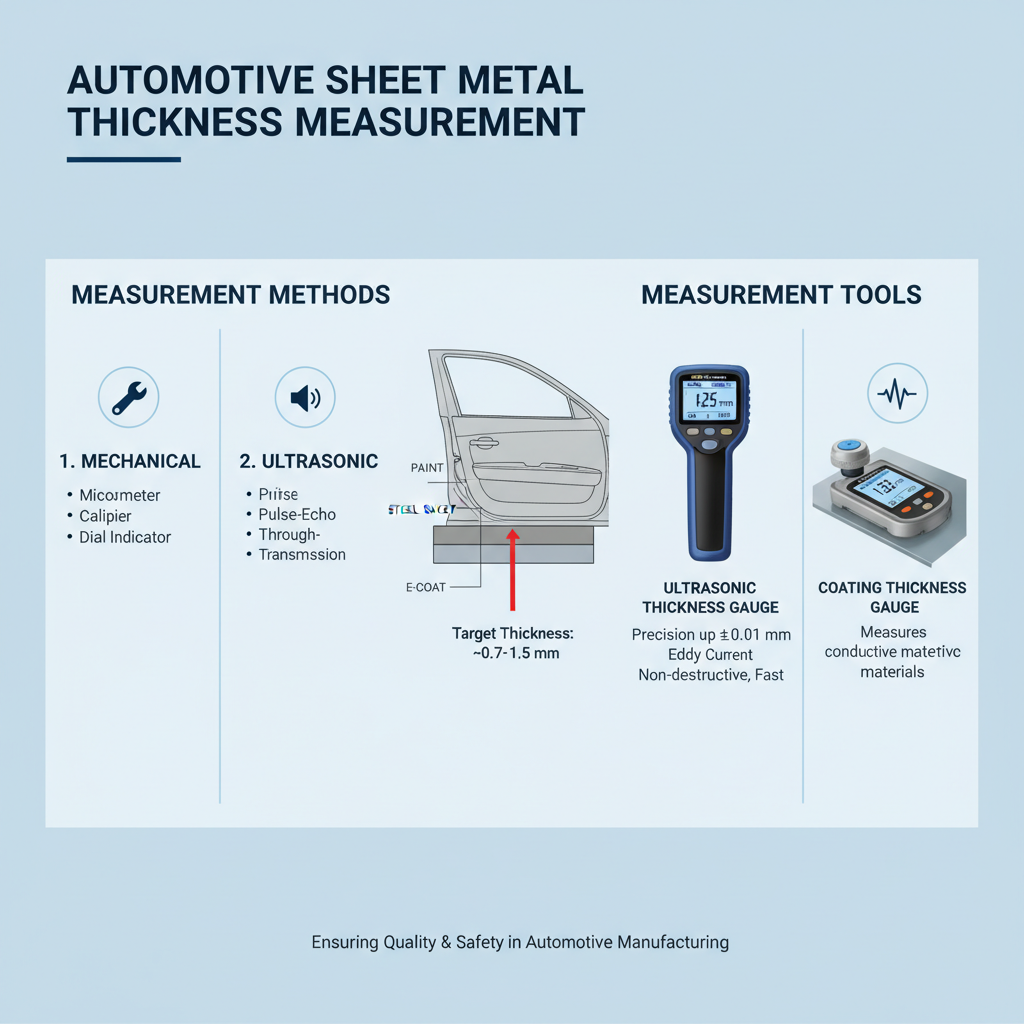
Accurate thickness measurement requires proper tools and techniques. Professional automotive work demands precision, especially when ordering replacement panels or planning welding procedures.
Ultrasonic thickness gauges provide the most accurate measurements without damaging paint or coatings. These tools use sound waves to measure metal thickness through existing finishes. Field experience shows these gauges work best on clean, flat surfaces.
Magnetic thickness gauges offer a cost-effective alternative for painted surfaces. They measure the distance between the magnet and the metal substrate, effectively showing combined paint and metal thickness. Subtract the paint thickness (typically 0.1-0.2mm) to get the metal measurement.
Calipers and micrometers work well on exposed metal edges or cut sections. This direct contact method provides excellent accuracy but requires access to bare metal surfaces.
A common issue technicians encounter is measuring curved or textured surfaces. In these cases, taking multiple readings and averaging the results provides more reliable data.
Factors Affecting Sheet Metal Thickness
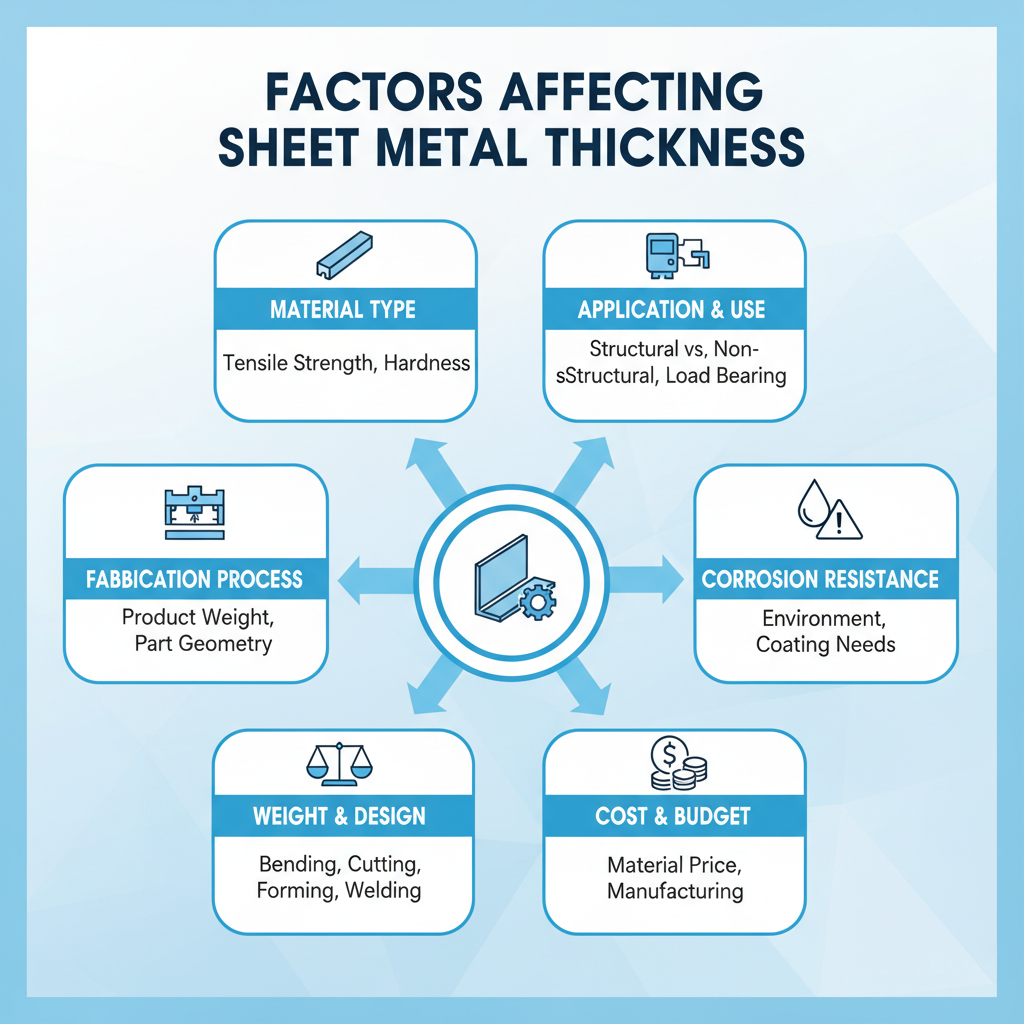
Vehicle manufacturers consider multiple factors when determining optimal sheet metal thickness for each component. Understanding these influences helps explain why thickness varies across different vehicle models and years.
Safety requirements drive thickness decisions for structural components. Crash test standards mandate minimum strength levels, often requiring thicker materials in critical areas like door frames and pillars.
Weight reduction goals push manufacturers toward thinner materials where structurally feasible. Modern high-strength steels allow thinner sections while maintaining required strength levels.
Manufacturing processes influence thickness selection. Deep-drawn panels like door skins require specific thickness ranges to prevent tearing or wrinkling during forming operations.
Cost considerations balance material expenses against performance requirements. Thicker materials cost more but may reduce the need for additional reinforcement structures.
Regional market preferences also play a role. Vehicles designed for harsh climates or rough roads often feature slightly thicker panels for enhanced durability.
Vehicle Type Variations
Different vehicle categories use varying sheet metal thickness standards based on their intended use and target market. These differences reflect the unique demands each vehicle type faces in real-world operation.
Compact cars typically use the thinnest allowable materials to maximize fuel efficiency. Exterior panels often measure 0.6-0.8mm, with structural components ranging from 1.0-1.4mm.
Mid-size sedans balance durability and efficiency, using moderate thickness ranges. Most panels fall within 0.7-1.0mm, with structural elements reaching 1.2-1.6mm.
Luxury vehicles prioritize refinement and longevity over weight savings. Panel thickness often exceeds standard ranges by 0.1-0.2mm, contributing to the solid feel and reduced noise levels these vehicles provide.
Pickup trucks and SUVs use substantially thicker materials throughout. Exterior panels typically measure 0.9-1.2mm, while structural components can reach 2.0mm or more in high-stress areas.
Sports cars present unique challenges, balancing weight reduction with structural integrity. These vehicles often use advanced materials like aluminum or carbon fiber rather than simply increasing steel thickness.
Impact on Repair and Restoration
Sheet metal thickness directly affects repair procedures, tool selection, and material costs. Professional body shops must consider these factors when estimating repair times and choosing appropriate techniques.
Welding procedures require adjustment based on material thickness. Thinner panels need lower heat settings and faster travel speeds to prevent burn-through. Thicker structural components allow higher heat input for deeper penetration.
Panel replacement becomes more complex with varying thicknesses. Aftermarket panels may not match original thickness specifications exactly, requiring technique modifications or additional preparation work.
Dent repair difficulty increases with thinner materials. Panels below 0.8mm thickness are more prone to stretching during paintless dent removal, sometimes requiring traditional bodywork methods instead.
In practice, experienced technicians often gauge thickness by feel and sound during metalworking operations. However, critical repairs and insurance work typically require precise measurements for proper documentation.
Modern Manufacturing Trends
Contemporary automotive manufacturing increasingly uses advanced materials and construction techniques that affect traditional thickness standards. These developments aim to improve safety while reducing vehicle weight.
Tailor-welded blanks allow manufacturers to use different thicknesses within a single panel. A door outer might use 0.7mm material in low-stress areas and 1.0mm sections where strength is critical.
High-strength steel grades permit thinner sections while maintaining structural integrity. These materials can be 30-50% thinner than conventional steel while providing equivalent strength.
Aluminum adoption in mainstream vehicles introduces new thickness considerations. Aluminum panels typically measure 1.0-1.5mm thick to match steel strength characteristics, but require different repair techniques.
Multi-material construction combines steel, aluminum, and advanced composites in single vehicles. This approach optimizes each material’s properties but complicates repair procedures and thickness specifications.
Frequently Asked Questions
How do I measure automotive sheet metal thickness without damaging the paint?
Use an ultrasonic thickness gauge, which measures through paint and coatings without damage. Magnetic gauges also work but require subtracting paint thickness from the total reading.
Why are modern car panels thinner than older vehicles?
Advanced steel grades allow thinner sections while maintaining strength. Additionally, computer-aided design optimizes material placement, reducing thickness where full strength isn’t required.
Can I use thicker replacement panels than original specifications?
While possible, thicker panels may require welding technique adjustments and can affect fit and finish. Always verify compatibility with your specific application.
What’s the thinnest automotive sheet metal I might encounter?
Some modern economy car panels measure as thin as 0.6mm, particularly on outer body panels like hoods and fenders where weight reduction is prioritized.
Do electric vehicles use different sheet metal thickness standards?
Electric vehicles often use similar thickness ranges but may incorporate more aluminum and advanced materials. Battery protection structures typically use thicker materials than conventional vehicles.
How does rust affect sheet metal thickness measurements?
Surface rust adds thickness, while through-rust reduces it. Always measure in multiple locations and account for corrosion when assessing structural integrity.
Are aftermarket panels the same thickness as original equipment?
Quality varies significantly among aftermarket suppliers. Premium aftermarket panels typically match original thickness, while budget options may be thinner or use different steel grades.
Final Thoughts
Automotive sheet metal thickness varies significantly based on panel function, vehicle type, and manufacturing era. Most exterior panels range from 0.7-1.2mm, while structural components use 1.2-2.0mm materials for safety and durability.
Understanding these specifications helps professionals select appropriate repair techniques, order correct replacement parts, and estimate job complexity accurately. Modern manufacturing trends toward advanced materials and variable thickness construction require updated knowledge and measurement techniques.
Whether you’re performing collision repairs, restoration work, or general maintenance, accurate thickness knowledge ensures proper procedures and professional results. Always measure critical areas when in doubt, and stay current with evolving automotive construction methods.