
Becoming an oil rig welder is a whole different level compared to typical shop or fabrication work. Moving from basic MIG or TIG welding into high-pressure, code-driven environments means everything has to be dialed in — from joint prep and metal thickness control to flawless arc control in some of the toughest conditions around.
A lot of welders wonder where to even start: what certifications are required, which welding processes matter most, and whether offshore welding is really worth the risk and pay. Getting this path right matters because oil rig welding demands precision, safety awareness, and consistency — mistakes can cost equipment, money, or lives.
With the right training, certifications, and hands-on experience, this career can be incredibly rewarding both financially and professionally. In this guide, I’ll break down the real steps it takes to become an oil rig welder, what skills you need to sharpen, and how to prepare for work in one of the most demanding welding environments out there.
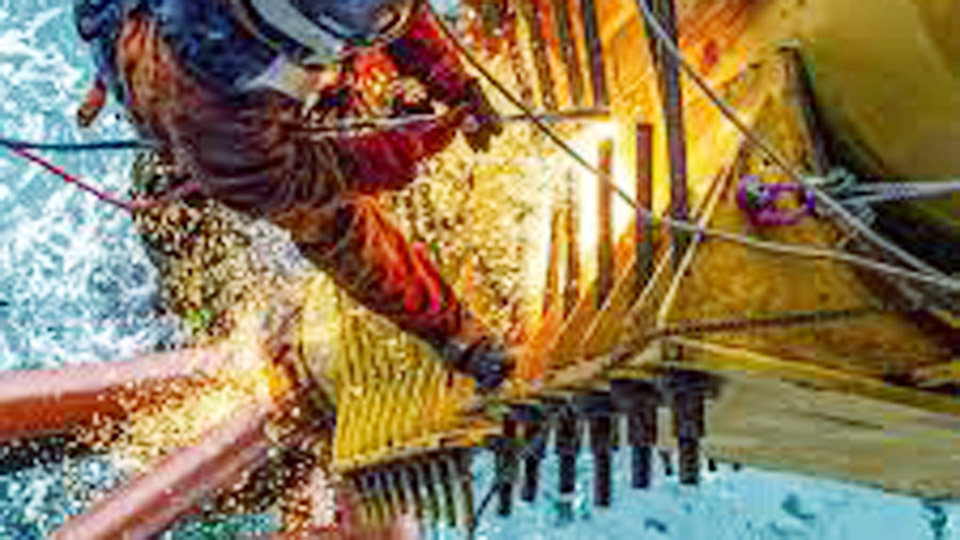
Image by novikontas
What Does an Oil Rig Welder Actually Do?
You’re out on a platform in the Gulf of Mexico, waves crashing below, and you’re tasked with repairing a pipeline joint under tight deadlines. As an oil rig welder, your day-to-day involves fabricating and fixing metal structures that support drilling, extraction, and storage operations.
You’ll weld beams, pipes, and vessels using techniques like stick, MIG, or TIG, depending on the material—think carbon steel, stainless, or even titanium for those high-pressure setups.
Onshore or offshore, the job demands precision. You’ll read blueprints to assemble components, inspect your welds for cracks or weaknesses, and use non-destructive testing to check for leaks. It’s hands-on work where you might be bending pipes, reinforcing joints, or even diving underwater for repairs if you’re certified for that.
I once spent a full shift fixing a flange on a riser pipe—taught me that prep work, like cleaning surfaces thoroughly, is non-negotiable to avoid porosity issues.
Why choose this over shop welding? The environments vary wildly, from desert heat on land rigs to cold, salty air offshore. It keeps things exciting, but remember, it’s physically demanding—lifting heavy gear and working in confined spaces. If you’re a DIY welder tinkering in your garage, this amps it up to industrial scale.
Why Pursue a Career in Oil Rig Welding?
Experienced oil rig welders in the US can pull in $75,000 to over $100,000 a year, especially with overtime and per diems for remote sites. But it’s more than money—it’s about the thrill of building something massive that powers the world.
For fabrication hobbyists, it’s a chance to apply your skills to real-world challenges like high-pressure high-temperature (HPHT) welding, where material compatibility is key to preventing failures.
From a practical standpoint, the industry needs you. With aging infrastructure and new offshore projects, there’s a welder shortage creating steady openings. I started because I loved the problem-solving aspect—figuring out how to weld in awkward positions without compromising integrity.
It’s cost-efficient too; a skilled welder reduces downtime, saving companies thousands. If you’re a student or industry worker eyeing a switch, this path offers travel, variety, and growth, but it demands commitment to safety and continuous learning.
One lesson from my early days: don’t chase the glamour without understanding the grind. Long shifts—sometimes two weeks on, two off—mean missing family time, but the extended breaks let you recharge or pursue hobbies like custom fab work back home.
Education Requirements for Aspiring Oil Rig Welders
You don’t need a four-year degree to break into oil rig welding, but a solid foundation is crucial. Start with a high school diploma or GED—it’s the bare minimum most employers require. Focus on classes in math, physics, and shop to build basics like measuring accurately and understanding material properties.
Without that diploma? Get your GED pronto; it’s straightforward and opens doors to training programs. I skipped college entirely and went straight into vocational training, which paid off faster than racking up student debt.
Enrolling in a Welding Trade School or Program
Trade schools are where the magic happens. Look for programs lasting 6 to 18 months that mix classroom theory with hands-on practice. You’ll learn core processes: Shielded Metal Arc Welding (SMAW) for stick, Gas Metal Arc Welding (GMAW) for MIG, and Gas Tungsten Arc Welding (GTAW) for TIG—essential for oil rig work on pipes and structures.
In the US, schools like Universal Technical Institute or Tulsa Welding School offer curricula tailored to industrial welding. Expect to cover blueprint reading, weld symbols, and quality testing. I remember my first program: we practiced on scrap pipe until our beads were smooth and penetration was spot-on.
Tip: choose a school with virtual reality simulators like OcuWeld—they let you practice rig scenarios without real risks.
Machine settings matter here. For carbon steel pipes, start with 120-140 amps on stick welding, adjusting based on position—overhead needs lower heat to avoid slag inclusion. Prep joints by beveling edges to 30-37 degrees for better fusion. Common mistake? Rushing prep—always grind surfaces clean to prevent contamination.
The Role of Apprenticeships in Your Journey
Apprenticeships bridge school to the field. These 3-4 year programs pair you with experienced welders, earning while learning. You’ll start as a helper, prepping materials and observing pros, then progress to supervised welding.
In the oil industry, apprenticeships often lead to pipeline or rig gigs. I apprenticed on a land rig in Texas—learned to handle hydraulic systems and fix diesel engines alongside welding. Pros: paid training, networking. Cons: competitive entry; you might need basic certs first.
Tip: Apply through unions like the United Association (UA) for structured paths. During apprenticeship, focus on safety tickets like H2S Alive—vital for hazardous environments. Avoid the mistake of slacking on logs; detailed records prove your hours for certification.
Certifications Every Oil Rig Welder Needs
Certifications prove your skills and are non-negotiable for rig work. They ensure you meet US welding codes like those from ASME or API, focusing on weld integrity and safety.
Start with entry-level ones, then specialize. I got mine step-by-step, which opened doors to better-paying offshore jobs.
American Welding Society (AWS) Certifications
AWS is the gold standard. The Certified Welder (CW) tests your ability on specific processes—pass a practical exam welding plates or pipes to code.
For rigs, aim for Certified Welding Inspector (CWI) later; it involves inspecting for defects like undercuts. Prep tip: Practice on 6G positions (pipe at 45 degrees)—common for pipelines. Settings: For TIG root passes, use 90-110 amps on stainless.
Common pitfall: Failing due to poor fit-up. Always align joints perfectly before tacking.
American Petroleum Institute (API) Certifications
API certs are rig-specific. API 577 covers welding inspection and metallurgy—great for understanding material compatibility in corrosive environments.
API 570 for piping inspectors helps if you’re eyeing supervisory roles. These require experience, so get them after a few years.
Anecdote: My API cert helped me land a Gulf job where we dealt with sour gas lines—knowledge of H2S resistance saved headaches.
Getting Your TWIC Card for Offshore Access
For US offshore rigs, the Transportation Worker Identification Credential (TWIC) is mandatory. It’s a background-checked ID for maritime facilities.
Step-by-step: Apply online via TSA, provide fingerprints and docs, pass a check (no felonies), then pick up your card. Costs about $125, valid five years.
Tip: Renew early to avoid job delays. Without it, you’re stuck onshore—big mistake for aspiring offshore welders.
| Certification | Focus | Pros | Cons |
|---|---|---|---|
| AWS CW | Basic welding proficiency | Quick to obtain, widely recognized | Process-specific, needs renewal |
| AWS CWI | Inspection and quality | Higher pay potential, advancement | Requires 3+ years experience |
| API 577 | Metallurgy and inspection | Industry-specific for oil | Exam-heavy, costly prep |
| TWIC Card | Security clearance | Essential for offshore | Background check delays possible |
Building Essential Skills for Oil Rig Welding
Skills go beyond technique—they’re about surviving the rig life. Physical strength is key; you’ll lift 50-pound torches and work in awkward spots.
Develop problem-solving: When a weld cracks due to vibration, adjust filler metals for better ductility. Communication matters too—relay issues to your crew to avoid accidents.
From my experience, math skills save time: Calculate bevel angles or heat input to prevent distortion. Practice in a shop first; I honed mine fabricating custom rigs before going offshore.
Mastering Welding Techniques for Rigs
Stick welding rules for outdoor repairs—tough against wind. Use 6010 rods for root passes on pipes: deep penetration, 100-130 amps.
MIG for faster production on platforms: 180-220 amps on carbon steel, with 75/25 argon/CO2 gas. TIG for precision on stainless: low amps, clean tungsten.
Tip: In wet conditions, dry rods in an oven to avoid hydrogen cracking. Mistake: Wrong polarity—DCEN for TIG roots ensures clean welds.
Safety Skills and Protocols
Safety isn’t optional—rigs are hazardous with explosions or falls. Learn PPE: helmets, gloves, FR clothing.
Get tickets like confined space entry and fall protection. Offshore? Swimming and diving basics help.
I once saw a newbie skip ear protection—led to hearing issues. Always inspect gear; follow lockout/tagout for equipment.
Gaining Hands-On Experience as a Beginner
Start small: As a welder’s helper, you’ll grind, clean, and assist—builds endurance.
Move to fab shops for controlled practice on pipes. I started there, learning to bevel with machines for perfect joints.
After 1-2 years, seek pipeline crews. Common error: Jumping to rigs too soon—get 5 years under your belt for low repair rates.
Step-by-step to experience:
- Land a helper gig via job boards or networks.
- Log hours on various materials.
- Test for entry-level certs.
- Network at truck stops or with reps from Lincoln/Miller.
How to Land Your First Oil Rig Welding Job
Job hunt smart: Texas or Oklahoma for starters—hub of opportunities.
Update your resume with certs and experience. Use sites like Indeed, but word-of-mouth rules—chat with rig hands.
Interviews often include weld tests: Practice 6G pipes. I got my first offshore spot by acing a bend test on 2-inch sch80.
Tip: Get insured if independent—$1M liability minimum. Unions can help with listings, but non-union work abounds.
Challenges: Competition fierce; persist with calls. Offshore? Expect rotations—pack light, stay fit.
Tools and Equipment You’ll Need on the Rig
Rig welders rely on robust gear. Engine-driven machines like Lincoln SA200 for remote power—diesel for reliability.
Essentials: Water-cooled torches for long sessions, bevelers for prep, clamps for holding.
In my kit: Hammers, levels, and a TIG inverter for versatility. Settings tip: On Vantage 300, dial 200 amps for flux-cored on thick plates.
Maintain tools—clean lenses daily to avoid arc eye. Mistake: Cheap gear fails in salt air; invest in quality.
| Tool | Use | Recommended Settings/Tips |
|---|---|---|
| Lincoln SA200 | Engine-driven welding | 150-200 amps for stick on pipes; fuel up regularly |
| Beveling Machine | Joint prep | 30-degree bevel for butt welds; wear gloves |
| TIG Torch | Precision work | 90-120 amps on stainless; purge gas for clean roots |
Common Challenges in Oil Rig Welding and Fixes
Harsh weather: Offshore cold numbs hands—use heated gloves, take breaks.
Physical toll: Back strains from bending—stretch, lift properly.
Isolation: Long shifts drain mentally—stay connected via calls during off time.
I faced a pipe leak once due to poor prep—fixed by re-beveling and re-welding. Tip: Always double-check blueprints.
Economic dips affect jobs—diversify skills to pipeline or fab during slowdowns.
Career Advancement and What to Expect in Pay
Advance to supervisor or inspector with CWI/API certs—more pay, less grunt work.
Salary starts at $50,000 entry-level, hits $80,000+ with experience. Offshore adds premiums.
I climbed by specializing in HPHT—led to consulting gigs. Pro tip: Network at industry events; continuous training keeps you relevant.
Conclusion
You’ve now got the roadmap to become an oil rig welder—from education and certs to landing jobs and tackling challenges. You’re better prepared because you understand the practical side: choosing the right techniques, prioritizing safety, and building experience step by step.
This isn’t just a job; it’s a skill set that ensures weld integrity, saves costs, and opens doors in the energy world. Always test your welds visually first—catch issues early to avoid costly reworks. If you’re serious, start with that trade school application today.
How Long Does It Take to Become an Oil Rig Welder?
From high school to your first rig job, plan for 2-5 years. That includes a 6-18 month program, apprenticeship, and gaining certs. I took three years total, but rushing leads to gaps in skills.
What Are the Highest-Paying Locations for Oil Rig Welders in the US?
Texas, Oklahoma, and the Gulf Coast top the list due to heavy oil activity. Offshore in the Gulf can add 20-30% premiums. Look for roles in Houston or Permian Basin for steady work.
Do I Need to Be Able to Swim for Offshore Oil Rig Welding?
Yes, especially for underwater repairs. Basic swimming and sometimes diving certs are required. I learned during training—it’s about safety in case of emergencies like platform evacuations.
What Common Mistakes Do New Oil Rig Welders Make?
Overlooking prep work, like not cleaning joints, leads to weak welds. Also, ignoring safety protocols—always wear PPE. I saw a guy skip fall harness checks; luckily, no fall, but it could’ve been bad.
Is Union Membership Necessary for Oil Rig Welding Jobs?
Not always—plenty of non-union work exists. But unions offer job leads and benefits. I went non-union first for flexibility, then joined for better protections later on.