
Underwater welding combines commercial diving with specialized welding skills to create one of the most challenging and well-compensated trades in the world. This comprehensive guide will walk you through every step needed to launch your career as an underwater welder, from initial training requirements to landing your first job.
To become an underwater welder, you need to complete welding training and certification (6-18 months), obtain commercial diving certification (6-12 months), and gain specialized underwater welding training. The entire process typically takes 2-4 years and costs $30,000-$60,000, but leads to high-paying careers with salaries ranging from $54,000 to $300,000 annually.
What Is Underwater Welding?
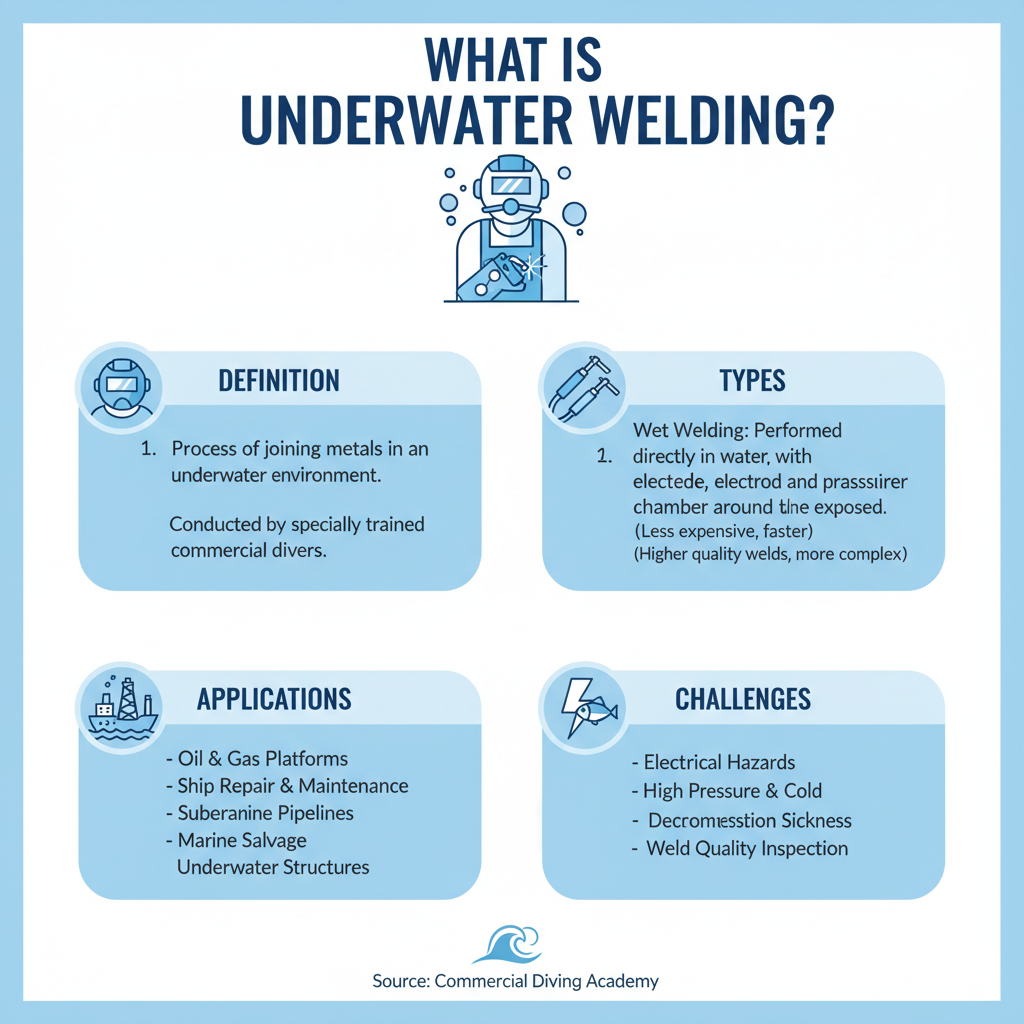
Underwater welding is a specialized profession that involves performing welding repairs and construction work in submerged environments. Underwater welders work on ships, offshore oil rigs, bridges, docks, and underwater pipelines. The job requires expertise in both commercial diving and welding techniques.
There are two main types of underwater welding: wet welding (performed directly in water) and dry welding (performed in a sealed chamber). Most underwater welders earn between $54,000 and $300,000 annually, depending on experience, location, and project complexity.
The profession demands physical fitness, technical expertise, and the ability to work in dangerous conditions. Underwater welders face risks including decompression sickness, electric shock, hypothermia, and equipment failure.
Step 1: Meet Basic Requirements and Prerequisites
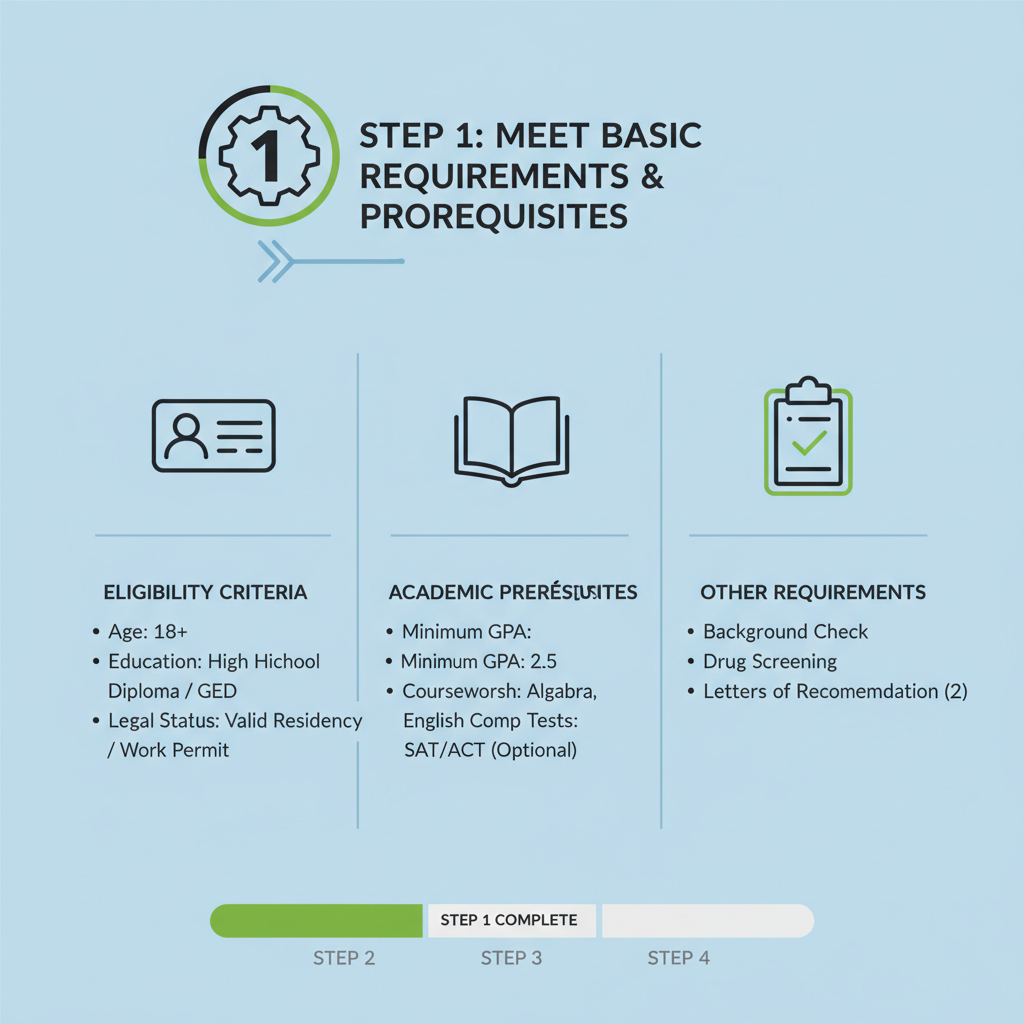
Before pursuing underwater welding training, you must meet several fundamental requirements:
Physical Requirements:
– Excellent physical fitness and swimming ability
– Good vision and hearing
– No serious medical conditions that could impair diving
– Age typically between 18-35 for entry-level positions
Educational Requirements:
– High school diploma or equivalent
– Strong foundation in mathematics and physics
– Basic understanding of metallurgy helpful but not required
Personal Qualities:
– Comfort working in confined, dark spaces
– Ability to remain calm under pressure
– Strong problem-solving skills
– Attention to detail and safety protocols
Most employers also require a clean driving record and the ability to pass drug screenings and background checks.
Step 2: Complete Welding Training and Certification
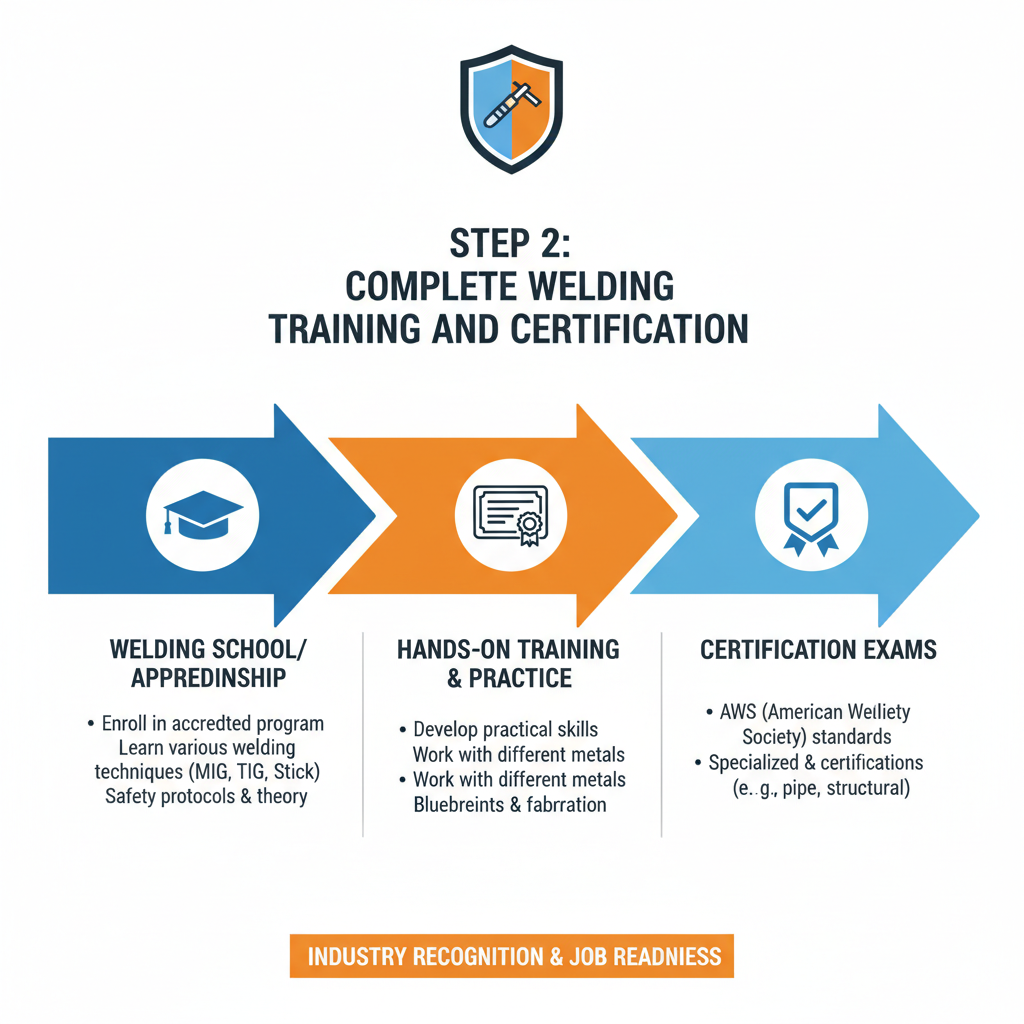
Your journey begins with mastering topside welding skills. Underwater welding builds upon traditional welding techniques, so solid foundational knowledge is essential.
Welding School Options:
– Community college welding programs (6 months to 2 years)
– Trade schools with specialized welding courses
– Apprenticeship programs with welding companies
Essential Welding Processes to Learn:
– Shielded Metal Arc Welding (SMAW/Stick welding)
– Gas Metal Arc Welding (GMAW/MIG welding)
– Gas Tungsten Arc Welding (GTAW/TIG welding)
– Flux-Cored Arc Welding (FCAW)
During training, you’ll work with equipment like the Miller Multimatic 220 AC/DC, which provides versatility for learning multiple welding processes. This machine allows students to practice MIG, TIG, and stick welding techniques that form the foundation of underwater welding skills.
Key Certifications to Pursue:
– AWS (American Welding Society) D1.1 Structural Welding certification
– AWS D3.6 Underwater Welding certification (after completing diving training)
– Various position certifications (1G, 2G, 3G, 4G, 5G, 6G)
Expect to spend 6-18 months developing proficient welding skills before moving to diving training.
Step 3: Obtain Commercial Diving Certification
Commercial diving certification is the second pillar of underwater welding expertise. This training is intensive, expensive, and physically demanding.
Choosing a Diving School:
Research schools accredited by the Association of Commercial Diving Educators (ACDE). Top programs include:
– The Ocean Corporation (Houston, Texas)
– Divers Institute of Technology (Seattle, Washington)
– National University Polytechnic Institute (Los Angeles, California)
Commercial Diving Curriculum:
– Physics of diving and decompression theory
– Diving equipment operation and maintenance
– Underwater cutting and welding techniques
– Rigging and lifting procedures
– Underwater inspection methods
– Emergency procedures and rescue techniques
Essential Equipment Training:
Students learn to operate surface-supplied diving equipment, including helmets, umbilicals, and communication systems. Training includes working with the Kirby Morgan SuperLite 27 diving helmet, an industry-standard piece of equipment known for its reliability and safety features in commercial diving operations.
Duration and Cost:
Commercial diving programs typically last 6-12 months and cost $15,000-$40,000. Many schools offer job placement assistance upon completion.
Certification Requirements:
– Pass written examinations on diving theory
– Demonstrate practical diving skills
– Complete required diving hours (typically 200-400 hours)
– Obtain medical clearance from diving physician
Step 4: Gain Specialized Underwater Welding Training
After mastering both welding and diving separately, you’ll need specialized training that combines these skills.
Underwater Welding Techniques:
Wet Welding:
– Performed directly in water using waterproof electrodes
– More common but produces lower quality welds
– Used for temporary repairs and non-critical applications
– Requires specialized electrodes designed for underwater use
Dry Welding (Hyperbaric Welding):
– Performed inside sealed chambers filled with gas
– Produces higher quality welds similar to surface welding
– Used for critical structural repairs
– Requires additional training in chamber operations
Training Components:
– Underwater electrode handling and manipulation
– Managing arc stability in aquatic environments
– Underwater cutting with oxy-arc and plasma systems
– Quality control and inspection techniques
– Safety procedures specific to underwater welding
Certification Process:
The AWS D3.6 Underwater Welding Code certification requires:
– Demonstrating welding skills in various underwater positions
– Passing written examinations on underwater welding theory
– Meeting minimum diving experience requirements
– Ongoing recertification every three years
Step 5: Build Experience and Find Employment
Breaking into the underwater welding industry requires persistence and strategic job searching.
Entry-Level Opportunities:
– Diving tender positions (assisting experienced divers)
– Inland diving jobs (lakes, rivers, water treatment facilities)
– Marine construction projects
– Ship repair facilities
– Offshore oil and gas support roles
Building Your Resume:
– Document all diving hours and welding certifications
– Maintain detailed logs of projects and techniques used
– Pursue additional certifications (NDT, rigging, crane operation)
– Network within the commercial diving community
Job Search Strategies:
– Contact commercial diving companies directly
– Work with specialized marine industry recruiters
– Attend diving and welding trade shows
– Join professional organizations like ADC International
Salary Expectations:
– Entry-level: $40,000-$60,000 annually
– Experienced welders: $80,000-$150,000 annually
– Specialized offshore work: $200,000-$300,000+ annually
Career Advancement Paths:
– Diving supervisor positions
– Underwater welding inspector roles
– Starting your own diving services company
– Specializing in nuclear or military diving operations
Safety Considerations and Risk Management
Underwater welding is consistently ranked among the world’s most dangerous professions. Understanding and mitigating risks is crucial for career longevity.
Primary Hazards:
– Decompression sickness (the bends)
– Electric shock and electrocution
– Hypothermia and cold water exposure
– Equipment failure and entanglement
– Structural collapse and falling objects
– Marine life encounters
Safety Protocols:
– Always follow proper decompression procedures
– Maintain and inspect equipment regularly
– Use appropriate thermal protection
– Establish clear communication with surface support
– Never dive alone or without proper backup systems
Health Considerations:
Regular medical examinations are mandatory for commercial divers. Long-term health effects may include joint problems, hearing loss, and respiratory issues. Many underwater welders transition to supervisory roles or related fields as they age.
Continuing Education and Career Development
The underwater welding field constantly evolves with new technologies and techniques.
Advanced Certifications:
– Non-Destructive Testing (NDT) certifications
– Underwater inspection specializations
– Hyperbaric welding advanced techniques
– ROV (Remotely Operated Vehicle) operation
Emerging Technologies:
– Robotic underwater welding systems
– Advanced materials and welding processes
– Improved diving equipment and safety systems
– Digital inspection and documentation tools
Professional Development:
– Attend industry conferences and workshops
– Maintain memberships in professional organizations
– Pursue leadership and project management training
– Consider teaching or training roles
Conclusion
Becoming an underwater welder requires significant investment in training, equipment, and personal development. The path typically takes 2-4 years and costs $30,000-$60,000 in education and certification expenses. However, the career offers exceptional earning potential, diverse work environments, and the satisfaction of mastering one of the world’s most challenging trades.
Success in underwater welding depends on maintaining the highest safety standards, continuously updating your skills, and building a reputation for quality work. While the risks are real and substantial, proper training, equipment, and safety protocols make underwater welding a viable long-term career for dedicated professionals.
The demand for skilled underwater welders continues growing as offshore energy projects expand and aging marine infrastructure requires maintenance. For those willing to invest in comprehensive training and commit to lifelong learning, underwater welding offers a unique and rewarding career path in the marine industries.