
Learning how to braze HVAC copper pipe without soldering is a skill that really separates casual DIY work from professional-grade installs. After working on refrigeration lines and HVAC repairs, it becomes clear why soft solder just doesn’t cut it for higher pressures and heat.
Brazing uses a high-silver filler rod, tighter joint prep, and precise heat control to create a much stronger bond than soldering ever could. The challenge most people run into is overheating the copper, burning the flux, or failing to draw the filler metal into the joint by capillary action.
This matters in real-world HVAC work because a properly brazed joint prevents leaks, handles vibration, and meets code for long-term system reliability. In this guide, I’ll walk through exactly how to braze copper pipe the right way — torch setup, rod choice, and proven techniques that make clean, leak-free joints every time.
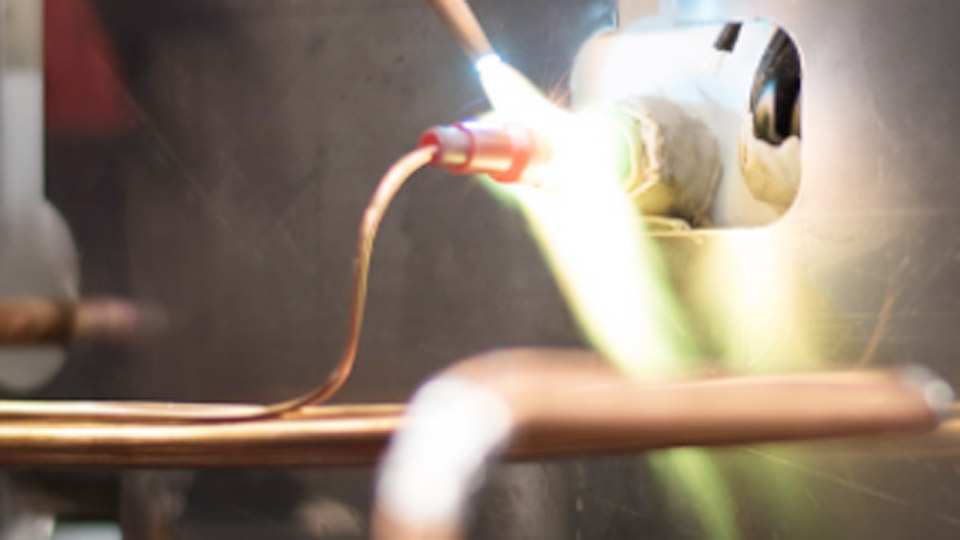
Image by nttinc
Why Choose Brazing for HVAC Copper Pipes?
Let’s get real about why you’d skip soldering altogether for HVAC copper. In my experience, soldering uses low-temp alloys, usually around 400-450°F, which is great for quick fixes on water lines but falls short in HVAC where pressures can hit 500 PSI or more.
Brazing kicks in at temps over 840°F, using filler metals like silver or copper-phosphorus alloys that flow deeper into the joint for a metallurgical bond that’s damn near as strong as the base metal.
Think about a rooftop unit in the blistering summer heat—those copper lines expand and contract, and a weak soldered joint can crack, spilling refrigerant everywhere. I’ve had to redo jobs like that, and it’s no fun climbing ladders with a torch in 100-degree weather.
Brazing ensures the joint can handle thermal cycling without breaking a sweat. Plus, it’s code-compliant for most HVAC installations in the US, aligning with standards that prioritize safety and longevity.
From a cost standpoint, brazing might seem pricier upfront with the fillers and flux, but it saves money long-term by reducing callbacks.
I’ve advised plenty of DIYers and pros alike: if you’re working on anything involving refrigerants, brazing is your go-to for reliability. It’s not about being fancy; it’s about getting the job done right the first time.
Brazing Basics: What It Is and How It Differs from Soldering
Brazing is essentially capillary action on steroids. You heat the copper pipes to a cherry-red glow, then introduce a filler rod that melts and wicks into the gap between the pieces. Unlike welding, which melts the base metal, brazing keeps the copper intact while the filler creates the bond. This is key for HVAC because copper’s thin walls can distort or burn through if you go too hot.
Compared to soldering, brazing requires more heat, so you’re using an oxy-acetylene torch or MAPP gas setup instead of a simple propane one. The fillers are different too—soldering uses tin-lead or lead-free alloys, while brazing calls for rods with silver content for better flow and strength.
I’ve switched to silver-based fillers for most HVAC work because they don’t require flux on copper-to-copper joints, cutting down on cleanup.
When do you use it? Anytime you’re joining copper lines in air conditioning or refrigeration systems. Why? Because the joint needs to be leak-proof under vacuum and pressure tests. In my shop days, we’d braze evaporator coils and condenser lines daily, and a good braze meant no hissing leaks during startup.
Tools and Materials for Brazing HVAC Copper Pipes
You can’t braze without the right gear—I’ve learned that the hard way after scorching a few pipes with mismatched equipment. Start with a good torch setup. For HVAC, I prefer an oxy-acetylene rig with a rosebud tip for even heating on larger pipes, but if you’re in a pinch, a turbo torch with MAPP gas works for pipes up to 1 inch.
Filler rods are crucial. Go for a 15% silver rod like Harris Stay-Silv for its low melting point and excellent capillary action. If you’re on a budget, a copper-phosphorus alloy like PhosCopper does the trick without flux for copper-to-copper.
Flux is non-negotiable for dissimilar metals or if there’s any oxidation—use a borax-based paste to prevent oxides from weakening the joint.
Other essentials: pipe cutters for clean ends (no hacksaws, they leave burrs), emery cloth or wire brushes for cleaning, safety glasses, leather gloves, and a fire extinguisher nearby.
I’ve added a nitrogen purge kit to my toolkit after seeing oxygen contaminate joints and cause failures. Purge the lines with low-flow nitrogen to keep things clean inside.
Don’t forget measuring tools—a caliper for checking joint gaps (aim for 0.002-0.006 inches) and a leak detector for post-braze checks. In US shops, brands like Victor for torches and Uniweld for tips are staples because they’re reliable and parts are easy to find.
Preparing Your Workspace and Pipes
Prep work is where most brazing jobs succeed or fail. I’ve rushed it before and ended up with porous joints that leaked like a sieve. First, set up in a well-ventilated area—brazing fumes aren’t something you want to breathe all day. Lay down a fire blanket or wet rags to protect surrounding areas, especially if you’re working near insulation or wood.
For the pipes, cut them square with a tubing cutter. Deburr the edges inside and out with a reamer or file; any burrs block filler flow. Clean the mating surfaces obsessively—use emery cloth to shine them up until they’re bright copper. Wipe with a dry cloth; no oils or fingerprints.
If the pipes are oxidized from sitting around, soak in a mild acid pickle or use a dedicated copper cleaner. For HVAC, always flux the outside of the joint if needed, but skip it inside to avoid contaminating the system. Fit the pieces together dry first to ensure a snug capillary gap—too tight and the filler won’t flow; too loose and you’ll get voids.
One shop trick I’ve used: heat the pipe slightly before cleaning to loosen stubborn oxide, but don’t overdo it. And always wear your PPE—I’ve got a scar from a hot drip to remind me.
Step-by-Step Guide to Brazing HVAC Copper Pipes
Let’s get into the meat of it. This is how I braze copper lines in HVAC repairs, honed from countless compressor swaps and line set installations.
First, assemble your joint. Slide the fitting over the pipe end, ensuring even overlap. If it’s a flare or compression, double-check alignments.
Purge the line with nitrogen at about 2-5 CFH to prevent internal oxidation. Light your torch—start with a neutral flame for oxy-acetylene, blue cone about 1 inch long.
Heat the joint evenly, moving the flame around the fitting. Watch for the copper to turn dull red; that’s around 1100-1200°F. Don’t point the flame directly at the filler rod yet.
Touch the rod to the joint edge. If it’s hot enough, it’ll melt and flow in via capillary action. Feed it steadily, letting the heat pull it in—don’t puddle it like welding.
Once the filler rings the joint, remove heat and let it cool naturally. No quenching; that can crack the braze.
Inspect visually for full penetration—a smooth fillet all around. Pressure test with nitrogen to 300 PSI and check for leaks with soap solution.
For vertical joints, heat from the bottom up to let gravity help flow. In tight spots, use a mirror to watch the back side. I’ve brazed in crawlspaces this way, cursing the whole time but getting solid results.
Machine Settings and Torch Techniques
Torch settings make or break your braze. For a standard 1/2-inch copper line, I set oxy to 5 PSI and acetylene to 3 PSI on a #2 tip. That’s enough for quick heat without overheating.
Technique-wise, oscillate the flame in circles to distribute heat. Overheat one spot and you’ll get burn-through or distortion. I’ve salvaged warped pipes by annealing them post-braze, but prevention is better.
For larger pipes, say 1-1/4 inch, bump to a #4 tip and higher pressures—7 PSI oxy, 5 acetylene. Always adjust based on ambient temp; colder shops need more heat.
If using air-acetylene, max out at 2400°F—fine for small jobs but slower. Pro tip: practice on scrap first. I’ve wasted rods learning flame control, but it’s worth it.
Common Mistakes in Brazing HVAC Copper and How to Fix Them
I’ve screwed up plenty, so learn from my mishaps. One biggie: insufficient cleaning. Oxide leads to black, brittle joints. Fix by recleaning and reheating with flux.
Overheating is another—copper melts at 1984°F, so stay below that. If you burn through, cut out the section and start over.
Poor filler flow? Check your gap or heat distribution. I’ve added more flux mid-braze to salvage, but it’s messy.
Leaky joints post-test? Often from no purge—internal scale blocks flow. Disassemble, clean, and retry with nitrogen.
Rushing cooling causes cracks. Let it air cool, or use a wet rag gently after solidification.
In shop settings, mismatched fillers bite you—don’t use high-silver on brass without proper flux. Test compatibility on scraps.
Safety Considerations for Brazing in HVAC Work
Safety isn’t optional; I’ve seen burns and fires that could’ve been avoided. Always ventilate—brazing releases cadmium fumes from some rods, nasty stuff.
Wear full PPE: flame-resistant clothing, gloves, tinted goggles (shade 4-5). Keep a fire watch; sparks fly far.
Handle gases smart—secure cylinders, no leaks. I’ve had a hose pop off mid-job; shutoff valves saved the day.
For HVAC, evacuate refrigerants first—brazing with pressure inside is explosive. Use recovery machines per EPA rules.
In confined spaces, monitor oxygen levels. I’ve used fans and respirators in basements.
Post-braze, dispose of flux residue properly—it’s corrosive.
When to Braze vs. Other Joining Methods for Copper Pipes
Brazing shines in HVAC, but know when to pivot. For low-pressure water lines, soldering is faster and cheaper.
Press fittings are great for no-flame jobs in occupied buildings—I’ve used ProPress tools for quick installs, no heat needed.
Welding copper? Rare in HVAC due to distortion, but for thick walls, TIG with argon shield works.
Choose brazing for strength in high-vibe areas like vehicle AC. Cost-wise, it’s mid-range: more than solder, less than custom welds.
In my fab shop, we’d braze for prototypes, weld for heavy-duty.
Pros and Cons of Brazing HVAC Copper Pipes
Let’s break it down simple.
Pros:
- Strong joints handle high pressure and temp.
- Good for dissimilar metals with right filler.
- Minimal distortion compared to welding.
- Leak-resistant for refrigerants.
Cons:
- Higher heat risks burns or fires.
- Requires skill and practice.
- Fillers cost more than solder.
- Fumes need ventilation.
I’ve weighed these on jobs—pros win for critical HVAC.
| Aspect | Brazing | Soldering |
|---|---|---|
| Temp Range | 840-2000°F | 350-500°F |
| Joint Strength | High (up to 70,000 PSI) | Medium (10,000-20,000 PSI) |
| Best For | HVAC refrigerants | Plumbing water lines |
| Cost per Joint | $2-5 | $0.50-2 |
| Skill Level | Intermediate | Beginner |
This table’s from my experience; adjust for your setup.
Troubleshooting Failed Brazed Joints
Joint leaking? Bubble test pinpoints. If small, reheat and add filler.
Porous braze? Likely contamination—clean and redo.
Cracks? Thermal stress; anneal pipe first next time.
Discoloration inside? No purge—flush with solvent.
Weak pull test? Wrong filler; match to copper grade.
I’ve troubleshot on-site, saving downtime.
Advanced Tips for Brazing in Challenging HVAC Scenarios
For bent lines, support with clamps to avoid sagging.
In wet environments, dry pipes thoroughly—moisture boils and spits.
Multi-joint assemblies: braze hottest first, work down.
For aluminum-copper transitions, use special fluxes.
I’ve brazed in rain under tarps—improvise but stay safe.
Conclusion
You’re better equipped to tackle those refrigerant lines with confidence, knowing your joints will hold strong against leaks and failures. This isn’t just book smarts; it’s the kind of hands-on know-how that keeps shops running smooth and jobsites safe.
Always keep a spare rod handy and heat the fitting, not the rod— it’ll save you from uneven flows and wasted material every time.
Can I braze copper pipes without flux?
You can on clean copper-to-copper with phosphorus-bearing rods—they self-flux. But for anything else, skip it at your peril; oxide ruins the bond. I’ve skipped flux once and regretted the rework.
What’s the best filler rod for HVAC brazing?
15% silver like Sil-Fos for flow and strength. Cheaper phos-copper works too, but silver handles gaps better. In my shop, silver’s go-to for critical lines.
How do I know if my brazed joint is strong enough?
Visual fillet, then pressure test to 1.5x system pressure. No drops after 15 minutes? Good. I’ve added dye penetrant for hidden cracks on tough jobs.
Is brazing safe for indoor HVAC repairs?
With ventilation and fire precautions, yes. Use no-flame alternatives in tight spots. I’ve brazed indoors with exhaust fans pulling fumes—key is prep.
What if I overheat the copper during brazing?
It anneals and softens, risking kinks. Cool slowly and support the pipe. If distorted, cut and retry—I’ve salvaged with fittings but prevention’s easier.