
Figuring out how to calculate gas consumption in MIG welding is something I didn’t pay much attention to at first — until I noticed how fast those cylinders were draining. One day I’d weld for hours with no issue, and the next I’d swear the tank emptied itself while I was grabbing a coffee.
That’s when I realized how much things like flow rate, wire feed speed, metal thickness, and even poor joint prep can affect how much shielding gas you burn through. Using too much gas doesn’t make your welds cleaner — it just wastes money. Too little, and you end up with porosity, weak beads, and inconsistent arc control.
Getting your gas usage dialed in saves cash, improves weld quality, and keeps your setup running smoothly whether you’re working mild steel, stainless, or doing light fabrication work. I’ll break down exactly how to calculate MIG gas consumption so you always know where your gas is going — and how to make it last longer.
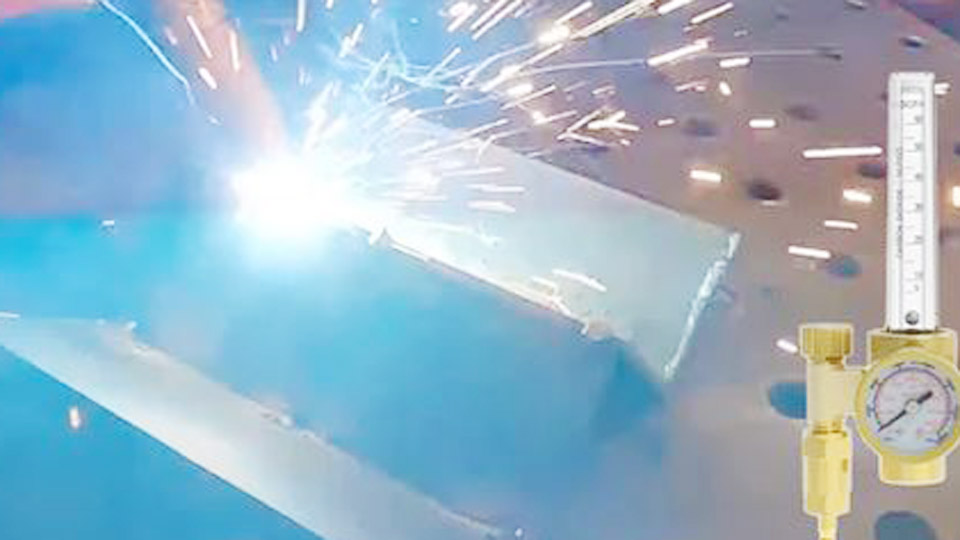
Image by yeswelder
Understanding Shielding Gas in MIG Welding
Shielding gas is your weld’s best friend in MIG welding. It’s that invisible barrier that protects the molten metal from oxygen and nitrogen in the air, preventing defects like oxidation or brittle spots. Common mixes include argon-CO2 blends for steel, pure argon for aluminum, or argon-helium for thicker materials needing deeper penetration.
How does it work? As you pull the trigger, gas flows through the nozzle, blanketing the weld area. The key is maintaining the right flow without excess, which is where calculation comes in. Use it when you’re dealing with carbon steel fabrication or stainless repairs—basically any MIG job where quality counts.
Why bother? In my experience, mismatched gas leads to rework. I once had a trainee crank the flow too high on a mild steel project, and we ended up with spatter everywhere because the arc got unstable. Dial it back, and your beads lay smoother, saving time on cleanup.
Practical know-how: Always check your regulator for leaks before starting. A hissy fitting can double your consumption without you noticing. For hobbyists, start with a basic argon-CO2 mix at 75/25—it’s versatile for most garage work.
Factors Influencing Gas Consumption in MIG
Gas usage isn’t a one-size-fits-all deal. Several things in your setup play a role, and ignoring them can lead to inaccurate estimates.
First up, wire feed speed. The faster you feed wire, the more gas you typically need to shield the larger weld pool. I’ve found that bumping from 200 to 300 inches per minute can increase gas needs by 20-30% on the same joint.
Gas type matters too. Argon is denser and flows slower than CO2, so mixes affect how much you use. For example, pure CO2 might require higher flows for stability, but it’s cheaper for carbon steel.
Nozzle size and condition? A worn nozzle lets gas escape inefficiently. I always keep spares handy—swapping one out mid-job has saved me from porosity issues countless times.
Environmental stuff like wind or drafts in the shop forces you to up the flow, sometimes to 25-35 CFH outdoors versus 15-20 indoors.
Machine settings, like voltage and amperage, indirectly influence it by changing arc length. Higher amps mean a hotter, wider pool needing more coverage.
Hose length is a sneaky one. Longer hoses create pressure drops, so you end up setting higher flows to compensate. I keep mine under 10 feet whenever possible.
Temperature swings affect gas density—warmer shop air expands the gas, potentially wasting more. In summer, I adjust down a bit after checking.
Common mistake: Setting flow based on guesswork. Fix it by using a flow meter at the nozzle end, not just the regulator. That’s real-world accuracy.
Tip for students: Log these factors on your next practice weld. It’ll build intuition faster than any textbook.
Step-by-Step Guide to Measuring Gas Flow Rate
Measuring flow rate is the foundation for calculating consumption. Here’s how I do it in the shop.
Start by gathering your tools: A flow meter or ball-type gauge, your MIG gun, and a stopwatch. Attach the flow meter to the nozzle if possible—some pros use a dedicated tester.
Step one: Set your regulator to a baseline, say 20 CFH for steel. Open the valve and pull the trigger without wire feeding to let gas flow steadily.
Step two: Time it for one minute while observing the gauge. Note the reading—that’s your volumetric flow rate in cubic feet per hour or liters per minute.
Step three: Adjust for variables. If it’s turbulent, drop it until the ball stabilizes without bouncing.
Step four: Repeat with actual welding to see real usage, as arc start-ups purge extra gas.
For DIYers, if you don’t have a fancy meter, use the bottle method: Weigh your cylinder before and after a timed session, then convert weight to volume using gas density (argon is about 1.78 kg/m³).
Anecdote: On a fence repair job, I measured 18 CFH but noticed higher usage. Turned out, a kinked hose was the culprit—straightened it and saved a full cylinder over the week.
Pro tip: Always calibrate annually. I’ve caught drifts that would’ve cost me extra tanks.
Formulas for Calculating Total Gas Consumption
Once you’ve got flow rate, crunching total consumption is straightforward. Basic formula: Total gas used = Flow rate × Time.
For example, 20 CFH for 2 hours equals 40 cubic feet. Scale to cylinders— a standard 80 cu ft bottle would last about 4 hours at that rate.
More precise: Account for duty cycle. If you’re welding 50% of the time, halve the time in the equation.
Gas to wire ratio is handy for estimates. Roughly, 1 cubic foot of gas per pound of wire for steel MIG. So, if you’re burning 10 pounds of wire, expect 10 cu ft gas.
In liters: Consumption (liters) = Flow (L/min) × Minutes welded.
For bidding jobs: Total = (Flow rate × Arc time) + Purge losses (about 10-20% extra).
Common error: Forgetting conversions. 1 CFH = about 0.47 L/min. Use online converters if needed, but memorize basics.
For pros, factor in efficiency: Actual consumption = Calculated × (1 + Waste factor), where waste is 0.1-0.3 based on setup.
I’ve used this on a trailer build: Estimated 50 cu ft for 5 hours at 10 CFH, but added 15% for starts/stops—nailed it spot on.
Choosing the Right Gas Flow Settings for Different Materials
Settings vary by what you’re welding. For mild steel, I stick to 15-25 CFH with 75/25 mix—keeps spatter low and penetration good.
Aluminum? Pure argon at 20-30 CFH, as it needs more coverage for the oxide layer.
Stainless calls for tri-mix (argon-helium-CO2) at 18-25 CFH for better arc stability.
Joint prep influences it too. Clean, tight joints use less gas than gappy ones needing extra shielding.
When to adjust: If beads look oxidized, up the flow. If arc wanders, dial back to avoid turbulence.
Mistake I’ve fixed: Newbies set too low for thick plate, getting porosity. Bump to 25 CFH and preheat if needed.
Tip: Match to machine recommendations. My Lincoln suggests 20 CFH base, but I tweak per job.
Tools and Equipment for Monitoring Gas Usage
Good tools make this easy. A basic regulator with gauge is entry-level, but add a flow meter for precision.
Digital calculators are game-changers—they measure real-time and adjust for pressure drops.
For hobbyists, apps or online calculators input flow and time for estimates.
In the shop, I use a surge protector on the line to cut post-flow waste.
Pros/cons of manual vs. digital: Manual is cheap but inaccurate; digital saves gas long-term but costs more upfront.
Comparison table:
| Tool Type | Pros | Cons | Best For |
|---|---|---|---|
| Basic Regulator | Affordable, simple | No precise measurement | DIY starters |
| Flow Meter | Accurate readings | Manual timing needed | Hobbyists |
| Digital Calculator | Auto-adjusts, saves data | Higher price | Pros |
| App/Online Tool | Quick estimates | Less hands-on | Planning |
Real application: On a pipeline job, digital tracking showed we were over by 25%—switched hoses and cut costs.
Common Mistakes in Gas Calculation and How to Avoid Them
Biggest blunder: Ignoring leaks. Check connections with soapy water—bubbles mean waste.
Another: Setting flow at the tank, not nozzle. Pressure drops eat accuracy.
Overestimating time—track actual arc hours, not total job time.
For students, confusing CFH with L/min leads to bad math. Always convert.
Anecdote: I once bid low on gas for a gate project, forgot wind factor—ended up buying extra. Now, I add 10% buffer.
Fix: Audit your setup weekly. Tighten fittings, clean nozzles.
Tip: Use pulse MIG modes—they optimize gas with the arc, reducing overall use.
Optimizing Gas Efficiency in Your Welding Shop
Efficiency starts with setup. Short hoses, wide diameters minimize drops.
Use gas savers or restrictors to cut surge at arc start.
Mix wisely—75/25 is efficient for most steel, avoiding pure gases unless needed.
Prep work: Clean materials reduce spatter, meaning less time welding and less gas.
For fabrication hobbyists, batch jobs to minimize starts/stops.
I’ve cut usage 30% by switching to a gas lens nozzle—better distribution, less flow needed.
Pros/cons of mixes:
| Mix | Pros | Cons |
|---|---|---|
| 75/25 Argon/CO2 | Good penetration, low spatter | Not for aluminum |
| Pure Argon | Clean on non-ferrous | More expensive, less stable on steel |
| Tri-Mix | Versatile for stainless | Higher cost |
Industry workers: Follow shop protocols, but suggest audits for savings.
Real-World Applications and Case Studies
Take a truck frame repair: 20 CFH, 3 hours arc time = 60 cu ft. With 80 cu ft bottle, one suffices.
DIY gate: 15 CFH, 1 hour = 15 cu ft. Small tank lasts multiple projects.
Pro piping: High duty, 25 CFH, 8 hours = 200 cu ft. Plan for two bottles.
Mistake fix: On a sculpture, wind pushed usage up—moved indoors, saved half.
Tip: For codes like ASME, document consumption for quality logs.
Safety Considerations When Handling MIG Gas
Safety first—gas cylinders are pressurized beasts. Secure them upright, away from heat.
Ventilate the shop; CO2 buildup can displace oxygen.
Wear PPE: Gloves for handling, helmet for welding.
Common issue: Overpressurizing regulators leads to bursts. Set per manufacturer.
I’ve trained newbies on this—proper chaining prevents tip-overs.
For students: Learn SDS for gases; know asphyxiation risks.
Comparing Gas Consumption Across Welding Processes
MIG vs. TIG: MIG uses more gas due to continuous feed, say 20 CFH vs. TIG’s 10-15.
Vs. Stick: No gas, but MIG’s efficiency shines in production.
For hobbyists, MIG’s gas cost is offset by speed.
Table:
| Process | Avg Flow (CFH) | Gas Type | Best Use |
|---|---|---|---|
| MIG | 15-25 | Argon/CO2 | Production |
| TIG | 10-15 | Argon | Precision |
| Stick | 0 | None | Outdoors |
In US shops, MIG dominates for its balance.
Advanced Tips for Professional Welders
Pros, integrate with WPS: Calculate per procedure for consistency.
Use software for job tracking—inputs flow, outputs totals.
For thick materials, pulse reduces gas by 15-20%.
Anecdote: On a bridge repair, optimized to 18 CFH—met code, under budget.
Wrapping It Up: Mastering Gas Consumption for Better Welds
Everything from basics to pro tweaks on how to calculate gas consumption in MIG welding. Measure flow accurately, factor in variables like wire speed and environment, use simple formulas like flow times time, and optimize with tools and tips to cut waste. You’re now set to tackle jobs with confidence, whether it’s a quick fix or a full fab.
You’ll save money, boost weld quality, and avoid those frustrating mid-project gas runs. Always start your day with a quick leak check—it’ll pay off in spades. Grab your torch and get welding smarter.
FAQs
How much shielding gas do I need for a typical MIG welding project?
For a standard steel job, plan on 15-25 CFH. A 2-hour session at 20 CFH uses about 40 cubic feet, so an 80 cu ft cylinder covers it with room to spare. Adjust up for wind or thicker materials.
What’s the best gas flow rate for welding aluminum with MIG?
Aim for 20-30 CFH with pure argon. It provides better coverage for the sensitive oxide layer. Test on scrap to avoid porosity, and keep your nozzle clean for even flow.
How can I reduce gas waste in my MIG setup?
Shorten hoses to cut pressure drops, use gas savers to minimize surges, and check for leaks regularly. Switching to pulse modes can drop usage by 15-20% without sacrificing quality.
Is there a difference in gas consumption between indoor and outdoor MIG welding?
Yes, outdoors often needs 25-35 CFH due to wind dispersing the gas. Indoors, 15-20 CFH suffices. Shield with barriers if possible to keep flows lower.
How do I convert CFH to liters per minute for gas calculations?
Multiply CFH by 0.47 to get L/min. For example, 20 CFH is about 9.4 L/min. Handy for international equipment or precise bidding.