
Choosing the right tungsten electrode size can make or break your TIG weld quality — and I learned that the hard way. Early on, I grabbed whatever tungsten was closest on the bench and wondered why my arc wandered, my puddle overheated, or the bead looked inconsistent.
The truth is, tungsten size matters just as much as amperage, metal thickness, and the type of material you’re welding — whether it’s stainless, aluminum, or mild steel.
Too small, and the tungsten overheats and balls up; too large, and you can’t get the precise arc control TIG welding is known for. Picking the proper size saves your tungsten, improves weld penetration, and keeps your puddle stable and clean.
I’ll walk you through how to choose the right tungsten electrode size for any job — so you get smoother starts, tighter beads, and more consistent welds every time.
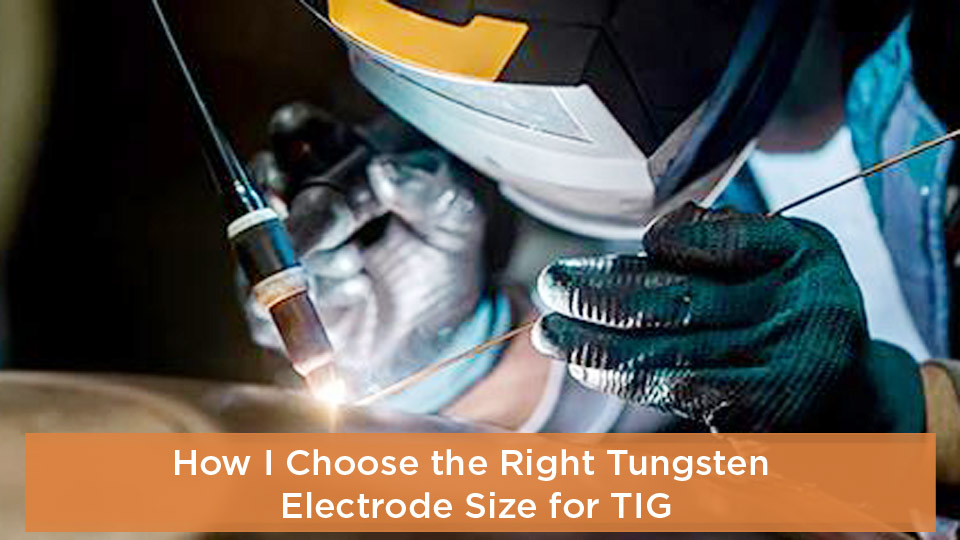
Image by arccaptain
Understanding Tungsten Electrodes in TIG Welding
Tungsten electrodes are the non-consumable heart of TIG welding, carrying the arc from your torch to the workpiece without melting away like filler rods do. They’re made from high-purity tungsten, often alloyed with oxides to boost performance, and come in various diameters that directly affect how they handle current and heat.
In my experience, these electrodes work by creating a stable arc when electricity flows through them, ionizing the shielding gas to form a plasma that transfers heat to your metal. You use them primarily in GTAW processes, which we all know as TIG, for precise control on everything from automotive repairs to aerospace parts.
Choose them when you need clean, spatter-free welds on thin gauges or exotic alloys where other methods like MIG might overpower the job.
Why bother with the right one? Back when I was apprenticing, I grabbed whatever was handy and ended up with erratic arcs that ruined a batch of stainless brackets—lesson learned.
The electrode size influences arc shape, start reliability, and overall weld quality, making it essential for anyone from DIYers fixing lawnmower frames to pros fabricating pressure vessels under ASME codes common in US shops.
Common Tungsten Electrode Diameters and Their Uses
Diving deeper, tungsten electrodes typically range from 0.020 inches up to 1/4 inch in diameter, but most of us stick to a handful of standards for everyday work. The smallest, like 0.020 or 0.040 inches, are your go-to for ultra-low amp welding on razor-thin sheets, while beefier ones like 3/16 inch handle heavy-duty high-current tasks.
Take the 1/16-inch diameter, for instance—it’s a versatile workhorse I reach for often. This size shines on materials up to 1/8 inch thick, handling 50 to 150 amps without breaking a sweat.
I’ve used it countless times for welding aluminum bike frames in my home shop, where it provides a focused arc that penetrates just right without warping the lightweight alloy.
Then there’s the 3/32-inch option, which I consider the all-rounder for medium-thickness work. It manages 100 to 250 amps comfortably, making it ideal for steel tubing or stainless exhaust systems.
On a job site repair once, I switched to this after a 1/16-inch kept overheating, and it saved the day with steady performance on 3/16-inch plate.
Larger diameters, say 1/8 inch, are for when you’re cranking the amps above 200, like on thick carbon steel beams. They resist melting better but can be trickier to start at low currents, so I prep them with a sharper point to ease ignition.
And don’t forget the tiny 0.040-inch for delicate jobs—I relied on these during a hobby project welding titanium jewelry, where anything bigger would’ve blown holes in the material.
In practice, match the diameter to your torch collet size too; a mismatch leads to poor gas flow or wobbly arcs. Always keep a variety sharpened and ready, as swapping mid-job beats dealing with contamination.
Factors Influencing Tungsten Electrode Size Selection
Choosing the size isn’t just about grabbing the middle one from the pack; several factors come into play based on what I’ve seen in real workshops.
First off, consider the welding current—DC for steels and titanium, AC for aluminum and magnesium. Smaller electrodes excel at low DC currents for fine control, while larger ones carry AC loads without balled tips wandering.
Material type and thickness are huge. For thin aluminum sheets under 1/16 inch, I always go small to avoid burn-through, setting my machine to 60-80 amps with a pointed tip.
Thicker stainless, say 1/4 inch, calls for a 1/8-inch electrode at 200 amps for deep penetration without excessive heat input.
Your power source matters too—inverter welding machines like those from Lincoln or Miller handle smaller electrodes better at low amps than older transformer units. I remember upgrading my setup and suddenly my 0.040-inch tungstens started arcs like a dream, no more high-frequency struggles.
Joint design plays a role; butt joints on pipe might need a size that allows for weave without instability, while fillet welds on frames benefit from focused arcs of mid-sized electrodes. Factor in your skill level—if you’re new, start with 3/32-inch for forgiveness on settings.
Here’s a quick comparison table to visualize:
| Diameter (inches) | Typical Amp Range (DC) | Best For Materials | Pros | Cons |
|---|---|---|---|---|
| 0.020 | 5-30 | Ultra-thin alloys like titanium foil | Precise control, easy low-amp starts | Overheats quickly at higher currents |
| 0.040 | 15-80 | Thin sheets (aluminum, stainless under 1/16″) | Good arc focus, minimal distortion | Limited to low amps, wears faster |
| 1/16 (0.0625) | 50-150 | Medium gauges (up to 1/8″) | Versatile, stable arcs | Can contaminate if pushed too hard |
| 3/32 (0.09375) | 100-250 | Thicker stock (1/8″ to 1/4″) | Handles heat well, long life | Harder starts at very low amps |
| 1/8 (0.125) | 150-300 | Heavy plates (over 1/4″) | High current capacity, durable | Bulky for fine work, needs sharp prep |
This table draws from my hands-on trials; always test on scrap first.
Tungsten Electrode Types and How They Affect Size Choice
Electrode type ties closely to size, as different alloys perform best at certain diameters. Pure tungsten (green tip) is old-school for AC aluminum, but I size it larger, like 1/8 inch, to handle balling without spitting.
Thoriated (red electrode) was my staple early on for DC steel, where a 3/32-inch size carries high amps reliably, but I switched due to radioactivity concerns—now I use lanthanated (blue electrode) in the same size for similar stability without the risks.
Ceriated (gray electrode) excels at low amps, so pair it with smaller 0.040 or 1/16-inch for thin stainless. Zirconiated (brown) for AC magnesium? Go mid-size like 3/32-inch for its contamination resistance.
Rare-earth blends (purple or chartreuse) are game-changers; they let you use a smaller diameter for the same amp load, like a 1/16-inch handling what a 3/32-inch thoriated would. In a fab shop, I once downsized with rare-earth and got tighter beads on aluminum enclosures.
Pros of matching type to size: Better arc starts, less wear. Cons: Mismatches cause instability—I’ve seen newbies use thoriated small on high AC and end up with wandering arcs.
Step-by-Step Guide to Selecting the Right Tungsten Size
Let’s walk through this like I’m showing you in the shop. Step one: Assess your material and thickness. For 1/8-inch mild steel, aim for 100-150 amps, pointing to a 1/16 or 3/32-inch electrode.
Step two: Determine polarity. DCEN for steel? Smaller sizes work fine. AC for aluminum? Size up slightly for ball stability.
Step three: Check your machine’s capabilities. My Everlast inverter handles low amps with tiny electrodes, but confirm your model’s range.
Step four: Consider the joint and position. Overhead welding might need a size that resists dripping, like 3/32-inch.
Step five: Prep the electrode. Sharpen to 20-30 degrees for DC, ball for AC. Use a dedicated grinder to avoid cross-contamination.
Step six: Test on scrap. Dial in settings—start at 70% of max amp for the size, adjust gas flow to 15-20 CFH argon.
Step seven: Weld and evaluate. If the arc wanders, size up; if it overheats, downsize or tweak amps.
I followed this on a recent hobby restore of an old truck frame, starting with 1/8-inch on thick sections and switching to 1/16-inch for patches—perfect results.
Machine Settings and Prep Work for Optimal Performance
Settings make or break it. For a 3/32-inch lanthanated on DC steel, I set 120 amps, 15 CFH gas, and a 1/8-inch stickout. Pulse if needed for heat control on thin stuff.
Prep the joint: Bevel edges on thick materials for better penetration, clean with acetone to avoid porosity. Electrode prep—grind longitudinally to prevent arc wander; I use a belt sander for quick flats on truncated tips.
Filler compatibility: Match rod size to electrode, like 1/16-inch filler with 1/16-inch tungsten for balance. Safety wise, wear gloves to avoid oils contaminating the tip, and use proper ventilation for any alloy fumes.
One tip from the field: Pre-flow gas for 0.5 seconds to shield the start, post-flow 10 seconds to cool the electrode.
Common Mistakes When Choosing Electrode Size and How to Fix Them
I’ve made ’em all, so learn from my blunders. Mistake one: Using too small a size for high amps. It melts, spits tungsten into the pool—fix by upsizing and dropping amps 20%.
Mistake two: Oversizing for low-current work. Arc won’t start easily—sharpen finer or downsize.
Mistake three: Ignoring type-size synergy. Pure tungsten small on DC? Unstable—switch to ceriated.
Mistake four: Poor prep leading to contamination. Grind marks spiral? Arc dances—always grind parallel.
Anecdote: On a job welding stainless tanks, I undersized and got inclusions that failed inspection. Fixed by testing sizes beforehand, now standard practice.
Safety Considerations in Electrode Selection
Safety isn’t optional in our line of work. Undersized electrodes overheat, risking burns or fires—always match to amps. Radioactive thoriated? I avoid them now, opting for lanthanated to cut exposure, per US guidelines.
Handle with care: Sharp points poke, so store in tubes. Grind dust is hazardous—use exhaust or masks. In shops following OSHA, proper sizing prevents arc flash incidents by ensuring stable operation.
Pro tip: Inspect electrodes pre-weld for cracks; a flawed one can shatter under heat.
Real-World Applications and Examples
In US auto shops, 1/16-inch ceriated rules for exhaust repairs on thin tubing at 80 amps. For pipeline work under API standards, 3/32-inch lanthanated at 150 amps ensures code-compliant beads.
DIY example: Welding a custom grill from aluminum angle—I used 3/32-inch zirconiated on AC at 120 amps, balled tip for wide coverage.
Industrial: Fabricating steel frames for machinery, 1/8-inch rare-earth at 250 amps for deep joints without filler overload.
Hobbyist: Student project on copper sculpture? 0.040-inch pure at 30 amps AC for delicate fusion.
These show how size adapts to scenarios, boosting efficiency.
Wrapping Up
I’ve covered the ins and outs of choosing the right tungsten electrode size, from diameters and types to settings and fixes. You’re now equipped to pick based on amps, materials, and processes, leading to safer, stronger welds that save time and frustration.
Whether you’re a DIYer in your garage or a pro on the site, this knowledge builds your confidence—grab that torch and lay some beads knowing you’ve got it right. Always keep a mixed pack of sizes on hand; versatility beats scrambling mid-project every time.
FAQs
What size tungsten electrode should I use for aluminum welding?
For aluminum on AC, start with 3/32-inch for most thicknesses up to 1/4 inch at 100-200 amps. It balls well for stability; downsize to 1/16-inch for thinner sheets to avoid excessive heat.
How does amperage affect tungsten electrode size choice?
Higher amps demand larger diameters to prevent melting—use 1/16-inch up to 150 amps, 3/32-inch for 100-250, and 1/8-inch beyond. Test to fine-tune for your setup.
Can I use the same tungsten size for DC and AC welding?
Yes, but adjust: Smaller for DC precision on steels, slightly larger for AC on alloys to handle balling. Versatile types like lanthanated work across both.
What are signs I’ve chosen the wrong tungsten size?
Erratic arc starts, quick wear, or pool contamination signal a mismatch—upsize if overheating, downsize if unstable at low amps.
How do I prepare a tungsten electrode for the chosen size?
Grind to a point for DC (20-30 degrees), ball for AC. Use a dedicated tool, keeping scratches parallel for arc focus, regardless of diameter.