
Converting a TIG welder to a plasma cutter isn’t a straightforward modification that most welders can perform safely or effectively. While both tools work with electrical arcs, they operate on fundamentally different principles and require specialized components that make direct conversion nearly impossible.
The short answer is: you cannot simply convert a TIG welder into a plasma cutter. However, there are practical alternatives and workarounds that can help you achieve plasma cutting capabilities without buying an entirely separate machine.
Understanding the Key Differences Between TIG Welding and Plasma Cutting
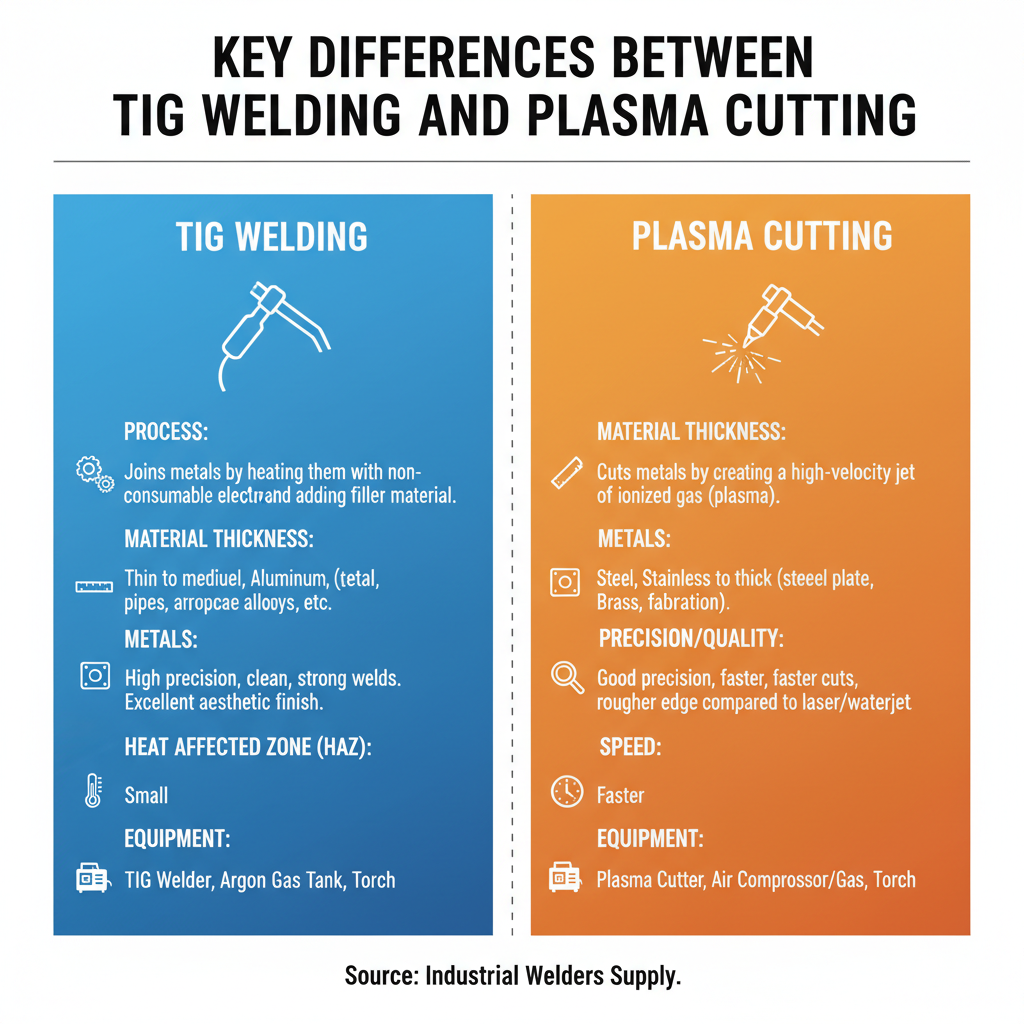
Before exploring your options, it’s essential to understand why direct conversion isn’t feasible.
TIG welders create a controlled arc between a tungsten electrode and the workpiece to join metals together. The process requires precise heat control and typically operates at lower amperages with specific voltage characteristics.
Plasma cutters, on the other hand, force compressed air or gas through a small nozzle opening, creating an extremely hot plasma arc that melts and blows away metal. This process requires much higher temperatures, different gas flow systems, and specialized cutting torches.
The electrical requirements also differ significantly. TIG welders focus on maintaining a stable arc for joining, while plasma cutters need rapid arc starting capabilities and different current characteristics optimized for cutting rather than welding.
Why Direct Conversion Isn’t Practical
Several technical barriers make converting a TIG welder to a plasma cutter impractical:
Power Supply Differences: TIG welders and plasma cutters have different power supply requirements. Plasma cutters need specific voltage and current characteristics that TIG power supplies aren’t designed to provide.
Arc Starting Systems: Plasma cutters require high-frequency or contact starting systems that differ from TIG arc initiation methods.
Gas Delivery Systems: TIG welders use shielding gas at low pressure, while plasma cutters need compressed air or specialized gases at much higher pressures and flow rates.
Torch Design: The CK Worldwide TIG Torch and similar TIG torches are designed for precision welding, not the high-velocity gas flow and cutting action required for plasma cutting.
Safety Considerations: Modifying welding equipment can create serious safety hazards, void warranties, and potentially violate electrical codes.
Alternative Solutions for Plasma Cutting Capabilities
Instead of attempting conversion, consider these practical alternatives:
Dual-Purpose Machines
Some manufacturers offer combination units that provide both TIG welding and plasma cutting capabilities in a single machine. These units are purpose-built with the necessary components for both processes.
Plasma Cutting Attachments
While true conversion isn’t possible, some companies have developed plasma cutting attachments that work with specific welder models. However, these are rare and typically only compatible with certain industrial-grade machines.
Separate Plasma Cutter Investment
The most practical solution is investing in a dedicated plasma cutter. Entry-level units have become increasingly affordable and offer better performance than any makeshift conversion attempt.
Understanding Plasma Cutter Components
To appreciate why conversion isn’t feasible, let’s examine what makes a plasma cutter work:
Power Supply: Plasma cutters require inverter-based power supplies with specific output characteristics. The power supply must provide consistent amperage while maintaining proper voltage for the cutting process.
Air Compressor Integration: Most plasma cutters require compressed air at 60-90 PSI. This air flow is crucial for creating the plasma arc and blowing away molten metal.
Cutting Torch: Plasma cutting torches contain consumable parts including electrodes, nozzles, and swirl rings. The Hypertherm Powermax45 XP Plasma Cutter uses precision-engineered consumables that create the proper gas flow patterns for effective cutting.
Control Systems: Modern plasma cutters include sophisticated control systems that manage arc starting, current regulation, and safety features.
Safety Considerations and Code Compliance
Attempting to modify welding equipment raises serious safety concerns:
Electrical Safety: Improper modifications can create shock hazards, fire risks, and equipment damage. Welding equipment modifications may violate electrical codes and insurance requirements.
Gas Safety: Plasma cutting involves high-pressure gases and compressed air systems. Improper installation can lead to dangerous pressure buildups or gas leaks.
Warranty Issues: Any modifications will void manufacturer warranties and may affect insurance coverage.
Professional Standards: Modified equipment may not meet workplace safety standards or professional certification requirements.
Cost-Effective Plasma Cutting Solutions
Rather than attempting conversion, consider these budget-friendly options:
Entry-Level Plasma Cutters
Modern entry-level plasma cutters offer excellent value and performance. Many units under $500 can cut through materials up to 1/2 inch thick, making them suitable for most hobbyist and light professional applications.
Used Equipment Options
The used equipment market offers quality plasma cutters at reduced prices. Look for well-maintained units from reputable manufacturers with available parts and service support.
Rental Options
For occasional plasma cutting needs, equipment rental can be more cost-effective than purchasing. Many welding supply stores offer daily or weekly plasma cutter rentals.
Maximizing Your TIG Welder Investment
Instead of conversion, focus on maximizing your existing TIG welder’s capabilities:
Expand Welding Applications: TIG welders can handle aluminum, stainless steel, and exotic metals that many other welding processes cannot.
Precision Work: Use your TIG welder for precision fabrication work that requires clean, high-quality welds.
Complementary Tools: Invest in cutting tools that complement your TIG welder, such as angle grinders, band saws, or oxy-acetylene torches for cutting applications.
When to Choose Plasma Cutting Over Other Methods
Understanding when plasma cutting offers advantages helps justify a separate investment:
Speed: Plasma cutting is significantly faster than mechanical cutting methods for most materials.
Precision: Modern plasma cutters with CNC integration offer excellent precision for complex shapes.
Material Range: Plasma cutters work effectively on various conductive metals and thicknesses.
Heat-Affected Zone: Plasma cutting creates a smaller heat-affected zone compared to oxy-fuel cutting.
Maintenance and Operating Costs
Consider ongoing costs when evaluating plasma cutting options:
Consumables: Plasma cutters require regular replacement of electrodes, nozzles, and other consumable parts.
Compressed Air: Operating costs include compressed air or specialized gases.
Power Consumption: Plasma cutters typically consume more electricity than TIG welders during operation.
Maintenance: Regular maintenance is essential for consistent performance and consumable life.
Professional vs. DIY Considerations
For professional applications, dedicated equipment offers several advantages:
Reliability: Purpose-built plasma cutters provide consistent performance and uptime.
Support: Manufacturer support, parts availability, and service networks are crucial for business applications.
Productivity: Dedicated equipment maximizes productivity and efficiency.
Quality: Professional plasma cutters deliver superior cut quality and consistency.
Conclusion
While converting a TIG welder to a plasma cutter isn’t practically feasible, understanding the differences between these technologies helps you make informed decisions about your metalworking capabilities. The fundamental differences in power supplies, gas systems, and torch designs make direct conversion unsafe and ineffective.
Instead of attempting conversion, consider investing in a dedicated plasma cutter that meets your specific cutting needs. Modern plasma cutters offer excellent value, improved safety, and superior performance compared to any makeshift conversion attempt.
Focus on maximizing your TIG welder’s capabilities for precision welding applications while adding a proper plasma cutter to your workshop for efficient metal cutting. This approach provides the best of both worlds: excellent welding capabilities and professional-quality plasma cutting performance.
Remember that metalworking success comes from using the right tool for each job. Your TIG welder excels at creating high-quality welds, while a dedicated plasma cutter will handle your metal cutting needs safely and efficiently.