
Motorcycle fairings take a beating from road debris, crashes, and everyday wear. Learning how to fix fairings on a motorcycle can save you hundreds of dollars in repair shop costs while keeping your bike looking sharp. Whether you’re dealing with minor scratches or major cracks, this comprehensive guide walks you through the essential repair techniques every rider should know.
Fixing motorcycle fairings involves cleaning the damaged area, sanding to prepare the surface, applying body filler for deep damage, and repainting with primer, base coat, and clear coat. Minor scratches can often be polished out, while cracks require reinforcement with fiberglass and plastic welding for severe damage. Most fairing repairs can be completed at home with basic tools and automotive-grade materials.
Motorcycle Fairing Damage Types
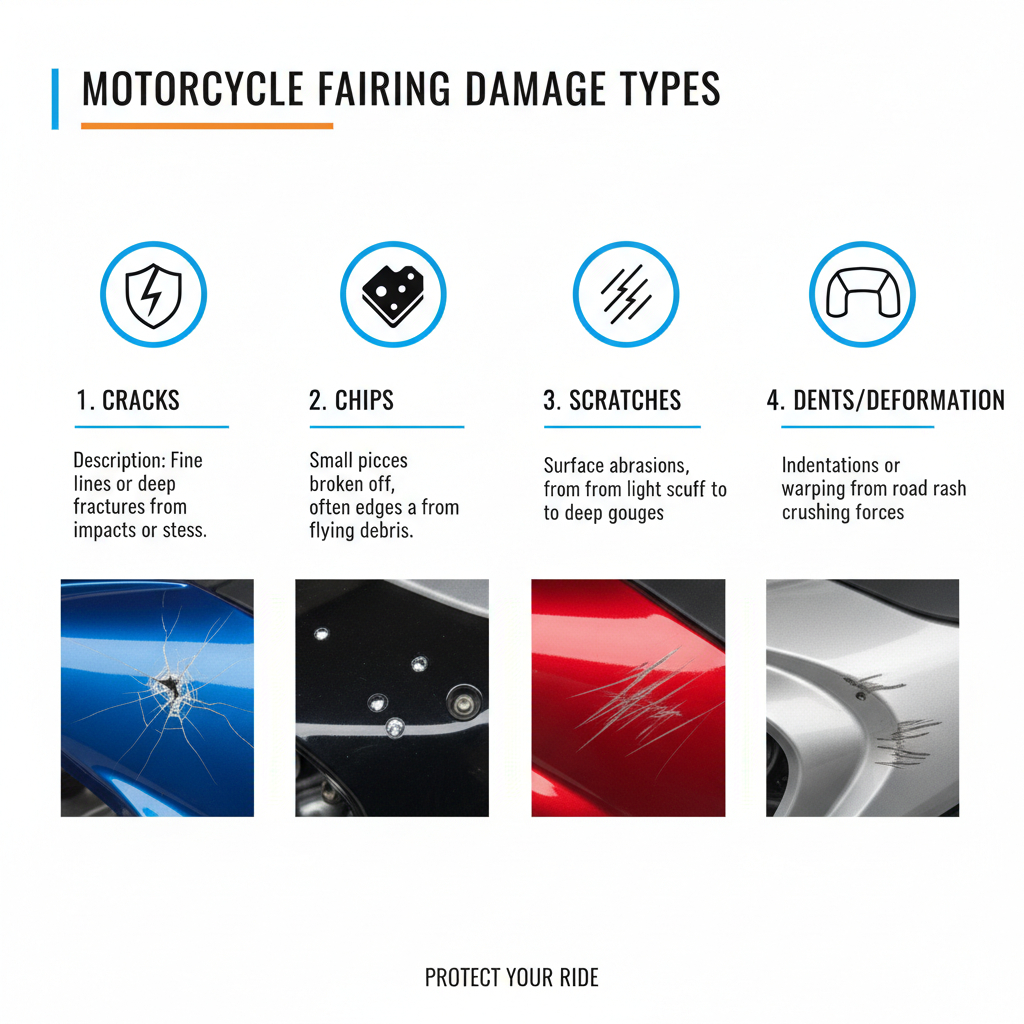
Before diving into repairs, identify the type of damage you’re dealing with. Different problems require different solutions.
Surface scratches are the most common fairing issue. These shallow marks affect only the paint layer and clear coat. They’re typically caused by branches, gravel, or minor contact with objects.
Deep gouges penetrate through the paint into the plastic substrate. These require more extensive repair work but are still manageable for DIY enthusiasts.
Cracks and splits represent structural damage to the fairing material. Small cracks can spread quickly if not addressed properly, while large splits may compromise the fairing’s integrity.
Missing chunks or holes require plastic welding or patching techniques. These often result from crashes or impact damage.
Stress fractures appear around mounting points and high-stress areas. They’re common on older bikes where the plastic has become brittle over time.
Essential Tools and Materials for Fairing Repairs
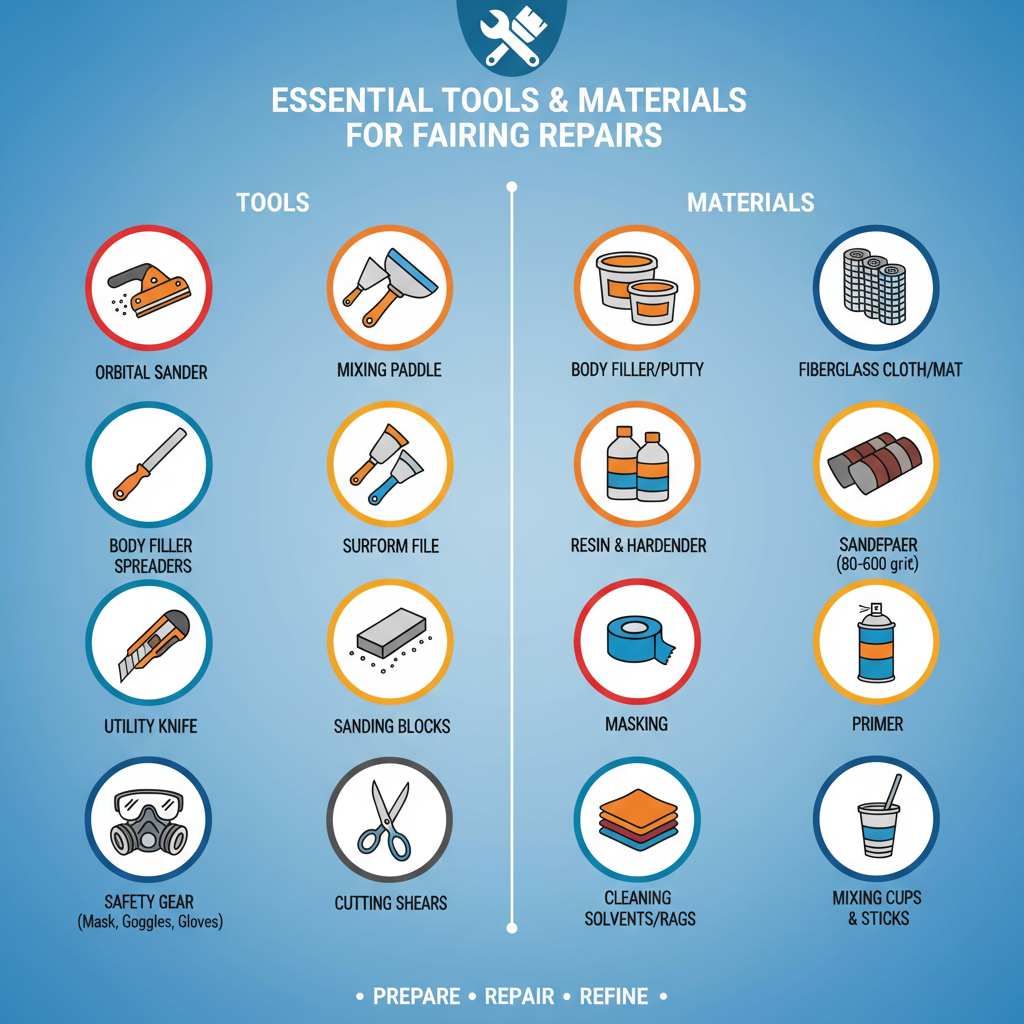
Gathering the right tools makes fairing repairs much easier and ensures professional-looking results.
Basic hand tools include screwdrivers, socket sets, and trim removal tools for fairing removal. A heat gun helps with plastic welding and paint removal.
Sanding supplies are crucial for surface preparation. You’ll need 220, 400, 800, and 1200-grit sandpaper. Sanding blocks ensure even surfaces.
Repair materials vary by damage type. Bondo Professional Grade Body Filler works excellently for filling deep gouges and small holes in motorcycle fairings. Its automotive-grade formula bonds well with ABS plastic commonly used in fairings.
Paint supplies include primer, base coat, and clear coat. Automotive paints provide the best durability for motorcycle applications.
Safety equipment protects you during repairs. Wear safety glasses, dust masks, and gloves when sanding or working with chemicals.
Step-by-Step Guide to Fixing Minor Scratches and Scuffs
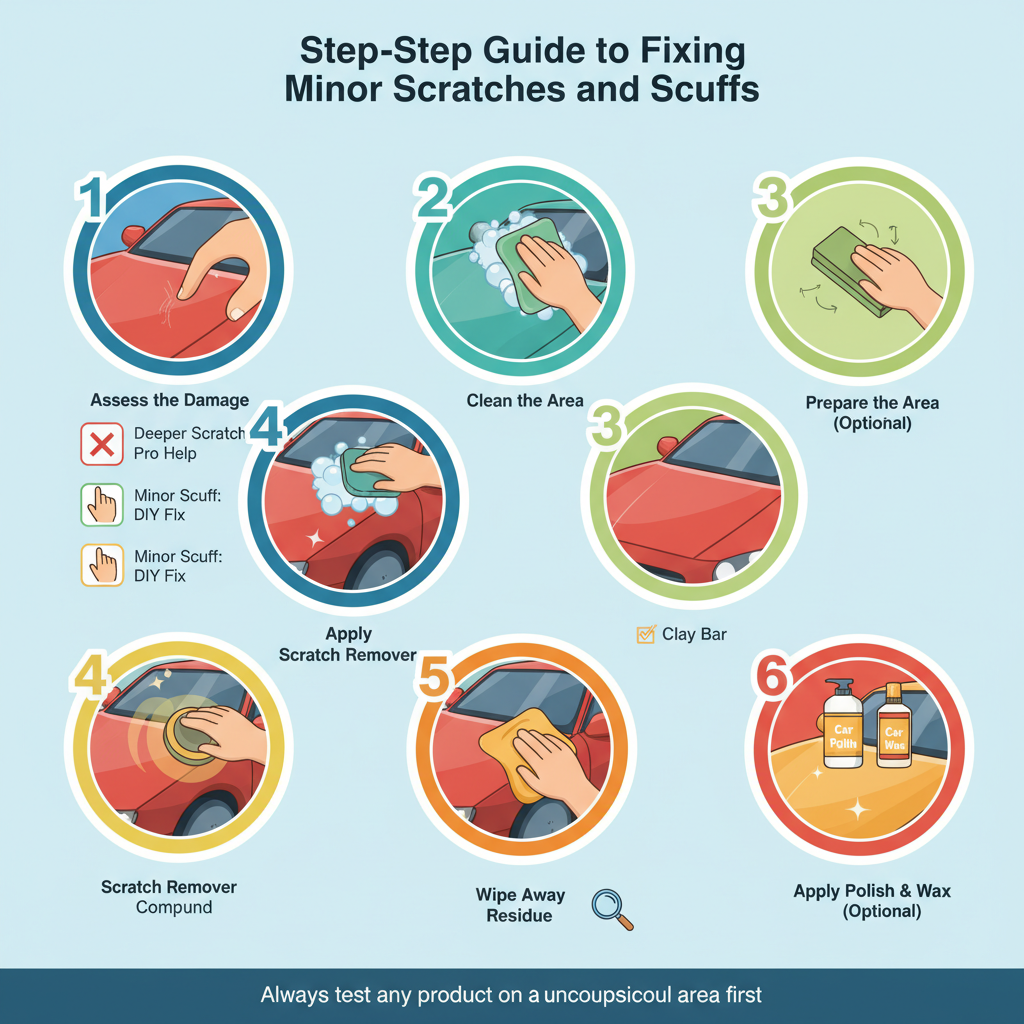
Minor scratches are the easiest fairing damage to repair and often don’t require fairing removal.
Clean the damaged area thoroughly with soap and water. Remove all dirt, grease, and road grime. Dry completely before proceeding.
Assess scratch depth by running your fingernail across it. If your nail doesn’t catch, it’s likely a surface scratch that polishing can remove.
Start with polishing compound for very light scratches. Apply a small amount to a clean cloth and work in circular motions. Many surface scratches disappear with this simple treatment.
Sand deeper scratches carefully with 1200-grit wet sandpaper. Use light pressure and keep the area wet. Sand until the scratch edges blend with the surrounding surface.
Apply touch-up paint in thin layers. Build up coverage gradually rather than applying thick coats. Allow each layer to dry completely.
Wet sand between coats with 1200-grit paper to ensure smoothness. This step is crucial for professional-looking results.
Finish with clear coat and polish once fully cured. The repair should blend seamlessly with the surrounding fairing.
Repairing Cracks and Deep Gouges in Fairings
Structural damage requires more intensive repair techniques but remains within DIY capabilities.
Remove the damaged fairing completely for proper access. Take photos before removal to remember mounting points and hardware locations.
Clean and prepare the crack by removing loose plastic pieces. Use a rotary tool to create a small groove along the crack’s length. This provides better adhesion for repair materials.
Reinforce from behind using fiberglass cloth and resin for large cracks. Cut cloth pieces slightly larger than the damaged area. Apply resin, place cloth, then add more resin. Allow to cure completely.
Fill the front surface with quality body filler. SEM Plastic Prep Spray helps body filler adhere better to motorcycle fairings by promoting chemical bonding with the plastic surface. Apply thin layers, allowing each to cure before adding more.
Shape and sand the filled area once cured. Start with 220-grit sandpaper to rough-shape, then progress through finer grits. The goal is a smooth surface that matches the original fairing contour.
Prime the repair area with automotive primer. This provides proper paint adhesion and helps identify any remaining imperfections.
Apply base coat and clear coat following manufacturer instructions. Multiple thin coats produce better results than single thick applications.
Plastic Welding Techniques for Severe Damage
Major fairing damage sometimes requires plastic welding to restore structural integrity.
Identify the plastic type first. Most motorcycle fairings use ABS plastic, but some manufacturers use different materials. Check for recycling codes or manufacturer specifications.
Prepare welding equipment including a plastic welding gun and appropriate welding rod. The rod material must match the fairing plastic for proper bonding.
Clean the damage area thoroughly and remove any paint or debris. Plastic welding requires clean surfaces for strong bonds.
Practice welding technique on scrap material first. Plastic welding requires steady hands and proper temperature control.
Weld the crack by heating both the fairing and welding rod simultaneously. Move steadily along the crack, allowing the materials to flow together.
Grind excess material once cooled. Use a rotary tool to remove protruding weld material and shape the repair.
Sand and finish the welded area like any other repair. Proper surface preparation is essential for paint adhesion over welded plastic.
Professional Tips for Long-Lasting Repairs
Quality fairing repairs require attention to detail and proper technique.
Temperature matters significantly in fairing repairs. Work in moderate temperatures between 65-75°F for best results. Cold conditions slow curing times while excessive heat can cause paint problems.
Surface preparation determines repair longevity. Spend extra time cleaning and sanding for better adhesion. Rushed prep work leads to failed repairs.
Match paint carefully using manufacturer paint codes when possible. Aftermarket fairings may require custom color matching at automotive paint shops.
Allow proper curing time between steps. Rushing the process leads to poor adhesion and premature failure. Follow product instructions for minimum cure times.
Protect surrounding areas with masking tape and plastic sheeting. Overspray and accidental damage to good fairings creates additional work.
Test fit frequently during repairs to ensure proper alignment. Fairings must fit correctly for both appearance and aerodynamics.
Preventing Future Fairing Damage
Prevention saves time and money compared to constant repairs.
Regular cleaning removes corrosive substances that can damage fairing materials. Road salt and bug residue are particularly harmful if left untreated.
Proper storage protects fairings from UV damage and temperature extremes. Cover your motorcycle or store it indoors when possible.
Careful riding in debris-heavy areas reduces impact damage. Slow down on gravel roads and maintain safe following distances.
Quality mounting hardware prevents stress cracks around attachment points. Replace worn rubber grommets and damaged fasteners promptly.
Protective films can shield high-wear areas from stone chips and scratches. Clear protective films are nearly invisible when properly applied.
Conclusion
Learning how to fix fairings on a motorcycle empowers you to maintain your bike’s appearance while saving money on professional repairs. Start with simple scratch repairs to build confidence before tackling more complex damage. Remember that proper preparation and patience produce the best results. With practice, you’ll develop the skills to handle most fairing repairs, keeping your motorcycle looking great for years to come. Whether dealing with minor scuffs or major cracks, these techniques will help restore your fairings to like-new condition.