
MIG welding an exhaust pipe can be a bit tricky — thin metal, tight spaces, and the constant risk of burning through if you’re not careful. I’ve tackled plenty of exhaust repairs and custom builds over the years, and trust me, the key is control, not power.
Exhaust tubing is usually pretty thin, so treating it like a heavy steel weld will only lead to holes and frustration. With the right MIG settings, good joint prep, and some smart arc control, you can get clean, gas-tight welds that look sharp and hold strong.
Whether you’re patching a rusted section or fabricating a full custom setup, understanding metal thickness, wire feed speed, and torch angle makes all the difference. Stick with me, and I’ll walk you through exactly how to MIG weld exhaust pipe the right way — clean, tight, and without blowing through your metal.
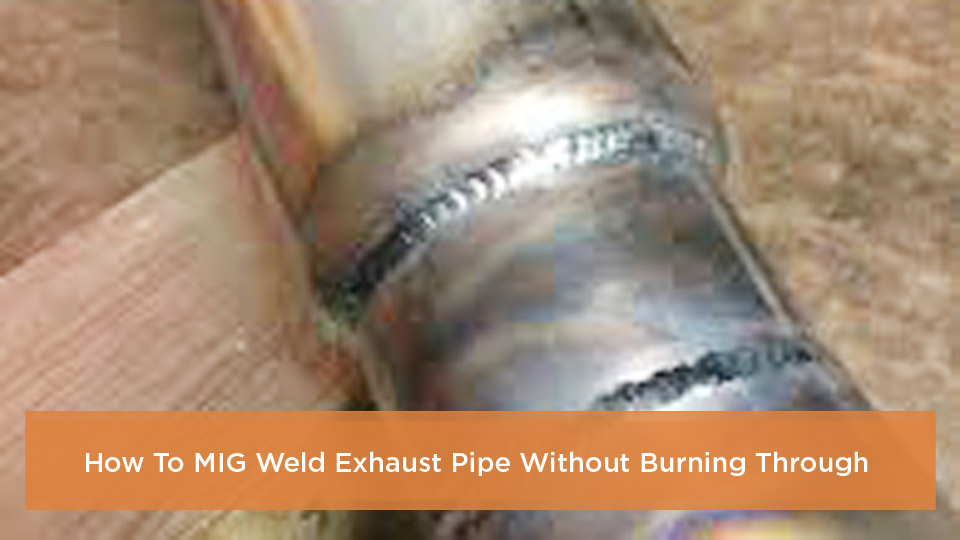
Image by mig-welding.co.uk
Why MIG Welding Makes Sense for Exhaust Repairs
I’ve chased down exhaust issues on everything from ’70s muscle cars to modern F-150s, and MIG always comes out on top for most folks. It’s forgiving for beginners but precise enough for pros tweaking custom setups. Unlike stick welding, which spits slag and demands constant cleanup, MIG lays down smooth beads fast, perfect for that thin-walled pipe that warps if you sneeze on it wrong.
What draws me back to MIG every time? Speed and versatility. You can tack a slip joint in minutes, then fill it without babysitting the arc. For DIYers or hobby fabricators, it’s a game-changer— no need for a $2,000 TIG rig when a $300 Harbor Freight MIG gets the job done.
Pros love it too; in shops I’ve worked, we MIG 80% of exhaust work because it penetrates just enough for leak-proof seals without cracking under thermal cycles.
But here’s the real-world hook: weld integrity. A bad exhaust weld isn’t just noisy; it risks carbon monoxide sneaking into your ride, or worse, a blowout on the highway. MIG’s shielding gas keeps out oxidation, so your joints stay strong against the 1,500-degree temps blasting through.
Cost-wise? You’re looking at pennies per inch versus buying pre-fab sections that never fit right. If you’re a student fresh out of welding class or an industry guy retrofitting fleet trucks, mastering this means fewer comebacks and more pride in your work.
One time, a buddy called me at midnight—his Jeep’s exhaust had split on a trail run, spewing fumes like a bad cigar. We MIG’d it right there in the dirt with a generator rig. Held up through two more seasons of rock crawling. That’s the magic: reliable, no-fuss fixes that last.
Understanding Exhaust Pipe Materials Before You Strike an Arc
Exhaust systems aren’t one-size-fits-all; they’re a mix of metals battling heat, corrosion, and abuse. Get this wrong, and your MIG bead turns to Swiss cheese. Most stock pipes are mild steel, about 16-18 gauge, coated with aluminized or galvanized layers to fight rust. Aftermarket? Often stainless for longevity, especially on performance builds.
Mild steel’s forgiving—easy to MIG with ER70S-6 wire—but that coating? Grind it off, or you’ll get porosity like a sponge. I’ve learned the hard way: skipped grinding once on a Ford F-250 pipe, and the weld bubbled like popcorn from trapped zinc vapors.
Stainless, though? It’s tougher, resists exhaust corrosion like a champ, but demands nickel-rich wire to avoid cracking. Think 304 or 409 grade for manifolds; 316 for salty coastal rigs.
Why does material matter? Compatibility. Mismatched filler on stainless leads to brittle welds that snap under flex. For students or hobbyists, start with mild—it’s cheaper to practice on. Pros, match your wire: ER308L for stainless keeps things ductile.
Real talk: in humid Midwest shops, I’ve seen untreated mild steel rot through in a year, while stainless laughs it off. Factor in your climate and use—daily commuter or track toy?—and pick accordingly.
Thickness plays huge too. Stock exhaust hovers at 0.065 inches; thin-wall race pipe dips to 0.049. Thinner means lower heat to dodge burn-through, but it flexes more, so your MIG needs to fuse without melting the edges.
Essential Tools and Equipment for MIG Welding Exhaust
Gear up right, or you’re fighting the tool instead of the task. My kit’s evolved from a basic 110V MIG to a dialed-in Miller 211—versatile for garage or job site. Core piece? A solid MIG welder with adjustable voltage and wire speed. For exhaust, aim for 140-200 amps; it’ll handle 16-gauge without choking.
Wire feeder matters—smooth feed prevents bird-nesting that stalls you mid-tack. Don’t skimp on the gun; a 15-foot whip lets you reach under dashes without contortions. Gas setup: regulator, hose, and MIG mix tank. CO2/argon blends are my staple—affordable and clean-burning.
Beyond the welder: angle grinder with flap discs for prep, C-clamps or magnetic squares for holding pipes steady, and a pipe expander tool for slip joints.
Safety gear’s non-negotiable—leather jacket, auto-darkening helmet, gloves thick enough for splatter but flexible for trigger pulls. I’ve got a respirator for galvanized work; those fumes hit like a hangover.
For fabrication hobbyists, add a tubing bender and notcher—custom mandrel bends make exhaust flow like a dream. Students, borrow a plasma cutter for clean cuts; it beats hacksaws on thin stock. Pros might toss in a back-purge kit for stainless to shield the inside from oxidation.
Quick pro tip: Keep a test scrap rack handy. Dial settings on junk pipe before the real deal—saves frustration and material.
Preparing Your Exhaust Pipe for Welding: The Foundation of a Solid Joint
Prep’s 80% of the battle; rush it, and no amount of MIG magic saves your weld. Start by measuring twice—exhaust runs twist like a snake, so mock up the full system on the ground. Cut with a cutoff wheel or reciprocating saw; aim for square ends to avoid gaps.
Cleaning’s king. Wire brush or grind to bright metal, inside and out. Galvanized? Hit it with a die grinder and sanding roll—I’ve chased ghosts of zinc inclusions that weakened entire sections. For rusty relics, vinegar soak loosens scale, then blast with a soda media if you’ve got access.
Joint types vary: butt for flanges, lap for muffler clamps, slip for easy expansion. For slips, expand the inner pipe 1/16 inch with a ball tool—snug fit without force. Bevel edges 30 degrees if butting thick stock; it helps filler pool.
Early on, I tacked a resonator without beveling—gap city. Weld filled okay, but it leaked under boost. Now, I always chamfer and tack opposite sides first for even pull.
For students or DIYers, use a V-block or fire blanket under the car to catch sparks. Pros, preheat if below 50 degrees—cold steel sucks heat like a sponge, leading to cracks.
Choosing the Right MIG Wire and Gas for Exhaust Projects
Wire’s your filler; pick wrong, and it’s like pouring syrup in a funnel. For mild steel exhaust, ER70S-6 .023 or .030 diameter rules—versatile for thin walls. .023 feeds smoother on low amps, dodging burn-through; .030 penetrates better for thicker bends.
Stainless calls for ER308L—matches thermal expansion, prevents hot cracks. I’ve MIG’d chromed headers with it; beads come out mirror-smooth. Flux-core tempts for no-gas portability, but skip it on exhaust—slag traps blow holes in thin pipe.
Gas shields the puddle. 75/25 argon/CO2 mix is gold—stable arc, minimal spatter. Straight CO2’s cheaper but hotter, risking undercut on edges. For stainless, add 2% oxygen for better wetting. Flow at 20-25 CFH; too much wastes tank, too little invites air.
| Wire Type | Best For | Pros | Cons |
|---|---|---|---|
| ER70S-6 .023 | Thin mild steel (16-18 gauge) | Low heat, smooth feed, less burn-through | Less penetration on thick joints |
| ER70S-6 .030 | Standard exhaust (14-16 gauge) | Strong fusion, faster deposition | Higher risk of warping thin walls |
| ER308L .030 | Stainless systems | Corrosion resistance, ductility | More expensive, needs precise settings |
This table’s from my shop notes—saved me headaches on a fleet of taxis last summer. Match wire to material, and you’re golden.
Setting Up Your MIG Welder: Dialing In for Clean Beads
Settings are personal—your machine, material, and position tweak everything. Start conservative: for 16-gauge mild, voltage 18-20V, wire speed 150-200 IPM on a 75/25 gas. Test on scrap; puddle should wet out without digging holes.
Amperage floats around 90-120 for exhaust—low end for thin, ramp up for flanges. Stick-out? 3/8 to 1/2 inch; longer cools the wire for delicate work. Angle the gun 10-15 degrees push for flat beads.
I’ve fried settings on a humid day—moisture amps up the arc. Dry your wire spool if stored damp. For inverter welders like my Lincoln 210, pulse mode if available—reduces heat input like a pro.
Common tweak: Under the car, bump voltage 1-2 points for gravity’s pull on the puddle. Hobbyists, use your machine’s chart as a baseline, then earball the sizzle—crackly means too hot, whispery too cold.
One fix I swear by: If bird-nesting hits, check drive rolls—worn grooves spit wire. Clean ’em monthly.
Step-by-Step Guide to MIG Welding Exhaust Pipe
Alright, gloves on—let’s weld. This guide’s for a basic slip joint repair, but scales to full customs.
Tacking the Joint Securely
Clamp your pipe horizontal—magnetic V-pads are lifesavers. Butt or lap the ends, tack at 12, 3, 6, and 9 o’clock. Quick trigger pulls: 1/2 second each, low voltage to pinch without blowout.
Wiggle the joint; if it flexes, add tacks midway. I’ve skipped this on a vertical run—pipe sagged, weld cracked on first heat-up. Pro move: Alternate sides to balance stress.
Building the Weld Bead Without Overheating
Stitch it: 1-inch bead, skip an inch, cool 10 seconds, repeat. Push technique—gun forward at 15 degrees, steady travel 1/2 inch per second. Watch the puddle; it should fan like a tail, not bubble.
For gaps, feather in filler by dipping the wire tip. On curves, orbit the gun to follow the bend. My trick for long pipes: Weld downhill where possible—gravity helps the bead flow.
Finishing and Inspecting Your Weld
Grind high spots flush, but don’t overdo—exhaust flexes, so leave some convexity for fatigue strength. Hammer test: Tap it; solid ring means good fusion. Leak check with soapy water under pressure—bubbles scream redo.
Post-weld, paint with high-temp ceramic for rust shield. In my experience, this step doubled life on salted roads.
Advanced Techniques for Welding Exhaust in Tight Spots
Exhaust ain’t always bench-friendly—think firewall flanges or axle crossovers. For under-vehicle work, jack it secure, drop the shield, and use a creeper with headlamp.
Tackling Welding Under the Vehicle
Visibility’s enemy number one. Magnetic mirror on the frame reflects your puddle; I’ve blind-welded half a system this way. Angle the nozzle 20 degrees back—builds a cold, fat bead that seals without penetrating deep.
Position matters: Fore-aft for straights, radial for bends. Slow your roll; rushing invites cherries dropping into the bellhousing.
Managing Heat and Distortion on Long Pipe Runs
Long straightaways warp easy—stagger beads like bricklaying, skipping to dissipate heat. Preheat ends to 150 degrees if stainless. Cool between passes with compressed air, not water—thermal shock cracks.
Custom fab story: Built a 3-inch dual for a Camaro; overlapped sections, MIG’d in phases. Zero distortion, flowed like stock but louder.
Common Mistakes When MIG Welding Exhaust and Quick Fixes
Everyone goofs—me included. Spot ’em early, and you’re back on track.
Dodging Burn-Through on Thin Walls
Too hot, too long: Holes galore. Fix: Drop voltage 2 points, shorten stick-out, stitch shorter. Practice on 18-gauge scrap till your ear tunes the arc sound.
Fighting Porosity and Contamination Issues
Dirty metal or bad gas flow invites bubbles. Grind deeper next time, check hose for kinks. Once, wind gusts contaminated a outdoor weld—now I shield with cardboard.
Other pitfalls: Weaving too wide (straight line for exhaust), ignoring fit-up (gaps swallow wire), or neglecting PPE (burns suck).
| Mistake | Symptom | Fix |
|---|---|---|
| Excessive heat | Burn-through holes | Lower voltage, shorter bursts |
| Poor prep | Porosity, weak fusion | Grind to bare metal, bevel edges |
| Wrong wire size | Spatter, lack of penetration | Switch to .023 for thin pipe |
| Bad gun angle | Undercut or convex beads | Push at 10-15 degrees |
This cheat sheet’s taped in my hood—pull it out when teaching apprentices.
Safety First: Key Considerations When Welding Exhaust Systems
Welding’s hot work; exhaust amps the risks. Fumes from galvanized? Toxic—respirator with organic cartridges, or weld outdoors. Ventilation fan pulls smoke away; I’ve coughed up lessons from skipping it.
Fire watch: Exhaust oil-soaked rags ignite fast—extinguisher handy. Ground clamps prevent shocks; inspect cables for frays.
For stainless, hex chrome in the smoke—long-term lung hitter, so limit exposure. Students, follow AWS codes: Clear 35 feet around, no flammables.
Personal gear: FR pants over jeans, boots with metatarsal guards for dropped tools. Heat stress? Hydrate, take breaks—I’ve passed out once in July; not fun.
Wrapping Up
From gritty prep to that satisfying sizzle of a sealed joint. How to MIG weld exhaust pipe boils down to respect the thin metal, control your heat, and prep like your ride depends on it (it does). Whether you’re a DIYer patching a beater, a hobbyist chasing that perfect rumble, or a pro churning fleet fixes, these steps arm you with welds that endure the miles. You’re not just gluing pipe; you’re building reliability, saving cash, and dodging shop drama.
Stitch over continuous for thin stuff, match wire to material, and always test on scrap. Now, grab that grinder—you’re ready to tackle that exhaust with confidence. After welding, run a vacuum test with a shop vac; catches leaks before the road does.
FAQs
Can Beginners MIG Weld Exhaust Pipe Without Burning Holes?
Absolutely, but start low and slow. Use .023 wire at 18V, stitch 3/4-inch beads, and practice on identical scrap. I’ve seen rookies nail it in an afternoon—patience beats power.
What’s the Best Wire Size for Welding Thin Exhaust Tubing?
For 16-18 gauge mild steel, .023 ER70S-6 is ideal—feeds cool, minimizes warp. Bump to .030 for 14-gauge or stainless. Always match your machine’s sweet spot.
Should I Grind Off Galvanized Coating Before MIG Welding Exhaust?
Yes, every time. Zinc fumes are nasty, and residue causes porosity. Flap disc to bare metal, wear a respirator—skipping this wrecked a manifold I did years back.
How Do I Prevent Weld Distortion on Long Exhaust Pipes?
Stagger your stitches, cool between passes, and tack opposite sides first. For curves, orbit the gun. Preheat if cold; it’s saved my custom Y-pipes from banana bends.
Is MIG Welding Better Than Flux Core for Exhaust Repairs?
MIG with gas wins for clean, strong beads on thin pipe—less slag, better penetration. Flux core’s okay for quick field fixes, but it spits more and risks holes indoors.