
Learning how to MIG weld an exhaust pipe without burn through was one of those skills I had to earn the hard way. Thin, dirty tubing and a hot MIG setup don’t exactly get along, and I can’t tell you how many times I watched a perfect tack instantly turn into a hole.
Exhaust pipe metal thickness is usually all over the place — sometimes paper-thin, sometimes patched, sometimes coated in rust or carbon — and that makes heat control, joint prep, and wire feed settings more important than ever.
Whether you’re running solid wire with gas or flux core in a pinch, the key is dialing in the right arc control and learning how to stitch or pulse the weld so you don’t cook the steel.
Getting this right matters not just for appearance, but for preventing leaks, maintaining backpressure, and keeping the whole system structurally sound. Stick with me, and I’ll walk you through the exact MIG techniques I use to weld exhaust pipe cleanly, confidently, and without blowing holes all over the place.
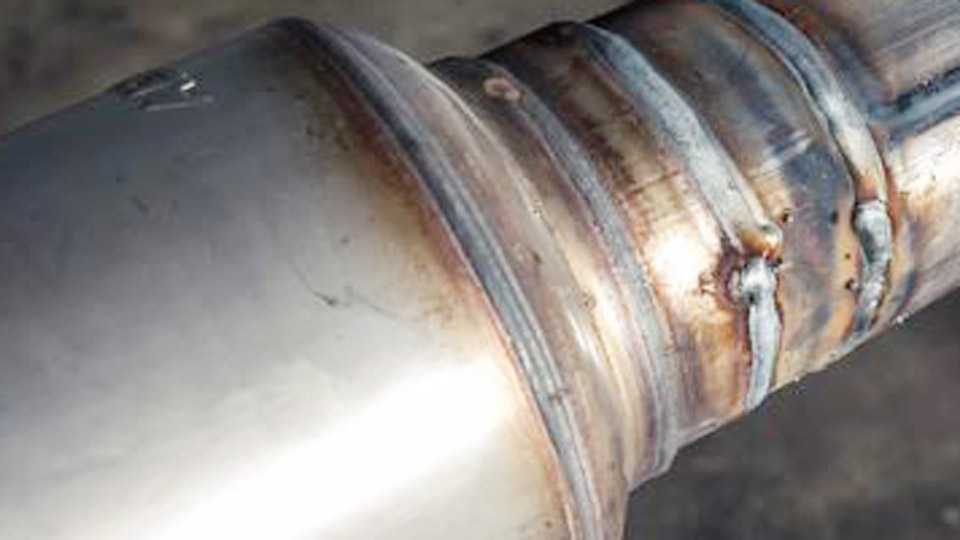
Image by nzperformancecar
Understanding MIG Welding for Exhaust Pipes
When I’m out in the shop working on a buddy’s truck or my own project, I always start by breaking down the basics so everyone’s on the same page. MIG welding, or Metal Inert Gas welding, is my go-to for exhaust work because it’s fast and gives me clean results on thin-gauge materials like stainless or mild steel pipes.
What is MIG Welding?
MIG welding uses a continuous wire electrode fed through a gun, shielded by an inert gas like argon or a mix to protect the weld pool from contaminants. I love how it lets me lay down beads quickly without stopping to change rods, which is perfect for long runs on exhaust tubing. The process melts the wire and base metal together with an electric arc, creating a strong fusion.
For exhaust pipes, which are often 16- to 20-gauge thin, this method shines because I can control the heat input precisely to avoid warping or holes.
In my experience, MIG is forgiving for beginners once you dial in the settings, but it demands respect for the material. I’ve seen guys new to the trade crank up the voltage too high and end up with Swiss cheese pipes—total headache. That’s why I always emphasize starting slow and practicing on scrap.
Why Choose MIG for Exhaust Systems?
I pick MIG for exhaust repairs or fab jobs because it’s efficient and produces minimal spatter, keeping the inside of the pipe clean to avoid restrictions in exhaust flow. Compared to TIG, which I use for more precise aluminum work, MIG is quicker for steel pipes and doesn’t require as much skill to avoid burn through on thin walls.
Real talk: in a busy shop, time is money, and MIG lets me butt-weld or lap-joint sections without much downtime. It also handles rusty or oily surfaces better after a quick clean, which is common with used exhaust parts.
But if you’re dealing with high-heat applications like turbo manifolds, I might switch to TIG for better penetration control. For everyday muffler swaps or custom bends, though, MIG’s my reliable choice—it ensures weld integrity that holds up to vibrations and thermal cycling without cracking.
One time, I was helping a DIYer fix his Jeep’s exhaust after a trail bash, and we went with MIG because it matched his home setup. The result? A seamless repair that lasted through mud and rocks, proving why this process fits hobbyists and pros alike.
Preparing Your Exhaust Pipe for Welding
Prep work is where I separate the good welds from the disasters. I’ve learned the hard way that skipping steps here leads to porous welds or burn through, especially on thin exhaust tubing. Let’s dive into how I get everything ready.
Cleaning and Prepping the Metal
First off, I grab my wire brush or grinder and scrub off any rust, scale, or old paint from the pipe ends. Exhaust pipes pick up a ton of grime from road salt and heat cycles, so I use a degreaser like brake cleaner to wipe away oils—nothing fancy, just effective.
For stainless pipes, I avoid contaminating them with carbon steel tools; I keep a dedicated stainless brush to prevent rust spots later. If the pipe’s bent or cut, I use a tubing cutter for clean edges, then bevel them slightly with a file for better penetration. This prep ensures the weld pool flows smoothly without popping or undercutting.
A common mistake I see is rushing this—guys weld over dirt and wonder why their joints leak. Fix it by taking five extra minutes; it’ll save hours of grinding out bad welds. In my shop, I always clamp the pieces in a vise or use magnets to hold them steady, checking alignment with a straight edge to avoid gaps that cause burn through.
Choosing the Right Filler Wire
For exhaust pipes, I swear by ER70S-6 wire—it’s got deoxidizers that handle mill scale well on mild steel. If it’s stainless, like 304 or 409 common in US aftermarket parts, I go with ER308L or ER309L for better corrosion resistance.
Wire diameter matters too; I use 0.023-inch for thin pipes to keep heat low and prevent burn through, stepping up to 0.030-inch for thicker sections. Always match the filler to the base metal for compatibility—mismatches lead to cracks under exhaust heat.
Here’s a quick comparison table of filler wires I use:
| Filler Wire | Best For | Pros | Cons |
|---|---|---|---|
| ER70S-6 | Mild steel exhaust | Affordable, good flow | Not for stainless |
| ER308L | 304 stainless | Corrosion resistant | More expensive |
| ER309L | Dissimilar metals | Versatile for mixes | Can be brittle if overheated |
I once used the wrong wire on a hybrid system and had to redo it—lesson learned. Pick based on your pipe material, and spool it properly to avoid bird-nesting in the feeder.
Setting Up Your MIG Welder
Getting the machine dialed in is crucial; I’ve burned through plenty of pipe early on by guessing settings. Now, I treat it like tuning an engine—precise and tested.
Machine Settings to Avoid Burn Through
For thin exhaust pipe, I start with voltage around 16-18 volts and wire speed at 200-250 inches per minute, adjusting based on the gun’s feel. Too high voltage, and you’ll melt right through; too low, and you get cold laps.
I use a short-circuit transfer mode for better control on thin metal—it pops the wire into the pool without excessive heat. Test on scrap: if it’s spattering wildly, drop the voltage. For a Lincoln or Miller welder, common in US shops, their charts are a good starting point, but I fine-tune by ear—the sizzle should sound like bacon frying, not fireworks.
Pro tip: pulse MIG if your machine has it; it reduces heat input by 20-30%, perfect for avoiding burn through on 18-gauge pipe.
Gas Mixtures and Flow Rates
I run 75/25 argon/CO2 mix for steel exhaust—argon for stability, CO2 for penetration. Flow rate? 20-25 CFH to shield without turbulence that causes porosity.
For stainless, straight argon or a tri-mix with helium boosts heat for better fusion without burn through. I’ve had jobs where poor gas coverage led to sugaring on the inside—ugly and weak. Always check your regulator and use a gas lens if needed for tighter coverage.
One anecdote: on a cold winter day in the garage, low flow froze my regulator, causing bad welds. Now, I warm things up and double-check pressure before striking an arc.
Step-by-Step Guide to MIG Welding Exhaust Pipe
I’ll walk you through how I do it, like I’m right there showing you.
Joint Types for Exhaust Pipes
Butt joints are my standard for straight sections—align the pipes end-to-end for smooth flow. For bends or flanges, lap joints overlap by 1/2 inch, giving more surface to weld without thin spots.
I prep by tacking first: small welds every few inches to hold position. This prevents warping from heat. In custom work, like adding a resonator, I use slip-fit joints with clamps for easy adjustment.
Common fix: if gaps appear, fill with a backing bar or copper spoon to absorb heat and prevent burn through.
Welding Techniques to Prevent Burn Through
Step 1: Suit up—helmet, gloves, jacket. No shortcuts on safety.
Step 2: Set your welder as above, gun at 15-degree angle, pushing the puddle.
Step 3: Start with short bursts—weld 1-2 inches, pause to let cool. This “stitch welding” dissipates heat.
Step 4: Weave slightly if needed for wider beads, but keep travel speed steady at 10-15 inches per minute.
Step 5: Back purge with argon on stainless to prevent oxidation inside.
I remember teaching a student who rushed and burned through— we fixed it by patching with a sleeve, but better to go slow. Finish by grinding smooth for aesthetics and flow.
For multi-pass, let each cool fully. If burn through happens, grind out and reweld with lower settings.
Common Mistakes and How to Fix Them
Even pros slip up. One biggie: overheating from long continuous welds. Fix by breaking into segments and using chill blocks.
Another: poor fit-up leading to gaps. I always measure twice, cut once, and use expanders for tight fits.
Dirty wire or liner causes erratic feeding—clean monthly. And forgetting to ground properly? Sparks fly wrong, welds suck. Clamp close to the joint.
I’ve fixed countless botched jobs from hobbyists; patience and practice turn mistakes into muscle memory.
Safety Tips for Welding Exhaust Pipes
Safety first—I’ve seen burns and eye flashes that sidelined guys for days. Always weld in ventilated areas; exhaust fumes plus welding smoke is toxic.
Use auto-darkening helmets rated for MIG, and leather gear to block sparks. Ground your workpiece away from fuel lines—fire risk is real in vehicles.
For enclosed pipes, purge with inert gas to avoid explosions from trapped volatiles. And post-weld, let cool naturally to prevent cracks.
In my years, following OSHA guidelines in US shops has kept me injury-free. Teach it to trainees: respect the arc, or it bites back.
Tools and Equipment Recommendations
You don’t need top-shelf everything, but good tools make the difference. I run a Miller Millermatic 211—versatile for 110/220V, great for garage or site.
For pipe work, a good chop saw or plasma cutter for cuts, and Vise-Grip clamps for holding. Wire? Hobart or Lincoln brands hold up.
Budget option: Harbor Freight’s Vulcan MIG for starters, but upgrade seals and tips for reliability.
Pros of inverter machines: lighter, more efficient. Cons: pricier upfront.
I once skimped on a cheap gun and regretted the clogs—invest in quality for smooth runs.
Advanced Tips for Professional Results
Pushing your skills? Try weaving patterns for stronger beads on vibrating exhausts. Or use anti-spatter spray inside pipes for clean flow.
For high-perf setups, consider silicon bronze wire for flexibility. Test on mock-ups always.
I’ve fabbed race exhausts where these tweaks meant the difference between track wins and failures.
Troubleshooting Weld Issues on Exhaust
Porosity? Check gas flow or clean metal better. Undercut? Slow travel speed.
Burn through fix: lower amps, faster travel. Cracks? Preheat slightly or use low-hydrogen wire.
Documentation in my log helps track patterns—valuable for repeat jobs.
Comparing MIG to Other Processes for Exhaust
MIG vs. Stick: MIG’s cleaner, less slag. Vs. TIG: MIG’s faster but TIG’s prettier on show cars.
For flux-core, it’s okay sans gas but messier indoors. I stick with MIG for most.
Table time:
| Process | Speed | Cleanliness | Cost |
|---|---|---|---|
| MIG | High | High | Medium |
| TIG | Medium | Very High | High |
| Stick | Low | Low | Low |
Choose based on your setup and project.
Maintaining Your Welded Exhaust System
Post-weld, I coat with high-temp paint for rust protection. Inspect regularly for cracks from heat cycles.
In salty US winters, undercoating helps. Rotate tires? Check exhaust hangers too.
One pro job: ceramic coating inside for better flow and longevity—worth it for turbos.
Wrapping Up
I’ve shared how I MIG weld exhaust pipe without burn through, from prep to finish. You’re now equipped with the know-how to tackle your own projects confidently, whether it’s a quick patch or full custom. Prep thoroughly, dial settings low, weld in bursts, and always prioritize safety.
This approach ensures strong, durable welds that stand up to daily drives or hardcore use. Grab your gear and give it a shot—you’ve got this. Always have extra wire on hand; running out mid-job is the worst.
FAQ
Can I MIG weld exhaust pipe with flux core wire?
Sure, flux core works without shielding gas, making it handy for outdoor repairs. But it produces more spatter and slag, so clean up well inside the pipe to avoid flow restrictions. I prefer it for thicker mild steel but stick to solid wire for thinner stainless to minimize burn through.
What voltage should I use for welding thin exhaust tubing?
Aim for 15-18 volts on 18-gauge pipe to keep heat low. Test on scrap—adjust up if beads are stacking, down if penetrating too deep. Wire speed around 180-220 IPM pairs well; listen for that steady crackle.
Is back purging necessary for MIG welding exhaust?
For stainless, yes—it prevents sugaring and oxidation on the inside, keeping the weld strong and corrosion-free. Use argon at low flow through the pipe. On mild steel, it’s optional but helps if you’re chasing perfection.
How do I fix burn through on an exhaust weld?
Grind out the hole carefully, then patch with a small sleeve or backer. Reweld with lower settings and stitch technique. Prevention’s better: practice heat control first.
What’s the best gas for MIG welding automotive exhaust?
75/25 argon/CO2 for mild steel—balances arc stability and penetration. For stainless, 90/7.5/2.5 argon/CO2/oxygen tri-mix improves wetting without excess heat. Flow at 20 CFH usually nails it.