
Finding a small hole in aluminum can be frustrating, especially when welding isn’t always an option. In real shop and DIY work, people often wonder how to patch a small hole in aluminum without warping the metal or making the repair worse.
Aluminum’s thin structure, high heat conductivity, and sensitivity to contamination make even tiny repairs tricky. Questions usually come up about whether to weld, braze, use epoxy, or apply an aluminum patch, and which method actually holds up over time.
This matters because a poor repair can crack, leak, or fail once heat, vibration, or pressure comes into play. In this guide, I’ll break down practical, real-world ways to patch small holes in aluminum and help you choose the best method for strength, durability, and long-term reliability.
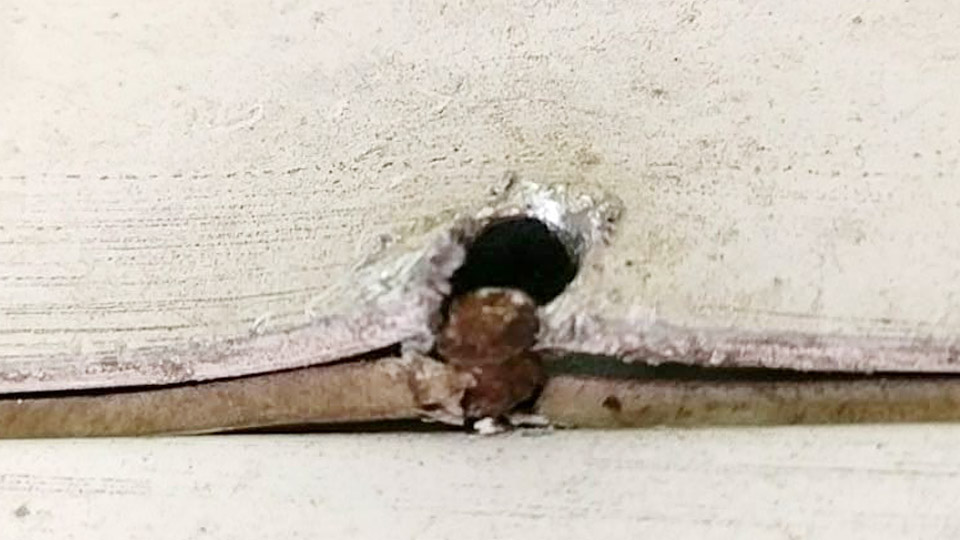
Photo by doityourself
Why Small Holes in Aluminum Are Trickier Than They Seem
Aluminum isn’t like steel—it’s lighter, more conductive, and that oxide layer on the surface acts like a barrier that can ruin your weld if you’re not prepared. A small hole, say under half an inch, might look innocent, but it can stem from electrolysis in marine environments or just plain wear in fabrication setups.
I’ve fixed holes in everything from aircraft parts to backyard grills, and the key is understanding why they form and how they compromise your work.
These holes often appear in thin sheets or castings where heat dissipation is fast, leading to quick cooling that stresses the material. If you’re a DIY welder patching a bike frame or a pro handling industrial repairs, ignoring the oxide means poor fusion and potential cracks later. That’s where proper prep comes in—it’s the foundation that prevents distortion and ensures your patch lasts.
From a safety standpoint, a weak patch in something like a pressure vessel or trailer could lead to failures under load. I’ve learned the hard way that skimping here costs more in the long run, especially with aluminum’s tendency to warp if your heat input is off.
Assessing the Damage Before You Start
Before grabbing your torch, take a minute to evaluate. Is the hole clean-edged from a punch, or ragged from corrosion? In my shop, I always measure it first—anything under 1/4 inch might just need filling, while up to 1/2 inch could require a patch piece.
Check the surrounding metal for thickness. Thin gauge aluminum, like 0.063 inches common in boats, demands lower amps to avoid blow-through. If it’s thicker, say 1/8 inch for structural work, you have more leeway.
Ask yourself: What’s the application? A cosmetic fix on a sign versus a load-bearing repair on a ladder changes your approach. For hobbyists, this step avoids overcomplicating things; for students, it’s a lesson in material science right there in the booth.
I had a client bring in an aluminum toolbox with a dime-sized hole from a dropped tool. Assessing showed underlying pitting, so we ended up reinforcing the area—saved him from a bigger issue down the road.
Gathering Your Tools and Materials
You don’t need a fancy setup, but the right gear makes all the difference. For welding, you’ll want a TIG machine capable of AC output, since DC won’t clean the oxide properly on aluminum.
Filler rods: Go with 4043 for general work—it’s forgiving and flows well—or 5356 if you need more strength, like in marine apps. Diameter-wise, 3/32 inch is my go-to for small holes; it’s versatile without overwhelming thin metal.
Other essentials: A stainless steel brush for cleaning (never use carbon steel to avoid contamination), acetone for degreasing, and clamps if using a backer. Safety gear—helmet, gloves, respirator—is non-negotiable; aluminum fumes aren’t friendly.
If welding isn’t feasible, have epoxy or brazing rods on hand as backups. In the US, brands like Miller or Lincoln machines are reliable for shop use.
Preparing the Surface for a Solid Patch
Prep is where most mistakes happen. Start by cleaning a 2-inch radius around the hole. Use that stainless brush to scrub off the oxide layer until it’s shiny—aluminum reforms oxide fast, so weld soon after.
Degrease with acetone on a rag; oils from handling can cause porosity. If the hole’s edges are jagged, file them smooth for better fusion.
For thin material, back the hole with a copper plate—it dissipates heat without sticking. I’ve used this trick on countless boat repairs to prevent sagging.
If corrosion’s involved, grind out the bad metal until you’re down to solid aluminum. This ensures your patch bonds to good material, not flaky stuff that’ll fail.
Pros do this religiously; beginners skip it and wonder why their weld cracks. Take your time—it’s shop wisdom that pays off.
Choosing the Best Welding Process for Patching Aluminum
For small holes, TIG (GTAW) is king—precise control over heat and filler lets you build up without distortion. MIG works for thicker stuff but can be messy on tiny repairs.
Stick (SMAW) isn’t ideal for aluminum; the electrodes are finicky, and it’s hard to avoid slag in small areas. I’ve used it in a pinch on farm equipment, but TIG’s cleaner.
Brazing with rods like Alumiweld is a non-welding alternative—uses lower heat, great for DIY without fancy gear.
When to use each? TIG for structural integrity, brazing for quick fixes where strength isn’t critical.
In my experience, TIG shines in fabrication shops; it’s what I teach new trainees first for aluminum work.
TIG Welding: The Preferred Method for Precision
TIG uses a tungsten electrode and argon shielding gas. For aluminum, set to AC to alternate cleaning and penetration.
Amperage: Start low, around 60-80 amps for 1/16-inch material, up to 100-120 for 1/8 inch. Pedal control helps ramp up as needed.
Electrode: 3/32-inch pure tungsten or zirconiated, sharpened to a point.
Gas flow: 15-20 CFH argon—too much turbulence, too little contamination.
It’s all about balance; overheat and you get warping, underheat and poor fusion.
When to Consider MIG Instead
MIG’s faster for larger patches but trickier on small holes due to wire feed. Use a spool gun for aluminum to avoid birdnesting.
Settings: 18-22 volts, wire speed 300-400 IPM for 0.035-inch 4043 wire.
I’ve used MIG on trailer frames where speed matters, but for pinholes, it often overfills.
Brazing as a Low-Heat Option
Heat with a propane torch to 700°F, apply the rod—it melts into the hole. No fusion like welding, but strong enough for non-critical spots.
Great for hobbyists without TIG setups. I’ve patched lawnmower decks this way—holds up fine.
Step-by-Step Guide to TIG Welding a Small Hole
Assume a 1/4-inch hole in 1/8-inch aluminum sheet.
Step 1: Clean and back the area as mentioned. Clamp if needed.
Step 2: Set your machine—AC, 80 amps max, HF start.
Step 3: Strike the arc near the edge, let a puddle form. Dab filler rod intermittently to build up.
Step 4: Work in circles, filling from the outside in. Keep the torch at 15 degrees, electrode 1/8 inch from work.
Step 5: If blow-through happens, back off heat, add more filler.
Step 6: Let cool naturally, then grind flush if needed.
I once filled a series of holes in an exhaust manifold this way—took practice, but the result was seamless.
For very small pinholes, just puddle and fill without a patch piece.
Using Patch Pieces for Larger Small Holes
If the hole’s 1/4 to 1/2 inch, cut a disc from matching aluminum, slightly larger.
Fit it over or in the hole, tack weld corners, then fill the seams.
This adds strength; I’ve done it on fuel tanks where integrity is key.
Grind edges for bevel, ensure fit-up is tight—no gaps over 1/16 inch.
Machine Settings and Filler Metal Tips
Here’s a quick table for reference:
| Material Thickness | Process | Amperage Range | Filler Diameter | Gas Flow (CFH) |
|---|---|---|---|---|
| 1/16 inch | TIG | 50-70 | 1/16 inch | 15-18 |
| 1/8 inch | TIG | 80-110 | 3/32 inch | 18-20 |
| 1/4 inch | MIG | 100-140 | 0.035 inch | 20-25 |
| Thin Sheet | Brazing | N/A | 1/8 inch rod | N/A |
These are starting points—adjust based on your machine. For 4043 filler, it’s silicon-rich for flow; 5356 has magnesium for corrosion resistance.
Common mistake: Wrong polarity—always AC for TIG aluminum.
Pros and Cons of Different Patching Methods
Every approach has trade-offs. Let’s break it down.
TIG Welding:
- Pros: Strongest bond, minimal distortion if done right, versatile for various alloys.
- Cons: Requires skill and equipment, higher heat can warp thin metal.
MIG Welding:
- Pros: Faster for pros, good for thicker patches.
- Cons: Harder to control on small areas, potential for spatter.
Brazing:
- Pros: Low cost, no electricity needed, easy for beginners.
- Cons: Weaker than true welding, not for high-stress areas.
Epoxy Fillers (like JB Weld):
- Pros: No heat, quick set-up, accessible.
- Cons: Not as durable, can fail under vibration or heat.
I’ve switched methods mid-job when TIG wasn’t practical—flexibility is key.
Common Mistakes Even Pros Make and How to Fix Them
Overheating is killer—causes holes to grow. Fix: Use pulse mode if your machine has it, or shorter arcs.
Poor cleaning leads to black sooty welds. Remedy: Fresh brush every time.
Wrong filler: Using steel rod contaminates. Always match alloys.
If your weld cracks post-cool, it’s likely stress—anneal the area gently.
Beginners often rush; take breaks to let heat dissipate.
In one shop mishap, I burned through a client’s part—had to grind and restart. Lesson: Test on scrap first.
Safety First: Protecting Yourself and Your Work
Aluminum welding produces UV light that burns skin and eyes—auto-darkening helmet essential.
Fumes: Use ventilation or a respirator; zinc in some alloys is toxic.
Fire risk: Keep extinguishers handy, especially with cleaners.
Ground properly to avoid shocks. I’ve seen sparks ignite rags—clean workspace saves lives.
For students, this is rule one: Gear up or go home.
Alternative Non-Welding Methods for Quick Fixes
Sometimes welding’s overkill. For epoxy: Mix JB Weld, push into hole over a backer, cure 24 hours.
Brazing: Heat till rod melts, flow in. Sand smooth.
Rivets: For structural, drill and pop rivet a patch.
I’ve used epoxy on cosmetic holes in signs—holds for years.
Pros/cons table for alternatives:
| Method | Strength | Ease | Cost |
|---|---|---|---|
| Epoxy | Medium | High | Low |
| Brazing | High | Medium | Low |
| Rivets | High | High | Medium |
Choose based on need.
Joint Preparation and Material Compatibility
Bevel edges for better penetration—45 degrees on thicker stuff.
Match filler to base: 6061 alloy? Use 4043.
Handle aluminum gently—it’s soft, dents easy.
In fabrication, I prep joints hours ahead for efficiency.
Real Shop Anecdotes: Lessons from the Field
Back in my early days, I tried MIG on a thin aluminum panel—ended up with a bigger hole. Switched to TIG, problem solved.
Another time, patching a boat in Florida humidity—oxide reformed fast, so I cleaned in stages.
These stories remind me: Experience trumps theory.
Testing Your Patch for Durability
After cooling, tap with a hammer—listen for solid sound.
Visual: No cracks or porosity.
For critical, dye penetrant test.
I’ve pressure-tested boat patches with water—peace of mind.
Wrapping Up
I’ve walked you through the nitty-gritty, from prep to finish, drawing on jobs that ranged from quick DIY fixes to pro-level repairs. Now, you’re armed with the know-how to tackle that small hole in aluminum with confidence, avoiding the pitfalls that trip up even seasoned hands.
You’ll save time, materials, and frustration, turning potential headaches into smooth, reliable results. Always preheat thicker aluminum to 200°F—it reduces cracking and improves flow, especially on cold shop days.
FAQs
Can I patch aluminum without any welding equipment?
Absolutely—grab a quality epoxy like Marine JB Weld. Clean the area thoroughly, mix the putty, and press it in, overlapping the edges. Let it cure fully before sanding. It’s held up on boat hulls I’ve fixed in a bind.
What’s the best filler rod for patching aluminum holes?
For most jobs, 4043 is your friend—flows easy and resists cracking. If it’s marine or needs extra toughness, switch to 5356. Stick to 3/32-inch diameter for control on small spots.
How do I avoid warping when welding thin aluminum?
Keep heat low—start at 60 amps and use short bursts. Back with copper to sink heat, and weld in sections, letting it cool between. Practice on scrap to dial it in.
Is brazing as strong as TIG for aluminum patches?
Not quite—brazing bonds at lower temps without melting the base, so it’s great for quick repairs but weaker under heavy load. Use TIG for anything structural.
What if my patch fails after welding?
Grind it out and start over, checking for contamination or wrong settings. Often, it’s poor prep—reclean and try again. If it’s cracking, consider stress-relieving with gentle heat.