
Setting up my MIG welder with gas the right way made a huge difference in how clean and smooth my welds turned out. I remember switching from flux core to gas MIG and thinking it would be a simple plug-and-play job — but between adjusting gas flow, choosing the right filler wire, setting voltage and wire speed, and dialing in for different metal thicknesses, there was a lot more to it.
Once you understand how the machine, gas, and arc all work together, MIG becomes one of the easiest and cleanest processes in the shop. Whether you’re welding mild steel, stainless, or doing light fabrication, proper setup gives you better arc control, less spatter, and stronger, more consistent welds.
I’ll walk you through exactly how to set up a MIG welder with gas so your beads come out smooth, stable, and professional every time.
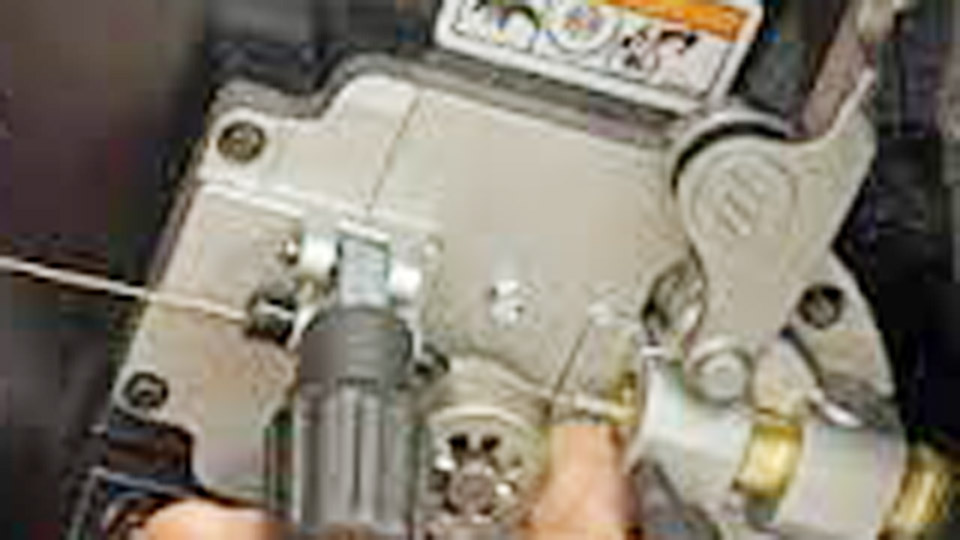
Image by millerwelds
Why Gas Matters More Than You Think Right Now
Back when I was green, I thought MIG with flux-core was “easier” because you didn’t have to drag a bottle around. Then I had to build a set of steel gates for a customer in Arizona in July. No wind block, 110 °F, and every time the breeze kicked up my flux-core welds looked like oatmeal.
Switched to a proper 75/25 mix that afternoon and finished the job in half the time with half the grinding. That single day taught me gas isn’t a luxury—it’s the difference between hobby welds and pay-the-bills welds.
Choosing the Right Shielding Gas for Your Project
75% Argon / 25% CO2 – The Everyday Hero
This is the mix you’ll see on 90 % of the bottles in American shops. I keep a 125 cf tank of 75/25 hooked up to my Lincoln Power MIG 210 pretty much year-round. It sprays nice on mild steel from 18 gauge up to half-inch plate, gives good penetration without burning through thin stuff, and keeps spatter low enough that I’m not chiseling balls off the table all day.
Straight CO2 – When You Need to Dig Deep
100 % CO2 runs hotter and cheaper (sometimes half the price per cubic foot), so a lot of structural shops and pipeline guys still swear by it. You’ll get deeper penetration on thick material, but spatter goes through the roof and the bead looks rougher. I only run straight CO2 when I’m welding 3/8 and up outdoors and don’t care about cosmetics.
Tri-Mix (Helium/Argon/CO2) – Stainless and Aluminum Territory
If you’re welding stainless or you finally bought that spool gun for aluminum, grab a bottle of tri-mix. The helium keeps the puddle fluid so you get those nice stacked-dime beads on stainless, and it helps wet out aluminum without that black soot nightmare.
Picking the Correct Regulator and Flowmeter
Don’t cheap out and slap a regular oxygen regulator on your argon bottle thinking “pressure is pressure.” I did that exactly once as a dumb apprentice and blew the gauge sky-high. MIG regulators are designed for argon/CO2 densities and usually have a flowmeter (measured in CFH—cubic feet per hour) instead of just PSI.
My personal favorite is still the Victor Edge 2.0 or the Harris 25GX. Set your bottle pressure to about 20–30 CFH indoors. Outside in any kind of breeze I bump it to 35–40 so the wind doesn’t steal my shield.
Step-by-Step: Setting Up Your MIG Welder with Gas from Scratch
Let’s walk through it like you just brought home a new Miller Multimatic 215 or a Hobart Handler 210 and you’re standing in the garage right now.
- Roll the cylinder into place and chain it twice—once high, once low. I’ve seen bottles tip and take out a brand-new plasma cutter. Not cheap.
- Crack the valve for half a second to blow any dust out of the opening. Sounds minor, but that dirt ends up in your liner and causes bird-nesting.
- Thread on the regulator hand-tight plus maybe a quarter turn with a wrench. Left-hand threads on argon bottles—remember “lefty loosey only when it’s empty.”
- Hook up the gas hose to the back of the machine. Most modern machines have a quick-connect; older ones use a simple hose barb and clamp.
- Open the bottle valve slowly—one full turn is plenty. You’ll hear the gauge jump.
- Set your flowmeter. I like to stand to the side, open the ball valve, and adjust until the ball floats right around 20–25 CFH for indoor work.
- Purge the hose for 10–15 seconds before you weld the first time. Gets the air out so your first bead isn’t porous.
Installing the Correct Wire and Matching Your Gas
ER70S-6 is the wire I keep loaded 90 % of the time with 75/25. The “S-6” means higher silicon so it flows nicer and handles a little surface rust or mill scale—perfect for real-world farm repairs and trailer work. If you’re welding squeaky-clean plate all day, ER70S-3 is technically cleaner, but I’ve never noticed enough difference to keep two spools.
Drive rolls matter too. Knurled V-groove rolls for solid wire with gas; don’t use the smooth ones you’d run on flux-core or you’ll get slippage and bird-nesting the first time you squeeze the trigger.
Dialing In Voltage and Wire Speed Like a Pro
Every machine is a little different, but the door charts are surprisingly good these days. For 1/8″ mild steel with 0.030 wire and 75/25 I usually land around 19–20 volts and 280–320 inches per minute. The trick I teach every new guy: set the wire speed first until you hear a steady bacon-fry sizzle, then tweak voltage until the arc sounds crisp and the bead flattens out nicely.
Too cold and you get a tall ropey bead that won’t tie in. Too hot and you burn through or get undercut. Listen to the gun—after a while it talks to you.
Common Gas Setup Mistakes I Still See on Job Sites
- Forgetting to open the bottle valve all the way. You’ll get 30 seconds of good welding then the flow drops and porosity shows up.
- Leaving the flowmeter wide open when you’re done for the day. Wastes a shocking amount of gas.
- Running the same 10-year-old hose with a pinhole leak somewhere. You won’t see it, but your welds will look like Swiss cheese.
- Setting flow too low because “20 CFH seems like a lot.” Then you wonder why every bead has worm tracks.
Testing Your Gas Coverage Before You Burn Real Money
Here’s my quick field test: strike an arc on a scrap piece and watch the puddle. If you see tiny sparks flying out sideways like a Fourth-of-July sparkler, you’ve lost gas coverage. Should look more like smooth molten flow with maybe just a little orange glow around the edges.
Safety Gear and Shop Practices You Can’t Skip
Even with gas, you’re still making UV light that’ll sunburn your neck in ten minutes and fumes that aren’t great for date night. Full shade 10–13 helmet (I run a Lincoln Viking 3350), leather jacket or at least long sleeves, and decent ventilation. I added a simple fume extractor arm over my bench for $300 and it was the best money I ever spent.
Settings Cheat Sheet for Common Jobs (75/25 Gas, ER70S-6 Wire)
| Material Thickness | Wire Diameter | Approx. Voltage | Wire Speed (IPM) | Flow Rate |
|---|---|---|---|---|
| 18–16 ga | 0.030″ | 16–18 V | 180–250 | 20 CFH |
| 14–11 ga | 0.030–0.035″ | 18–21 V | 250–350 | 20–25 CFH |
| 1/8″ | 0.035″ | 19–22 V | 280–380 | 25 CFH |
| 1/4″ | 0.035–0.045″ | 23–26 V | 350–450 | 25–30 CFH |
| 3/8″+ | 0.045″ | 26–30 V | 400+ | 30–40 CFH |
These are starting points—every machine and welder is a little different, but you’ll be in the ballpark.
When to Switch to Flux-Core Instead
I still keep a roll of Lincoln NR-211-MP in the drawer for windy days outside or when I’m too lazy to drag the bottle across the yard. You lose some cleanliness and the slag takes extra cleanup, but sometimes practicality wins.
Final Thoughts – You’ve Got This
Setting up a MIG welder with gas isn’t rocket science, but doing it right the first time saves you hours of grinding and rework. Take the ten extra minutes to check your regulator, purge the hose, and dial in that flowmeter and you’ll be stacking clean beads while the guy next to you is still cussing at porosity.
Pro tip that took me way too long to learn: mark your favorite settings with a Sharpie right on the side of the machine for each thickness. Next time you roll up to a job you’re welding in thirty seconds instead of ten minutes of trial and error.
Frequently Asked Questions
How many CFH should I run on my MIG welder outdoors?
Start at 35–40 CFH if there’s any breeze at all. I’ve gone as high as 50 CFH on really windy days doing field repairs and still had decent coverage.
Can I use the same regulator for argon and CO2?
Technically yes, but CO2 regulators have a heated element to prevent freezing when flow is high. I just keep separate regulators—it’s cheaper than replacing gauges.
Why does my MIG weld look porous even with gas?
Nine times out of ten it’s a gas coverage issue—leaks, wind, or the nozzle completely clogged with spatter. Clean the nozzle, check your hoses, and bump the flow 5 CFH and try again.
Is 100% argon good for mild steel?
It’ll work, but the arc is unstable and you get almost no penetration. Save straight argon for TIG or aluminum MIG with a spool gun.
How long does a 125 cf bottle of 75/25 last?
At 20 CFH you’re looking at roughly 6–7 hours of trigger time. I can usually get three or four decent weekend projects out of one bottle welding 1/8″ and thinner.