
Soldering wires is an essential skill for electronics enthusiasts, DIY projects, and professional repairs. This fundamental technique creates permanent electrical connections that are stronger and more reliable than twisted wire joints. Whether you’re fixing headphones, working on automotive wiring, or building electronic circuits, learning proper wire soldering techniques will save you time and ensure lasting connections.
To solder wires, you need a soldering iron, rosin-core solder, and wire strippers. Strip the wire insulation, tin both wire ends with solder, position them together, then apply heat with the iron and feed solder into the joint until it flows smoothly around both wires. Allow the joint to cool without movement for a strong, permanent electrical connection.
Essential Tools and Materials for Wire Soldering
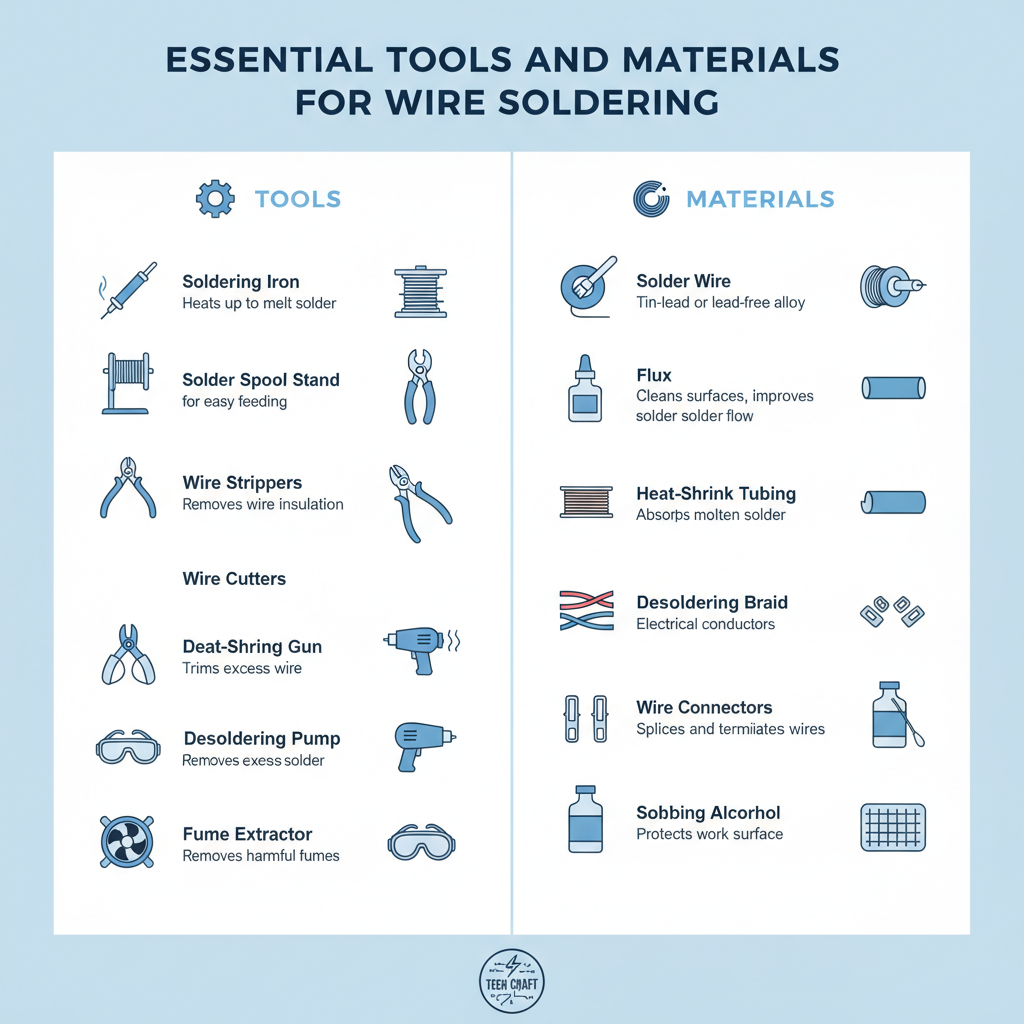
Before you begin soldering wires, gathering the right equipment is crucial for success. The quality of your tools directly impacts the strength and reliability of your solder joints.
Required Soldering Equipment
A good soldering iron is the cornerstone of any soldering setup. The Weller WLC100 is an excellent choice for beginners, offering adjustable temperature control and reliable performance for wire soldering projects. This 40-watt soldering station provides consistent heat output, making it easier to create clean, professional joints.
You’ll also need:
– Rosin-core solder (60/40 or 63/37 tin-lead ratio)
– Wire strippers
– Heat shrink tubing or electrical tape
– Flux paste (optional but recommended)
– Damp sponge for cleaning the iron tip
– Third-hand tool or helping hands
– Safety glasses
– Well-ventilated workspace
Choosing the Right Solder
Select rosin-core solder with a diameter between 0.6mm and 1.0mm for most wire soldering applications. The rosin core contains flux that helps clean the connection and improves solder flow. Avoid acid-core solder, as it can corrode electrical connections over time.
Preparing Wires for Soldering
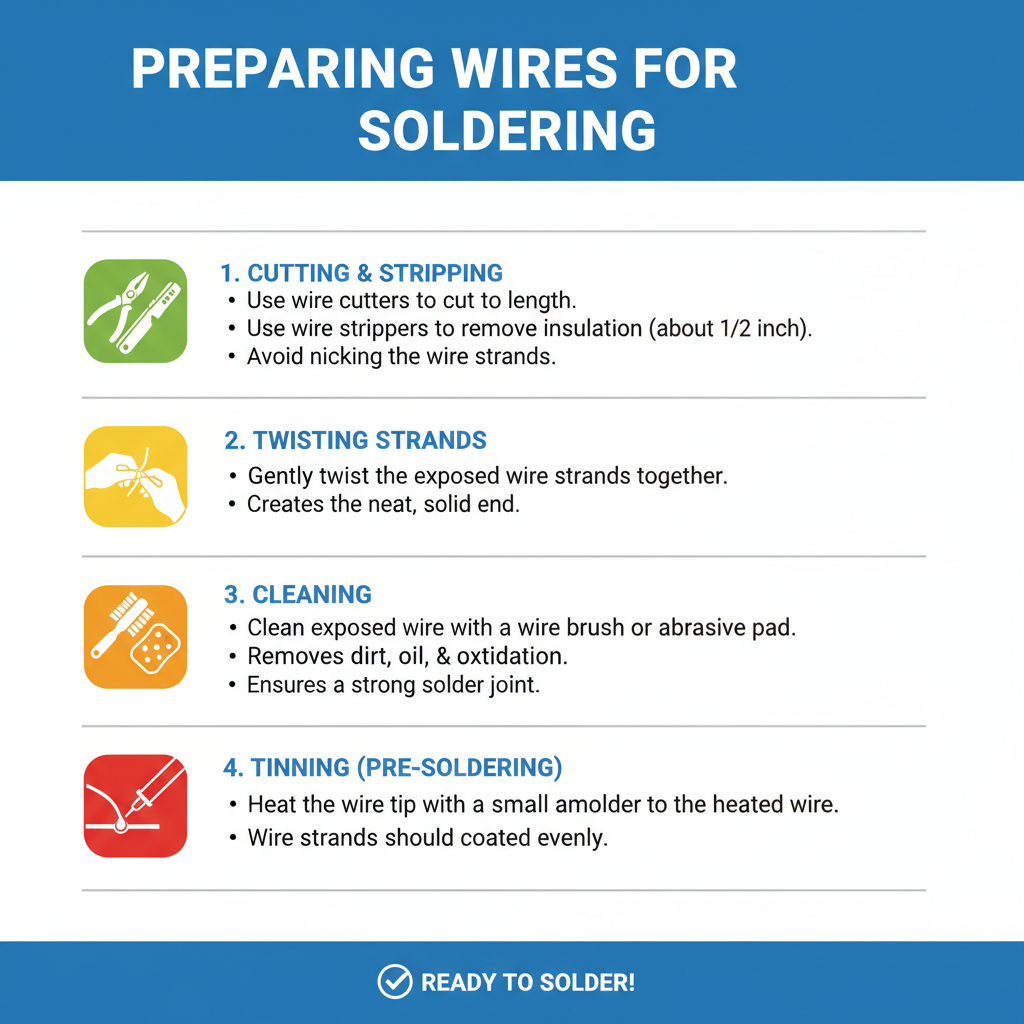
Proper wire preparation is critical for creating strong, reliable solder joints. Clean, properly stripped wires ensure optimal electrical conductivity and mechanical strength.
Stripping Wire Insulation
Strip approximately 1/2 to 3/4 inch of insulation from each wire end using quality wire strippers. Avoid nicking or cutting individual wire strands, as this weakens the connection. For multi-strand wires, gently twist the exposed strands together to prevent fraying.
Cleaning Wire Surfaces
Clean wire surfaces remove oxidation and contaminants that prevent proper solder adhesion. Use fine sandpaper or steel wool to lightly clean solid copper wires. For stranded wires, the twisting action usually provides sufficient cleaning.
Tinning Wire Ends
Tinning involves applying a thin layer of solder to wire ends before making the final connection. This process:
– Prevents oxidation
– Improves solder flow during final joining
– Creates stronger mechanical connections
– Reduces cold solder joint formation
Heat your soldering iron to approximately 350-375°F. Touch the solder to the wire while applying the iron tip nearby. The solder should flow smoothly around the wire strands, creating a shiny, even coating.
Step-by-Step Wire Soldering Process
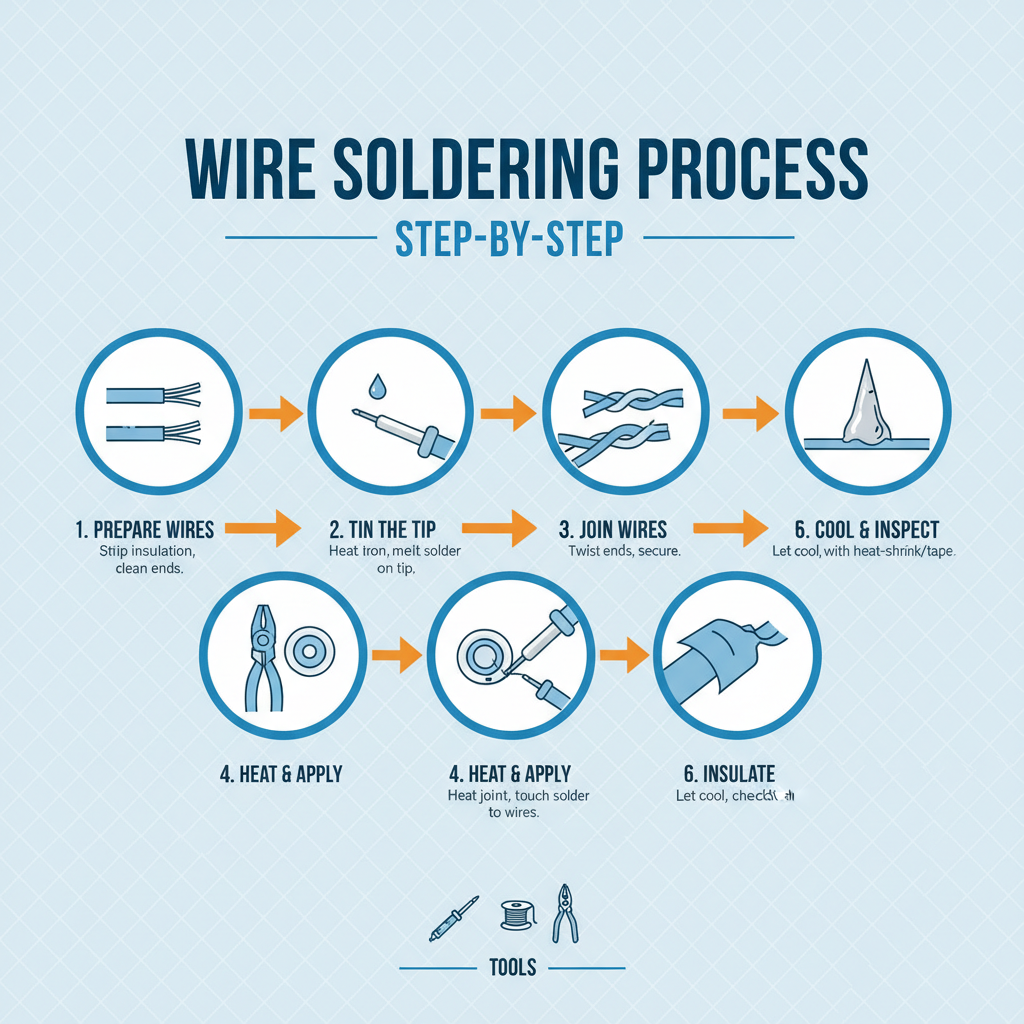
Follow these detailed steps to create professional-quality solder joints every time.
Step 1: Set Up Your Workspace
Create a clean, well-lit workspace with adequate ventilation. Position your soldering iron in its stand and allow it to reach operating temperature. Have all materials within easy reach, including your Hakko FX888D digital soldering station if you’re using professional-grade equipment for consistent temperature control.
Step 2: Position the Wires
Determine your connection type:
– Splice joint: Overlapping wire ends for inline connections
– Western Union splice: Twisted wire ends for maximum mechanical strength
– Pigtail splice: Multiple wires joined to a single wire
– Butt joint: Wire ends placed end-to-end
Use helping hands or a third-hand tool to hold wires in position. Ensure wires are clean and properly tinned before proceeding.
Step 3: Apply Heat and Solder
Place the soldering iron tip against both wires simultaneously to heat the joint area. After 2-3 seconds, touch the solder to the wire connection point (not the iron tip). The solder should melt and flow around the wires, creating a smooth, shiny joint.
Remove the solder first, then the iron. Hold the wires steady for 3-5 seconds while the joint cools and solidifies.
Step 4: Inspect the Joint
A properly soldered wire joint should be:
– Shiny and smooth in appearance
– Mechanically strong when gently tugged
– Free from cold solder joint characteristics (dull, grainy appearance)
– Completely covering all exposed wire strands
Common Wire Soldering Techniques
Different applications require specific soldering approaches for optimal results.
Splicing Wires in Tight Spaces
When working in confined areas, use a pencil-tip soldering iron for precision. Pre-tin both wire ends and use minimal solder to avoid creating bulky joints. Consider using flux paste to improve solder flow in challenging positions.
Soldering Different Wire Gauges
When connecting wires of different thicknesses, heat the larger wire longer to ensure both reach soldering temperature simultaneously. The larger wire acts as a heat sink, requiring additional heating time.
Multi-Wire Connections
For connections involving multiple wires, tin each wire individually before bringing them together. This approach ensures even solder distribution and prevents cold joints in complex connections.
Troubleshooting Common Soldering Problems
Understanding common issues helps you identify and correct problems quickly.
Cold Solder Joints
Cold joints appear dull and grainy, indicating insufficient heat during soldering. Causes include:
– Soldering iron temperature too low
– Insufficient heating time
– Wire movement during cooling
– Contaminated surfaces
Reheat the joint until solder flows smoothly, then allow proper cooling time.
Excessive Solder Buildup
Too much solder creates bulky joints that may not fit in tight spaces. Use only enough solder to coat the wire connection completely. Remove excess solder by reheating and wicking away with desoldering braid.
Poor Solder Flow
Solder that doesn’t flow smoothly indicates:
– Dirty or oxidized surfaces
– Insufficient flux
– Wrong solder type
– Temperature issues
Clean surfaces thoroughly and consider using additional flux paste for difficult joints.
Safety Considerations and Best Practices
Wire soldering involves high temperatures and potentially harmful fumes, making safety precautions essential.
Ventilation and Fume Management
Always work in well-ventilated areas or use a fume extractor. Solder flux produces smoke that shouldn’t be inhaled directly. Position your face away from rising fumes and consider using a small fan to direct smoke away from your breathing zone.
Heat Management
Soldering irons reach temperatures exceeding 700°F, capable of causing severe burns. Always:
– Use the iron stand when not actively soldering
– Keep the workspace clear of flammable materials
– Allow the iron to cool completely before storage
– Never touch the iron tip or recently heated components
Electrical Safety
When soldering live circuits or battery-powered devices, disconnect power sources whenever possible. Capacitors can store dangerous charges even after power removal, so exercise caution with electronic devices.
Finishing and Protecting Solder Joints
Proper joint protection ensures long-term reliability and prevents short circuits.
Heat Shrink Tubing Application
Slide heat shrink tubing over one wire before soldering, then position it over the completed joint. Use a heat gun or lighter (carefully) to shrink the tubing around the connection. Choose tubing diameter that’s 2-3 times larger than the wire diameter for easy installation.
Electrical Tape Alternative
When heat shrink isn’t available, wrap joints with high-quality electrical tape. Start wrapping before the joint and extend past it, overlapping each wrap by 50%. This method provides good insulation but may be less durable than heat shrink tubing.
Strain Relief Considerations
Solder joints are mechanically strong but can fail under repeated flexing. Provide strain relief by:
– Forming service loops in wire runs
– Using cable ties to secure wires near joints
– Avoiding sharp bends near solder connections
– Adding additional support for heavy components
Conclusion
Learning how to solder wires properly is a valuable skill that improves with practice. Start with simple projects and gradually work toward more complex applications as your technique develops. Remember that quality tools, proper preparation, and attention to safety create the foundation for successful wire soldering projects.
Focus on creating clean, shiny joints with adequate but not excessive solder coverage. Take time to properly prepare wire surfaces and maintain your soldering equipment for consistent results. With patience and practice, you’ll develop the confidence to tackle any wire soldering challenge, from basic repairs to complex electronic projects.
The key to mastering wire soldering lies in understanding the fundamentals and applying them consistently. Whether you’re using basic equipment or professional-grade tools, following proper techniques ensures reliable, long-lasting electrical connections that will serve your projects well for years to come.