
Tapping stainless steel requires specific techniques and tools to create clean, precise threads without damaging the material. This comprehensive guide covers everything you need to know about threading stainless steel, from selecting the right tools to executing proper tapping techniques.
To tap stainless steel successfully, use cobalt or carbide taps specifically designed for stainless steel, apply generous amounts of cutting fluid, and maintain slower speeds than you would use for carbon steel. The key is using a forward-reverse tapping motion (turn 1-2 full turns forward, then back off 1/2 turn) to break chips and prevent the material from work-hardening, which can cause tap breakage.
Stainless Steel Properties for Tapping
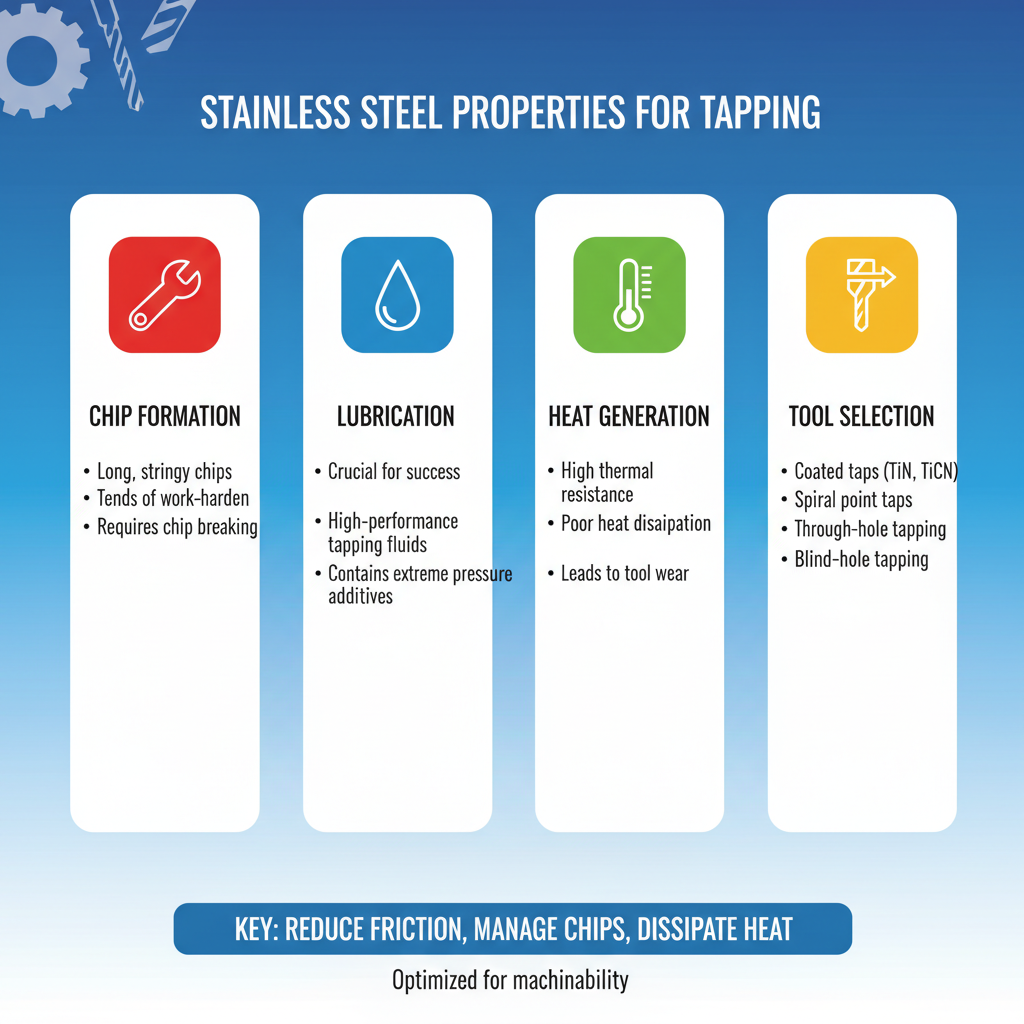
Stainless steel presents unique challenges when tapping threads. Its work-hardening characteristics mean the material becomes harder and more difficult to cut as you work with it. The chromium content that gives stainless steel its corrosion resistance also makes it tougher on cutting tools.
The key properties affecting tapping include:
– High tensile strength requiring more cutting force
– Work-hardening behavior that demands consistent feed rates
– Heat retention that can damage tools and workpiece
– Gummy cutting characteristics that cause chip buildup
Different stainless steel grades behave differently during tapping. Austenitic grades like 304 and 316 are more challenging due to their work-hardening properties, while martensitic grades like 410 and 420 machine more easily but require careful speed control.
Essential Tools and Equipment for Tapping Stainless Steel
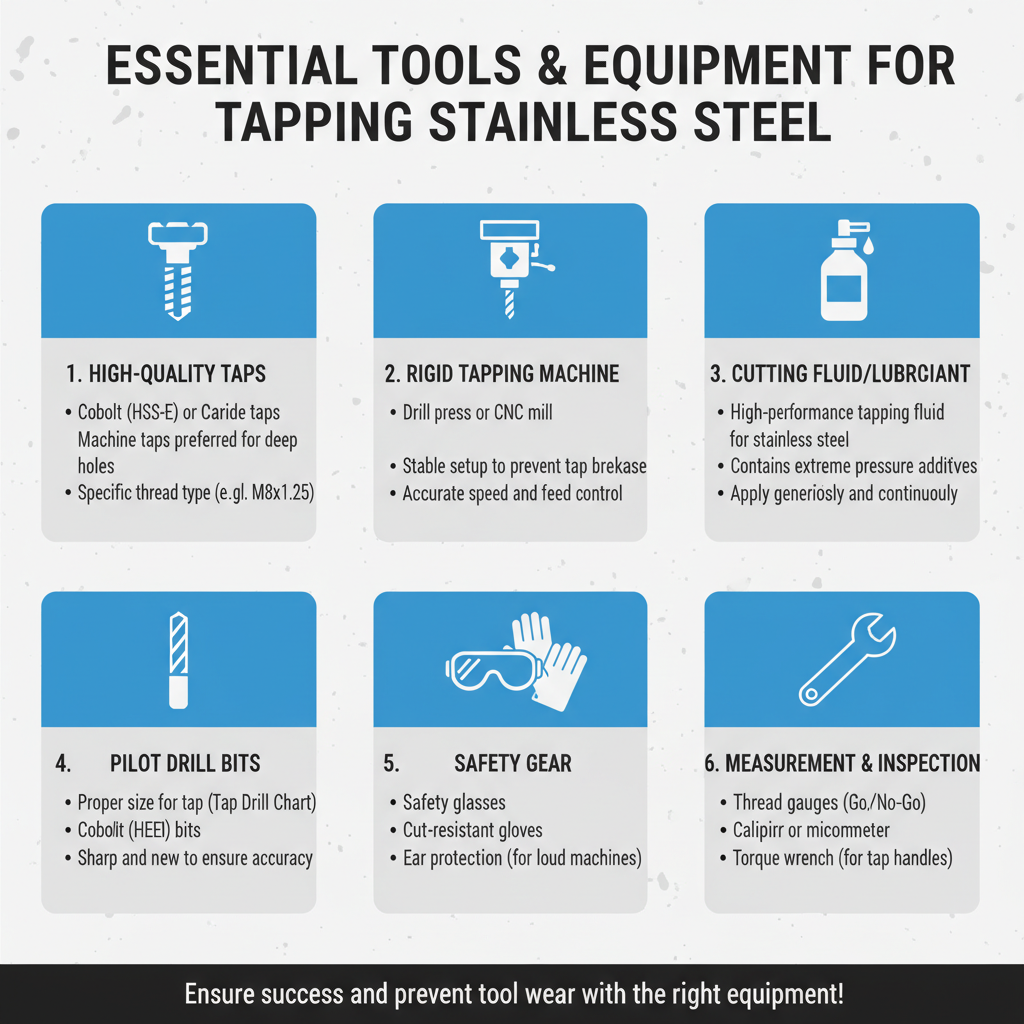
Success in tapping stainless steel starts with selecting appropriate tools. Standard carbon steel taps won’t perform well in stainless steel applications.
Tap Selection
Choose taps specifically designed for stainless steel work. Cobalt high-speed steel taps offer excellent performance, while carbide taps provide superior wear resistance for production work. Greenfield Threading Taps are engineered with specialized geometries that handle stainless steel’s challenging characteristics effectively.
The tap geometry matters significantly. Look for taps with:
– Positive rake angles to reduce cutting forces
– Larger flute spaces for better chip evacuation
– Surface treatments like TiN or TiAlN coatings
– Sharp cutting edges to minimize work hardening
Cutting Fluids and Lubricants
Proper lubrication is critical when tapping stainless steel. The material’s heat retention and gummy cutting behavior demand effective cooling and lubrication. Sulfur-based cutting oils work exceptionally well, though they may stain the workpiece.
Water-soluble coolants provide good results for through-holes where drainage is possible. For blind holes, use cutting paste or stick lubricants that won’t trap chips.
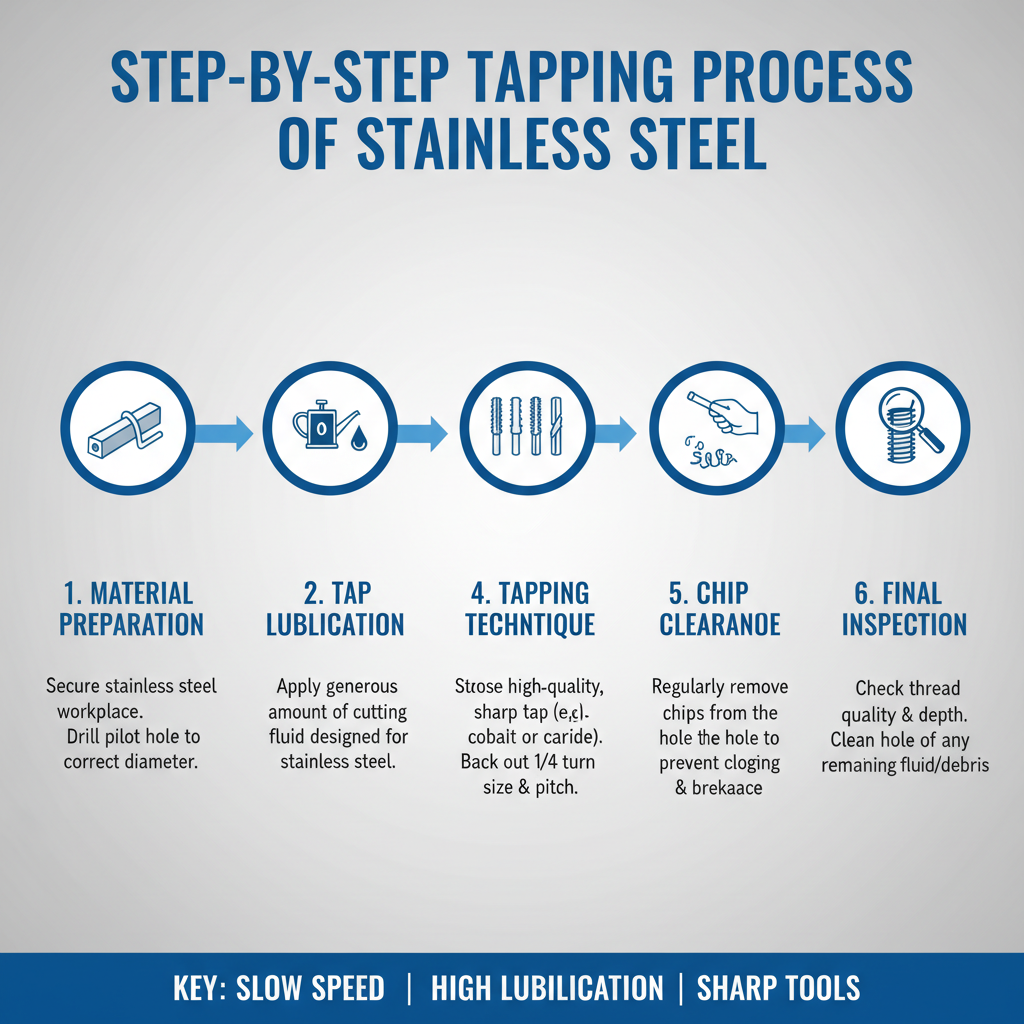
Step-by-Step Tapping Process of Stainless Steel
Preparation and Setup
Start with proper hole preparation. The pilot hole diameter is crucial for successful tapping. Use standard tap drill charts, but consider that stainless steel’s elastic properties may require slight adjustments.
Calculate the correct tap drill size using this formula:
Tap drill diameter = Major diameter – (1/Threads per inch)
Ensure your drilling setup is rigid and the pilot hole is perfectly straight. Any deviation will cause tap breakage or poor thread quality.
Drilling the Pilot Hole
Use sharp drill bits designed for stainless steel. Cobalt or carbide-tipped drills perform best. Maintain consistent feed rates to prevent work hardening, and use adequate cutting fluid.
Keep these drilling parameters in mind:
– Use slower speeds than for carbon steel
– Maintain steady, consistent feed pressure
– Clear chips frequently to prevent heat buildup
– Ensure the hole is deburred before tapping
Tapping Technique
Begin tapping with the spindle stopped and the tap aligned perfectly with the pilot hole. Start the first few threads by hand to ensure proper alignment.
For manual tapping, use a tap wrench that provides good feel and control. Starrett Tap Wrenches offer the precision and durability needed for stainless steel applications, with their adjustable design accommodating various tap sizes.
Follow this tapping sequence:
1. Start the tap square to the workpiece surface
2. Turn clockwise 1-2 full turns
3. Back off 1/2 turn to break chips
4. Apply cutting fluid generously
5. Continue with the forward-reverse pattern
6. Maintain steady, consistent pressure
Managing Heat and Chips
Heat buildup is your enemy when tapping stainless steel. The forward-reverse tapping motion helps break chips and allows cutting fluid to reach the cutting edges. Never force the tap or rush the process.
Watch for these warning signs:
– Excessive heat at the tap shank
– Squealing or chattering sounds
– Increased resistance
– Visible sparks or discoloration
If any of these occur, stop immediately, clear chips, apply more cutting fluid, and reduce your cutting speed.
Machine Tapping Considerations
Machine tapping stainless steel requires careful parameter selection. Use significantly slower speeds than for carbon steel – typically 50-75% of normal carbon steel speeds.
Speed and Feed Guidelines
For machine tapping, follow these general guidelines:
Tap Size (inches) | Surface Speed (SFM) | RPM Range
– 1/4-20: 15-25 SFM | 150-300 RPM
– 3/8-16: 15-25 SFM | 125-200 RPM
– 1/2-13: 15-25 SFM | 90-150 RPM
– 3/4-10: 15-25 SFM | 60-100 RPM
These speeds may need adjustment based on your specific stainless steel grade and machine capabilities.
Synchronization and Rigid Tapping
Modern CNC machines often feature rigid tapping capabilities that synchronize spindle speed with feed rate. This eliminates the need for tapping attachments and provides better control over the tapping process.
When using rigid tapping:
– Ensure perfect synchronization between speed and feed
– Use flood coolant when possible
– Program adequate dwell time at the bottom of blind holes
– Include chip-breaking cycles for deeper holes
Troubleshooting Common Problems
Tap Breakage
Tap breakage in stainless steel usually results from:
– Excessive cutting speed
– Inadequate lubrication
– Work hardening from inconsistent feed
– Misaligned pilot holes
– Dull or inappropriate taps
Prevention involves maintaining sharp tools, consistent techniques, and proper lubrication throughout the process.
Poor Thread Quality
Rough or torn threads indicate:
– Insufficient cutting fluid
– Wrong tap geometry for the application
– Excessive speed causing heat buildup
– Work hardening from improper technique
Address these issues by slowing down, improving lubrication, and ensuring consistent feed rates.
Chip Evacuation Problems
Stainless steel’s gummy nature can cause chip packing, especially in blind holes. Combat this by:
– Using taps with larger flute spaces
– Implementing more frequent backing-out cycles
– Applying cutting paste for better lubrication
– Considering spiral-point taps for through holes
Advanced Techniques and Tips
Thread Forming vs. Thread Cutting
For thin stainless steel sheets, consider thread-forming taps instead of cutting taps. Form taps create threads by displacing material rather than cutting, which can produce stronger threads in thin sections.
Thread forming works best in:
– Sheet metal applications
– Ductile stainless grades
– Applications requiring maximum thread strength
Specialized Coatings and Treatments
Modern tap coatings significantly improve performance in stainless steel. TiAlN coatings provide excellent heat resistance, while diamond-like carbon (DLC) coatings reduce friction and galling.
Consider these coating options:
– TiN (Titanium Nitride): Good general-purpose coating
– TiAlN (Titanium Aluminum Nitride): Superior heat resistance
– AlCrN (Aluminum Chromium Nitride): Excellent for high-speed applications
– DLC: Reduces friction and prevents galling
Quality Control and Inspection
After tapping, inspect threads using appropriate gauges. Go/no-go thread gauges quickly verify thread acceptability. For critical applications, use thread micrometers or optical comparators for precise measurement.
Check for these quality indicators:
– Complete thread form without torn edges
– Proper thread pitch and major diameter
– Absence of work hardening or heat damage
– Smooth thread surfaces without galling
Conclusion
Successfully tapping stainless steel requires understanding the material’s unique properties and adapting your techniques accordingly. The key factors for success include selecting appropriate taps designed