
Are you staring at your new Hobart wire welder, wondering how to transform raw metal into strong, professional joints? Many beginners feel overwhelmed by the controls, settings, and safety requirements of wire welding equipment. The good news is that Hobart welders are designed for user-friendly operation once you understand the basics.
To use a Hobart wire welder, connect the ground clamp to your workpiece, set the appropriate voltage and wire speed for your material thickness, load the wire through the drive system, and maintain a steady 10-15 degree gun angle while moving at consistent speed. Proper preparation and technique will produce clean, strong welds.
What You’ll Learn in This Guide
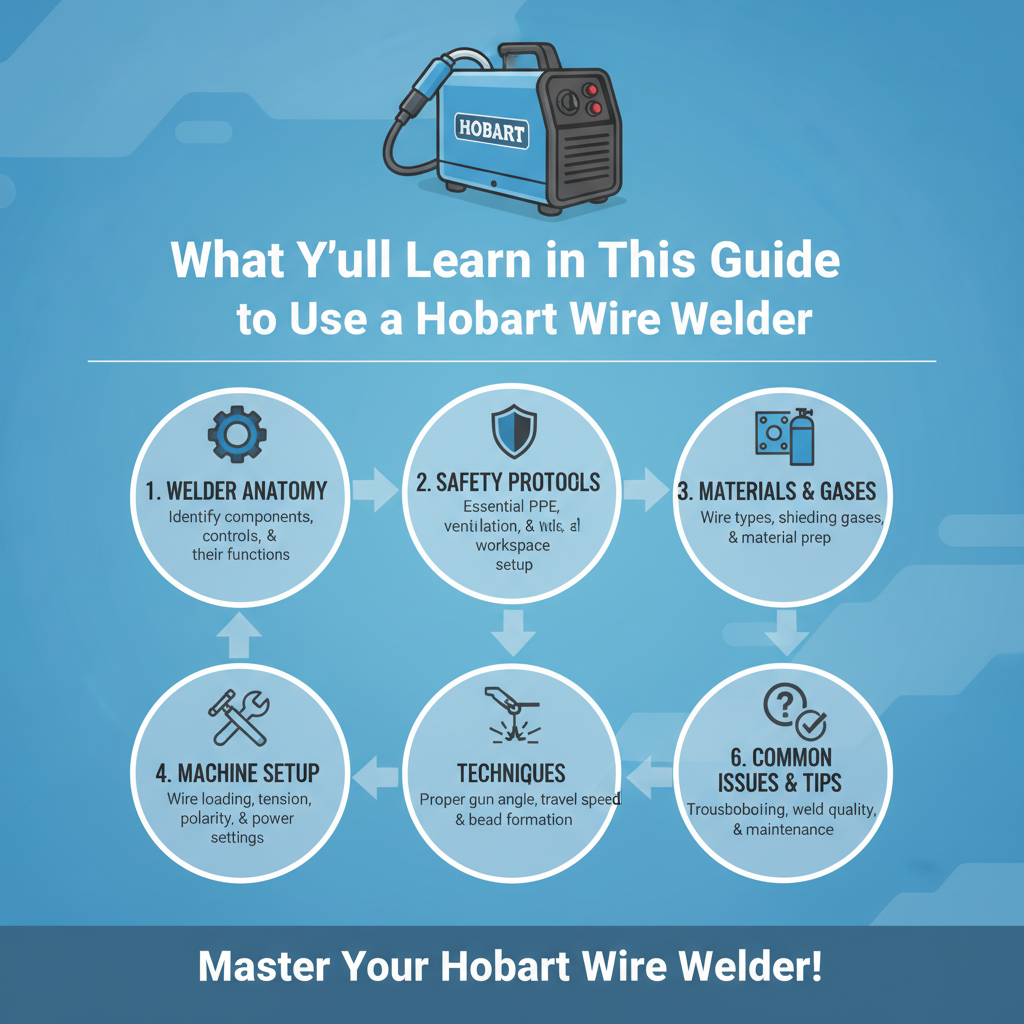
This comprehensive guide covers everything needed to operate your Hobart wire welder effectively:
• Essential safety equipment and workspace preparation
• Step-by-step setup process for optimal performance
• Proper welding technique and gun handling
• Troubleshooting common welding problems
Essential Safety Equipment and Preparation
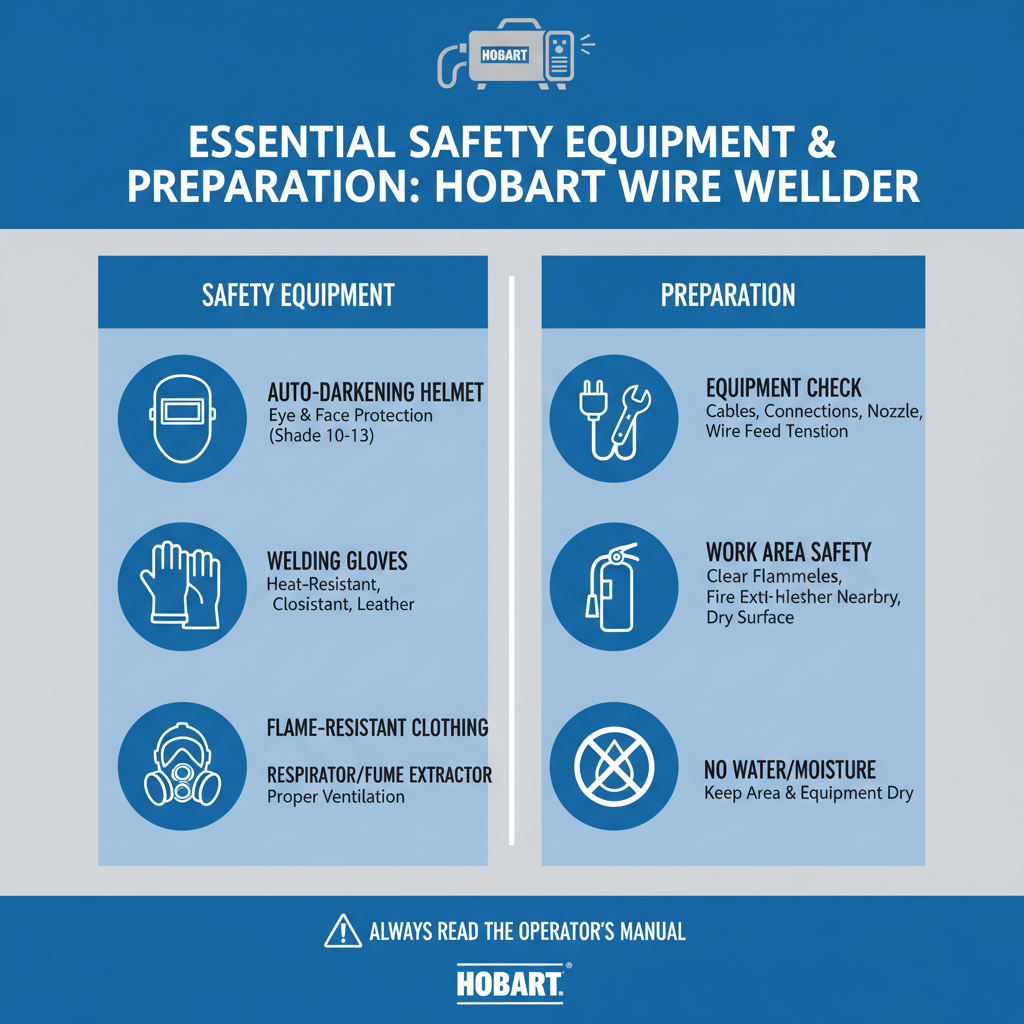
Safety must come first when operating any welding equipment. Hobart wire welders produce intense heat, bright light, and potentially harmful fumes.
Required Safety Gear:
• Auto-darkening welding helmet (minimum shade 10)
• Leather welding gloves and long-sleeved jacket
• Safety glasses for setup work
• Steel-toed boots and long pants
• Proper ventilation or respirator for enclosed spaces
Workspace Requirements:
• Fire-resistant welding table or surface
• Fire extinguisher within easy reach
• Adequate ventilation to remove fumes
• Clear area free from flammable materials
• Proper electrical outlet matching welder specifications
Never attempt welding without complete safety equipment. Arc flash can cause permanent eye damage in seconds, and molten metal spatter can cause severe burns.
Understanding Your Hobart Wire Welder Controls
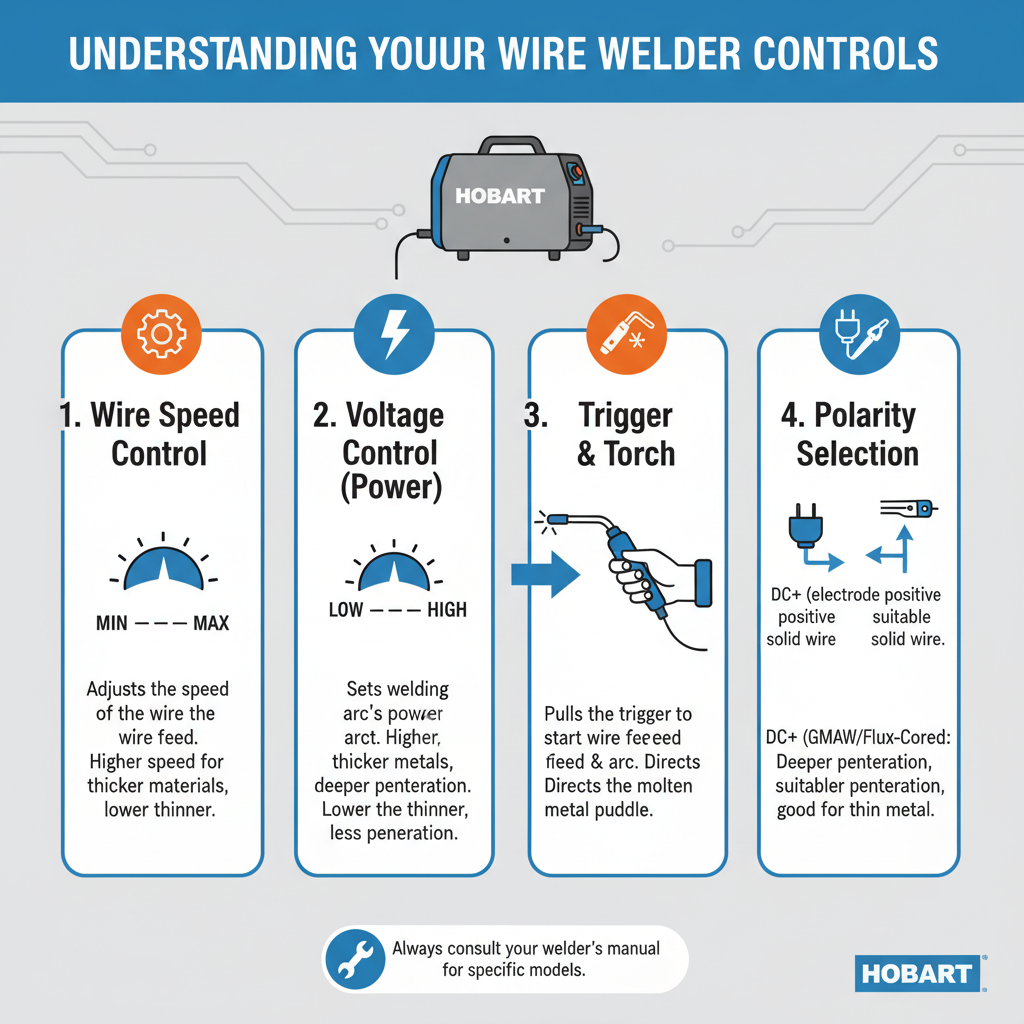
Modern Hobart wire welders feature intuitive control panels, but understanding each setting ensures optimal results.
Primary Controls:
• Voltage/Heat Setting: Controls penetration depth and bead appearance
• Wire Feed Speed: Determines how fast wire feeds to the arc
• Polarity Switch: Set to DCEP (electrode positive) for steel welding
• Gas Flow Regulator: Controls shielding gas flow rate
Voltage Settings by Material Thickness:
• 18-gauge sheet metal: Setting 1-2
• 1/8 inch steel: Setting 3-4
• 1/4 inch steel: Setting 5-6
• 3/8 inch steel: Setting 7-8
Wire feed speed typically ranges from 50-500 inches per minute. Start with manufacturer recommendations, then adjust based on arc characteristics and bead appearance.
Step-by-Step Setup Process to Use a Hobart Wire Welder
Proper setup determines welding success before you strike the first arc. Follow this systematic approach for consistent results.
Wire Loading Process:
1. Open the wire compartment door
2. Remove the wire spool retaining nut
3. Place wire spool with wire feeding counterclockwise
4. Thread wire through the inlet guide tube
5. Set drive roll tension according to wire diameter
6. Feed wire through the gun liner to the contact tip
Gas System Setup:
1. Connect gas cylinder to regulator
2. Attach gas hose to welder inlet
3. Set flow rate to 15-20 CFH for most applications
4. Purge air from lines before welding
Ground Connection:
• Attach ground clamp directly to clean base metal
• Ensure solid electrical connection without paint or rust
• Position clamp as close to weld area as practical
Poor ground connections cause erratic arc behavior and weak welds. Clean connection points with a wire brush if necessary.
Proper Welding Technique and Gun Handling
Consistent technique produces professional-quality welds regardless of project complexity. Master these fundamentals before attempting complex joints.
Gun Angle and Position:
• Maintain 10-15 degree push angle in travel direction
• Hold gun 1/4 to 3/8 inch from workpiece
• Keep consistent arc length throughout the weld
• Use both hands for steady control
Travel Speed Guidelines:
• Too fast: Narrow, ropey bead with poor penetration
• Too slow: Wide, irregular bead with excessive buildup
• Correct speed: Uniform bead width with slight ripple pattern
Arc Starting Technique:
1. Position gun at weld starting point
2. Lower helmet and squeeze trigger
3. Establish arc with slight gun movement
4. Begin steady travel along joint line
5. Release trigger at weld end while maintaining position
Practice on scrap material until you achieve consistent bead appearance and penetration.
Wire and Gas Selection Guide
Choosing appropriate consumables affects weld quality, appearance, and mechanical properties.
| Material | Wire Type | Gas Mixture | Typical Applications |
|———-|———–|————-|———————|
| Mild Steel | ER70S-6 | 75% Argon/25% CO2 | General fabrication |
| Stainless Steel | ER308L | 98% Argon/2% CO2 | Food service equipment |
| Aluminum | ER4043 | 100% Argon | Automotive, marine |
| Flux-Core | E71T-11 | None (self-shielded) | Outdoor, windy conditions |
Wire Diameter Selection:
• .023 inch: Thin materials, precision work
• .030 inch: Most versatile, general purpose
• .035 inch: Thicker materials, higher deposition
• .045 inch: Heavy fabrication, high-speed welding
Flux-core wire eliminates gas requirements but produces more spatter and requires different technique compared to solid wire.
Common Problems and Solutions
Even experienced welders encounter issues that affect weld quality. Recognizing symptoms helps identify solutions quickly.
Porosity (Gas Bubbles in Weld):
• Cause: Contaminated base metal, insufficient gas coverage
• Solution: Clean materials thoroughly, check gas flow rate
• Prevention: Remove oil, paint, and rust before welding
Poor Penetration:
• Cause: Insufficient heat, incorrect gun angle, fast travel speed
• Solution: Increase voltage setting, slow travel speed
• Check: Ensure proper joint preparation and fit-up
Excessive Spatter:
• Cause: High voltage, contaminated wire, poor gas coverage
• Solution: Reduce voltage, clean wire path, verify gas flow
• Tip: Anti-spatter spray reduces cleanup time
Burn-Through:
• Cause: Excessive heat for material thickness
• Solution: Reduce voltage, increase travel speed
• Prevention: Use backing plates on thin materials
Regular maintenance prevents many common problems. Keep wire path clean and replace contact tips when worn.
Maintenance and Care Tips
Proper maintenance extends equipment life and ensures consistent welding performance.
Daily Maintenance:
• Check gas connections for leaks
• Clean spatter from gun nozzle
• Verify ground clamp connection
• Inspect wire feed path for obstructions
Weekly Maintenance:
• Replace contact tip if worn or damaged
• Clean drive rolls and wire path
• Check gun liner for wear or kinks
• Verify gas flow rates and cylinder pressure
Monthly Maintenance:
• Inspect all cables for damage
• Clean cooling fan intake screens
• Check internal connections for tightness
• Lubricate wire drive mechanism per manual
Storage Recommendations:
• Store in dry location to prevent moisture damage
• Cover equipment when not in use
• Remove wire from drive system for long-term storage
• Disconnect gas cylinder and store separately
Preventive maintenance costs far less than emergency repairs and ensures reliable operation when you need it most.
Frequently Asked Questions
What wire speed should I use for 1/8 inch steel?
Start with 200-250 inches per minute on voltage setting 3-4. Adjust based on arc sound and bead appearance. A steady crackling sound indicates proper settings.
Can I weld aluminum with my Hobart wire welder?
Yes, but you’ll need aluminum wire, 100% argon gas, and a spool gun or push-pull system. Standard wire feed systems struggle with soft aluminum wire.
Why does my wire keep jamming in the gun?
Common causes include kinked liner, wrong drive roll type, excessive drive roll pressure, or contaminated wire. Check the entire wire path systematically.
How do I know if my penetration is adequate?
Cut test pieces and examine the cross-section. Proper penetration shows complete fusion through the joint thickness without excessive reinforcement.
What causes my welds to look rusty immediately?
This indicates contamination from oil, moisture, or improper gas coverage. Clean materials thoroughly and verify gas flow before welding.
Can I use my Hobart welder outdoors?
Yes, but wind affects gas coverage. Use flux-core wire for windy conditions or create windscreens around the work area.
How often should I replace the contact tip?
Replace when the opening becomes enlarged or egg-shaped, typically after 10-20 pounds of wire depending on amperage and duty cycle.
Key Takeaways
• Safety equipment and proper ventilation are non-negotiable requirements for wire welding
• Correct voltage and wire speed settings depend on material thickness and joint requirements
• Consistent gun angle, travel speed, and arc length produce professional-quality welds
• Wire and gas selection significantly impacts weld quality and mechanical properties
• Regular maintenance prevents common problems and extends equipment life
• Practice on scrap material builds muscle memory and confidence before tackling important projects
• Proper joint preparation and cleanliness affect weld quality more than expensive equipment
Final Thoughts
Mastering your Hobart wire welder requires understanding both the equipment and fundamental welding principles. Start with proper safety equipment and workspace setup, then focus on consistent technique through practice on scrap materials. The combination of correct settings, steady gun handling, and quality consumables will produce strong, attractive welds that meet professional standards. Remember that welding skills develop over time, so be patient with the learning process and prioritize safety above speed or appearance.