
Getting the hang of how to use a Miller welder was a game changer for me in the shop. I remember setting one up for the first time and wondering if I had the right settings for my metal thickness, whether my MIG vs TIG choice made sense, and how much arc control I really needed for a clean bead.
Miller machines are smooth to run, but like any welder, the results come down to proper joint prep, knowing your filler wire or filler rods, and dialing in the amperage so you’re not fighting spatter, burn-through, or weak fusion.
A lot of beginners get overwhelmed by all the knobs, modes, and options, but once you understand what each setting does, you can weld mild steel, stainless, or thicker plate with confidence and consistency. In this guide, I’ll walk you through the practical, shop-tested steps that make using a Miller welder simple — so you can set it up right, run cleaner beads, and get pro-quality results every time.
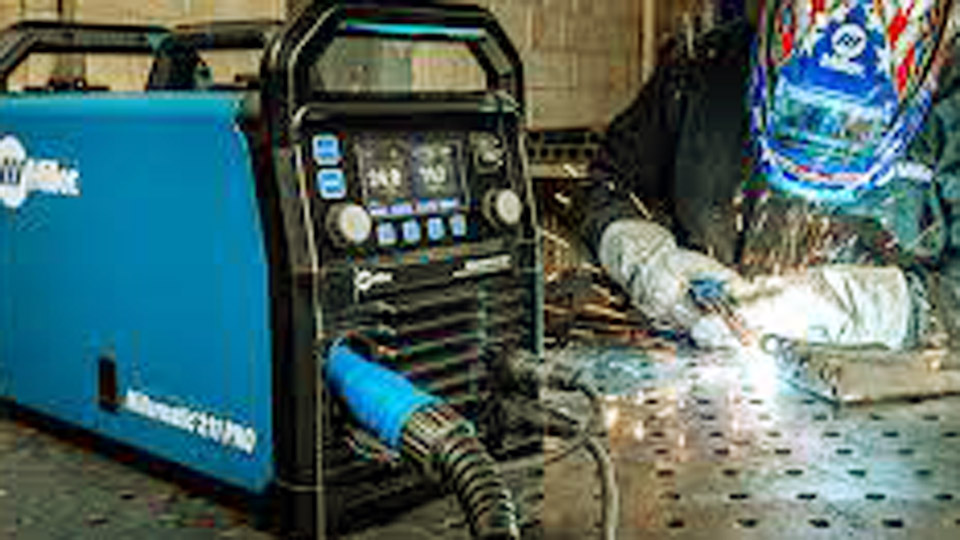
Image by millerwelds
What Makes Miller Welders Stand Out for Everyday Welding
Miller welders aren’t your grandpa’s buzz box; they’re built tough for American shops, from quiet garages to roaring fab floors. These machines crank out reliable arcs across MIG, stick, and TIG, with features like Auto-Set that take the guesswork out of dialing in volts and wire speed.
Why does that hit home? I’ve run Millers through Indiana winters and Texas summers— they hum steady, no fuss, and their inverter tech means lighter weight without skimping on power.
For hobbyists, it’s the ease: plug in a spool gun for aluminum, and you’re laying clean skins on bike frames. Pros love the duty cycles—30% at 215 amps on a 211 means more weld time, less cooldown coffee breaks.
Take the Multimatic series; it’s a multi-process beast that switches from MIG to TIG with a flip, saving you from juggling rigs. Or the Trailblazer for remote sites—engine-driven, it powers lights and tools while you stick heavy plate.
The real edge? Miller’s baked-in smarts, like synergic controls that sync voltage to wire feed, cutting spatter and boosting penetration. In my early days, I chased settings manually; now, I let the machine do the math, focusing on the puddle. Bottom line: if you’re chasing versatile gear that grows with you, Miller delivers without the headaches.
Choosing the Right Miller Welder for Your Skill Level and Projects
Picking a Miller starts with honest talk—what’s your shop like, and what metals are you wrestling? If you’re green, eye the Millermatic 142: 120-volt plug-and-play for sheet metal up to 3/16-inch steel. I grabbed one for home projects; it chewed through exhaust repairs like butter, no breaker trips. For thicker stuff like trailers, step to the 211 PRO—handles 3/8-inch with a 15-foot gun reach that lets you maneuver without dancing around.
Multi-process fans, the Multimatic 215 is gold: MIG, flux-core, DC stick, and TIG in one box, welding up to 3/8-inch on 120 or 240 volts. I loaned mine to a trainee; he went from shaky fillets to solid T-joints in a week. TIG purists? Syncrowave 210 for AC/DC on aluminum—precise heat for thin skins without blow-through. And for field work, Thunderbolt 210 sticks rusty beams outdoors, no gas needed.
Pros: MIG’s speed for fab volume; stick’s forgiveness on dirty iron; TIG’s beauty for show pieces. Cons: MIG guzzles gas indoors; stick spits slag to chip; TIG demands steady hands and time. Match to your metals too—steel loves all three, but aluminum begs TIG or spool MIG.
| Project Type | Recommended Miller Model | Best Process | Material Thickness Range |
|---|---|---|---|
| Auto Body Repairs | Millermatic 142 | MIG | 24 gauge to 3/16 inch |
| Trailer Frames | Multimatic 215 | Flux-Core/Stick | 1/4 to 3/8 inch |
| Custom Bike Frames | Syncrowave 210 | TIG | 1/16 to 1/8 inch |
| Farm Equipment | Trailblazer 325 | Stick | 5/16 inch+ |
| General Repairs | Multimatic 220 AC/DC | Multi-Process | Up to 3/8 inch |
This table’s your roadmap—start here, scale up as your beads stack.
Step-by-Step Setup for Your Miller Welder
Setting up a Miller feels intimidating at first, but break it down, and it’s like tuning a carb: methodical, rewarding. First, unbox and inspect—check for dents or loose wires; I’ve skipped this and paid with a callback. Plug into a dedicated 120 or 240 circuit—use 10-gauge for longer runs to dodge voltage drops. Ground it solid; clip the work lead to clean metal, not paint.
For basics: Fill the wire spool compartment with your electrode—ER70S-6 for mild steel, .030-inch diameter. Thread through the drive rolls; tension just snug, or it’ll bird-nest. Attach the MIG gun, twist the connector firm. Hook up shielding gas—75/25 argon-CO2 mix, flow at 20 CFH. Fire it up: Power on, select MIG mode, let Auto-Set sniff your inputs.
Personal screw-up? Forgot to trim the wire stickout once—arced wild, burned a hole. Fix: Snip to 3/8 inch every setup. For stick mode on a Multimatic, swap the MIG gun for electrode holder and ground; set polarity to DCEP for 7018 rods. TIG? Add the torch kit, set to lift-arc, pure argon at 15-20 CFH.
Safety first: Ventilate—fumes sneak up. Wear FR jacket, leather sleeves; I’ve got a scar from skipping that on a long run. Test arc on scrap: Smooth hum, steady puddle? You’re golden. Takes 15 minutes tops—now weld.
How to MIG Weld with a Miller Welder: From Setup to Solid Beads
MIG on a Miller’s a joy—fast pools, minimal cleanup, perfect for stacking parts quick. It’s GMAW: wire electrode feeds continuous, shielded by gas, constant voltage arc melts it into the joint. Use it for fab speed on steel or stainless; why? High deposition, less skill curve than TIG. I MIG’d a gate frame last summer—finished in hours what stick would’ve dragged.
Start with prep: Grind joints to 45 degrees for butt welds, wire-brush rust off. On your Millermatic, punch in material thickness and wire size—Auto-Set spits perfect volts (18-22 for .030 on 1/8-inch steel) and feed (150-250 IPM). No Auto-Set? Chart inside the door: Match thickness to settings.
Step-by-step: Clamp work lead. Trigger gun—wire jogs out. Hold 90 degrees to plate, 15-degree push angle, 3/8-inch stickout. Squeeze trigger; arc bites gentle. Travel steady, 10-12 inches per minute—watch the puddle fan even, no blobs. Weave slight for fillets, straight for butts.
Anecdote: First time, I pushed too hard—porous mess. Lesson: Clean metal rules; MIG forgives dirt better than TIG, but grease kills fusion. Gas flow key—20 CFH shields without turbulence; too much wastes, too little oxidizes.
| Material Thickness (Steel) | Wire Diameter | Voltage | Wire Feed Speed (IPM) |
|---|---|---|---|
| 1/8 inch | .030 inch | 18-19 | 150-180 |
| 1/4 inch | .035 inch | 20-22 | 200-250 |
| 3/8 inch | .035 inch | 22-24 | 250-300 |
Tweak for aluminum: Spool gun, 100% argon, ER4043 wire at lower amps. Good bead? Crowned slight, toes blend smooth, bends without cracking. Practice on flats—your truck bed thanks you.
Stick Welding Essentials on a Miller Welder
Stick welding—SMAW—on a Miller’s rugged workhorse stuff: rods coat flux that shields and slags, forgiving on rusty beams outdoors. Great for thick carbon steel, repairs; why bother? No gas, portable, penetrates deep. I’ve stuck pipeline patches in wind—holds like glue.
Setup: On Thunderbolt or Multimatic, set DCEN or DCEP—positive for penetration on 7018 low-hydrogen rods. Amps: 1 per .001-inch rod diameter, so 125 for 1/8-inch. Clamp ground tight.
CLAMS technique keeps you sharp: Current first—dial till arc’s crisp, not sticky (low) or spattery (high). Arc length: Match rod core—too long sputters, too short sticks. Angle: Drag 10-15 degrees back for flat; push slight for vertical up.
Manipulation: Straight stringers on thin; weave Z-pattern on thick, overlap half electrode width. Travel speed: Arc in puddle’s front third—slow widens beads, fast narrows ’em skinny.
Common flub: Rushing verticals—puddle sags. Fix: Pause sides, slow middle for tie-in. I botched a trailer hitch that way; reheated with preheat next time, 200°F on cold steel. Rod storage: Dry oven at 250°F—moist ones pop hydrogen cracks. Nail CLAMS, and your stacks dime perfect.
TIG Welding Fundamentals with a Miller Machine
TIG—GTAW—on Miller’s precision play: Tungsten electrode arcs non-consumable, filler dabs separate, gas shields tight. Ideal for aluminum, stainless; why? Clean, controllable heat for thin exotics—no slag, aesthetic beads. My first TIG run was on a chopper tank—silky, no grind needed.
Setup for Multimatic 220: TIG mode, lift-arc start—tap tungsten to work, lift clean. Pure argon, 15 CFH. Tungsten: 2% lanthanated, 1/16-inch for starters, sharpen point. Amps: 100 for 1/8-inch aluminum.
Steps: Brace hand flat on bench, torch forward 10 degrees, tungsten 1/8-inch off. Foot pedal heat—ease in slow. Push torch, dab filler at puddle front, 90 degrees to arc. For aluminum, balance 60% EN for cleaning oxide.
Practice: Puddle walks first—no filler, hold width steady. Too hot? Washout; pedal off edges. Anecdote: Contaminated my tungsten dipping filler—arc flamed out. Fix: Grind fresh, never touch. Frequency high for focus on tight joints; low for wide butts. Rhythm builds: Torch steady, filler dab-move. Your bike frames glow.
Safety First: Protecting Yourself with Miller Welding Gear
Welding a Miller’s hot fun, but skip safety, and it’s ER bingo—UV flashes, fumes, zaps. Always: Auto-darkening helmet (shade 10), FR jacket, leather gloves—I’ve felt splatter through cotton, ouch. Ventilate: Fume extractor or outdoors; hex chrome in stainless bites lungs long-term.
Ground right—loose clamp arcs wild, shocks sneak. Eye check yearly; flashes creep. Gas hoses away from sparks—no leaks, or boom.
Personal rule: Hydrate, stretch—long sessions fatigue hands, sloppy beads follow. Codes like AWS D1.1? Follow for structural; saves callbacks. Gear up, weld smart—you’re home for dinner.
Common Mistakes When Using a Miller Welder and Easy Fixes
We all botch—my first Miller run? Wrong gun size, overheated mid-bead. Here’s the trenches truth: Top pitfalls and shop fixes.
Wrong settings: Auto-Set ignores? Porosity city. Fix: Recheck thickness, wire match—bump volts 1-2 if cold arc.
Dirty prep: Grease welds weak. Fix: Acetone wipe, grind 1/16-inch clean—prevents inclusions.
Gas glitches: Low flow oxidizes. Fix: 20 CFH MIG, purge lines—tune regulator, no surges.
Electrode mess: Wet rods crack. Fix: Bake 7018 at 500°F hour; store sealed.
Gun neglect: Worn tip birds-nests. Fix: Swap .035 for .030 wire; trim liner straight.
Overheat: Duty cycle push—thermal shutdown. Fix: 3-min on, 7 off at max; cool gun water if air-cooled.
Preheat skip: Thick steel warps. Fix: Torch to 150°F, temp stick verify.
Filler cheap-out: Spatter fest. Fix: Quality ER70S-6—less grind, more fusion.
Training lag: Bad habits stick. Fix: Scrap practice daily—log arcs, tweak.
Maintenance dodge: Cables fray, arcs stutter. Fix: Weekly wipe, torque connections—downtime killer.
Spot these early, tweak quick—your welds thank you.
Fine-Tuning Miller Welder Settings for Steel, Aluminum, and Stainless
Settings make or break—Miller’s charts guide, but feel’s king. For mild steel MIG: .030 wire, 19 volts, 175 IPM on 1/8-inch—push technique, preheat none under 1/2-inch.
Aluminum TIG: 100 amps AC, 100Hz frequency, ER4043 filler—clean oxide with stainless brush, back-purge pipes. Stainless MIG: Triple mix gas (90/7.5/2.5 Ar/He/CO2), 308L wire, 20 volts—lower heat dodges distortion.
Joint prep: Bevel thick butts 30 degrees, tack every 4 inches. Filler match: 308 for 304 stainless, 4043 for 6061 aluminum.
| Metal Type | Process | Amps/Volts | Filler/Rod | Gas Mix |
|---|---|---|---|---|
| Mild Steel | MIG | 18-22V | ER70S-6 .035 | 75/25 Ar/CO2 |
| Aluminum | TIG | 80-120A AC | ER4043 1/16 | 100% Argon |
| Stainless | Stick | 110-140A | E308-16 1/8 | N/A |
| Carbon Steel | Stick | 125A DCEP | E7018 1/8 | N/A |
Test on coupons—visual clean, bend pass? Locked in. Experiment safe; your fab shines.
Wrapping Up: Dial In Your Miller and Weld with Confidence
From unboxing to that satisfying bead freeze, using a Miller welder boils down to prep, practice, and tweak. You’ve got the setups for MIG speed, stick toughness, TIG finesse; the CLAMS and puddle dances that turn rookies pro.
Why you’re set now? No more guessing arcs or chasing defects—you’ll lay joints that hold, save time on reworks, and tackle any project from garage hacks to shop contracts. Grab that scrap pile, fire up your Miller, and lay a run today—confidence comes from the spark. Log every weld—amps, speed, outcome—in a notebook. Review weekly; it’s your cheat code to mastery.
FAQs
What’s the Best Gas for MIG Welding on a Miller?
75/25 argon-CO2 mix rules for mild steel—balances penetration and low spatter. Pure argon for aluminum; triple mixes for stainless. Start 20 CFH, adjust for no turbulence.
How Do I Avoid Birdnesting on My Miller MIG Gun?
Tension drive rolls light—too tight binds wire. Trim stickout fresh, match liner to wire size (.035 tip for .035). Clean spool hub; jam’s gone.
Can Beginners Use TIG on a Miller Multimatic?
Absolutely—lift-arc starts easy, Auto-Set helps. Practice puddles first; brace hands steady. Start DC on steel, add AC for aluminum once comfy.
Why Is My Stick Weld Spattery on Miller Equipment?
Amps high or arc long—drop 10 amps, hold 1/8-inch tight. Clean rod ends; drag angle right. Quality 7018 flux matters—bake if damp.
How Often Should I Maintain My Miller Welder?
Weekly: Wipe gun, check cables. Monthly: Replace consumables, test output. Annual service if heavy use—keeps arcs crisp, downtime low.