
Figuring out how to weld an exhaust pipe without a welder is something that comes up more often than you’d think, especially when you’re dealing with thin, rusty tubing and don’t have access to MIG or TIG welding. Exhaust pipe steel is usually light-gauge, uneven in metal thickness, and already stressed from heat cycles, which makes traditional welding tricky — or sometimes impossible — in a driveway or roadside repair.
I’ve relied on high-temp exhaust clamps, metal-reinforced epoxies, patch sleeves, and even brazing-style fixes to get vehicles back on the road without striking an arc.
When done right, these methods can seal leaks, restore structural support, and save serious time and money. In this guide, I’ll walk you through the practical, no-welder techniques I actually trust for exhaust repairs — and explain when they work, when they don’t, and how to make them last.
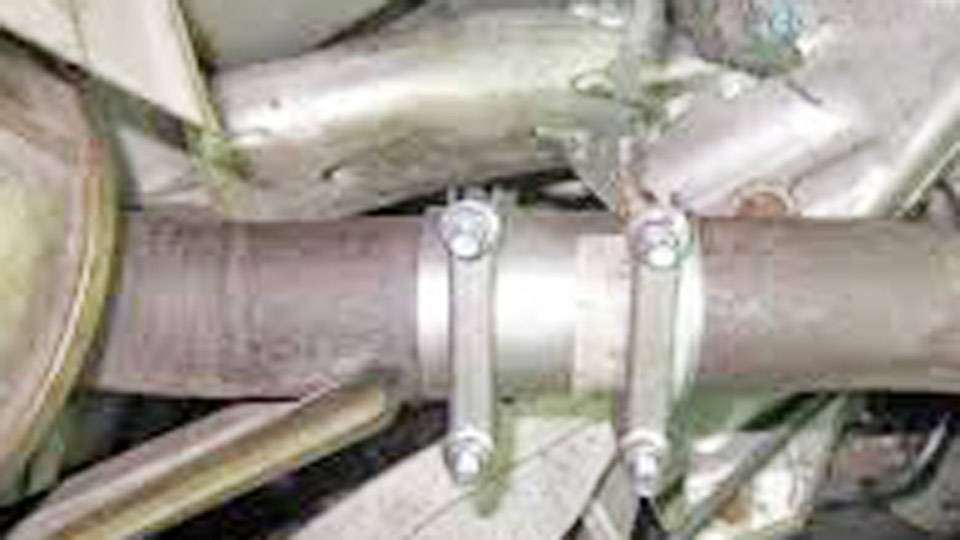
Image by motoroomph
Why You Might Need to Repair Exhaust Pipes Without Welding
You’re under your car, spotting a crack in the exhaust pipe, and the last thing you want is to invest in a MIG welder or TIG setup if you’re not using it daily. That’s where non-welding repairs shine—they’re accessible for DIY welders and hobbyists who might not have pro-level gear. In real-world scenarios, like fixing a trailered boat hauler or a student’s project car, these methods maintain exhaust flow without disrupting the system’s balance.
Exhaust pipes take a beating from road salt, heat cycles, and vibrations, leading to leaks that affect fuel efficiency and engine health. Without addressing them, you risk reduced backpressure, which can throw off your O2 sensors and trigger check engine lights.
I’ve seen folks ignore small holes, only to deal with bigger issues like manifold cracks later. Opting for clamp-based joins or sealants ensures compatibility with common mild steel or aluminized pipes found in most US vehicles, preserving integrity without heat distortion from welding.
From a cost standpoint, these fixes are game-changers. A basic clamp setup might run you twenty dollars, versus a hundred for a welded patch at a shop. They’re ideal for temporary holds until you can upgrade, especially if you’re in a state with strict inspection codes like California or New York. Remember, though, these aren’t always permanent—use them wisely for safety and longevity.
Essential Tools and Materials for Non-Welding Exhaust Repairs
Before we get our hands dirty, let’s talk gear. In my shop, I always keep a jack and stands for safe lifting—never rely on just a jack, as exhaust work involves tugging and twisting. You’ll need a wire brush or grinder to clean rust, ensuring a tight seal. High-temp exhaust sealant or paste is crucial for filling gaps, rated up to 2000°F to handle engine heat.
For materials, stock up on stainless steel clamps in various sizes—2-inch to 3-inch diameters cover most cars. Epoxy like high-temp JB Weld is a staple for patching holes, while exhaust tape provides quick wraps for minor leaks. Don’t forget safety essentials: gloves, eye protection, and a fire extinguisher, since exhaust residues can be flammable.
I’ve found that investing in quality stainless parts pays off in humid climates, preventing quick rust recurrence. For joint prep, a pipe cutter or hacksaw ensures clean cuts, and anti-seize compound on bolts makes future disassembly easier. These tools keep things practical, aligning with everyday US shop practices where time is money.
Preparing Your Exhaust System for Repair
Prep work is where most folks trip up, but it’s straightforward if you take it slow. Start by cooling the exhaust completely—I’ve burned myself rushing after a drive, so give it a couple hours. Jack up the vehicle securely and support it on stands, then inspect the entire system for multiple leaks using a smoke test: block the tailpipe and introduce smoke to spot escapes.
Clean the area thoroughly with a wire brush, removing rust and carbon buildup for better adhesion. If cutting pipes, measure twice—use a tape measure to ensure overlaps of at least 2 inches for clamps. Degrease with brake cleaner to avoid contaminants weakening seals.
In my experience, prepping curved sections requires extra care; sand lightly for texture if using epoxy. Always check for compatibility—aluminized pipes pair well with stainless clamps to minimize galvanic corrosion. This step sets up success, turning a potential headache into a smooth fix.
Using Exhaust Clamps for Secure Pipe Connections
Clamps are my go-to for joining pipes without welding, offering reliable holds that mimic welded strength in low-stress areas. They work by compressing pipes together, creating a seal against exhaust pressure. Use them when pipes are intact but separated, or for adding components like resonators.
The beauty is their adjustability—loosen and reposition as needed. In US applications, like on Ford trucks or Chevy sedans, they comply with basic noise regulations if sealed properly. I’ve used them on countless projects, from quieting a loud Civic to securing a custom setup on a Jeep.
Apply high-temp sealant inside joints for extra leak-proofing, and torque clamps to 40-50 ft-lbs for even pressure. Common mistake: over-tightening, which crushes thin pipes—ease up if you feel resistance.
U-Bolt Clamps: Simple and Affordable Option
U-bolt clamps are basic but effective, featuring a U-shaped bolt that squeezes pipes via nuts. They deform the pipe slightly for a snug fit, ideal for straight joins on 2-2.5 inch diameters common in sedans.
To install, slide the clamp over the overlap, position the U-bolt evenly, and tighten nuts alternately. Pros: cheap (under $5 each) and widely available at auto stores. Cons: can rust if not stainless, and removal might require cutting.
I once fixed a buddy’s exhaust on his F-150 using these during a road trip—quick and held for 500 miles. Tip: use two per joint for redundancy in high-vibration setups.
Band Clamps: For Strong, Leak-Proof Seals
Band clamps wrap around the joint like a belt, providing uniform pressure without deforming pipes much. They’re perfect for butt joints where pipes meet end-to-end, using a wide band for better sealing.
Installation: align pipes, slip the band over, and tighten the bolt until snug. Pros: excellent for high-heat areas, reusable, and seal well with minimal prep. Cons: pricier at $10-15, and sizing must be exact.
In my workshop, these saved a project on a rusted-out Dodge where traditional clamps failed— the even pressure stopped a persistent leak. Add sealant for joints under 1 inch overlap.
Worm Gear Hose Clamps: Versatile for Custom Fits
Worm gear clamps, or jubilee clips, use a screw mechanism for adjustable tightening, great for irregular shapes or temporary holds. Cut slots in one pipe end for better grip if needed.
Steps: position over the joint, turn the screw to tighten evenly. Pros: highly adjustable and inexpensive. Cons: not as strong for high-pressure systems, may loosen over time.
I’ve used these on off-road vehicles where vibrations are intense—adding lock washers helps. Ideal for students experimenting with fabrication.
Sleeve Repairs for Sheared or Broken Pipes
Sleeves act as bridges for broken sections, sliding over both ends to reconnect them. Make one from a metal can or buy a pre-made coupler—ensure it’s larger than your pipe diameter.
Clean ends, apply sealant inside the sleeve, slide it on, and secure with clamps. Pros: sturdy for straight pipes, cheap DIY. Cons: tricky on curves, temporary in salty regions.
One lesson from my early days: use Permatex Ultra Copper for sealing—it withstands heat better than generic stuff. This method fixed a sheared pipe on my old Chevy without issues for a year.
For curved pipes, use flexible stove pipe material, filling gaps with glass rope gasket. Tighten clamps carefully to avoid crushing.
Sealing Leaks with High-Temp Epoxy
High-temp epoxy like JB Weld is fantastic for patching holes without tools beyond a putty knife. It cures hard under heat, bonding to metal for semi-permanent fixes.
Mix equal parts, apply to cleaned area, smooth it, and let cure—run the engine to heat-set. Pros: no special skills needed, holds up to 2400°F. Cons: not for large gaps, can crack if vibrations are extreme.
I patched a pinhole on a motorcycle exhaust this way—it lasted through a cross-country trip. Tip: reinforce with metal mesh for bigger holes.
Always wear gloves—epoxy is messy. For compatibility, it works on steel, but test on scrap first.
Applying Exhaust Tape or Bandages for Quick Fixes
Exhaust tape wraps around leaks, hardening with heat to form a seal. Soak in water if required, wrap tightly, and secure with wire.
Pros: super fast, no disassembly needed. Cons: short-term, may not hold on moving parts.
I’ve used it on farm equipment for emergency quieting—effective but check monthly. Combine with paste for better results.
Avoid overlapping too much to prevent bulges.
Comparing Non-Welding Exhaust Repair Methods
Here’s a quick comparison to help choose:
| Method | Cost | Durability | Ease of Use | Best For |
|---|---|---|---|---|
| U-Bolt Clamps | Low | Medium | Easy | Straight joins |
| Band Clamps | Medium | High | Medium | Butt joints |
| Sleeves | Low | Medium | Medium | Broken sections |
| Epoxy | Low | Medium | Easy | Holes/leaks |
| Tape | Low | Low | Very Easy | Quick patches |
This table draws from my fixes—clamps win for longevity, tape for speed.
Safety Considerations and Best Practices
Safety isn’t optional—exhaust gases are toxic, so work outside or with fans. Use CO detectors in your garage. Post-repair, check for leaks by listening or using soapy water.
Follow US codes: repairs shouldn’t increase noise beyond limits. Wear PPE, and if near fuel lines, disconnect the battery.
My pro tip: always road-test gently first, monitoring for smells or sounds.
Common Mistakes to Avoid in Exhaust Repairs
One big error: skipping cleaning, leading to poor seals. Another: mismatched sizes, causing slips.
I’ve learned not to ignore vibrations—use hangers to support weight. Over-relying on temporary fixes can lead to bigger failures, so plan upgrades.
When to Call a Professional
If the leak is near the manifold or involves cats, pros have the tools for precise work. In states with emissions testing, DIY might not pass—I’ve sent complex jobs to shops to avoid headaches.
For hobbyists, stick to simple pipes; students, practice on scrap.
Conclusion
You’ve now got the know-how on clamps, sleeves, epoxy, and tape to tackle exhaust repairs without a welder. These methods boost your confidence in handling safety, compatibility, and efficiency, making you ready for real-world fixes. Always keep spare clamps in your toolkit—they’ve saved me more times than I can count. Stay safe out there, and happy wrenching.
FAQ
Can I use regular duct tape for exhaust leaks?
No, duct tape burns up under exhaust heat. Stick to specialized exhaust tape or bandages that harden with temperature for a proper seal.
How long do clamp repairs last on exhaust pipes?
Depending on conditions, 6 months to 2 years. Stainless clamps in dry climates hold longer; check regularly for loosening.
Is JB Weld safe for exhaust systems?
Yes, high-temp versions are designed for it, but use on non-structural areas and ensure full cure before driving.
What if my exhaust pipe is too rusted to clamp?
If rust is severe, replacement is better. Clamps need solid metal; otherwise, they slip—cut out bad sections first.
Do these methods affect vehicle performance?
Minimal if sealed well. Leaks can cause backpressure issues, but proper fixes maintain flow like original.