
Welding square tubing without warping is one of those challenges that sneaks up on you, especially when everything looks straight until the clamps come off. In real fabrication work, thin-wall tubing loves to move as soon as heat is applied, and many welders struggle with distortion no matter how good their bead looks.
Questions about heat control, weld sequence, metal thickness, joint prep, and whether to use MIG, TIG, or stick welding come up fast. This matters because even a small amount of warping can throw off measurements, weaken joints, or ruin the fit of a frame or project.
In this guide, I’ll break down practical, shop-tested techniques to control heat, balance welds, and keep square tubing straight and true from start to finish.
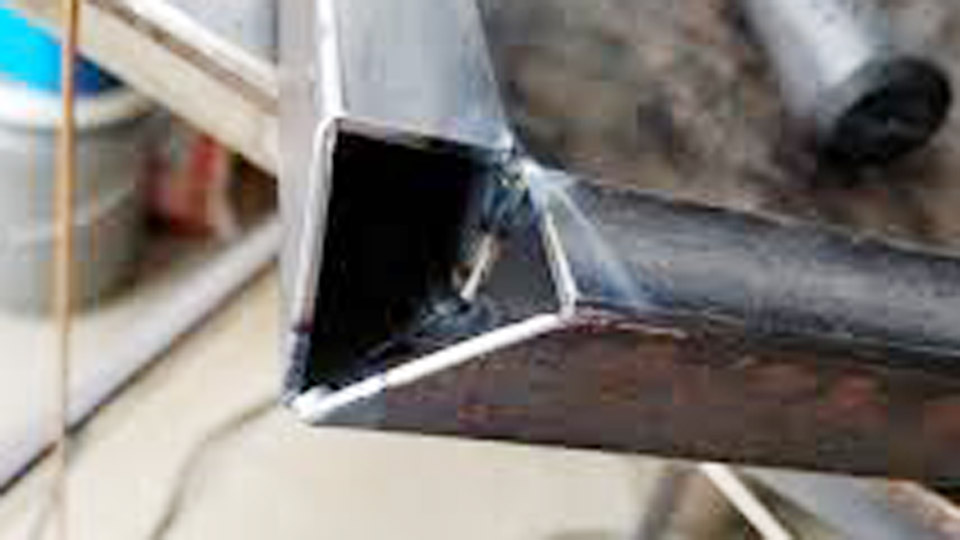
Image by HARDCORE METAL FABRICATION TIPS AND TRICKS
What Causes Warping When Welding Square Tubing
Warping happens because welding introduces intense, localized heat that expands the metal, and as it cools, that area shrinks and pulls everything around it. With square tubing—common in everything from furniture frames to automotive chassis—the thin walls and box shape amplify this. The heat doesn’t distribute evenly, so one side contracts more than the other, twisting the tube out of alignment.
Think of it like this: When you weld a joint, the molten pool solidifies and contracts, creating tension. If you’re welding a mitered corner on a gate, that pull can bow the frame inward or outward by fractions of an inch, but over a longer span, it adds up to major distortion.
Factors like material thickness play a big role—1/16-inch wall tubing warps easier than 1/8-inch because there’s less mass to absorb the heat.
We use this in the shop when it matters most on jobs where precision is key, like building custom racks for industrial storage. Ignoring it leads to fittings that don’t line up, doors that won’t close, or even structural failures under weight.
Because fixing a warp after the fact means grinding, heating, and hammering—extra time and risk of weakening the metal.
From my experience, the biggest culprits are uneven heat input and poor sequencing. I once rushed a bike rack project, welding full beads on one side without alternating, and ended up with a 1/4-inch bow. Lesson learned: Always plan for the pull.
How to Prepare Square Tubing for Welding to Minimize Distortion
Prep work is where you set yourself up for success. Start by selecting the right tubing—mild steel like A500 grade B is forgiving for most fab work, but if it’s galvanized, strip the coating first with a grinder or acid to avoid toxic fumes and poor fusion.
Cleanliness matters. Degrease with acetone or brake cleaner, then wire brush or grind the joint areas to remove mill scale. This ensures better penetration and reduces spatter that can lead to uneven heating.
Joint fit-up is crucial. For butt joints or miters, aim for zero gap—any space allows more pull as the weld bridges it. Use a chop saw for clean, square cuts, and dry-fit everything on a flat table. Check squareness with a framing square or digital angle finder.
When to use this prep? Always, but especially on thin-wall tubing (under 1/8-inch) where heat builds fast. In the shop, I clamp pieces to a welding table with strong magnets or C-clamps to hold position without forcing it—clamping too tight can hide issues that pop up post-weld.
A pro tip: Pre-bend the tubing slightly in the opposite direction of the expected warp. For a long frame, shim under the center to create a subtle arch before tacking. As the welds pull, it straightens out. I pulled this off on a trailer hitch extension that needed to stay dead flat—saved me hours of correction.
Common mistake: Skipping bevels on thicker walls. For 3/16-inch tubing, bevel the edges at 30 degrees for better root penetration without excess heat.
Choosing the Right Welding Process for Square Tubing
Not all processes handle square tubing the same way. MIG (GMAW) is my go-to for speed and ease on mild steel tubing—great for hobbyists building gates or pros on production runs. It uses a wire electrode fed through a gun, with shielding gas like 75/25 argon/CO2 mix.
How it works: The arc melts the wire and base metal, forming a puddle that solidifies into the bead. For tubing, short-circuit transfer mode keeps heat low to fight warping.
Use MIG when you need clean, fast welds on 1/16- to 1/4-inch walls. Why? It deposits filler efficiently with less heat than stick, reducing distortion. But watch voltage—too high and you get spatter; too low, poor fusion.
TIG (GTAW) shines for precision on thin tubing. It uses a tungsten electrode and separate filler rod, with argon gas for shielding. The pedal controls amperage finely, so you heat just what’s needed.
This process excels in custom fab like motorcycle frames where aesthetics matter. It minimizes heat-affected zones, cutting warp risk. Drawback: Slower, so not ideal for long seams unless you’re patient.
Stick welding (SMAW) is rugged for thicker tubing in outdoor repairs. Electrodes like 6010 for root passes or 7018 for fills provide deep penetration.
It works by striking an arc with the coated rod, which melts to form the weld. Use it on rusty or dirty tubing where prep is tough—common in farm equipment fixes.
Why choose stick? High strength for load-bearing joints, but it inputs more heat, so warping is a bigger threat without careful technique.
Here’s a quick comparison table for these processes on square tubing:
| Process | Pros | Cons | Best For | Typical Amperage Range (1/8-inch mild steel) |
|---|---|---|---|---|
| MIG | Fast, low spatter, easy for beginners | Needs clean surfaces, gas setup | Production fab, DIY projects | 90-150 amps, 18-22 volts |
| TIG | Precise heat control, clean beads | Slow, requires skill | Thin tubing, aesthetics | 70-120 amps, foot pedal adjust |
| Stick | Portable, works on dirty metal | More heat, slag cleanup | Repairs, thick walls | 80-140 amps for 1/8-inch 7018 rod |
In my shop, I switch based on the job— MIG for quick frames, TIG for art pieces. Electrode diameters: For MIG, 0.030-inch wire on thin stuff; 1/8-inch rods for stick on heavier.
Safety note: Always wear a helmet with proper shade (10-13 for MIG/TIG), leather gloves, and a respirator if fumes are heavy. Ventilate well, especially with galvanized.
Step-by-Step Guide to Tacking Square Tubing Without Warping
Tacking is your first defense against warp. It’s short, temporary welds that hold pieces in place while allowing adjustments.
Start with setup: Lay out on a flat surface, clamp lightly, and measure diagonals for squareness—equal diagonals mean it’s true.
Step 1: Tack opposite corners first. For a rectangular frame, hit the top-left and bottom-right with small tacks (1/4-inch long). This balances initial pull.
Step 2: Check squareness again. Use a mallet to tap into alignment if needed—tacks bend easier than full welds.
Step 3: Add tacks to remaining corners, then midpoints if seams are long. Keep them minimal to avoid heat buildup.
Step 4: For miters, tack inside corners first where access is tight.
Use this on any frame job, like building a workbench. Why? It lets you correct before committing. I tacked a gate wrong once, welded full, and had to cut it apart—waste of time.
Shop tip: On thin tubing, use lower amps for tacks (say 80 for MIG) to prevent burn-through. If it’s warping already, break the tack and re-position.
Mastering Weld Sequencing to Keep Everything Square
Sequencing is the game-changer—weld in an order that counters shrinkage.
What it is: A planned pattern of welding segments to distribute heat evenly.
How it works: Weld pulls metal toward the bead, so alternating sides evens it out.
For a square frame: Start with short stitches (1-2 inches) on one joint, skip to the opposite, let cool, then repeat.
Use it always on closed shapes like boxes or gates where warp compounds.
Practical tip: Weld inside to outside. On tubing, do fillet welds on inner faces first—they pull less visibly.
On a trailer frame, I sequenced wrong and got a twist. Now, I mark joints 1-4 and rotate: Weld 1, then 3, cool, 2, then 4.
For longer tubes, stitch weld: Lay a bead, skip 6 inches, bead again, then fill gaps after cooling.
Common mistake: Full beads on one side. Pros do it in passes. If warped, heat the convex side with a torch and quench to shrink it back—carefully, to avoid cracks.
Controlling Heat Input for Distortion-Free Welds
Heat is the enemy of straightness. Too much, and metal expands unevenly; control it, and warping drops.
What it means: Managing amps, travel speed, and bead size.
How: Run hotter but faster for less total heat—opposite of intuition, but it works. For MIG on 1/8-inch tubing, 120 amps at 20 inches per minute.
When: On all jobs, but critical for thin walls.
Tips: Use pulse MIG if available—it cycles heat for cleaner control. Let pieces cool naturally; forced cooling with water can crack.
Anecdote: I overheated a thin-tube sculpture, warped it bad. Fixed by clamping flat and re-welding in short bursts.
Electrode choice: Smaller diameters (0.023-inch MIG wire) for thin stuff—less filler, less heat.
Safety: Monitor for red-hot zones; overheat weakens steel.
Joint Preparation Techniques for Better Fusion and Less Warp
Good joints reduce needed heat, cutting distortion.
What: Beveling, gaping, or chamfering edges.
How: For butt joints on tubing, grind a V-groove for multi-pass welds.
When: Thicker than 1/8-inch, or high-stress areas.
Why: Allows deeper penetration without cranking amps.
Tip: For corner joints, cope the tube end to fit snug—use a tube notcher for pros.
Mistake: Poor fit-up. If gapped, bridge with tacks first.
In repairs, like fixing a bent fence, grind old welds flush before re-prepping.
Filler compatibility: Match to base—ER70S-6 wire for mild steel MIG.
Fixing Warped Square Tubing Post-Weld
Even with care, warps happen. Don’t scrap it—straighten.
What: Applying heat or force to counter distortion.
How: Clamp flat, heat the longer (convex) side with a rosebud torch to cherry red, then quench with wet rag to shrink.
When: After full cooling; hot metal bends easy but springs back.
Why: Saves projects without cutting.
Tip: For minor bows, use a hydraulic press with wood blocks to avoid dents.
I straightened a warped cart frame this way—heated opposite the pull, clamped, and it came true.
Pros: Quick fix. Cons: Risk of weakening if overheated.
Material Handling and Storage to Prevent Pre-Weld Issues
Before welding, handle tubing right. Store flat to avoid bends—stacking warps thin walls.
What: Keeping straight and dry.
How: Use racks, cover from rust.
When: Always, especially in humid shops.
Tip: Acclimate cold tubing indoors before welding—temperature swings cause condensation and poor welds.
Anecdote: Pulled cold tubing from outside, welded, got cracks from moisture. Now, I warm it first.
Safety Considerations When Welding Square Tubing
Welding’s hazards amp up with tubing—fumes in enclosed spaces, flash burns.
What: PPE and ventilation.
How: Auto-dark helmet, flame-resistant jacket, exhaust fans.
When: Every session.
Why: Prevents injury, like arc eye or lung issues.
Tip: For stick, chip slag safely—flying bits hurt.
In my years, I’ve seen guys skip gloves and regret it. Don’t.
Wrapping Up
Now, it’s clear that welding square tubing without warping boils down to respecting the metal’s response to heat. You’ve got the guide—prep smart, sequence wisely, control that arc—and your projects will come out stronger and straighter. No more twisted frames eating your time.
With these techniques, you’re equipped to tackle anything from a simple repair to a complex build, choosing the right process, settings, and fixes like a seasoned pro. Always double-check diagonals after every few welds—it’s the quickest way to catch and correct before it’s too late.
Can I weld square tubing with a basic stick welder without too much warping?
Yes, but keep heat low. Use 7018 rods at 80-100 amps for 1/8-inch walls, tack thoroughly, and stitch weld in short segments, alternating sides. Let cool between passes to minimize pull.
What amperage should I use for MIG welding 1/16-inch square tubing?
Start at 70-90 amps with 18 volts and 0.023-inch wire. Travel fast to avoid burn-through. Test on scrap—adjust up if fusion’s poor, down if warping starts.
How do I fix a warped frame after welding square tubing?
Clamp it flat on a table, heat the bowed side (convex) to dull red with a torch, then quench with a wet rag to shrink it back. For severe cases, cut and re-weld problem joints.
Is TIG better than MIG for preventing warping on thin square tubing?
Absolutely, for precision. TIG’s fine control (60-100 amps) inputs less overall heat. Use it for cosmetic jobs, but MIG works fine with practice on thicker stuff.
What common mistakes cause the most warping in square tubing welds?
Rushing full beads without alternating, poor fit-up with gaps, and overheating one area. Always tack, sequence, and cool—fixes 90% of issues.