
When I first tried welding stainless steel with a stick welder, I assumed it would be just like running mild steel—same machine, same mindset. That mistake showed up fast in the form of ugly beads, too much spatter, and discoloration that told me the weld wasn’t as clean or strong as it should be.
A lot of welders get stuck here, especially those used to MIG or TIG welding, and wonder if stick welding stainless is even worth it. Questions about the right stainless filler rods, proper amperage, metal thickness, joint prep, and arc control come up immediately.
Getting this right really matters because stainless steel is unforgiving—overheat it, and you risk cracking, warping, or killing corrosion resistance. Stick around, and I’ll walk you through the practical, shop-tested steps to weld stainless steel with a stick welder the right way.
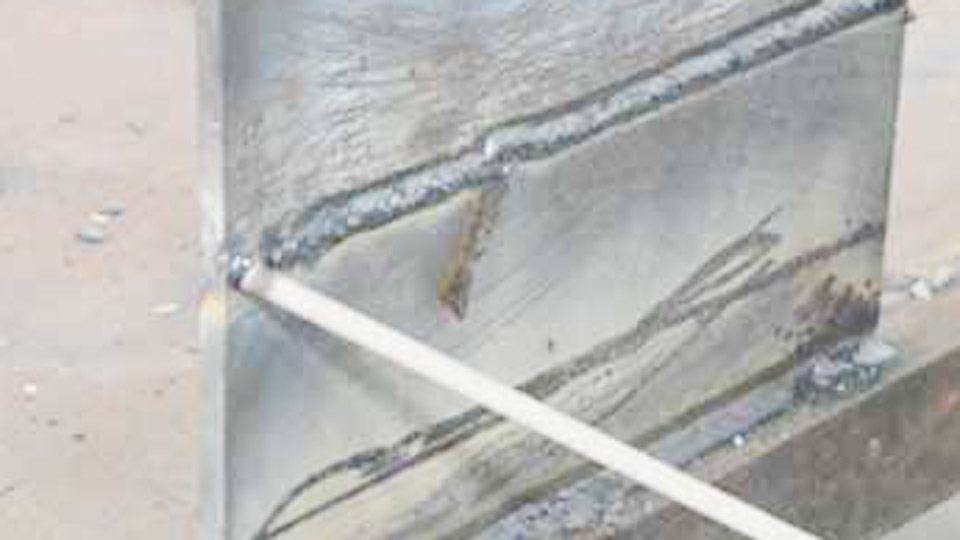
Photo by cruxweld
Why Stick Welding Works Well for Stainless Steel Projects
Stick welding shines in situations where portability and simplicity matter most. Think field repairs on farm equipment or quick fixes in a mobile fab shop—places where dragging out a gas bottle for MIG isn’t practical.
SMAW uses a flux-coated electrode that shields the weld pool from contaminants, making it forgiving in windy or dirty conditions that would ruin other processes.
It works by striking an arc between the electrode and the base metal, melting both to form a joint as the flux creates slag for protection. For stainless, this means you can achieve deep penetration on thicker sections without needing fancy equipment.
Use it when you’re dealing with outdoor jobs, heavy plates over 1/8 inch, or when cost is a factor—stick rods are cheaper than filler wire spools.
In my shop, I’ve used stick for welding 304 stainless brackets on trailers exposed to road salt. It holds up better than mild steel, but only if you control heat input to prevent warping.
A pro tip: Preheat thicker stainless to 200-300°F if possible; it reduces cracking risks in high-alloy grades. Always test on scrap first—nothing beats hands-on verification.
Decoding Stainless Steel Types for Better Welds
Not all stainless is created equal, and picking the wrong grade can turn a simple weld into a nightmare of cracks or corrosion failure down the line. Austenitic stainless, like 304 or 316, is the most common for stick welding because it’s non-magnetic and ductile, resisting heat-induced brittleness.
Austenitic grades work through their stable crystal structure that maintains toughness even after welding. Use them for food processing equipment or marine applications where rust is the enemy. Martensitic types, such as 410, harden with heat, so they’re trickier—ideal for tools or wear parts but prone to cracking if not preheated.
Ferritic stainless, think 430, is magnetic and cheaper, great for automotive exhausts, but it can embrittle if welded too hot. In practice, I’ve learned to match the electrode to the base metal’s composition to avoid dilution issues that weaken the joint.
Austenitic Stainless: Your Everyday Workhorse
Austenitic makes up about 70% of stainless welds I do. It’s forgiving because of its low carbon content, which minimizes carbide precipitation—a fancy term for what causes intergranular corrosion.
How it welds: The material expands and contracts predictably, but watch for distortion on thin sheets. When to use: Kitchen sinks, brewery tanks, or architectural railings. Why: Excellent formability post-weld.
Shop tip: Clean with acetone before welding; any oil residue will cause porosity. I once had a batch of 316 pipe welds fail inspection due to grease from handling—lesson learned, always degrease thoroughly.
Handling Martensitic and Ferritic Challenges
Martensitic stainless transforms under heat, gaining hardness but losing ductility if cooled too fast. Preheat to 400°F and post-weld temper at 1100-1400°F to tame it.
It works for high-strength needs like knife blades or turbine parts. Use when abrasion resistance is key, but avoid in cryogenic applications where brittleness bites.
Ferritic is simpler but sensitive to grain growth from overheating. Weld at lower amps and interpass temps under 300°F. Practical advice: For exhaust manifolds, I’ve stuck with 409 ferritic and 409 electrodes—keeps costs down without sacrificing longevity.
Common mistake: Skipping preheat on martensitic leads to hydrogen cracking. Fix it by slow cooling under blankets.
Picking the Perfect Electrode for Stainless Stick Welding
The electrode is your filler and shield in one, so choosing wrong means weak welds or excessive spatter. For stainless, go with AWS-classified rods like E308, E309, or E316, which match common grades.
These rods have a rutile or basic coating that stabilizes the arc and produces clean slag. E308 for 304 base, E309 for dissimilar metals like stainless to carbon steel—it’s got extra nickel for crack resistance.
When to pick: Base it on the service environment. Corrosive? E316 with molybdenum. Why: Prevents pitting in chloride-heavy spots like coastal structures.
In the shop, I stock 1/8-inch diameters for most jobs—versatile for 10-14 gauge material.
Early on, I used a mismatched rod on a dairy tank repair; the weld corroded in months. Now, I always check mill certs.
Electrode Diameters and Their Sweet Spots
Diameter affects heat input and bead size. 3/32-inch for thin stuff under 1/8 inch—runs cooler to avoid burn-through.
How: Smaller rods need lower amps, say 50-80, for precise control. Larger 5/32-inch for heavy plates, cranking up to 120-160 amps for penetration.
Practical tip: Store rods in a dry oven at 250°F; moisture pickup causes hydrogen embrittlement. I’ve salvaged bad welds by grinding out and redoing with fresh rods.
Amperage Ranges for Common Rods
Here’s a quick table comparing amperage for popular stainless electrodes:
| Electrode Type | Diameter (inch) | Amperage Range (DC+) | Best For |
|---|---|---|---|
| E308-16 | 3/32 | 50-80 | Thin austenitic sheets |
| E308-16 | 1/8 | 75-110 | General fabrication |
| E309-16 | 1/8 | 80-120 | Dissimilar joints |
| E316-16 | 5/32 | 110-160 | Corrosive environments |
| E410-16 | 1/8 | 90-130 | Martensitic repairs |
Adjust based on position—overhead needs lower amps to fight gravity. Pro: These ranges ensure good fusion without overheating. Con: Too high, and you get undercut; too low, lack of penetration.
Prepping Joints to Avoid Weld Failures
Joint prep is where pros separate from hobbyists. Stainless conducts heat poorly, so bevel edges on anything over 3/16 inch for full penetration.
Cleanliness is king—use a dedicated stainless brush to remove oxides, as aluminum from shared tools contaminates. For butt joints, aim for a 60-70° V-groove; it allows rod access without filler buildup.
When: Always on structural welds. Why: Prevents inclusions that cause cracks under load.
Shop story: I prepped a 304 frame poorly once, leading to porosity from mill scale. Now, I grind to bright metal and tack with low heat to hold alignment.
Tack Welding Techniques for Stability
Tacks hold pieces without distorting. Use short, 1/2-inch beads at 4-6 inch intervals, alternating sides to balance heat.
How: Strike arc briefly, let cool. Practical: On thin stainless, space tacks farther to avoid warping waves.
Mistake: Over-tacking heats the whole joint prematurely. Fix: Grind flush if they interfere with the main pass.
Dialing In Your Stick Welder Settings
Your machine’s setup dictates arc stability. For stainless, DC electrode positive (DCEP) is standard—gives deeper penetration than AC.
Amperage: Start at the low end of the rod’s range and adjust up. For 1/8 E308 on 1/4-inch plate, 90-100 amps flat position.
Polarity matters: Reverse polarity for most stainless rods to concentrate heat on the work.
Interpass temp: Keep under 350°F for austenitic to avoid sensitization. Use a temp stick or infrared gun.
Tip: If arc wanders, check cable connections—loose grounds cause erratic behavior. I’ve chased ghosts in setups only to find a frayed lead.
Polarity and Arc Length Tips
DCEP focuses electrons on the base for better fusion.Arc length: Keep it tight, about the rod’s diameter, to minimize spatter.
When welding vertically, shorten arc for uphill to control puddle. Why: Longer arcs oxidize chromium, weakening corrosion resistance.
Common fix: If beads look ropey, shorten arc and increase travel speed.
Step-by-Step: Welding Stainless Steel with Stick
Let’s break it down like I’m showing you in the booth.
- Gather gear: Welder, rods, grinder, clamps, PPE.
- Prep material: Cut, bevel, clean to shiny metal.
- Set machine: DCEP, amps per rod spec.
- Tack up: Secure joint with minimal heat.
- Strike arc: Scratch or tap method—hold at 15° angle.
- Weld pass: Weave slightly for wider beads, travel at 5-8 inches per minute.
- Chip slag: After cooling, wire brush clean.
- Inspect: Look for cracks, undercut—grind if needed.
For multi-pass: Fill root, then cap. On a 1/2-inch groove, root with 3/32 rod low amps, build with larger.
Anecdote: On a pressure vessel repair, slow travel saved me from blow-through. Speed up on thin stuff to limit heat.
Pros of this method: Versatile for positions. Cons: Slower than MIG, more cleanup.
Spotting and Fixing Common Welding Mistakes
Beginners often run too hot, causing distortion—stainless expands 50% more than carbon steel.
How to fix: Use stringer beads instead of weaves, cool between passes with air or wet rags (carefully, no quenching).
Pros burn rods too fast, leading to inclusions. Slow down, ensure full melt.
Undercut from high amps: Lower current, angle rod properly.
I’ve reworked many a weld by grinding to sound metal and reapplying—patience pays.
Dealing with Cracks and Porosity
Cracks from rapid cooling: Preheat and peen beads to relieve stress.
Porosity: Dirty material or damp rods. Dry everything, reclean.
Real fix: For hairline cracks, grind out V and refill. Prevention beats cure.
After the Weld: Cleaning and Heat Treatment
Post-weld, remove slag completely—residual flux corrodes stainless.
Pickle with acid paste for passivation, restoring chrome oxide layer.
For heat-treated grades, anneal if specified to restore properties.
Inspection: Visual for beads, dye pen for cracks. In shop, I use mag particle on critical joints.
Tip: Buff to match finish; it hides nothing but looks pro.
Staying Safe While Welding Stainless
Fumes from chromium can be hexavalent—nasty stuff. Use exhaust ventilation, respirators in confined spaces.
Gear: Leather gloves, auto-dark helmet (shade 10-12), flame-resistant jacket.
Electric shock: Dry gloves, insulated mats.
Why extra care: Stainless arcs hotter, spatter flies farther.
Story: I skipped ventilation once, felt sick for days—now, fans always on.
Heat stress: Take breaks, hydrate. Simple, but overlooked.
Wrapping Up
The beauty of mastering stick on stainless is versatility—you’re ready for any job without fancy gear. You’ve got the settings, preps, and fixes to avoid common pitfalls, making your welds stronger and your projects last longer. Remember, practice on scraps builds intuition no guide can teach.
Always back-purge with argon on critical internal welds to prevent sugaring oxidation—it’s the difference between a pass and a fail in inspections.
FAQs
Can I weld stainless steel to mild steel with a stick welder?
Absolutely, but use E309 rods for the buffer layer. They handle the carbon migration that causes cracking. Clean both metals thoroughly, run at 80-110 amps for 1/8 rod, and avoid high heat to prevent dilution. I’ve done this on hybrid frames—holds up if you peen the beads.
What amperage should I use for 1/8-inch stainless rod?
Aim for 75-110 amps on DCEP for flat positions. Adjust down for vertical or overhead to control the puddle. Test on scrap: Too low, and it sticks; too high, excessive spatter. Factors like joint type matter—grooves need more penetration.
Why does my stainless weld crack after cooling?
Often from no preheat or fast cooling on high-carbon grades. Solution: Preheat to 200°F for austenitic, higher for martensitic, and cover to slow cool. Check rod match too—mismatch stresses the joint. Grind and reweld if needed, but prevention with proper technique saves time.
Is stick welding stainless better than MIG?
Depends on the job. Stick’s portable and cheap for thick, outdoor work, but MIG’s faster with less cleanup for shop production. Stick pros: No gas needed. Cons: More skill for clean beads. I switch based on volume—stick for one-offs.
How do I prevent distortion when welding thin stainless?
Use low amps, fast travel, and skip welding—alternate sections to distribute heat. Clamp to heatsinks like copper bars. For sheets under 16 gauge, back with argon if possible. I’ve straightened many panels with hammers, but better prep avoids it.