
Welding thin metal without burning through is one of the fastest ways to test your patience, especially when the puddle suddenly drops out just as things start looking good. In real shop work, light-gauge steel doesn’t forgive excess heat, and many welders struggle with holes, warping, and weak tack welds.
Questions about amperage, wire speed, metal thickness, joint prep, and whether MIG, TIG, or flux core is the better choice come up constantly. Small adjustments in arc control, travel speed, and heat input make a huge difference here.
Getting this right matters because burn-through weakens the joint, ruins appearance, and wastes time and material. In this guide, I’ll share practical, shop-tested techniques to control heat and weld thin metal cleanly without blowing holes.
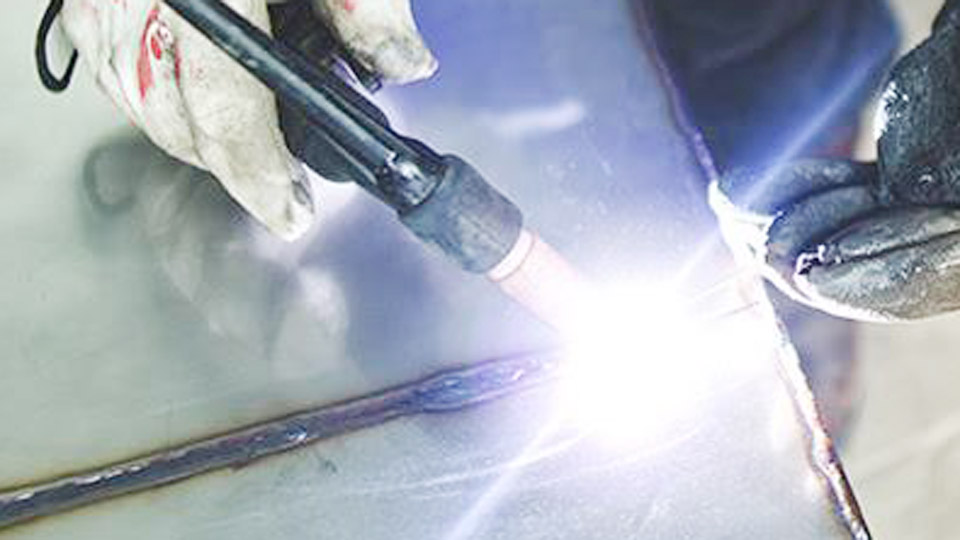
Photo by red-d-arc
What Causes Burn-Through on Thin Metal?
Burn-through happens when too much heat penetrates the thin material, melting it away instead of just fusing the joint. It’s basically overcooking your weld pool— the metal liquifies and drops out, leaving a hole or a weak spot.
On thin stuff, say anything under 1/8 inch, heat builds up quickly because there’s less mass to absorb it. Factors like high amperage, slow travel speed, or poor joint fit-up amplify this.
In practice, it works like this: your arc generates intense heat, around 6,000 degrees Fahrenheit in processes like TIG or MIG. If that heat isn’t controlled, it overwhelms the thin base metal before the filler can bridge the gap.
I’ve had it happen on aluminum bike frames where the tube walls are paper-thin; one second you’re good, the next you’ve got a blowout.
Use this understanding when you’re working on auto body repairs or HVAC ducting, where thin gauge is common. It’s essential because burn-through not only ruins aesthetics but compromises integrity—think leaky exhausts or cracked fuel tanks.
A shop tip: Always test on scrap first. Clamp a piece identical to your project and run a bead. If it burns through, drop your amps by 10-15% and try again. This saves headaches on the real job.
Which Welding Process Works Best for Thin Metal?
Picking the right process is half the battle against burn-through. TIG welding, or GTAW, stands out for thin metal because it gives you precise control over the heat input. You use a non-consumable tungsten electrode and add filler manually, allowing you to pulse the arc and keep temperatures low.
How it works: The foot pedal lets you vary amperage on the fly, starting low to establish the pool and ramping up just enough for penetration. For thin stainless or aluminum, it’s unbeatable—no spatter, clean finishes.
Go with TIG when precision matters, like on motorcycle tanks or artistic sculptures where distortion would kill the look. Why? It minimizes heat-affected zones, reducing warping on delicate parts.
But if TIG isn’t in your arsenal, MIG (GMAW) can work with short-circuit transfer mode. It uses a wire electrode fed through a gun, and the short arcs keep heat down. Avoid spray transfer on thin stuff—it’s too hot.
In my shop, I’ve switched to MIG for quicker jobs on mild steel sheets, like patching farm equipment. Pros of MIG: Faster than TIG, easier for beginners. Cons: More spatter, harder to control on ultra-thin (under 20 gauge).
Stick welding (SMAW) is trickier for thin metal— the electrodes are consumable and run hotter, making burn-through likely. But it can be done with small diameters like 1/16 inch and low amps.
When to use stick: Outdoor repairs where wind messes with gas-shielded processes. Why? It’s portable and doesn’t need shielding gas. Just don’t expect museum-quality welds.
Here’s a quick comparison table to help you choose:
| Process | Best For Thin Metal Thickness | Heat Control | Speed | Common Applications |
|---|---|---|---|---|
| TIG (GTAW) | Under 1/8 inch | Excellent (pedal adjustable) | Slow | Precision fab, aluminum repairs |
| MIG (GMAW) | 18-24 gauge | Good (short-circuit mode) | Medium | Auto body, sheet metal work |
| Stick (SMAW) | 16 gauge and up | Fair (fixed electrode) | Slow | Field repairs, structural steel |
Practical tip: If you’re in a US shop with a Lincoln or Miller machine, check the manual for thin metal presets. They’ve got charts that nail the starting points.
How Do I Choose the Right Electrode or Filler for Thin Metal?
The electrode or filler metal is your bridge against burn-through—get it wrong, and you’re fighting uphill. For TIG, use thin filler rods like 1/16 inch ER70S-6 for mild steel; it melts at lower temps and flows smoothly without overwhelming the pool.
How it works: The filler adds material to the joint, absorbing some heat and preventing the base from melting away. Diameter matters—smaller ones heat faster but allow finer control.
Choose based on material compatibility: Match the filler to your base metal. For aluminum, go with 4043 or 5356 series; they have lower melting points to avoid cracking thin sections.
When and why: On thin copper or brass, which conduct heat like crazy, a compatible filler prevents rapid dissipation that leads to burn-through. I’ve used this on radiator repairs where mismatched fillers caused immediate holes.
For MIG, opt for .023-.030 inch wire diameters. Thinner wire feeds slower, reducing heat input. Pros: Less amperage needed. Cons: Can bird-nest if your machine isn’t tuned.
Stick electrodes for thin: 6013 or 7014 in 3/32 inch or smaller. They’re mild and forgiving, with coatings that stabilize the arc at low amps.
Early on, I grabbed a 1/8 inch rod for 20-gauge steel—big mistake. It burned through every time until I downsized and dropped amps. Lesson: Always scale electrode size to material thickness.
Tip: Store fillers dry to avoid porosity, which weakens thin welds. In humid shops, use rod ovens.
Setting the Right Amperage to Avoid Burn-Through
Amperage is the heat knob—too high, and you’re drilling holes; too low, and you get no penetration. For thin metal, start low and creep up. On TIG, aim for 40-80 amps on 18-gauge steel; for aluminum, 50-100 amps since it dissipates heat faster.
How it works: Amperage controls arc intensity. Lower settings create a smaller, cooler pool that’s easier to manage on thin stuff.
When to adjust: In hot shops or on preheated metal, dial back 10-20%. Why? Extra ambient heat compounds the risk.
For MIG, 80-120 amps with 15-20 volts on short-circuit works for thin sheets. Voltage affects arc length—keep it short to minimize heat.
Stick: 50-90 amps for small electrodes on thin mild steel. Polarity matters—DCEN for better penetration control.
Real shop fix: If you burn through, stop, grind out the mess, and restart at lower amps with faster travel. I’ve saved panels this way on car restorations.
Pro tip: Use a digital meter on your US-brand welder like Hobart or ESAB to monitor actual output—don’t trust dials alone.
Prepping Joints on Thin Metal to Prevent Issues
Joint prep is your foundation—skip it, and no technique saves you from burn-through. Clean the edges thoroughly; oil, rust, or paint act as insulators, forcing higher amps and more heat.
How it works: A tight fit-up reduces gaps, so the arc doesn’t have to bridge far, keeping heat localized.
Bevel edges slightly on butt joints for better penetration without excess heat. For lap joints, overlap by at least 1/2 inch.
When and why: On galvanized thin steel, strip the zinc first— it boils off and causes blowouts. Essential for trailer frames or ductwork.
Step-by-step prep guide:
- Degrease with acetone or brake cleaner.
- Wire brush or grind to bright metal.
- Clamp pieces snug—no more than 1/16 inch gap.
- Tack weld at low amps to hold position.
Shop story: I once prepped a thin exhaust pipe sloppily—rust led to porosity and burn-through. Cleaned it right the second time, and it welded like butter.
Tip: Use backing bars on ultra-thin for heat sinking. Copper works great without sticking.
Techniques for Welding Thin Metal Step by Step
Mastering technique turns potential disasters into solid welds. Start with pulsing: In TIG, feather the pedal to alternate high and low heat, letting the metal cool between peaks.
How it works: Pulsing reduces overall heat input while maintaining fusion.
When to use: On long seams to prevent warping.
Backstepping is another gem—weld in short segments, skipping ahead and filling back. It distributes heat evenly.
Step-by-step TIG on thin aluminum:
- Set machine to AC for cleaning action, 60-80 amps.
- Strike arc on scrap to stabilize.
- Hold torch at 15-20 degrees, dab filler rhythmically.
- Travel at 4-6 inches per minute—faster than thick stuff.
- Pulse every second to control pool.
For MIG: Use push technique for better gas coverage, short bursts.
Pros of these: Less distortion. Cons: Takes practice.
I’ve used backstepping on canoe repairs—thin hulls warp easy without it.
Tip: Watch the pool color—bright orange means too hot; adjust speed.
Common Mistakes When Welding Thin Metal and Fixes
Even pros slip up. Biggest mistake: Cranking amps too high thinking it’ll penetrate better. Fix: Test on scrap, start 20% below recommended.
Another: Slow travel speed—heat soaks in. Speed up to 5-8 IPM.
Poor shielding gas flow in MIG causes oxidation, leading to weak spots and burn-through attempts. Set to 20-25 CFH.
Beginners often hold the torch wrong—too perpendicular heats concentrated. Angle it for spread.
Shop lesson: I burned through a toolbox lid rushing without clamps. Warped bad. Now, I always secure and take breaks to cool.
If you get a hole: Grind smooth, backfill with low amps, or patch with fresh metal.
Staying Safe While Welding Thin Materials
Safety isn’t optional—thin metal heats fast, increasing flash and fume risks. Always wear auto-darkening helmets (shade 9-13), leather gloves, and flame-resistant jackets.
How it works: Thin stuff can splatter more if unstable, so eye protection is key.
Ventilate well; zinc fumes from galvanized are toxic. Use respirators.
When to amp up caution: In confined spaces or with alloys like chrome-moly.
Why: Burns or inhalations lead to long-term issues.
Tip: Ground close to the weld to avoid stray arcs.
I’ve dodged close calls by double-checking setups—do the same.
Wrapping Up
Welding thin metal without burning through boils down to control: heat, prep, and technique. You’ve got the guide to tackle those tricky jobs with confidence, whether it’s a hobby project or a pro repair. Remember, practice on scraps builds that instinct. Always let the metal tell you—watch the puddle, feel the arc, and adjust in real time. It’ll make you unstoppable in the shop.
FAQ’s
Can I weld thin metal with a stick welder?
Absolutely, but it’s challenging. Use small 1/16-3/32 inch 6013 electrodes at 40-70 amps DCEN. Keep arcs short, travel fast, and use stringer beads. Test on scrap to avoid burn-through—it’s less forgiving than TIG.
What’s the best amperage for MIG on 20-gauge steel?
Start at 80-100 amps with 17-19 volts in short-circuit mode, .023 wire. Adjust based on fit-up; tighter joints need less. If it burns, drop amps and speed up travel.
How do I fix a burn-through hole in thin metal?
Grind the edges clean, back it with copper if possible, and refill with low-heat pulses. For patches, cut a matching piece, tack it, and weld around. Prevent next time with better prep.
Is TIG always better for thin aluminum?
Yes, for quality, but MIG with spool gun works for speed. TIG’s pedal control prevents burn-through on under 1/8 inch. Use pure argon, AC balance at 70% cleaning.
Why does my thin metal warp even without burning through?
Heat expansion—thin stuff distorts easy. Use clamps, tack often, and backstep. Let cool between passes. For big panels, stitch weld in sections.