
Setting the correct MIG welding gas pressure is one of those details that’s easy to overlook but makes a huge difference in weld quality. In real shop work, I’ve seen clean welds turn porous or spattery simply because the shielding gas flow was too high or too low.
Many welders get confused about regulator readings, CFM vs PSI, and how gas flow changes with nozzle size, joint position, and shop conditions. Too little gas leads to porosity and contamination, while too much creates turbulence that actually pulls air into the weld.
Getting this setting right matters for arc stability, bead appearance, penetration, and overall weld strength. In this guide, I’ll break down practical MIG gas pressure settings and show you how to dial them in for consistent, professional-looking welds.
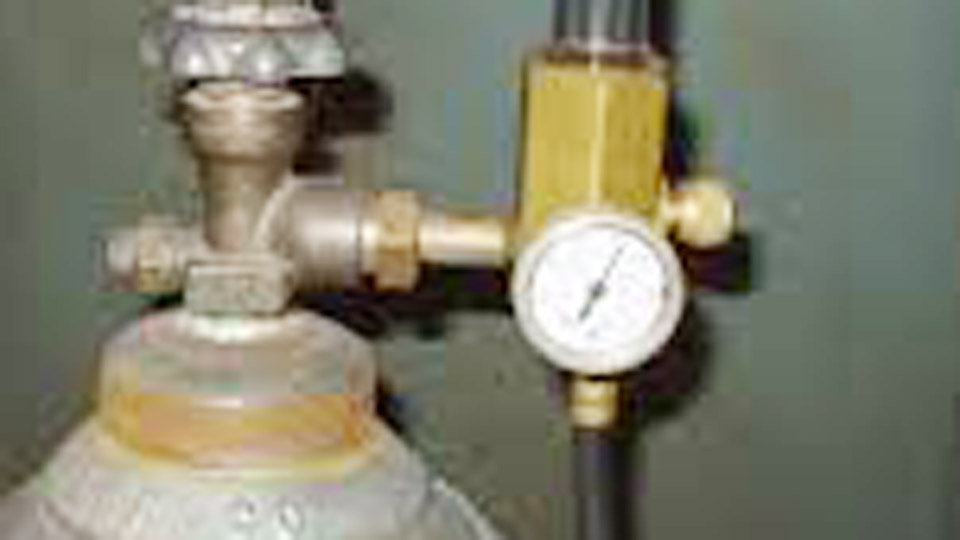
Photo by gowelding
Why Gas Pressure Settings Can Make or Break Your MIG Welds
In MIG welding, that gas isn’t just an accessory—it’s your frontline defense against atmospheric contamination. Oxygen and nitrogen in the air love to crash the party, turning your molten puddle into a porous nightmare that cracks under load.
Shielding gas flows out of your MIG gun’s nozzle, creating an inert blanket over the weld area. For most jobs on mild steel, we’re talking a mix like 75% argon and 25% CO2, which gives you good arc stability and penetration without too much spatter.
But the “pressure setting” folks often mention is really about flow rate—measured in cubic feet per hour (CFH)—not straight PSI on the tank.
Why does this distinction matter? Because cranking the regulator without understanding flow can lead to turbulence, sucking in air and defeating the purpose. I’ve seen guys set it too low on aluminum jobs, ending up with black sooty welds that had to be ground out entirely.
Use it when you’re aiming for clean, strong beads on metals like steel, stainless, or aluminum. It’s crucial for indoor fab work or repairs where you need efficiency and minimal cleanup.
In my experience, proper settings cut down on gas costs—I’ve saved shops hundreds by tweaking from wasteful 40 CFH blasts to a steady 20-25 CFH sweet spot.
Tip: Always test on scrap first. Run a bead, check for pinholes or uneven toes, and adjust incrementally.
Clearing Up the Confusion: Gas Pressure vs. Flow Rate in MIG Setup
I can’t tell you how many times I’ve heard “pressure” thrown around when we really mean flow rate. The tank holds gas at high pressure (up to 2,000 PSI), but your regulator steps that down to a controllable flow. That knob you’re turning? It’s calibrating how much gas escapes per hour to shield your arc.
It works like this: Gas exits the cylinder, hits the regulator, and flows through a meter (ideally a ball-in-tube type for accuracy). The ball rises to show CFH—simple and reliable, unlike some gauges that stick in humid shops.
When to focus on this? Every setup, but especially if you’re switching gases or materials. Too little flow exposes the puddle to air; too much creates a vacuum effect (Venturi principle) that pulls in contaminants.
From my shop days, a common pitfall is ignoring the regulator type. Use one calibrated for argon/CO2 mixes on straight CO2, and it might freeze up mid-job.
Practical advice: Invest in a quality flow meter regulator—something with a CGA-580 fitting for argon blends. It’ll pay for itself in consistent welds and less gas waste.
Recommended Gas Flow Settings for Different Materials and Thicknesses
Let’s get to the numbers that actually work. Based on countless jobs, here’s what I recommend starting with. These aren’t pulled from thin air—they’re dialed in from real tests on US machines like Lincoln or Miller welders.
For mild steel, aim for 15-25 CFH with a 75/25 argon/CO2 mix. On thin sheet (1/8 inch), keep it lower around 15-20 to avoid burn-through and distortion. Thicker plate? Bump to 20-25 for better coverage without excess spatter.
Stainless steel demands 20-30 CFH, often with a tri-mix (argon, helium, CO2) for heat control. I’ve welded exhaust systems where low flow led to sugaring (oxidation), so err higher if you’re on thin gauges to prevent warping.
Aluminum is trickier—start at 25-35 CFH with pure argon, or up to 50 if helium’s in the mix for thicker stock. It conducts heat fast, so high flow ensures the gas stays put without floating away.
Here’s a quick comparison table I use in my notebook:
| Material | Gas Type | Recommended Flow (CFH) | Thickness Notes | Pros | Cons |
|---|---|---|---|---|---|
| Mild Steel | 75/25 Ar/CO2 | 15-25 | Low for thin (15-20), high for thick (20-25) | Affordable, good penetration | Can spatter if too high |
| Stainless Steel | Ar/He/CO2 Tri-mix | 20-30 | Higher for oxidation-prone alloys | Heat control, clean finish | More expensive gas |
| Aluminum | 100% Argon | 25-35 | Up to 50 with He for >1/4 inch | No oxidation, smooth beads | Gas floats easily, needs more flow |
Why these ranges? They balance protection with economy. In a fab shop, I once ran low on gas mid-project—stuck to 18 CFH on steel and still got solid welds by slowing my travel speed.
Tip: Always match to your wire diameter; finer wires (0.030 inch) pair with lower flows to avoid pushing the puddle around.
How to Dial In Your MIG Welder’s Gas Regulator Step by Step
Setting up isn’t rocket science, but do it wrong and your whole day sours. I’ve trained dozens of apprentices on this, and here’s the foolproof method.
First, gear up: Gloves, helmet, and ensure your workspace is ventilated—gas buildup is no joke. Attach the regulator to the cylinder (CGA-580 for most). Tighten with a wrench, but don’t gorilla it.
Step 1: Open the cylinder valve slowly to avoid shocking the regulator.
Step 2: Connect the hose to your MIG welder’s gas inlet—check for leaks with soapy water; bubbles mean trouble.
Step 3: Trigger the gun without wire to purge the line, then adjust the knob while watching the flow meter. For a standard 1/2-inch nozzle, set to 20-25 CFH.
Step 4: Run a test bead on scrap. If it’s porous, nudge up 5 CFH. Spattery? Dial back.
In humid climates like the South, I add a moisture trap to the line—keeps the gas dry for consistent arcs. When using CO2 alone (cheaper for steel), expect more spatter but better penetration; set 20-25 CFH to compensate.
Factors That Throw Off Your Gas Settings in Everyday Welding
No two jobs are identical, so flexibility is key. Material type is huge—aluminum’s lightness means gas can dissipate faster, demanding higher flow.
Thickness plays in too: On 1/4-inch steel plates, 20 CFH gives deep penetration without distortion. But drop to 16 gauge, and you’ll want 15-18 to prevent holes.
Dealing with Wind and Drafts in Your Workshop
Drafts are the silent killer of good welds. In an open bay shop, even a fan can whisk away your shielding gas, leading to oxidation.
How it works: Wind displaces the gas blanket, inviting air in. I’ve fixed this by building wind blocks from scrap sheet—simple cardboard even works in a pinch.
When to crank it up: Indoors with light breeze, go 20-30 CFH. Outdoors? Avoid MIG if possible; flux-core wire is better. But if stuck, 30-35 CFH minimum, and weld in short bursts.
Tip from experience: Position your body to block wind, and use a larger nozzle for broader coverage. Once, on a field repair, I doubled flow and still got porosity—lesson learned: Prep joints extra clean to minimize issues.
Nozzle Size and MIG Gun Choices That Impact Gas Flow
Your gun’s nozzle isn’t one-size-fits-all. A 3/8-inch works for hobby stuff at 18-22 CFH, but industrial jobs need 5/8-inch at 30-35 CFH for wider beads.
It affects flow by determining gas dispersion—smaller nozzles concentrate it, larger spread for big joints.
Choose based on amperage: Low amps (under 200), small nozzle; high (300+), bigger to handle heat.
Pro tip: Keep nozzles clean; buildup restricts flow. I soak mine in anti-spatter weekly—saves headaches.
Pairing Gas Flow with Wire Diameter and Amperage for Optimal Results
MIG isn’t just gas—wire size and amps interplay. For 0.030-inch wire on mild steel, pair 15-20 CFH with 120-150 amps for clean runs.
Thicker 0.045-inch? Up amps to 180-220, flow to 20-25 CFH for penetration.
Why? Higher amps widen the puddle, needing more gas coverage. I’ve burned through thin metal ignoring this—now I always chart it.
Table for quick reference:
| Wire Diameter | Amperage Range | Gas Flow (CFH) | Best For |
|---|---|---|---|
| 0.023 inch | 40-130 | 10-15 | Thin sheet, low heat |
| 0.030 inch | 80-180 | 15-20 | General fab, auto repairs |
| 0.035 inch | 120-250 | 20-25 | Structural steel |
| 0.045 inch | 180-300 | 25-30 | Heavy plate, high strength |
On a trailer frame, wrong amps with low flow gave shallow penetration—fixed by bumping both, saving the job.
Common Pitfalls Even Pros Make with MIG Gas Settings
Beginners often set too low, thinking to save gas, but end up with porous welds that fail inspections.
Pros? We overdo it in windy spots, causing turbulence. Fix: Drop back and shield the area.
Another: Forgetting to purge lines after changing tanks—old air mixes in. Always trigger for 10 seconds.
Shop tip: Mark your regulator with tape for go-to settings per material—speeds setup.
Spotting and Fixing Weld Defects Tied to Bad Gas Flow
Porosity looks like Swiss cheese—tiny holes from trapped gas. Cause: Low flow. Fix: Increase 5-10 CFH, clean metal.
Excess spatter? High flow turbulence. Dial down, check voltage.
Discoloration on stainless: Insufficient shielding. Up flow, use tri-mix.
From my log: A stainless manifold job went south with black edges—boosted to 25 CFH, perfect after.
Essential Safety Tips for Handling MIG Gases
Gases are compressed—treat cylinders like loaded guns. Secure them upright, away from arcs.
Ventilate: CO2 buildup causes dizziness. I’ve felt it in tight booths—fans are must-haves.
Leak checks daily; never smoke near. PPE always: No shortcuts.
Lessons from the Shop: Real MIG Jobs and Gas Tweaks
Remember that bracket story? Turned out the kid had a 3/8 nozzle but set 30 CFH—turbulence city. Dropped to 20, smooth sailing.
On aluminum boat repairs, low flow gave sooty welds—upped to 30 CFH, no distortion.
For stainless exhausts, 25 CFH with tri-mix prevented warping on thin pipes.
These tweaks come from trial and error—your shop will teach you too.
Wrapping Up
Getting your MIG gas flow dialed in isn’t just technical; it’s about building confidence in your work. You’ve got the tools now to avoid those costly do-overs, whether you’re a hobbyist tinkering in the garage or a pro on deadline.
You’ll pick wires and amps that complement your settings, leading to welds that look pro and hold strong. Always log your successful setups—machine, material, flow, amps. It’ll turn good days into a pattern of excellence.
FAQs
What Gas Flow Should I Use for MIG Welding Mild Steel?
Stick to 15-25 CFH with 75/25 argon/CO2. Start at 20 indoors; increase for drafts. Test on scrap to avoid porosity.
How Do I Adjust for Windy Conditions in MIG Welding?
Bump flow to 30-35 CFH, use wind blocks, and weld short sections. If possible, move inside or switch to flux-core.
What’s the Best Gas Setting for Aluminum MIG Welding?
Go 25-35 CFH with pure argon. For thicker stuff, add helium and hit 40-50. Clean thoroughly and travel fast to minimize heat issues.
Why Am I Getting Porosity Despite Good Gas Flow?
Check for leaks, dirty metal, or wrong gas mix. Often, it’s drafts—shield the area and retest at 5 CFH higher.
How Does Wire Size Affect My MIG Gas Settings?
Finer wires (0.030) pair with lower 15-20 CFH for control; thicker (0.045) needs 25-30 for coverage on wider puddles. Match amps accordingly.