
MIG welding square tubing looks simple until you start chasing distortion, uneven gaps, and welds that pull the frame out of square. In real fabrication work, tubing heats up fast, especially on thinner wall material, and even good-looking beads can leave you with twisted or misaligned joints.
Welders often have questions about metal thickness, joint prep, machine settings, and whether short-circuit MIG or pulse is the better option. Arc control, tack placement, and weld sequence all play a huge role in how the tubing behaves.
Getting this right matters because square tubing is commonly used for frames, trailers, racks, and structural projects where accuracy and strength are critical. In this guide, I’ll walk you through practical, shop-tested techniques for MIG welding square tubing straight, strong, and clean.
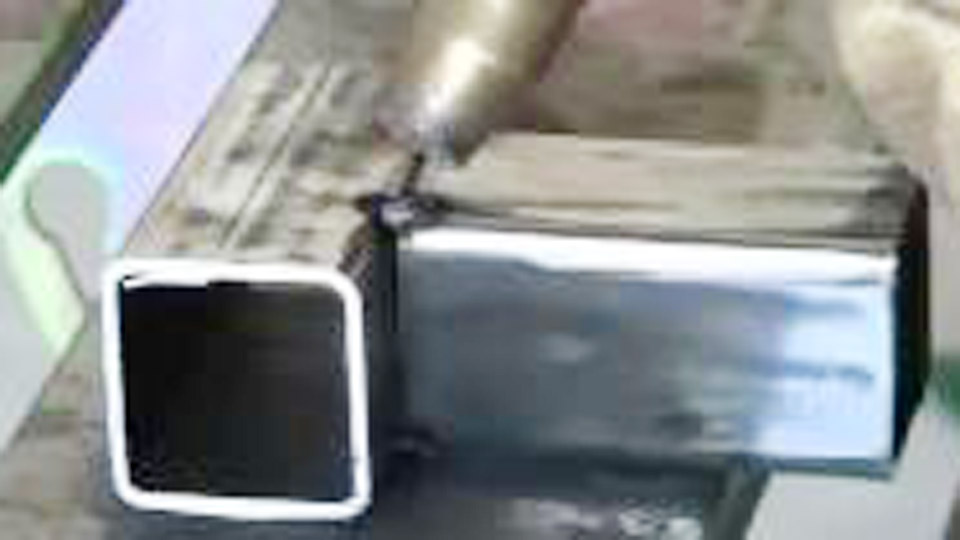
Photo by kurraglenindustries
What Makes Square Tubing Tricky for MIG Welding?
Square tubing isn’t like flat plate or round pipe. Its geometry creates challenges right from the start. The corners concentrate stress, and the hollow interior means heat dissipates unevenly.
In MIG welding, where you’re feeding wire continuously shielded by gas, this can lead to issues like incomplete fusion if your angle’s off or porosity if contaminants sneak in.
From my experience, the trickiness boils down to material thickness and alloy. Mild steel tubing, say ASTM A500, welds forgivingly with ER70S-6 wire, but aluminum like 6061 demands ER4043 or ER5356 and argon gas.
I’ve welded miles of 2×2-inch steel tubing for gates, and the key is recognizing how the square profile affects joint types—butt joints on ends, corner joints on sides, or T-joints for bracing.
Why bother mastering this? In real situations, a bad weld on square tubing can fail under load, like a trailer hitch giving way on the highway. It also wastes time and money on grinding out defects.
I’ve had apprentices burn through tubing on their first try, turning a quick job into hours of patching. Proper MIG setup minimizes that, ensuring clean, strong welds that pass visual and bend tests.
Preparing Your Square Tubing Joints Properly
Joint prep is where half the battle’s won. Skipping it leads to contaminated welds that crack or corrode faster. Start by cleaning the surfaces—remove mill scale, rust, or paint with a wire brush or grinder. I always degrease with acetone to eliminate oils that cause porosity.
For square tubing, beveling edges on thicker walls (over 1/4-inch) helps with penetration. On a butt joint, aim for a 30-degree bevel on each side, creating a V-groove.
For corner joints, a slight chamfer prevents undercut. I’ve found that clamping the pieces with C-clamps or magnets keeps alignment perfect, reducing gaps that force you to bridge with extra filler.
In the shop, I measure twice and cut once using a chop saw for square ends. Fit-up is critical—gaps over 1/16-inch invite burn-through on thin tubing. Tack weld every few inches with low amperage to hold position without distorting. This prep stage sets you up for smooth MIG passes, saving headaches later.
Selecting the Best MIG Wire and Shielding Gas for Square Tubing
Choosing wire and gas isn’t guesswork; it’s about matching to your material and job. For mild steel square tubing, ER70S-6 wire shines—it’s got deoxidizers that handle minor contaminants, giving smooth arcs and minimal spatter. Diameters matter: 0.030-inch for thin walls (up to 1/8-inch), 0.035-inch for heavier stuff.
Aluminum tubing? Switch to ER4043 for general use or ER5356 for higher strength. These wires are softer, so feed them carefully to avoid bird-nesting. I’ve welded aluminum frames for race cars, and pure argon gas is essential—CO2 mixes cause oxidation.
Gas flow rates: 20-25 CFH outdoors, 15-20 indoors. Too low, and you’ll get porous welds; too high wastes gas and creates turbulence.
In my experience, a 75/25 argon/CO2 mix for steel tubing balances penetration and bead appearance. Pros? Cleaner welds with less cleanup. Cons? It’s pricier than straight CO2, which can work but increases spatter on thin tubing.
Here’s a quick comparison table for wire choices on common square tubing materials:
| Material | Recommended Wire | Diameter Options | Shielding Gas | Best For |
|---|---|---|---|---|
| Mild Steel | ER70S-6 | 0.030″ or 0.035″ | 75/25 Ar/CO2 | General fabrication, low spatter |
| Stainless Steel | ER308L | 0.030″ | 90/7.5/2.5 Ar/CO2/He | Corrosion resistance, food-grade projects |
| Aluminum | ER4043 | 0.035″ or 0.047″ | 100% Argon | Lightweight frames, minimal distortion |
This setup ensures compatibility, reducing defects like lack of fusion that plague mismatched combos.
Dialing In MIG Welder Settings: Amperage, Voltage, and Wire Speed
Settings are the heart of MIG welding square tubing. Get them wrong, and you’re fighting the machine. Amperage controls heat—too high burns through, too low leaves weak beads. For 1/8-inch mild steel tubing, I start at 120-140 amps with 18-20 volts and wire speed around 250-300 IPM.
Thinner 16-gauge? Drop to 90-110 amps, 16-18 volts, slower wire speed to avoid melting the base. Voltage affects arc length: higher for spray transfer on thicker walls, lower for short-circuit on thin. I’ve tuned my Lincoln Power MIG 210 for countless jobs, and testing on scrap is non-negotiable.
Step-by-step for setting up:
- Clamp your tubing securely.
- Set gas flow to 20 CFH.
- Choose wire diameter based on thickness.
- Start with mid-range amps (e.g., 130 for 1/8-inch steel).
- Adjust voltage for a crisp arc sound—no popping.
- Fine-tune wire speed until the bead wets out smoothly.
- Run a test bead and inspect for penetration.
On aluminum, push technique helps—angle the gun 10-15 degrees toward the travel direction. For steel, drag works better. These tweaks prevent distortion, especially on long runs where heat builds up.
Techniques to Avoid Distortion When MIG Welding Square Tubing
Distortion is the enemy with square tubing—the thin walls expand and contract unevenly, pulling corners out of square. I’ve warped plenty in my early days, but techniques like stitch welding save the day. Weld short segments (1-2 inches), skip around, and let cool between passes.
Backstepping helps too: Start at the end and weld toward the beginning, countering pull. For full frames, tack all joints first, then weld opposites—top then bottom, left then right. Clamping to a flat table or using heat sinks like copper bars draws away excess heat.
In practice, on a 4×4-foot gate from 1×1-inch tubing, I alternate sides and use wet rags for cooling. This keeps everything plumb.
Pros of these methods: Maintains tolerances for fitting doors or hinges. Cons: Takes longer than continuous welding, but it’s worth it to avoid hammering warps straight.
Tackling Common Mistakes in MIG Welding Square Tubing
Everyone messes up sometimes, even after years. Beginners often crank amps too high, burning holes in thin tubing. Fix? Grind out the damage, back-weld from inside if accessible, or patch with a plate.
Pros overlook contamination—dirty wire or oily tubing leads to porosity. I’ve chased pinholes that turned out to be from humid gas lines.
Solution: Purge lines and store wire dry. Another pitfall: Wrong gun angle. Push at 15 degrees for better shielding; too perpendicular causes undercut.
On a repair job for a bent trailer frame, I once had cold lap from rushing—bead didn’t fuse properly. Ground it back, reprepped, and rewelded slower. Lessons like these teach patience. Always post-weld inspect: Tap with a hammer for soundness, check for cracks.
Advanced Tips for Pro-Level MIG Welds on Square Tubing
Once basics are down, elevate your game. Pulse MIG on modern machines like Miller’s Millermatic reduces heat input for thinner tubing, minimizing distortion. I’ve used it on stainless exhaust frames for cleaner beads.
Weave patterns for wider joints: Slight side-to-side motion fills gaps without overheating. For vertical welds, uphill for better control on thick walls.
In my shop, I experiment with filler alloys—adding silicon in wire for better flow on galvanized tubing, though I prefer removing zinc first to avoid fumes.
Multi-pass on heavy tubing: Root pass for penetration, then fills and cap. This builds strength without excess heat. Tie in real jobs, like welding square tubing braces on a truck bed—proper pulsing kept it flat for mounting.
Safety weaves in here: Always wear a helmet with fresh lens, gloves, and respirator. Fumes from galvanized can cause metal fever—strip it off first.
Why Mastering These Techniques Transforms Your Welding Projects
Getting MIG welding square tubing right opens doors to bigger builds. You avoid the frustration of do-overs, save on materials, and produce work that stands up to abuse. With the right prep, settings, and techniques, your joints hold tight, looking pro without endless grinding.
You’re now equipped to tackle that next project confidently—whether it’s a simple shelf or a complex chassis. Remember, practice on scrap refines your feel for the arc. Always cool your welds gradually with air, not water, to prevent cracking in high-stress areas.
FAQs
Can I MIG Weld Square Tubing Without Backing Gas?
You can, but for full penetration on thin walls, it’s risky without internal purging, especially on stainless or aluminum to prevent sugaring. On mild steel, focus on tight fit-up and low heat. I’ve done it successfully on exterior frames by welding from both sides when possible.
What’s the Best Amperage for 1/4-Inch Square Tubing?
For mild steel, 150-180 amps with 22-24 volts works well using 0.035-inch wire. Test on scrap—adjust up for deeper penetration, down to curb spatter. In my experience, this range handles most structural jobs without burn-through.
How Do I Prevent Burn-Through on Thin Square Tubing?
Lower amps to 80-100, use short bursts, and stitch weld. Clamp heat sinks nearby. I’ve saved thin 18-gauge tubing this way on custom racks—pulse mode if your machine has it is a game-changer.
Is MIG Better Than Stick for Square Tubing?
MIG’s faster and cleaner for production, with less cleanup, but stick (SMAW) excels outdoors in wind. For shop work, MIG’s my go-to for square tubing due to continuous wire feed. Pros: Easier for beginners. Cons: Needs gas setup.
What Wire Diameter Should I Use for Aluminum Square Tubing?
Go with 0.035-inch ER4043 for 1/8-inch walls—feeds smoothly without jamming. For thicker, bump to 0.047-inch. Pure argon at 25 CFH, and keep your liner clean to avoid issues I’ve run into on long runs.