
Dialing in the correct MIG welding stainless steel settings is where most welders start running into trouble, especially if they’re used to welding mild steel. Stainless reacts differently to heat, and using standard steel settings often leads to burn-through, heavy discoloration, or weak fusion.
In real shop work, questions about voltage, wire speed, shielding gas, metal thickness, and joint prep come up fast. Arc control becomes even more critical because too much heat can destroy corrosion resistance, while too little heat results in cold, brittle welds.
Getting these settings right matters for weld strength, appearance, and long-term durability—especially on 304 or 316 stainless projects. In this guide, I’ll break down practical, shop-tested MIG stainless steel settings so you can produce clean, consistent welds with confidence.
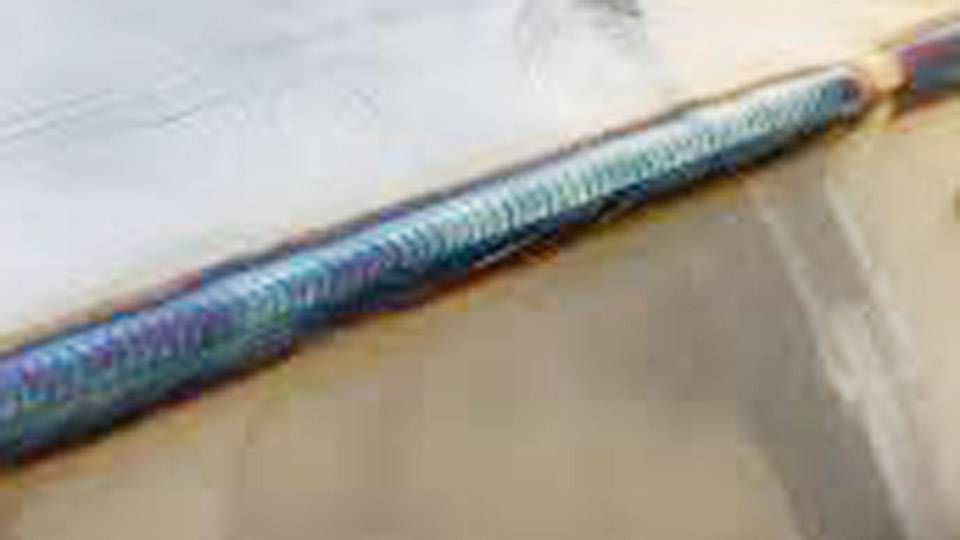
Image by welderamazing
Why Stainless Steel Behaves Differently in MIG Welding
Stainless steel isn’t like mild steel—it’s got chromium and nickel that give it corrosion resistance, but that also makes it trickier to weld without the right setup. The alloy’s higher thermal conductivity means heat dissipates quickly, so you need precise control to avoid warping or cracking.
In MIG welding, we’re talking about a process where a continuous wire electrode is fed through a gun, melted by an electric arc, and protected by shielding gas. This setup shines for stainless because it’s fast and produces minimal slag, ideal for clean applications like kitchen fabrications or marine repairs.
How does it work exactly? The wire acts as both filler and electrode, with the arc creating a molten pool that fuses the base metals. The key is balancing heat input to penetrate without overheating.
Use it when you need efficiency on thinner gauges or long runs—think exhaust systems or railings—where stick welding might be too slow. Proper MIG on stainless prevents intergranular corrosion, which can weaken joints over time, especially in humid environments.
From my shop experience, I once rushed a brewery tank repair without adjusting for the austenitic grade, and the result was ugly porosity that required a full redo.
Lesson learned: always match your settings to the material’s properties. Start by identifying your stainless type—300 series like 304 or 316 are common—and adjust accordingly.
Selecting the Best MIG Wire for Stainless Steel Projects
Picking the right wire is your foundation. For stainless, you want solid wires classified under AWS like ER308L or ER316L. The “ER” stands for electrode rod, “308” matches 304 stainless, and “L” means low carbon to reduce carbide precipitation.
Diameters typically range from 0.023″ for thin sheets to 0.045″ for thicker plates—0.030″ or 0.035″ are go-tos for most jobs.
It works by providing compatible filler that maintains the base metal’s corrosion resistance. The wire melts into the pool, alloying seamlessly if chosen right.
Opt for this when welding similar grades; mismatches lead to cracking or reduced strength. Why use it? It ensures welds that resist pitting in harsh conditions, like chemical plants or coastal builds.
Practical tip: In my workshop, I keep spools of ER308LSi for its silicon boost, which improves wetting and reduces spatter on 304. For 316, which has molybdenum for better acid resistance, ER316L is non-negotiable.
Common mistake? Using mild steel wire by accident—I’ve seen beginners do this and end up with brittle joints that fail under load. Fix it by always labeling your spools clearly and double-checking before loading.
When prepping, clean the wire contact tip regularly to avoid erratic feeding. For a 1/8″ thick 304 sheet, I’d start with 0.035″ wire at 140-160 amps. Test on scrap first—adjust if the bead crowns too much, signaling low heat.
Optimal Shielding Gas Choices for Clean Stainless Welds
Shielding gas is your weld’s bodyguard against oxidation. For MIG welding stainless steel, pure argon is okay but often leads to sluggish puddles. Better options are mixes like 98% argon/2% CO2 for stability or tri-mix (90% helium/7.5% argon/2.5% CO2) for hotter arcs and deeper penetration on thicker stock.
The gas flows around the arc, displacing air to prevent contaminants from ruining the weld. It works by creating an inert envelope—helium adds heat, CO2 improves arc characteristics.
Use argon-heavy mixes for short-circuit transfer on thin materials to minimize spatter; switch to tri-mix for spray transfer on heavier gauges where you need more oomph.
Why does it matter? Without proper gas, you’ll get black sooty deposits or porosity that weakens the joint. In a real job, like welding stainless handrails for a commercial building, poor gas coverage means unsightly welds that require polishing, eating into your time.
I was on a site once with windy conditions, and my standard argon mix wasn’t cutting it—drafts blew the gas away, causing oxidation. Switched to a higher-flow tri-mix at 25-30 CFH and problem solved. Tip: Always use a gas lens on your torch for better coverage, especially outdoors.
Common error is setting flow too low (under 15 CFH), leading to sugaring on the back side. Crank it to 20-25 CFH and monitor with a flowmeter.
For cost-conscious hobbyists, straight argon works fine for light duty, but pros swear by tri-mix for its fluidity. Pros: Cleaner beads, less cleanup. Cons: More expensive and can cause more spatter if not balanced with voltage.
| Gas Mix | Best For | Flow Rate (CFH) | Pros | Cons |
|---|---|---|---|---|
| 100% Argon | Thin sheets, short-circuit | 15-20 | Stable arc, low spatter | Limited penetration |
| 98% Argon/2% CO2 | General purpose | 20-25 | Good wetting, affordable | Some oxidation risk |
| Tri-Mix (He/Ar/CO2) | Thick plates, spray transfer | 25-30 | Deep fusion, hot arc | Higher cost, more spatter potential |
Dialing In Amperage, Voltage, and Wire Feed Speed
This is where the magic happens—or the mess, if you’re off. For MIG welding stainless steel settings, amperage controls heat input, voltage affects arc length, and wire speed ties into amps (faster feed = higher amps). A good starting point for 0.035″ wire on 1/8″ 304: 18-20 volts, 140-180 amps, wire speed 250-350 IPM.
How it works: Amperage melts the wire and base; too low, and you get lack of fusion; too high, burn-through. Voltage stabilizes the arc—higher for spray mode. Use lower settings for thin stock to avoid distortion, ramp up for thicker.
When to adjust? On a repair job for stainless tubing, if the bead is ropey, drop voltage by 1-2 volts. Why? Precise settings ensure even penetration without excessive heat-affected zones that can sensitize stainless to corrosion.
From experience, I botched a manifold weld with amps too high—warped the piece beyond salvage. Now, I always use a chart as a baseline but fine-tune based on sound: a steady sizzle means you’re good; crackling indicates issues.
Step-by-step guide for setup:
- Clean the base metal with acetone or a stainless brush to remove oxides.
- Set gas flow to 20 CFH.
- Choose wire and load it, ensuring smooth feed.
- For 16-gauge sheet: 16-18 volts, 100-130 amps, 200-250 IPM.
- Test weld on scrap, adjust in small increments.
- Maintain 1/4″-3/8″ stick-out for stability.
Pro tip: On US machines like Lincoln or Miller, use the synergic mode if available—it auto-adjusts voltage to wire speed for easier stainless work.
Preparing Joints for Stronger Stainless Welds
Joint prep is non-negotiable for stainless. Bevel edges on thicker than 1/4″ for full penetration— a 30-45 degree angle works. For butt joints, aim for zero gap; T-joints need clean fillets.
It ensures the arc reaches the root without bridging. Use it always, but especially on load-bearing parts like frames. Why? Poor prep leads to inclusions or weak spots.
In my shop, I use a plasma cutter for clean bevels, then grind smooth. Mistake: Skipping degreasing—oils cause porosity. Fix with pre-weld cleaning.
Technique: Push the gun at 10-15 degrees for better gas coverage on stainless. Travel speed around 10-15 IPM to avoid cold laps.
Tackling Common Mistakes in Stainless MIG Welding
Even pros slip up. Overheating causes distortion—cool with clamps or backstepping. Undercutting from fast travel? Slow down and weave slightly.
How to fix: For porous welds, check gas and clean wire.
Anecdote: A trainee I mentored used wrong polarity (DCEP is standard for MIG)—arc was unstable. Switched and beads improved instantly.
Beginners often ignore post-weld cooling; rapid quenching cracks stainless. Let it air cool.
Prioritizing Safety When MIG Welding Stainless
Safety isn’t optional. Fumes from stainless contain hexavalent chromium—use ventilation or respirators. Wear leather gloves, auto-darkening helmets (shade 10-12), and flame-resistant clothing.
It protects from UV burns, sparks, and toxins. Always in enclosed spaces or high-volume jobs. Why? Long-term exposure risks lung issues.
Tip: In US shops, follow OSHA guidelines—keep a fire extinguisher handy for spatter fires.
Wrapping Up
Nailing MIG welding stainless steel settings comes down to practice and attention to detail. You’ve got the tools now to avoid those frustrating pitfalls that waste material and time. Whether you’re fixing a boat trailer or building custom furniture, these insights will help you produce welds that last.
Always log your successful settings for each job—it builds a personal cheat sheet that speeds up future projects.
FAQs
Can I MIG weld stainless steel without gas?
No, but you can use flux-cored wire for gasless, though it’s messier with more slag. For clean results, stick with gas-shielded solid wire—it’s worth the setup for corrosion resistance.
What amperage should I use for 1/4-inch stainless steel?
Aim for 160-200 amps with 0.035″ wire at 20-22 volts. Test on scrap; adjust down if you see excessive spatter or up for better penetration.
Is argon the best gas for MIG stainless?
It’s solid for basics, but tri-mix outperforms for thicker stuff with hotter, smoother arcs. Start with 98/2 argon/CO2 if budget’s tight.
How do I prevent warping in thin stainless sheets?
Use lower amps (90-120), faster travel, and tack frequently. Clamp to a heat sink like copper backing to dissipate heat evenly.
What’s the difference between ER308L and ER316L wire?
ER308L suits 304 grades for general corrosion resistance; ER316L adds molybdenum for pitting resistance in chloride environments like saltwater. Match to your base metal.