
Getting the right oxy acetylene welding pressure settings was one of those things that used to trip me up back when I first started cutting and welding with a torch. I’d dial in what felt right, only to end up with a flame that was either too weak to heat the joint or so aggressive it kept popping and ruining my puddle.
Anyone who’s worked with gas knows how much the right settings matter — especially when you’re dealing with different metal thicknesses, switching between brazing and welding, or pairing your torch work with other processes like MIG or TIG on the same project.
A simple pressure mistake can affect everything: arc control, weld quality, safety, fuel efficiency, and even how smoothly your filler rod melts. That’s exactly why having a solid Oxy Acetylene Welding Pressure Settings Chart is a game changer. I’ll break down the exact torch pressures that make your flame stable, your welds cleaner, and your work a whole lot easier.
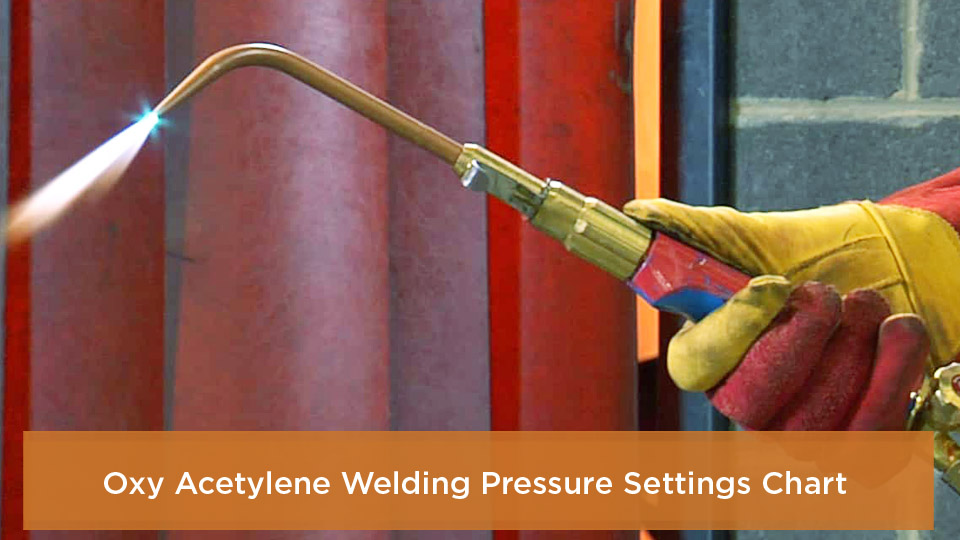
Image by safetyhub
What Is Oxy-Acetylene Welding and Why Do Most People Still Swear By It?
Oxy-acetylene (also called gas welding or torch welding) is the original fusion process—pure oxygen and acetylene mixed in a torch, producing a flame that can hit 5,800 °F. That’s hot enough to melt pretty much anything you’ll run into in a typical shop: mild steel, stainless, cast iron, aluminum, brass, bronze, even copper.
I still keep a set of bottles on the truck because nothing beats it when you’re 40 miles from the nearest power outlet fixing a cracked tractor frame or brazing a leaky copper line in somebody’s basement. It’s light, portable, cheap to run once you own the gear, and—if you know your pressures—you get the cleanest, prettiest welds most processes can’t touch.
How Flame Chemistry and Pressure Actually Work Together
Here’s the part nobody explains clearly. You’re not just “turning knobs until it looks right.” You’re balancing two gases so the flame burns neutral, slightly carburizing, or slightly oxidizing depending on the metal.
- Acetylene by itself burns dirty and sooty.
- Add the right amount of oxygen and you get a neutral flame—sharp blue inner cone, no feathers, perfect for steel.
- Too much oxygen = oxidizing flame that eats your steel and makes brittle welds.
- Too little oxygen = carburizing flame that adds carbon and works great for hardfacing or aluminum.
The regulator pressures control how fast each gas leaves the bottle and how stable flow is what keeps that cone steady while you’re moving the torch.
The Real-World Oxy Acetylene Welding Pressure Settings Chart I Keep Taped Inside My Toolbox Door
Here’s the chart I actually use every day. These are line pressures measured at the regulators with the torch valve open and flowing (working pressure), not static bottle pressure.
| Tip Size (Victor 000–6 or Harris equivalent) | Metal Thickness | Acetylene Pressure (psi) | Oxygen Pressure (psi) | Flame Type Recommended | Typical Application |
|---|---|---|---|---|---|
| 000 | Up to 1/32″ | 3–5 | 3–5 | Neutral | Jewelry, very thin sheet |
| 00 | 1/32″–1/16″ | 4–6 | 4–6 | Neutral | Auto body patch panels |
| 0 | 1/16″–3/32″ | 5–7 | 5–8 | Neutral | General light fabrication |
| 1 | 3/32″–1/8″ | 6–8 | 7–10 | Neutral | Most common shop work |
| 2 | 1/8″–3/16″ | 7–10 | 10–15 | Neutral | Structural repair |
| 3 | 3/16″–1/4″ | 8–12 | 12–18 | Neutral | Heavy repair, farm equipment |
| 4 | 1/4″–3/8″ | 10–14 | 15–20 | Neutral | Truck frames, plows |
| 5–6 | Over 3/8″ | 12–20 | 20–30 | Neutral or slight carburizing | Cast iron, thick plate |
Pro tip I learned the hard way: Always set acetylene first and never go over 15 psi no matter how big the tip. Acetylene becomes unstable above that pressure and can explode inside the hose. OSHA, AWS, and every old-timer with eyebrows will tell you the same thing.
Choosing the Right Tip Size So You Don’t Waste Gas or Burn Holes
I see guys grab the biggest tip they own because “more fire = faster,” then wonder why they have a hole the size of a quarter. Match the tip to the thickness:
- Under 1/16″ → size 00 or 000
- 1/16″ to 1/8″ → size 0 or 1 (this is 80% of what I do)
- 1/8″ to 1/4″ → size 2 or 3
- Over 1/4″ → preheat with rosebud or switch to stick/MIG
Setting Up Your Regulators Like a Pro (Step-by-Step)
- Crack both bottle valves for a second to blow out dust.
- Close torch valves completely.
- Open acetylene bottle valve no more than 3/4–1 turn (quick escape if something goes wrong).
- Open oxygen bottle all the way (double-seat valve).
- Set acetylene regulator to desired pressure with torch valve cracked open.
- Set oxygen the same way.
- Light acetylene first, adjust to clean flame with just a hint of feather, then add oxygen until the feather disappears and you have sharp cones.
- If the flame pops or blows out, your pressure is too high or tip is dirty—back it down.
Material-Specific Pressure and Flame Adjustments I Actually Use
Mild steel → Neutral flame, pressures from chart above. RG-45 or RG-60 filler.
Stainless → Slightly carburizing flame (tiny feather), 1–2 psi less oxygen than chart, 308L filler.
Aluminum → Carburizing flame (1–2× cone length), size 0–1 tip even on thicker stuff because aluminum conducts heat fast. 4043 or 5356 filler.
Cast iron → Carburizing flame, preheat the whole piece to dull red, slow cool under blanket. Use cast iron rod or nickel 99.
Copper & brass → Neutral to slightly oxidizing, flux-coated bronze rod (RBCuZn).
Cutting vs Welding Pressures (Because Everyone Gets Them Mixed Up)
Cutting tips need way more oxygen—usually 30–60 psi oxygen and 5–10 psi acetylene. Never try to cut with a welding tip; you’ll just make orange sparks and curse a lot.
Common Mistakes That Cost Me Tips, Money, and Almost an Eyebrow
- Setting acetylene over 15 psi → flashback inside the hose (happened once—never again).
- Forgetting to purge hoses → spiderwebs and moisture make the flame dance like crazy.
- Using a dirty tip → carbon buildup gives you a bushy flame no matter what pressure you run.
- Lighting oxygen first → instant pop and black soot everywhere.
- Not checking for leaks with soapy water → tiny leaks become big fires.
Safety Gear and Habits I Never Skip
- Shade 5 glasses minimum (I wear shade 5 auto-darkening now—game changer).
- Leather gloves, long sleeves, no polyester (melts to your skin).
- Flashback arrestors on both regulators—$40 insurance policy.
- Keep the bottles chained and capped when moving.
- If the torch pops more than once, shut everything down and find the problem.
How Temperature Changes Affect Your Settings
Cold winter morning in the shop? Your pressures will read 10–20% lower because gas contracts. I bump acetylene up 1–2 psi in January and drop it again in July. Same bottles, same tip, totally different feel.
Why I Still Reach for Oxy-Acetylene Instead of MIG on Certain Jobs
- No spatter cleanup
- Heat-affected zone is tiny
- Can braze, heat, bend, and cut with the same setup
- Runs forever on one set of bottles
- Weld looks like it came out of 1955 in the best way possible
Conclusion
Once you internalize that chart and learn to read your flame like you read a text message, oxy-acetylene becomes stupid simple. You’ll make welds that make stick and MIG guys jealous, fix things in the field nobody else can, and save a pile of money on filler wire and electricity.
My favorite pro tip I give every new guy in the shop: spend five bucks on a tip cleaner set and use it every single time you change tips. A clean tip is a happy tip, and happy tips don’t melt or pop. Now go set those regulators, strike a clean neutral flame, and lay down the prettiest bead you’ve ever made.
FAQs
What’s the maximum safe acetylene pressure?
Never exceed 15 psi working pressure. Acetylene becomes unstable and can detonate on its own above that point.
Can I use the same tip for welding and cutting?
No. Welding tips mix the gases inside the tip; cutting tips have a separate oxygen jet for the cutting stream. You’ll ruin the tip and get terrible results.
Why does my flame keep popping?
Most common causes: pressure too high, tip too close to the work, dirty tip, or not enough acetylene flow. Back the torch off an inch and drop pressure 1–2 psi.
Is oxy-acetylene stronger than MIG for thin sheet metal?
For sheet metal under 1/8″, oxy-acetylene with a skilled hand usually gives a stronger, cleaner joint because there’s almost no burn-through and perfect fusion.
Do I need flux for oxy-acetylene welding steel?
No, only for stainless, aluminum, brass, bronze, or cast iron. Mild steel welds fine bare with RG-45 or RG-60 rod.