
Polyethylene (PE) pipeline welding requires specialized techniques and equipment to create strong, leak-proof joints in plastic piping systems. Whether you’re working on water distribution, gas lines, or industrial applications, understanding proper PE welding methods is essential for reliable installations. This guide covers the most effective welding techniques, equipment requirements, and best practices used by professional pipeline contractors.
PE pipeline welding primarily uses three techniques: butt fusion welding for straight joints, electrofusion welding for repairs and fittings, and socket fusion for smaller diameter pipes. Butt fusion creates the strongest joints by heating pipe ends and pressing them together under controlled pressure and temperature, typically at 400-450°F for HDPE materials.
Primary PE Welding Methods
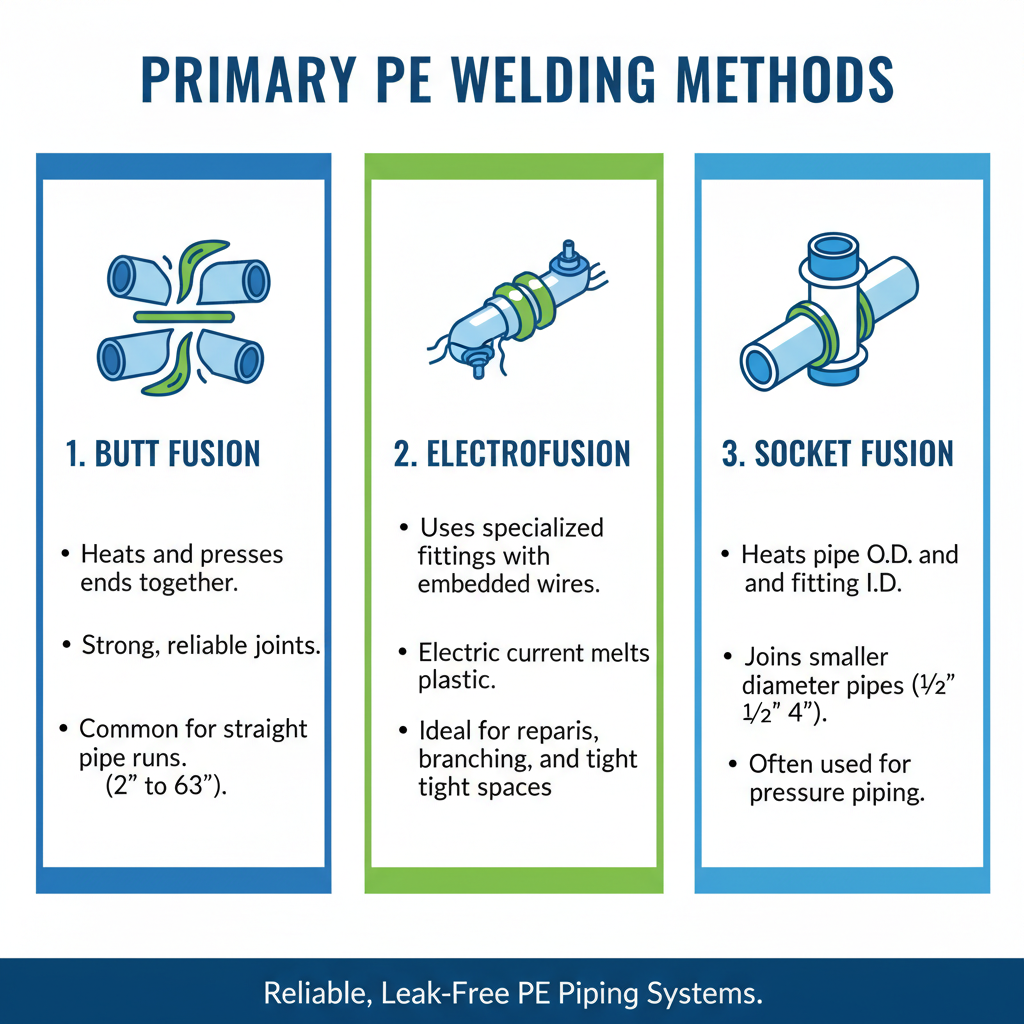
Butt Fusion Welding
Butt fusion welding creates the strongest possible joint in PE pipelines. This technique involves heating the squared-off ends of two pipes simultaneously, then pressing them together under controlled pressure.
The process requires a butt fusion machine with precise temperature and pressure controls. Heating plates maintain temperatures between 400-450°F for high-density polyethylene (HDPE). The heated pipe ends develop a molten layer that fuses together when pressed, creating a joint as strong as the original pipe material.
Field experience shows that proper preparation is critical for butt fusion success. Both pipe ends must be perfectly square and clean, with no contamination from dirt, oil, or moisture.
Electrofusion Welding
Electrofusion welding uses specially designed fittings with embedded heating coils. When electrical current passes through these coils, they heat the surrounding PE material to fusion temperature.
This technique works exceptionally well for repairs, branch connections, and situations where butt fusion equipment cannot fit. The electrofusion fitting slides over the pipe ends, and the heating process occurs automatically based on programmed parameters.
Temperature control happens internally within the fitting, making this method more forgiving of environmental conditions. However, electrofusion fittings cost significantly more than standard PE fittings used with butt fusion.
Socket Fusion Welding
Socket fusion welding joins smaller diameter PE pipes using heated socket tools. This method heats both the pipe end and the fitting socket simultaneously, then joins them together.
Most socket fusion applications involve pipes under 6 inches in diameter. The technique requires less expensive equipment than butt fusion but produces joints with slightly lower strength ratings.
Proper timing is essential for socket fusion success. Insufficient heating creates weak joints, while overheating can damage the pipe structure.
Equipment Requirements for PE Welding
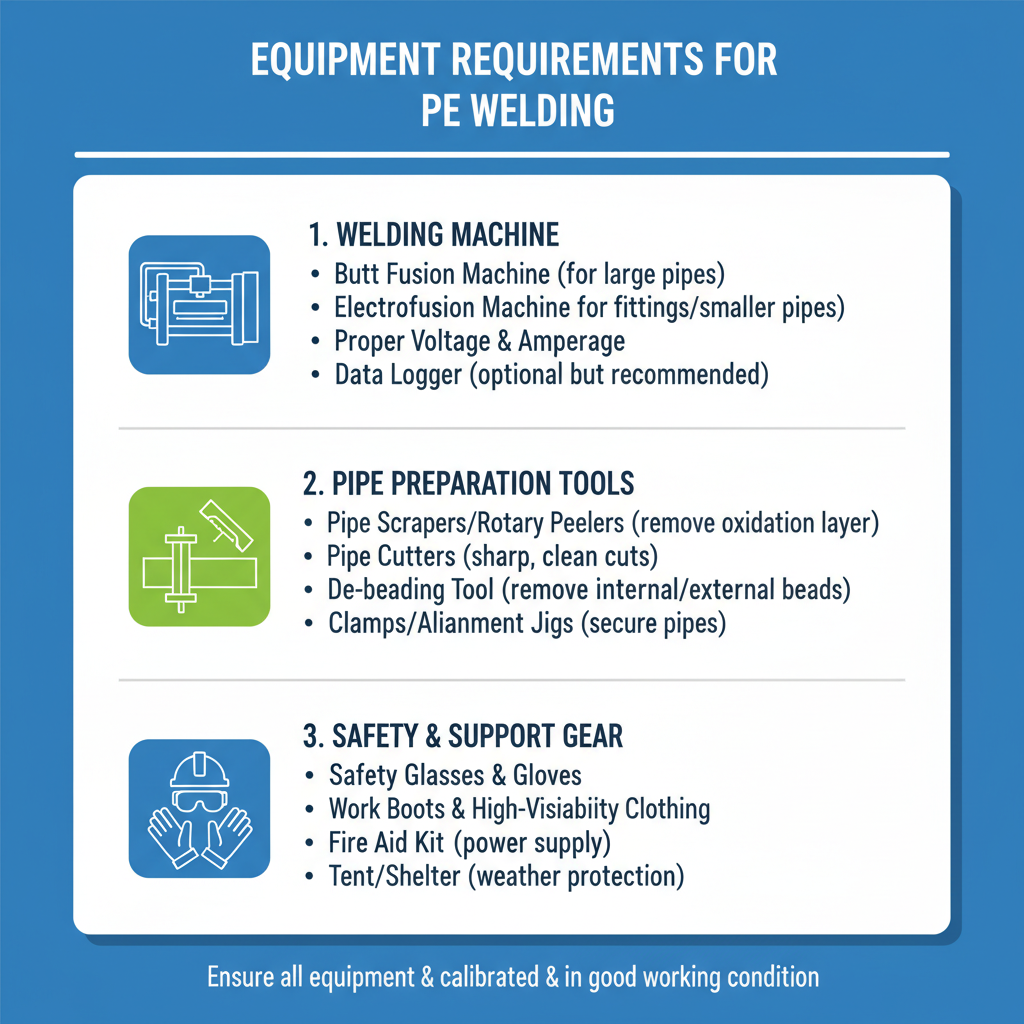
Butt Fusion Machine Components
Professional butt fusion machines include several critical components. The heating plate maintains consistent temperature across its entire surface. Hydraulic clamps hold pipes in perfect alignment during the welding process.
Pressure control systems apply precise force during the heating and cooling phases. Most machines include data logging capabilities to record welding parameters for quality control documentation.
Machine size varies based on pipe diameter capacity. Smaller units handle pipes up to 12 inches, while large track-mounted machines can weld pipes over 48 inches in diameter.
Electrofusion Control Units
Electrofusion control units automatically manage the welding process based on fitting specifications. These units read barcode information from fittings to determine proper voltage, current, and timing parameters.
Built-in safety features prevent welding if environmental conditions fall outside acceptable ranges. Most units include data storage for welding records and traceability requirements.
Battery-powered portable units allow electrofusion welding in remote locations without electrical power sources.
Critical Welding Parameters
Temperature Control
Maintaining proper temperature throughout the welding process determines joint quality. HDPE materials require heating plate temperatures between 400-450°F, while medium-density polyethylene (MDPE) uses slightly lower temperatures.
Environmental temperature affects welding parameters significantly. Cold weather requires longer heating times and modified pressure sequences. Hot weather can cause overheating issues that weaken joint strength.
Wind speed above 15 mph can cool heated surfaces too quickly, preventing proper fusion. Welding enclosures or windbreaks become necessary in these conditions.
Pressure Application
Proper pressure application occurs in distinct phases during butt fusion welding. Initial pressure squares the pipe ends against the heating plate. Heat soak pressure maintains contact during the heating phase.
Fusion pressure forces the molten pipe ends together after removing the heating plate. This pressure must be applied quickly and maintained throughout the cooling cycle.
Pressure values depend on pipe diameter and wall thickness. Typical fusion pressures range from 30-50 PSI for most HDPE applications.
Timing Sequences
Each welding phase requires specific timing for optimal results. Heat soak time allows temperature to penetrate through the pipe wall thickness. Thicker walls require proportionally longer heating times.
Changeover time between removing the heating plate and applying fusion pressure should not exceed 5-8 seconds. Longer delays allow surface cooling that prevents proper fusion.
Cooling time under pressure ensures the joint solidifies before releasing clamps. Minimum cooling times typically equal the heat soak time for the specific pipe size.
Common Welding Problems and Solutions
Incomplete Fusion Issues
Incomplete fusion creates weak joints prone to failure under pressure. This problem typically results from insufficient heating time, low temperature, or contaminated pipe surfaces.
Visual inspection reveals incomplete fusion as gaps or voids in the weld bead. Properly fused joints show continuous, uniform beads around the entire circumference.
Prevention requires strict adherence to welding procedures and regular equipment calibration. Temperature measurement devices help verify heating plate accuracy.
Overheating Damage
Excessive heat can degrade PE material properties and create brittle joints. Overheating often occurs when heating plates exceed recommended temperatures or heating times are too long.
Signs of overheating include discolored material, excessive bead formation, or carbonized surfaces. These joints may pass initial pressure tests but fail prematurely in service.
Regular temperature calibration and adherence to manufacturer specifications prevent overheating problems.
Contamination Effects
Dirt, oil, water, or other contaminants prevent proper fusion between pipe surfaces. Even small amounts of contamination can significantly reduce joint strength.
Proper surface preparation includes cleaning with approved solvents and protecting prepared surfaces from contamination. Work areas should be clean and organized to minimize contamination sources.
Weather conditions like rain or snow require additional protection measures during welding operations.
Quality Control and Testing
Visual Inspection Criteria
Proper PE welds display characteristic bead formations that indicate successful fusion. The bead should be continuous around the entire joint circumference with uniform height and width.
Acceptable beads show no gaps, voids, or irregularities. The bead surface should appear smooth without signs of overheating or contamination.
Bead removal for inspection purposes should reveal clean, uniform fusion zones without defects or inclusions.
Pressure Testing Requirements
Hydrostatic pressure testing verifies joint integrity under operating conditions. Test pressures typically equal 1.5 times the maximum operating pressure for the pipeline system.
Testing duration varies by pipe diameter and application requirements. Most specifications require holding test pressure for 2-4 hours minimum.
Pressure drop during testing indicates leakage that requires joint repair or replacement.
Documentation Standards
Welding records document critical parameters for each joint including temperatures, pressures, timing, and environmental conditions. This documentation supports quality assurance and warranty requirements.
Welder certification records verify that personnel have proper training and qualification for PE welding techniques. Most projects require certified welders for critical applications.
Material traceability links specific pipe lots and fittings to individual joints for quality control purposes.
Frequently Asked Questions
What temperature should PE pipes be welded at?
HDPE pipes require heating plate temperatures between 400-450°F. MDPE materials use slightly lower temperatures around 380-420°F. Always follow manufacturer specifications for specific materials.
How long does a PE weld take to complete?
Complete butt fusion welding cycles typically take 15-45 minutes depending on pipe diameter. Larger pipes require longer heating and cooling times. Electrofusion welds usually complete in 5-15 minutes.
Can PE pipes be welded in cold weather?
Yes, but cold weather requires modified procedures including longer heating times and protection from wind. Ambient temperatures below 32°F may require preheating or welding enclosures.
What causes PE weld failures?
Common failure causes include insufficient heating, contaminated surfaces, improper pressure application, and poor environmental conditions. Following proper procedures prevents most failures.
How strong are properly welded PE joints?
Correctly welded PE joints achieve 100% of the pipe’s original strength. Butt fusion welds typically exceed the pipe material strength when tested to failure.
What equipment maintenance is required for PE welding?
Regular temperature calibration, heating plate cleaning, and hydraulic system maintenance ensure consistent results. Most manufacturers recommend annual calibration and service.
Can different PE materials be welded together?
Only compatible PE materials should be welded together. HDPE can typically be welded to HDPE, but mixing different material types or grades may create weak joints.
Final Thoughts
Successful PE pipeline welding depends on proper technique, quality equipment, and strict adherence to established procedures. Butt fusion welding provides the strongest joints for straight pipe connections, while electrofusion offers flexibility for repairs and fittings. Temperature control, pressure application, and timing sequences must be precisely managed for reliable results. Regular equipment maintenance and welder training ensure consistent quality throughout pipeline installation projects. Proper documentation and testing verify joint integrity and support long-term system reliability.