
Comparing plasma arc welding vs TIG is something that comes up once you’ve spent enough time behind a torch and start chasing cleaner welds, tighter control, and better repeatability. On the surface, they look similar—both use a non-consumable tungsten electrode and work great on stainless, thin sheet, and precision jobs—but in practice, they behave very differently.
I’ve seen welders get confused wondering why plasma arc welding costs more, or whether it actually offers real advantages over TIG for metal thickness, heat control, and production work. Things like arc control, penetration consistency, joint prep, and even operator fatigue can change depending on which process you choose.
This matters in the real world because the wrong process can mean distortion, wasted time, or higher costs on critical parts. Stick with me, and I’ll break down plasma arc welding vs TIG in plain shop terms so you can decide what actually makes sense for your work.
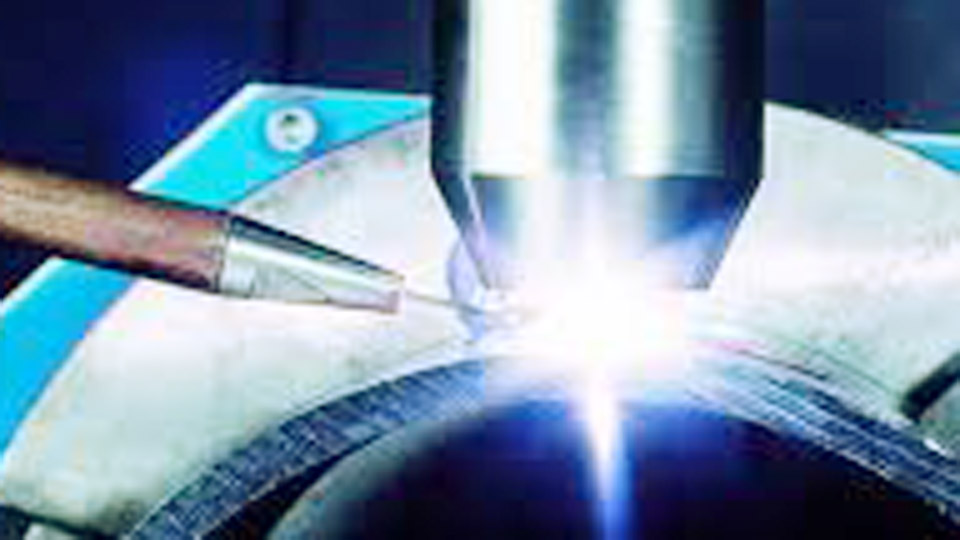
Photo by haldencn
What Is TIG Welding?
TIG welding, or Gas Tungsten Arc Welding (GTAW) as it’s formally known, is my go-to for jobs where control and finish are everything. It’s a process that uses a non-consumable tungsten electrode to create an electric arc that melts the base metal.
You hold the torch in one hand and feed a filler rod with the other, all while a shielding gas like argon flows out to protect the weld pool from oxygen and other contaminants that could cause porosity or cracks.
How it works is straightforward but demands finesse. The arc starts with a high-frequency spark or a lift-start method to avoid contaminating the tungsten.
Once lit, you modulate the heat with a foot pedal or thumb control on the torch, keeping the puddle about a quarter-inch wide for most materials. The gas shield keeps things clean—no slag or spatter to chip away later.
I use TIG when the job calls for high-quality, aesthetic welds on thin sections. Think aerospace parts, food-grade stainless tanks, or custom auto exhausts where appearance counts as much as strength.
It’s perfect for materials under 1/8-inch thick because you can dial in low heat to avoid burn-through. In my shop, we’ve relied on it for repairing bike frames where distortion would ruin the geometry.
Practical tips from years of training new guys: Always clean your base metal thoroughly—wire brush or solvent wipe—to prevent inclusions. Keep your torch at a 70-80 degree angle and the tungsten 1/16 to 1/8 inch from the work for a stable arc.
If you’re on aluminum, sharpen the tungsten to a pencil point and use AC current for better cleaning action. Start with lower amps and ramp up as the puddle forms; rushing leads to cold laps.
What Is Plasma Arc Welding?
Plasma arc welding (PAW) takes the TIG concept and amps it up—literally. It’s similar in that it uses a tungsten electrode, but the arc is constricted through a copper nozzle, ionizing the gas into plasma for a hotter, more focused beam. This creates a stiffer arc that’s less prone to wandering, giving you deeper penetration without cranking the amps sky-high.
The process kicks off with a pilot arc inside the torch, between the electrode and nozzle, then transfers to the workpiece. Plasma gas (usually argon) shoots through the orifice, while a separate shielding gas envelopes the area. You can run it in microplasma mode for super-fine work or keyhole mode for punching through thick plates.
I’ve turned to PAW when TIG felt too slow for production runs, like welding stainless tubes in a nuclear fab job. It’s ideal for thicker materials—say, over 3mm—where you need speed and full penetration in one pass. Applications include medical devices, automotive components, and even electronics where precision meets efficiency.
Shop-floor advice: Watch your gas flows closely; too much plasma gas can cause turbulence and suck in air, leading to oxidation. Use the largest nozzle bore that fits your current to avoid erosion. For beginners, start in melt-in mode before trying keyhole—it’s less forgiving if your travel speed wavers.
Key Differences Between Plasma Arc Welding and TIG
Diving deeper into plasma arc welding vs TIG, the core difference lies in arc constriction. TIG’s arc is open and diffuse, great for control but limiting on penetration. PAW squeezes it through a nozzle, boosting energy density for faster welds and less heat input overall, which means reduced distortion on sensitive alloys.
Heat-wise, PAW runs hotter—up to 20,000°C in the plasma column—versus TIG’s 6,000-8,000°C arc. This translates to PAW handling thicker stock with ease, while TIG shines on thin gauge to avoid warping. Speed is another big one; PAW can be 2-3 times faster on the right jobs, cutting labor costs in a busy shop.
From experience, TIG requires more hand-eye coordination since you’re managing the filler manually without the focused beam’s help. PAW feels more automated, especially in mechanized setups, but the torch is bulkier, making tight spots trickier.
I’ve switched mid-project from TIG to PAW on titanium repairs when penetration fell short, saving the day but highlighting how PAW’s tolerance for surface coatings (like paint or rust) gives it an edge over TIG’s need for spotless prep.
Pros and Cons of TIG Welding
TIG’s strengths make it a staple in any serious shop. The precision is unmatched—you get clean, spatter-free welds that often need no grinding. It’s versatile across metals, from aluminum to exotics like Inconel, and works in all positions, even overhead where control matters most.
On the flip side, it’s slow. You’re limited by manual filler addition and heat modulation, so high-volume work drags. It demands high skill; a shaky hand means contaminated tungsten and restarts. Costs add up with constant gas use and premium electrodes.
In my early days, I loved TIG for its forgiveness on thin stainless—low amps prevent holes—but hated the time sink on thicker frames. Pros outweigh cons for quality-driven jobs, though.
Pros and Cons of Plasma Arc Welding
PAW’s big win is efficiency: deeper penetration means fewer passes, and the keyhole mode slices through 10mm stainless like butter. It’s more tolerant to contaminants, speeding prep time, and the stable arc reduces operator fatigue.
Drawbacks include the rougher finish—expect some spatter cleanup—and the equipment’s complexity. Torches need frequent maintenance to avoid nozzle wear, and it’s not as portable as TIG setups. Manual PAW is rare due to the bulk; it’s better mechanized.
I recall a fab run where PAW halved our time on nuclear-grade tubes, but we lost a day troubleshooting nozzle erosion from undersized bores. It’s powerful, but respect the learning curve.
| Aspect | TIG Welding | Plasma Arc Welding |
|---|---|---|
| Penetration | Shallow to medium; controlled for thin materials | Deep; keyhole for thick stock |
| Speed | Slower, manual focus | Faster, especially in production |
| Weld Finish | Clean, minimal post-work | Rougher, may need grinding |
| Skill Level | High; precise hand control | Medium; more automated |
| Cost | Moderate setup, high gas/labor | Higher initial, lower long-term for volume |
| Applications | Precision, aesthetics (aero, auto) | High-strength, speed (nuclear, medical) |
When to Choose TIG Over Plasma Arc
Pick TIG when the project screams for finesse. On thin aluminum sheets for aircraft skins, TIG’s low-heat input prevents warping that PAW’s intensity might cause. It’s my choice for cosmetic welds, like stainless railings in a restaurant build, where the smooth bead looks pro without extra finishing.
Why? The diffuse arc lets you feather the heat, avoiding burn-through on gauges under 0.05 inches. In shop terms, if you’re a DIYer fixing a lawnmower frame or a student practicing fillets, TIG builds skills without overwhelming complexity.
Tips: For vertical welds, reduce amps 10-20% to fight gravity on the puddle. I’ve taught trainees to “walk the cup” on pipes for steady progress—rest the nozzle edge and pivot smoothly.
When Plasma Arc Shines Over TIG
Flip to PAW for jobs where TIG bogs down. On thicker titanium alloys for medical implants, PAW’s keyhole mode delivers full penetration in one go, slashing time and filler use. It’s a game-changer in automotive fabs for welding frames quickly without multiple layers.
The reason is that focused plasma beam—higher velocity means less heat spread, so distortion stays low even on heat-sensitive steels. For industry workers on production lines, PAW’s speed boosts output without sacrificing strength.
Real tip: In keyhole, match travel speed to the hole’s formation; too slow and it collapses, too fast and penetration drops. I once fixed a bad batch by pulsing the current to stabilize the pool on uneven joints.
Material Compatibility: What Works Best with Each
Both processes handle stainless steel, aluminum, titanium, and nickel alloys, but choices hinge on thickness and needs. TIG excels on thin aluminum (0.02-0.125 inches) with AC for oxide cleaning, preventing cracks from impurities.
PAW thrives on thicker stainless (up to 0.4 inches in keyhole) where deep fusion is key, and its tolerance for coatings means less prep on painted steel.
Compatibility notes: For copper, TIG’s control avoids overheating; PAW’s heat can cause embrittlement if not dialed in. Always match filler to base—ER308 for 304 stainless in either process.
Shop insight: On magnesium, I’ve used TIG with helium mix for better flow, but PAW’s constriction risked burn if gas wasn’t spot-on. Test scraps first.
Setting Up Your Machine: Amperage, Electrodes, and Gases
Settings are where experience pays off. For TIG, electrode diameter ties to amps: 1/16-inch for 30-120A on thin stock, 3/32-inch for 70-220A on medium. Amperage ranges: 80-120A for 1/16-inch steel butt joints, 120-180A for aluminum fillets. Use 2% lanthanated tungsten for DC stability.
PAW settings vary by mode: Microplasma at 5-15A with 0.5-1 lpm plasma gas for ultra-thin; keyhole over 100A with 2-4 lpm for penetration. Electrodes are similar—thoriated tungsten sharpened to 30-60 degrees—but nozzles dictate flow.
Gases: Argon for both, but PAW adds hydrogen (2-5%) in shielding for hotter arcs. Tips: Calibrate regulators weekly; low flow causes porosity. In my shop, we chart settings per material—start low, adjust by puddle response.
Step-by-Step Guide to TIG Welding a Basic Joint
- Prep: Clean metal with acetone, clamp securely.
- Setup: Grind tungsten to point, set machine to DCEN for steel (100A start), 15 cfh argon.
- Strike arc: Pedal down gently, hold 1/8-inch gap.
- Form puddle: Heat until molten, dab filler at 15-degree angle.
- Travel: Move torch steadily, adding filler in rhythm.
- Finish: Taper amps, post-flow 10 seconds.
Common fix: If arc wanders, repoint tungsten.
Step-by-Step Guide to Plasma Arc Welding
- Prep: Less stringent, but wipe surfaces.
- Setup: Choose nozzle bore (0.04-inch for medium), set 150A, 2 lpm plasma argon.
- Pilot arc: Ignite inside torch.
- Transfer: Touch to work, increase flow for constriction.
- Weld: Maintain speed for keyhole; add filler if needed.
- End: Slope out current to close hole.
Tip: Monitor nozzle for wear post-job.
Common Mistakes Beginners and Pros Make
Newbies often contaminate tungsten by dipping it in the puddle—fix by grinding clean and shortening arc length. Pros sometimes skip prep on PAW, assuming tolerance, but coatings still cause spatter; always brush.
On TIG, wrong polarity burns electrodes; double-check DCEN. For PAW, undersized nozzles melt—match to amps. I’ve seen bad welds from rushed travel: Cold laps in TIG, holes in PAW keyhole. Slow down, observe the puddle.
To fix porosity: Boost gas flow or clean filler. Distortion? Use clamps or back-purge on thin stuff.
FAQs
Understanding plasma arc welding vs TIG boils down to matching the process to your project’s demands—precision or pace. You’re now equipped to assess thickness, material, and timeline, avoiding costly trial-and-error. Always run a test bead on scrap; it reveals settings flaws before they hit the real work.
FAQs
Can I Use the Same Machine for Both TIG and Plasma Arc Welding?
Not usually—PAW needs a dedicated plasma console for gas control, but some TIG units adapt with add-ons. Stick to separate setups for reliability; I’ve tried hybrids and faced inconsistent arcs.
Is Plasma Arc Welding Safer Than TIG?
Both require PPE like helmets and gloves, but PAW’s higher heat means more UV risk—use darker lenses. TIG’s open arc exposes more to fumes; ventilate well. Safety comes from proper training, not the process.
What Amperage Should I Start With for Aluminum in TIG?
For 1/8-inch aluminum, begin at 120-150A on AC, balance at 70% EN. Ramp based on puddle; too low causes sticking, too high burns through. Practice on scraps.
How Do I Avoid Distortion in Thin Materials with Plasma Arc?
Use microplasma mode under 15A with low gas flow. Clamp pieces and weld in short bursts. It’s less distorting than TIG on ultra-thin due to focused heat—I’ve saved panels this way.
Which Process Is Better for Beginners Learning in a Home Shop?
TIG builds fundamentals like puddle control without PAW’s complexity. Start there for DIY repairs; PAW suits once you’re comfortable with arcs. Focus on steady hands first.
Pingback: How to Convert TIG Welder to Plasma Cutter: Complete Guide for DIY Welders - Garage Weld