
Dialing in the right spool gun aluminum welding settings is one of those things that separates frustrating weld days from smooth, confident beads. Aluminum doesn’t give you much forgiveness—its fast heat transfer, changing metal thickness, and oxide layer mean your voltage, wire speed, and arc control all have to work together.
I’ve seen plenty of welders blame the spool gun itself, when the real issue was settings that were still tuned like mild steel. Compared to MIG vs TIG, aluminum MIG with a spool gun can be incredibly efficient, but only if your joint prep, filler wire choice, and machine setup are spot on.
Getting this right matters for weld strength, appearance, and avoiding costly rework on parts that aren’t cheap to replace. I’ll break down practical, shop-tested spool gun settings that actually work on real aluminum jobs.
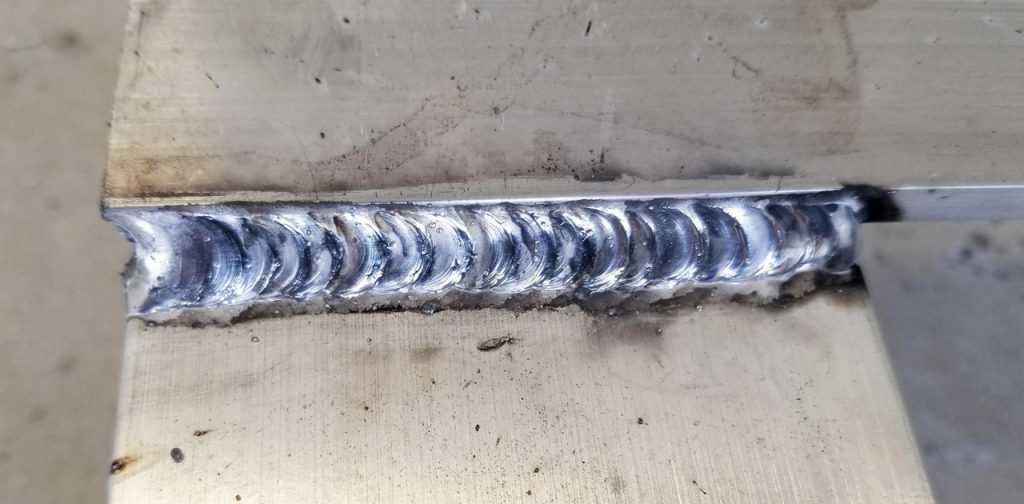
Image by reddit
What is a Spool Gun and Why Use It for Aluminum?
You’re in the middle of a repair job, and your aluminum wire keeps kinking in the liner of your regular MIG gun. That’s the nightmare a spool gun avoids. It’s essentially a mini wire feeder mounted right on your torch, holding a small spool of wire—usually 1-pound for aluminum—to push it short distances without friction or bird-nesting.
I first grabbed a spool gun back when I was fabricating exhaust systems for off-road trucks. Standard MIG guns work fine for steel, but aluminum wire is softer and more prone to buckling in long liners. The spool gun keeps the feed path short, reducing resistance and letting you weld thinner gauges without distortion.
Use it when you’re dealing with aluminum sheets under 1/8 inch or long runs where wire push-pull is key. Why? Because it maintains consistent feed, which means stronger, cleaner welds with less spatter.
In a busy shop, that translates to fewer cleanups and more uptime. If you’re a hobbyist welding up a bike frame or a pro on aerospace repairs, this tool saves your sanity.
Advantages of Spool Guns Over Push-Pull Systems
Spool guns aren’t the only way to feed aluminum wire—push-pull guns exist too, with a motor in the torch and another in the welder. But in my experience, spool guns win for portability. No extra cables dragging around, which is huge on job sites where you’re climbing ladders or squeezing into tight spots.
They shine on intermittent welding, like tacking up panels, because startup is instant without wire backlash. Drawbacks? Smaller spool size means more frequent changes on big jobs, but for most DIY or fab work, it’s a fair trade for reliability.
I’ve switched mid-project from push-pull to spool gun on marine aluminum repairs—the difference in arc stability was night and day, especially in windy conditions where gas coverage matters.
Essential Spool Gun Settings for Aluminum Welding
Getting your spool gun dialed in starts with understanding how settings interplay. Aluminum needs higher heat but lower penetration than steel, so you’re balancing voltage for arc length, wire speed for deposition, and gas for shielding.
I’ve tuned these on Miller and Lincoln machines in US shops, where 4043 or 5356 wire is standard. Always start conservative—too hot, and you burn through; too cold, and you get lack of fusion.
Wire Feed Speed Settings
Wire feed speed (WFS) controls how much filler metal you’re laying down. For aluminum, I aim for 300-500 inches per minute (IPM) on most spool guns, depending on thickness.
On 1/16-inch sheet, I’ll run 350 IPM to avoid excess buildup. Thicker 1/4-inch plate? Crank it to 450 IPM for better fill. The key is watching the puddle—if it’s sluggish, bump up the speed; if it’s splashing, dial it back.
In my garage days, I learned this welding aluminum fuel tanks. Too slow, and oxide inclusions weakened the seam. Match WFS to your travel speed—about 15-20 inches per minute for fillets—to keep the bead flat and tied in.
Voltage Settings for Clean Arcs
Voltage dictates arc length and heat input. For spool gun aluminum, 18-24 volts is my sweet spot on DCEP (reverse polarity).
Start at 20 volts for 0.030-inch wire on thin stock—it gives a stable spray transfer without globbing. On heavier sections, push to 22-23 volts for deeper fusion.
I’ve scorched plenty of parts ignoring this. Once, on a trailer frame, low voltage caused cold laps that failed inspection. Test on scrap: if the arc sounds like frying bacon, you’re good; hissing means too low.
Shielding Gas Flow and Mixtures
Gas flow protects your weld from oxidation—aluminum’s enemy. I run pure argon at 20-30 cubic feet per hour (CFH) for spool guns, as it gives a smoother arc than argon-helium mixes.
In drafty shops, bump to 35 CFH to combat wind. Why pure argon? It’s cheaper and sufficient for most fab work under 1/2 inch thick. Helium blends (25-75%) add heat for thicker stuff but cost more.
From experience on HVAC ducting, inadequate flow led to black soot and porosity. Always check your cup size—a #6 or #8 ceramic works best for coverage without turbulence.
Polarity and Tension Adjustments
Always use DCEP for aluminum MIG—electrode positive cleans the oxide layer via cathodic etching.
Tension on the spool gun drive rolls? Light touch is key. Too tight, and soft aluminum wire flattens; too loose, and it slips. I set it just enough to feed without deformation—test by pulling wire manually.
On older machines like my Hobart, ignoring polarity flipped the process to globular transfer, ruining beads. Double-check connections every setup.
Preparing Your Aluminum for Spool Gun Welding
Prep work is half the battle with aluminum. Skip it, and no settings will save you from contaminated welds.
I’ve pulled all-nighters grinding out bad welds from dirty stock. Cleanliness ensures fusion and strength, especially in load-bearing apps like ladders or railings.
Cleaning and Surface Preparation Techniques
Aluminum oxide forms instantly, so clean right before welding. I use a stainless steel brush or dedicated grinder—never steel tools, as they embed contaminants.
For oils, wipe with acetone or alcohol. On mill-finish sheet, etch with a mild acid like vinegar if needed, then rinse thoroughly.
In shop repairs, I’ve seen guys weld over grease—result? Cracks and leaks. Always degrease, brush, and weld within hours to beat oxidation.
Joint Design for Better Welds
Joint prep affects settings too. For butt joints, bevel edges 30-45 degrees on material over 1/8 inch for full penetration.
T-joints? Back them with copper for heat sink to prevent burn-through. I design with extra material for practice beads.
On custom gates, poor fit-up forced me to crank voltage, warping panels. Gap no more than wire diameter, and clamp securely.
Choosing the Right Filler Wire and Gas
Filler selection ties directly to settings—wrong wire, and your arc goes haywire.
I’ve stocked my shop with ER4043 for general use—it’s forgiving on dirty stock. ER5356 for higher strength in marine or structural.
Types of Aluminum Wire for Spool Guns
0.030-inch diameter is versatile for spool guns, feeding smoothly without jamming.
For anodized or alloyed stock, match wire to base metal—4043 for 6000-series, 5356 for 5000-series.
I once used 4043 on magnesium-alloyed aluminum—big mistake, led to cracking. Check alloy charts; it’s shop basics.
Best Shielding Gases for Aluminum
Pure argon dominates for cost and arc stability. For hotter arcs on thick plate, 75/25 argon-helium penetrates better.
Flow rates adjust with gas—helium needs higher CFH due to lighter weight.
In windy outdoor welds, I’ve switched to helium for better coverage, saving redo time on fences.
Step-by-Step Guide to Setting Up Your Spool Gun
Let’s walk through setup like I’m handing you the torch.
First, install the spool: load 1-pound aluminum wire, thread through drive rolls, set tension lightly.
Connect to your welder—most US machines like Miller Multimatic have plug-and-play adapters.
Set polarity to DCEP, voltage to 20, WFS to 350 IPM, gas to 25 CFH.
Test on scrap: strike arc at 15-20 degree push angle, travel steady. Adjust if puddle doesn’t wet out.
I do this ritual every job—skipped once, got feed issues mid-weld on a radiator repair.
Fine-Tuning for Different Thicknesses
On thin 0.040-inch sheet, drop voltage to 18, WFS to 300 to avoid holes.
Thicker 3/16-inch? Up to 22 volts, 400 IPM for fill.
Pulse modes on advanced machines help, but for basic spool guns, steady settings win.
Common Mistakes in Spool Gun Aluminum Welding
Biggest blunder: ignoring wire condition. Kinked or dirty wire birds-nests instantly.
Another: wrong gun angle—pull instead of push, and you lose gas shield, getting porosity.
I’ve fixed countless apprentice mistakes like over-tight tension flattening wire.
How to Avoid Bird-Nesting and Feed Issues
Keep liners clean—blow out with compressed air weekly.
Use contact tips sized for wire—0.030 for 0.030-inch.
If nesting hits, cut wire back, re-thread slowly. Prevention? Consistent tension and straight paths.
Fixing Porosity and Lack of Fusion
Porosity from gas issues or dirt—boost flow or re-clean.
Lack of fusion? Increase voltage or slow travel for more heat soak.
On a boat transom, porosity hid cracks—destructive testing taught me to X-ray critical welds.
Troubleshooting Spool Gun Problems on the Fly
Arc unstable? Check ground clamp—aluminum needs clean contact.
Wire not feeding? Tension or drive roll wear—replace yearly in heavy use.
I’ve troubleshot on deadlines: once, bad tip caused intermittent feed; swapped it, back in business.
Overheating and Warpage Fixes
Aluminum warps easy—use skip welding or chill bars.
If gun overheats, duty cycle limit—cool with air, not water.
Shop tip: interpass temps under 200°F prevent distortion on frames.
Real-World Applications for Spool Gun Settings
In automotive fab, these settings seal exhausts without leaks.
For marine, higher strength wire and gas ensure corrosion resistance.
I’ve welded airplane skins with precise low-heat settings—strength is life-or-death.
On job sites, portable spool guns handle repairs where big rigs can’t go.
Shop Hacks for When Settings Go Wrong
No argon? CO2 mixes work in a pinch but spatter more—avoid for quality.
Improvised chill: wet rags on thin stock control heat.
I’ve MacGyvered setups in remote fields—know your basics, adapt.
Comparing Spool Gun Brands and Models
| Brand | Model | Key Features | Pros | Cons |
|---|---|---|---|---|
| Miller | Spoolmate 200 | Plug-and-play with Multimatic, 20-ft cable | Reliable feed, durable | Pricey for hobbyists |
| Lincoln | Magnum 100SG | Compact, fits Power MIG | Affordable, easy swap | Shorter reach |
| Hobart | SpoolRunner 100 | Basic, for Handler series | Lightweight, simple | Limited to small spools |
| Eastwood | MIG Spool Gun | Budget option for versatig | Cheap entry | Less robust build |
I’ve owned most—Miller for pro work, Eastwood for garage tinkering.
Pros and Cons of Spool Guns vs. Standard MIG
Pros: Better aluminum control, portability, less maintenance.
Cons: Spool changes, higher initial cost.
For occasional aluminum, stick with standard; daily? Spool gun all day.
Conclusion
I’ve discussed nuts and bolts of spool gun aluminum welding settings—from wire speed tweaks to gas flows that keep your welds oxide-free. You’re now equipped to tackle aluminum projects with confidence, avoiding the pitfalls that send rookies back to the grinder.
Whether you’re a weekend warrior fixing lawn furniture or a full-time fabricator on structural beams, these hands-on adjustments ensure your joints hold up under real stress, saving you material waste and rework headaches.
Always preheat thicker aluminum to 200°F with a torch—it evens heat distribution and cuts down on cracking, especially in cold shops. Get out there, strike an arc, and build something solid.
What are the best starting settings for welding 1/8-inch aluminum with a spool gun?
Kick off with 20-21 volts, 350-400 IPM wire speed, and 25 CFH argon. Push angle at 15 degrees, travel 18 IPM. Test on scrap—adjust voltage up if fusion lacks, down if burning through. This setup’s nailed countless brackets in my shop.
Why does my spool gun keep bird-nesting aluminum wire?
Usually tension’s too high, flattening soft wire, or liner’s dirty. Loosen rolls just enough for smooth pull, clean with air or solvent. Check for kinks in the spool—straighten or replace. I’ve sorted this mid-job by re-threading slowly, no rush.
Can I use a spool gun for metals other than aluminum?
Sure, but it’s optimized for soft wires like aluminum or silicon bronze. For steel, switch back to standard gun—spool guns work but waste their advantages. I’ve done bronze overlays with one for corrosion fixes, settings similar but lower heat.
How do I know if my shielding gas flow is too high or low?
Too low: porosity and black welds from oxidation. Too high: turbulent arc, sucking in air. Aim for 20-30 CFH—watch the puddle; steady coverage without whipping. In windy spots, cup extenders help. Learned this welding outdoors, where gusts ruined beads.
What’s the difference between 4043 and 5356 wire for spool gun aluminum welding?
4043 flows easier, great for general fab with less cracking on dirty stock. 5356 offers higher strength and corrosion resistance, ideal for marine or stressed parts. Match to your alloy—4043 for 6xxx, 5356 for 5xxx. I’ve preferred 5356 on trailers for durability over ease.