
Oxy acetylene cutting uses a high-temperature flame (approximately 6,300°F) created by mixing oxygen and acetylene gas to heat steel to its ignition point, then applies a pure oxygen jet to oxidize and blow away molten metal for precise cuts.
Oxy acetylene cutting remains the most versatile and portable thermal cutting method in metalworking. This comprehensive guide delivers the technical expertise and practical knowledge needed to achieve professional-grade cuts across various steel thicknesses and applications.
Understanding Oxy Acetylene Cutting Fundamentals
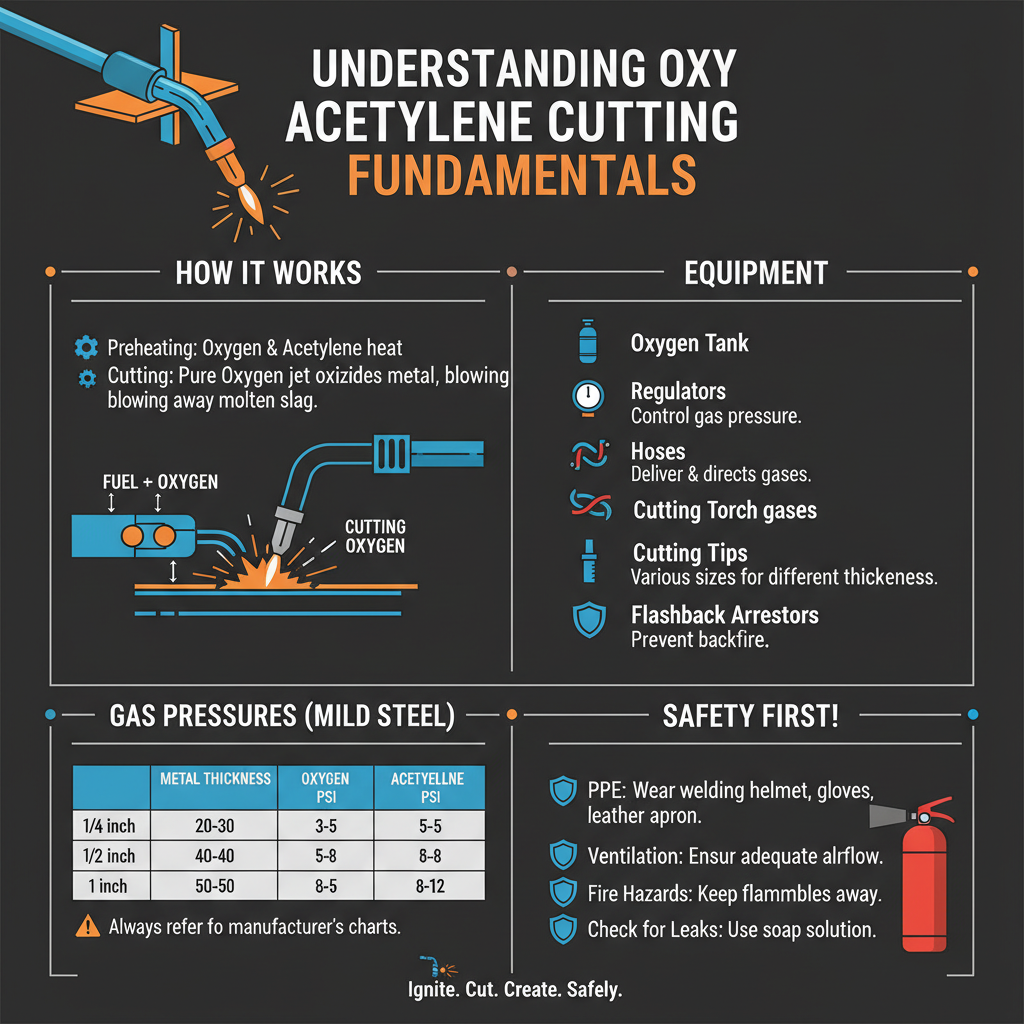
The oxy acetylene cutting process operates on the principle of rapid oxidation. When steel reaches approximately 1,800°F (982°C), it begins to oxidize rapidly in the presence of pure oxygen. The cutting torch creates this critical temperature through combustion of acetylene and oxygen in a 1:1 ratio for the heating flame.
The cutting action occurs when a high-pressure oxygen jet (typically 40-60 PSI) strikes the preheated steel surface. This oxygen stream oxidizes the iron, creating iron oxide (slag) that gets blown away by the gas pressure. The result is a narrow kerf with clean, straight edges when executed properly.
Modern cutting torches feature separate controls for heating flame adjustment and cutting oxygen flow. Professional operators understand that maintaining proper gas pressures and flame characteristics determines cut quality more than torch movement speed.
Essential Equipment and Gas Setup Requirements for Oxy Acetylene Cutting
Primary Equipment Components
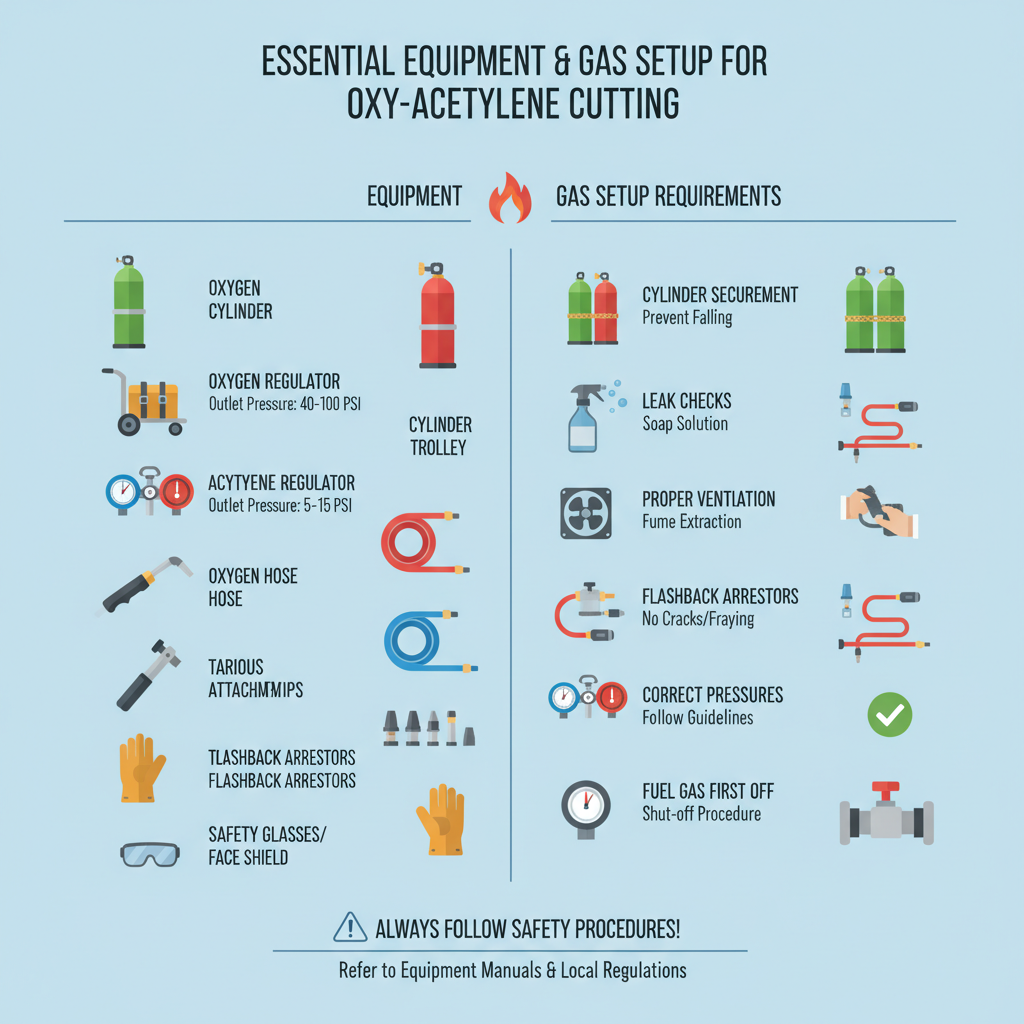
Your oxy acetylene cutting setup requires specific equipment rated for industrial use. Never compromise on safety-certified components when assembling your cutting system.
Torch Assembly:
– Cutting torch head with interchangeable tips
– Mixing chamber rated for acetylene service
– Separate oxygen and acetylene control valves
– Ergonomic handle for extended use periods
Gas Supply System:
– Oxygen cylinder (typically 244 cubic feet capacity)
– Acetylene cylinder (maximum 330 cubic feet for safety)
– Two-stage regulators for both gases
– Reverse-flow check valves at torch connections
– Flashback arrestors for both gas lines
Safety Equipment:
– Welding goggles with shade 3-5 lenses
– Leather welding gloves and apron
– Fire extinguisher rated for metal fires
– Proper ventilation system for fume extraction
Gas Pressure Settings and Calculations
Proper gas pressures ensure optimal cutting performance and safety. These pressures vary based on material thickness and cutting tip size.
For steel cutting applications, use these pressure guidelines:
| Material Thickness | Acetylene Pressure (PSI) | Oxygen Pressure (PSI) | Tip Size |
|---|---|---|---|
| 1/8″ – 1/4″ | 3-5 | 25-30 | #0-1 |
| 1/4″ – 1/2″ | 4-6 | 30-35 | #1-2 |
| 1/2″ – 1″ | 5-7 | 35-40 | #2-3 |
| 1″ – 2″ | 6-8 | 40-50 | #3-4 |
| 2″ – 4″ | 7-10 | 50-60 | #4-6 |
The oxygen-to-acetylene consumption ratio typically runs 2.5:1 for cutting operations. Calculate your gas consumption using the formula: $Gas Consumption = Tip Flow Rate times Cutting Time times Safety Factor$
Flame Adjustment and Cutting Technique Mastery of Oxy Acetylene
Achieving the Perfect Neutral Flame
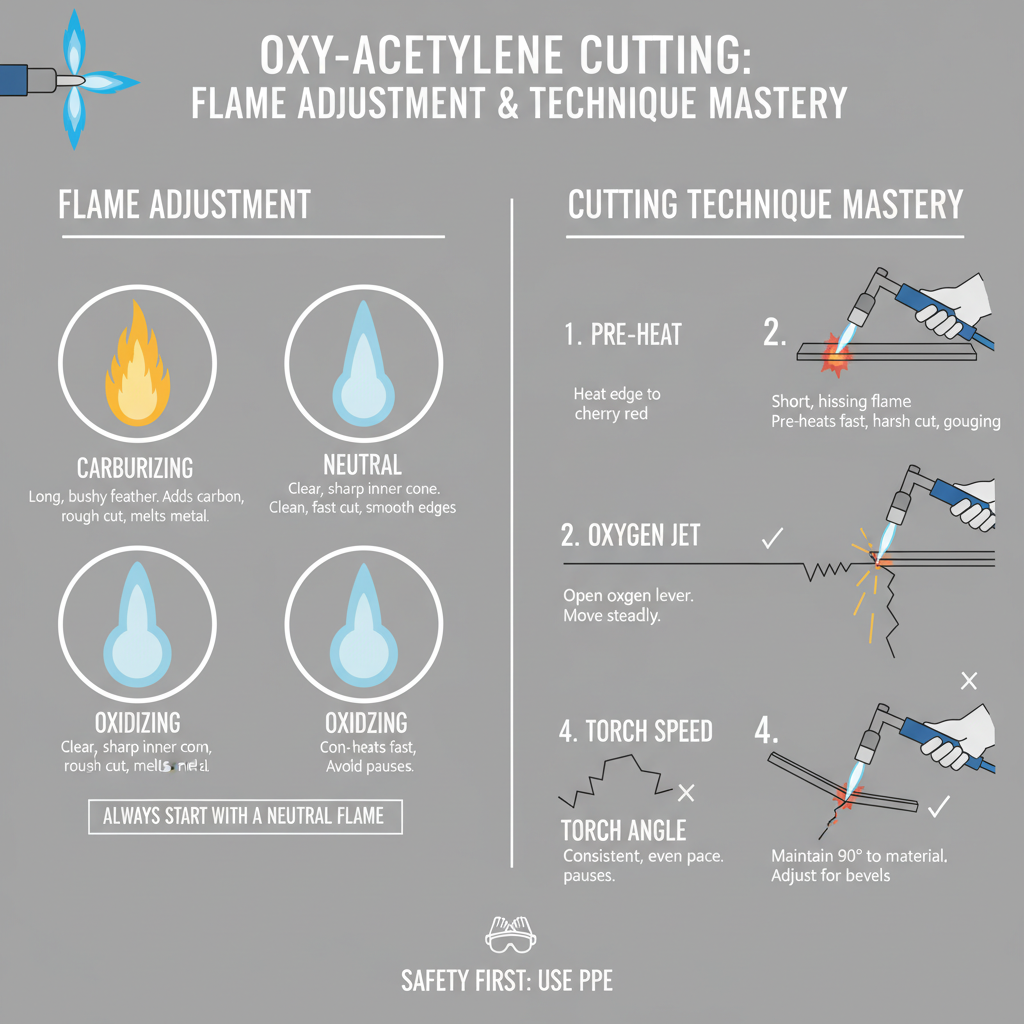
Flame adjustment represents the most critical skill in oxy acetylene cutting. Start by opening the acetylene valve slightly and igniting the gas with a striker. Never use matches or lighters near acetylene.
Gradually increase acetylene flow until the flame just stops smoking. The flame should have a bright white inner cone surrounded by a blue outer envelope. This creates your baseline acetylene flame.
Slowly introduce oxygen while observing the inner cone characteristics. A neutral flame shows a sharp, well-defined white inner cone with no feather around its base. This neutral flame provides optimal cutting temperatures without adding carbon or removing carbon from the steel.
Professional Cutting Techniques
Piercing Technique:
Position the torch at a 90-degree angle to the workpiece surface. Hold the heating flame 1/8″ above the steel until a bright orange spot appears. Gradually depress the cutting oxygen lever while maintaining steady torch position. The initial pierce creates sparks and slag ejection – this is normal.
Travel Speed Optimization:
Maintain consistent travel speed based on material thickness. Too fast creates an irregular kerf with incomplete penetration. Too slow produces excessive heat input and wide kerfs with poor edge quality.
For 1/2″ mild steel, optimal travel speed ranges from 18-24 inches per minute. Thicker materials require proportionally slower speeds to ensure complete penetration and clean slag removal.
Kerf Width Management:
Proper technique produces kerf widths approximately 10-15% of material thickness. A 1″ thick plate should yield a kerf width of 0.100″-0.150″. Wider kerfs indicate excessive tip size, incorrect pressures, or poor technique.
Material-Specific Cutting Parameters
Mild Steel Cutting Optimization
Mild steel with carbon content below 0.30% cuts most readily with oxy acetylene. The low carbon content allows complete oxidation without excessive hardening of cut edges.
Cutting Parameters for Mild Steel:
– Preheat time: 3-5 seconds per inch of thickness
– Torch angle: 90 degrees for straight cuts, 45 degrees for bevels
– Standoff distance: 1/8″ to 1/4″ from surface
– Post-cut cooling: Allow natural air cooling to prevent warping
High-Carbon Steel Considerations
Steels with carbon content above 0.45% require modified techniques to prevent edge cracking and excessive hardening. Preheat the cutting area to 400-600°F before beginning the cut.
Use slightly reducing flame (excess acetylene) to minimize carbon pickup in the heat-affected zone. Slower travel speeds and controlled cooling prevent thermal shock and cracking.
Stainless Steel and Alloy Limitations
Standard oxy acetylene cutting works only on ferrous metals that oxidize readily. Stainless steels, aluminum, and copper alloys require plasma or laser cutting methods due to their oxidation resistance and thermal conductivity properties.
Chromium content above 5% significantly reduces cutting effectiveness. The chromium forms a protective oxide layer that prevents the rapid oxidation necessary for flame cutting.
Advanced Cutting Applications and Troubleshooting
Bevel Cutting and Shape Cutting
Bevel cuts require precise torch angle control and modified travel techniques. For 45-degree bevels, maintain the torch at exactly 45 degrees to the surface while following the cutting line.
Shape Cutting Guidelines:
– Inside radius cuts: Use smaller tips and reduced travel speed
– Outside radius cuts: Maintain steady arc progression
– Square corners: Stop at corner, rotate torch, restart cut
– Pierced holes: Start with small pilot hole, expand gradually
Common Cutting Problems and Solutions
Irregular Cut Surfaces:
Caused by inconsistent travel speed, improper gas pressures, or worn cutting tips. Verify all equipment settings and replace consumables as needed.
Excessive Slag Adhesion:
Results from insufficient cutting oxygen pressure or contaminated oxygen supply. Check regulator settings and cylinder purity ratings.
Incomplete Penetration:
Indicates inadequate preheat time, insufficient oxygen pressure, or oversized cutting tip for material thickness. Adjust parameters systematically.
Quality Control and Cut Inspection
Professional cutting operations require systematic quality control measures. Inspect cut surfaces for smoothness, perpendicularity, and dimensional accuracy.
Acceptable Cut Quality Standards:
– Surface roughness: Ra 250-500 microinches for machine-cut surfaces
– Angular tolerance: ±2 degrees from perpendicular
– Dimensional accuracy: ±0.030″ for cuts under 12″ length
Use precision measuring tools including squares, calipers, and surface roughness gauges to verify cut quality meets specification requirements.
Safety Protocols and Risk Management
Gas Handling and Storage Safety
Acetylene cylinders must never be stored or used horizontally. The acetone solvent inside can enter the regulator system, creating dangerous conditions. Always secure cylinders in upright positions with proper restraints.
Critical Safety Procedures:
1. Purge all gas lines before lighting torch
2. Never exceed 15 PSI acetylene pressure at the torch
3. Install flashback arrestors on both gas lines
4. Maintain minimum 20-foot separation from combustible materials
5. Ensure adequate ventilation for fume removal
Emergency Response Procedures
Flashback events require immediate action to prevent equipment damage and injury. If flashback occurs, immediately shut off both gas supplies at the torch valves, then at the regulators.
Allow equipment to cool completely before investigating the cause. Common flashback causes include loose connections, damaged hoses, or improper gas pressures.
Fire Emergency Protocol:
– Shut off gas supplies immediately
– Use Class D fire extinguisher for metal fires
– Evacuate area if cylinders are threatened by fire
– Contact emergency services for cylinder fire situations
Economic Analysis and Operational Efficiency
Cost Calculations and Budgeting
Operating costs for oxy acetylene cutting include gas consumption, consumable replacement, and labor time. Calculate total cost per linear foot using actual consumption data.
Typical Operating Costs (per linear foot):
– Gas consumption: $0.15-0.25 for 1/2″ steel
– Consumables (tips, hoses): $0.05-0.10
– Labor (at $25/hour): $0.30-0.50
– Total cost: $0.50-0.85 per linear foot
Productivity Optimization Strategies
Maximize cutting efficiency through proper setup, material preparation, and cutting sequence planning. Batch similar thickness materials to minimize setup changes.
Efficiency Improvement Methods:
– Pre-mark all cutting lines with soapstone
– Arrange materials for continuous cutting paths
– Maintain spare torch tips and consumables
– Implement preventive maintenance schedules
Track cutting speeds and quality metrics to identify improvement opportunities. Professional operators achieve 85-90% arc-on time during production cutting.
Frequently Asked Questions
What’s the maximum thickness oxy acetylene can cut?
Oxy acetylene cutting effectively handles steel up to 12 inches thick with proper equipment and technique. Thicker materials require specialized heavy-duty torches and extended cutting times.
Why won’t my torch cut stainless steel?
Stainless steel contains chromium that forms an oxide layer preventing rapid oxidation. Use plasma cutting or mechanical methods for stainless steel applications.
How do I prevent warping in thin materials?
Use tack welds or clamps to secure thin materials. Cut from center outward and allow controlled cooling to minimize thermal distortion.
What causes popping sounds during cutting?
Popping indicates flashback or improper gas mixture. Check all connections, verify gas pressures, and ensure proper flame adjustment before continuing.
How often should I replace cutting tips?
Replace tips when orifices become enlarged, damaged, or clogged. Quality tips last 8-12 hours of cutting time with proper care and cleaning.
Next Steps for Cutting Mastery
Master oxy acetylene cutting through systematic practice and continuous improvement. Start with simple straight cuts on mild steel, then progress to complex shapes and thicker materials as your skills develop.
Consider pursuing AWS (American Welding Society) certification for thermal cutting processes to validate your expertise and enhance career opportunities. Professional certification demonstrates competency in safety procedures, cutting techniques, and quality standards.
The foundation you build with oxy acetylene cutting translates directly to advanced thermal cutting processes including plasma and laser systems. These skills remain valuable throughout your metalworking career, providing versatile capabilities for fabrication, repair, and demolition applications across multiple industries.
Advanced Cutting Techniques for Complex Applications
Bevel cutting requires precise torch angle control and steady hand movement. Position the cutting tip at the desired bevel angle, typically 15-45 degrees from vertical. Maintain consistent travel speed while keeping the flame perpendicular to the cut direction, not the material surface.
Stack cutting multiple thin sheets simultaneously increases productivity for repetitive parts. Clamp sheets tightly together with minimal gaps between layers. Use slightly higher oxygen pressure to ensure complete penetration through all layers while maintaining clean cut quality.
Cutting Thick Sections Beyond Standard Capacity
Heavy plate cutting over 6 inches thick demands modified techniques and specialized equipment. Increase preheat flame size and extend preheat time proportionally to material thickness. The preheat phase may require 2-3 minutes for 8-inch plate compared to 30 seconds for 1-inch material.
Multiple-pass cutting becomes necessary for extremely thick sections exceeding your torch capacity. Make the first pass to establish a kerf, then follow with successive passes to complete the cut. Each pass should overlap slightly with the previous cut to maintain continuity.
Specialized Materials and Cutting Considerations
Cast iron requires different cutting parameters due to its carbon content and metallurgical structure. Use lower cutting oxygen pressure and slower travel speeds to prevent excessive sparking and material fracture. Preheat the entire casting when possible to minimize thermal shock and cracking.
Stainless steel cutting presents unique challenges due to chromium content and heat conductivity. Increase cutting oxygen pressure by 10-15% above mild steel settings. Use faster travel speeds to prevent excessive heat buildup that can cause warping or carbide precipitation.
High-carbon steels may require post-cutting heat treatment to prevent hardening along cut edges. Consider the material’s hardenability and intended application when determining cutting parameters and subsequent processing requirements.
Quality Control and Cut Inspection Methods
Visual inspection remains the primary quality assessment method for most applications. Examine cut surfaces for smoothness, perpendicularity, and absence of defects such as gouging, undercutting, or excessive dross formation.
Dimensional accuracy verification using precision measuring tools ensures parts meet specification requirements. Check critical dimensions within 0.030 inches of target values for most structural applications. Tighter tolerances may require secondary machining operations.
Dross removal techniques vary based on application requirements. Light dross often breaks away with hammer tapping or grinding. Heavy dross indicates improper cutting parameters and should be corrected through technique adjustment rather than excessive cleanup.
Economic Considerations and Cost Optimization
Gas consumption optimization directly impacts operating costs. Proper flame adjustment minimizes acetylene waste while maintaining cutting performance. A neutral flame uses approximately 1 cubic foot of acetylene per hour for typical cutting operations.
Tip life extension through proper maintenance reduces replacement costs. Clean tips regularly with appropriate cleaning wires, store properly when not in use, and avoid dropping or damaging the precision-machined orifices.
Productivity improvements through technique refinement reduce labor costs per linear foot of cutting. Experienced operators achieve 2-3 times the cutting speed of beginners while maintaining superior quality standards.
Integration with Modern Fabrication Workflows
CNC plasma and laser cutting systems complement oxy acetylene capabilities in modern shops. Use oxy acetylene for field repairs, demolition work, and situations where portability outweighs precision requirements.
Weld preparation applications represent a significant portion of oxy acetylene cutting usage. Bevel cutting for groove welds, gouging for defect removal, and plate edge preparation all benefit from the process flexibility.
Environmental and Regulatory Compliance
Proper ventilation systems remove cutting fumes and maintain air quality standards. Local exhaust ventilation at the cutting point provides optimal fume capture while allowing operator mobility.
Waste material handling includes proper disposal of cut-off pieces, slag, and dross. Segregate materials by type for recycling programs and follow local regulations for hazardous waste disposal.
Fire prevention measures extend beyond immediate cutting operations. Establish fire watch procedures for hot work in sensitive areas and maintain appropriate firefighting equipment nearby.
Training and Skill Development Pathways
Structured learning progressions build competency systematically. Begin with basic torch lighting and flame adjustment, advance through straight-line cutting, then tackle complex shapes and specialized applications.
Hands-on practice requirements typically include 40-80 hours of supervised cutting time before achieving basic proficiency. Advanced techniques may require additional training and certification through recognized programs.
Mentorship from experienced operators accelerates skill development and provides real-world problem-solving experience. Observe different cutting styles and adapt techniques that match your physical capabilities and application requirements.
Future Technology Integration
Automated oxy acetylene systems combine traditional cutting advantages with modern control technology. These systems maintain the process benefits while improving consistency and reducing operator fatigue.
Hybrid cutting approaches integrate multiple thermal processes for optimal results. Start cuts with oxy acetylene for thick sections, then switch to plasma for fine detail work on the same part.
Conclusion
Oxy acetylene cutting mastery requires understanding fundamental principles, developing proper technique through practice, and maintaining equipment in optimal condition. Success depends on balancing cutting parameters with material properties while prioritizing safety throughout all operations. The versatility and portability of this time-tested process ensure its continued relevance in modern metalworking applications, from precision fabrication to heavy industrial cutting tasks.