
When welding aluminum, selecting the correct tungsten electrode color is crucial for achieving clean, strong welds. The right tungsten electrode ensures proper arc stability, heat distribution, and overall weld quality. Understanding which color-coded tungsten works best with aluminum will help you produce professional results every time.
For aluminum welding, use pure tungsten (green) or zirconiated tungsten (white/brown) electrodes with AC current. Pure tungsten is the traditional choice that forms a stable ball tip and provides excellent arc characteristics, while zirconiated tungsten offers improved arc starting and longer electrode life. Avoid thoriated (red) or lanthanated (gold/blue) tungsten as they’re designed for DC welding applications.
Understanding Tungsten Electrode Color Coding
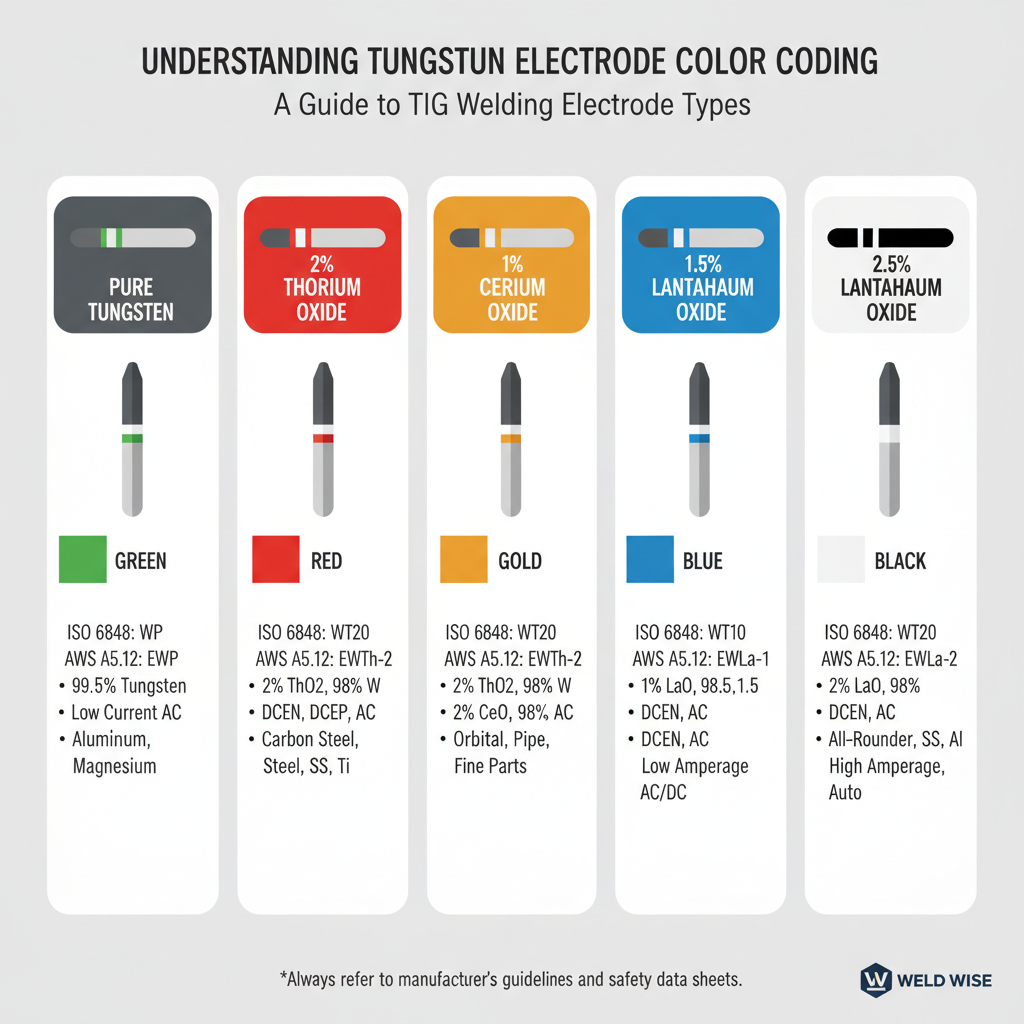
Tungsten electrodes are color-coded at their tips to indicate their composition and intended use. This standardized system helps welders quickly identify the right electrode for specific materials and applications.
The color coding system follows American Welding Society (AWS) standards:
– Green: Pure tungsten
– Red: Thoriated tungsten (2% thorium oxide)
– Gold: Lanthanated tungsten (1.5% lanthanum oxide)
– Blue: Lanthanated tungsten (2% lanthanum oxide)
– White: Zirconiated tungsten (0.25% zirconium oxide)
– Brown: Zirconiated tungsten (0.8% zirconium oxide)
– Gray: Ceriated tungsten (2% cerium oxide)
Each type offers different characteristics that make them suitable for specific welding applications and materials.
Best Tungsten Colors for Aluminum Welding
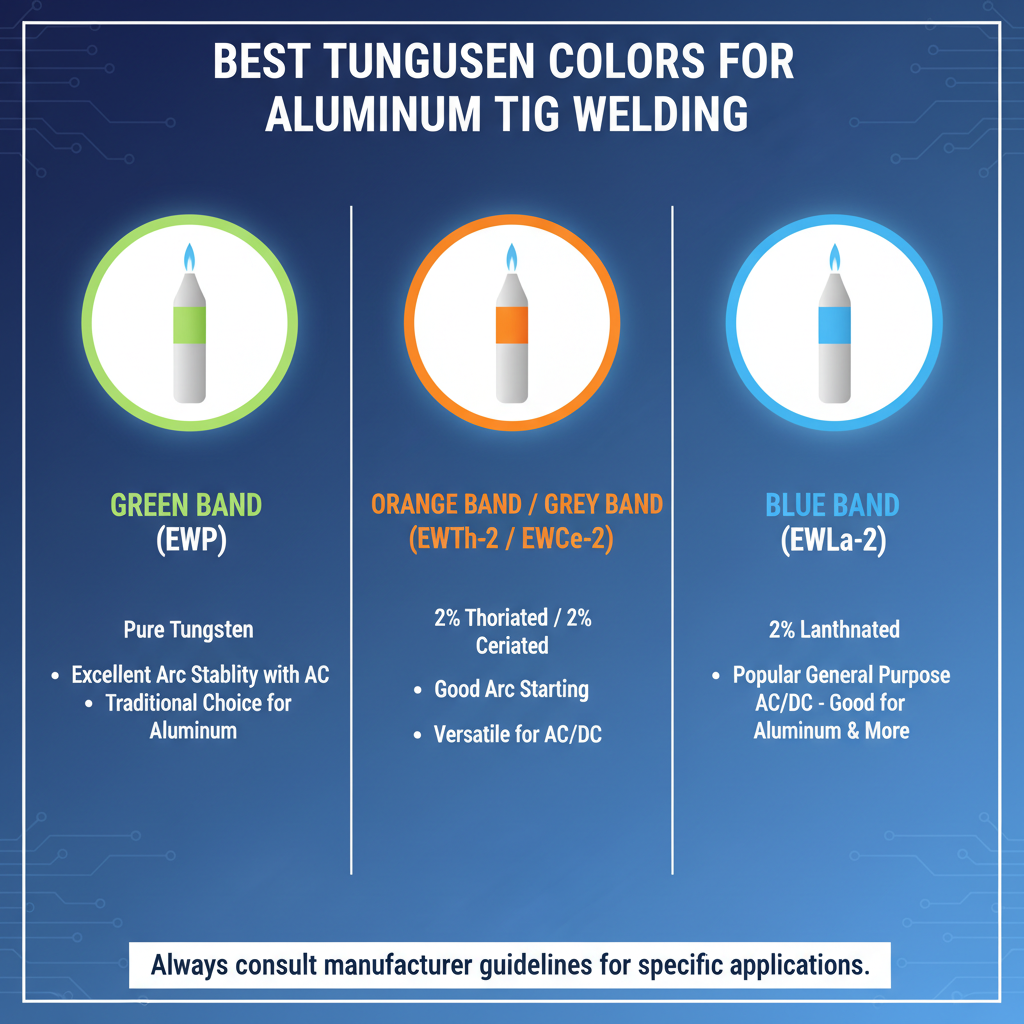
Pure Tungsten (Green)
Pure tungsten electrodes are the traditional choice for aluminum welding. These electrodes contain 99.5% tungsten with no additional alloying elements. They work exceptionally well with AC (alternating current) welding, which is standard for aluminum applications.
Pure tungsten electrodes form a stable, rounded ball at the tip when heated during AC welding. This ball formation is essential for aluminum welding because it provides excellent arc stability and heat distribution. The Lincoln Electric Pure Tungsten Electrodes are widely recognized for their consistent performance and reliability when welding aluminum projects.
Key benefits of pure tungsten for aluminum:
– Excellent arc stability on AC current
– Forms proper ball tip automatically
– Provides smooth, consistent arc characteristics
– Ideal for thin to medium thickness aluminum
Zirconiated Tungsten (White and Brown)
Zirconiated tungsten electrodes offer superior performance compared to pure tungsten in many aluminum welding situations. The zirconium oxide addition improves arc initiation and maintains better arc stability throughout the welding process.
White-coded zirconiated tungsten contains 0.25% zirconium oxide, while brown-coded contains 0.8%. Both types work excellently for aluminum welding and offer several advantages over pure tungsten.
Benefits of zirconiated tungsten:
– Better arc starting characteristics
– Longer electrode life
– Reduced tungsten consumption
– Maintains stable arc at lower amperages
– Less likely to contaminate the weld
The Miller Electric Zirconiated Tungsten Electrodes provide excellent performance for aluminum welding applications, offering improved arc stability and longer electrode life compared to pure tungsten options.
AC vs DC Considerations for Aluminum
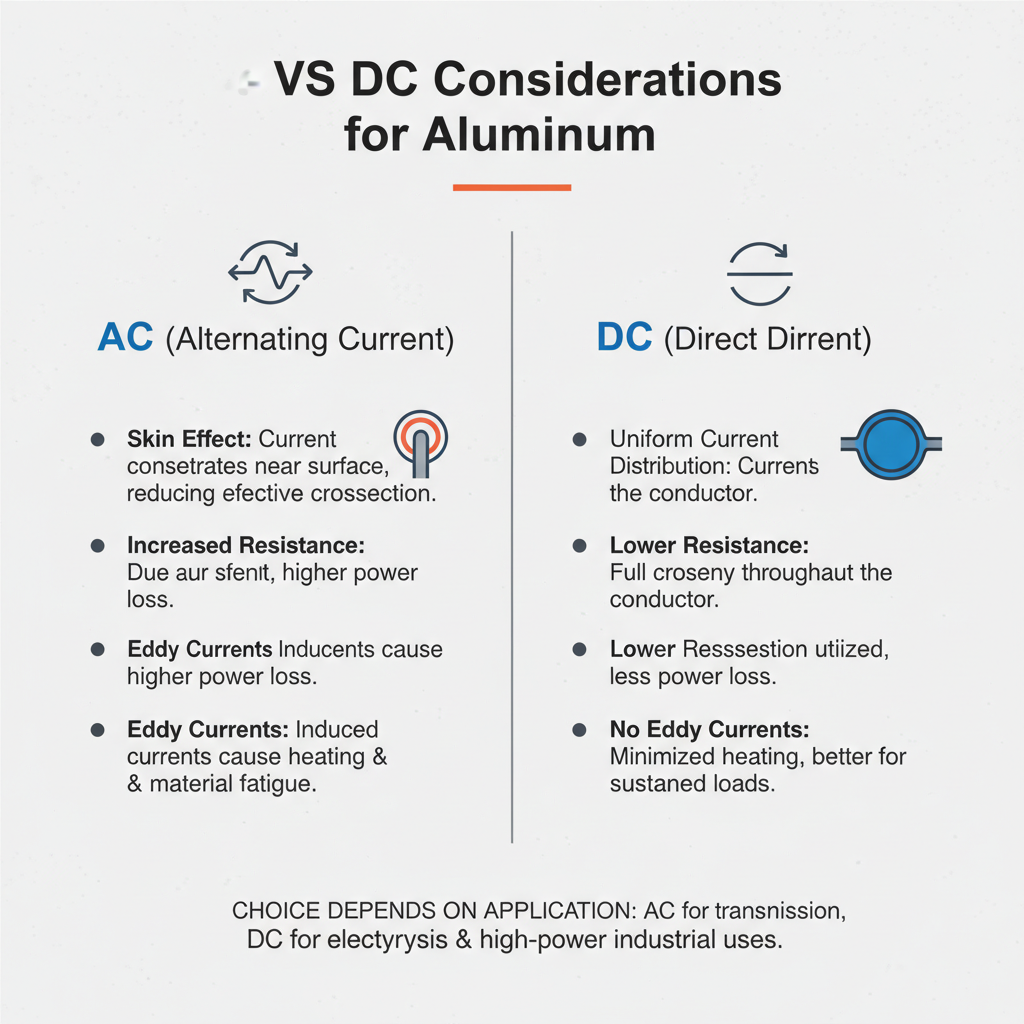
Aluminum welding typically requires AC current because it effectively breaks down the aluminum oxide layer that naturally forms on aluminum surfaces. This oxide layer has a much higher melting point than the base aluminum material, making it difficult to achieve proper fusion without AC welding.
During the positive half-cycle of AC current, the electrode cleaning action removes the oxide layer. During the negative half-cycle, the actual welding penetration occurs. This alternating action is why certain tungsten types work better for aluminum than others.
Why Some Tungsten Types Don’t Work Well for Aluminum
Thoriated tungsten (red) and lanthanated tungsten (gold/blue) are primarily designed for DC welding applications. While they can technically be used for aluminum welding, they don’t offer the same advantages as pure or zirconiated tungsten electrodes.
These electrodes are optimized for maintaining sharp points, which is beneficial for DC welding but not necessary for AC aluminum welding where a balled tip is preferred.
Proper Tungsten Preparation for Aluminum
Electrode Diameter Selection
Choose the appropriate tungsten diameter based on your welding amperage and material thickness:
– 1/16″ (1.6mm): 15-80 amps, thin aluminum sheets
– 3/32″ (2.4mm): 70-150 amps, medium thickness aluminum
– 1/8″ (3.2mm): 140-250 amps, thicker aluminum sections
– 5/32″ (4.0mm): 225-400 amps, heavy aluminum welding
Tip Preparation
For aluminum welding with AC current, the tungsten tip should form a ball. This happens naturally during welding, but you can pre-form the ball by:
1. Setting your welder to DC electrode positive
2. Striking an arc on a piece of copper or carbon
3. Allowing the tungsten tip to form a rounded ball
4. The ball diameter should be approximately 1.5 times the electrode diameter
Never grind tungsten electrodes lengthwise for aluminum welding, as this can cause arc wandering and instability.
Amperage Settings and Heat Control
Proper amperage settings depend on material thickness, joint design, and tungsten electrode size. Start with these general guidelines:
Aluminum Thickness and Amperage:
– 0.040″ (1mm): 40-60 amps
– 0.063″ (1.6mm): 60-90 amps
– 0.125″ (3.2mm): 90-150 amps
– 0.250″ (6.4mm): 150-250 amps
Adjust amperage based on your travel speed and desired penetration. Too much heat can cause burn-through, while insufficient heat results in poor fusion and cold laps.
Common Issues and Troubleshooting
Arc Wandering
If your arc wanders or becomes unstable, check:
– Tungsten electrode condition and ball formation
– Proper AC balance settings (typically 65-75% electrode negative)
– Clean base material free from oils and oxidation
– Appropriate electrode diameter for amperage
Tungsten Contamination
Contamination occurs when the tungsten electrode touches the molten weld pool or filler metal. Signs include:
– Dark spots or inclusions in the weld
– Erratic arc behavior
– Poor weld appearance
To prevent contamination:
– Maintain proper electrode extension (1/8″ to 1/4″)
– Use adequate gas coverage
– Keep steady hand position
– Replace contaminated electrodes immediately
Poor Arc Starting
Difficulty starting the arc can result from:
– Worn or contaminated tungsten tip
– Insufficient amperage settings
– Poor work connection
– Contaminated base material
Gas Coverage and Shielding
Proper shielding gas coverage is essential when welding aluminum with any tungsten electrode. Use pure argon gas with flow rates between 15-25 cubic feet per hour (CFH) depending on:
– Cup size and electrode extension
– Wind conditions and drafts
– Joint accessibility
– Material thickness
Inadequate gas coverage leads to oxidation, porosity, and poor weld quality regardless of tungsten electrode selection.
Electrode Storage and Handling
Store tungsten electrodes properly to maintain their performance:
– Keep electrodes in original containers
– Avoid contamination from oils or dirt
– Store in dry conditions
– Handle with clean gloves or tools
– Separate different tungsten types to prevent mixing
Conclusion
Selecting the right color tungsten for aluminum welding significantly impacts your weld quality and productivity. Pure tungsten (green) and zirconiated tungsten (white or brown) are the best choices for aluminum applications. Pure tungsten offers traditional reliability and excellent arc characteristics, while zirconiated tungsten provides improved performance and longer electrode life.
Remember that proper technique, adequate gas coverage, and clean base materials are equally important as tungsten selection. Practice with different tungsten types to determine which works best for your specific aluminum welding applications and equipment setup. With the right tungsten electrode and proper technique, you’ll achieve consistent, high-quality aluminum welds every time.