
MIG stands for Metal Inert Gas, which is a welding process that uses a continuously fed wire electrode and protective inert gas to join metals together. Also known as Gas Metal Arc Welding (GMAW), MIG welding is popular because it produces clean, strong welds and is relatively easy to learn compared to other welding methods.
MIG stands for Metal Inert Gas, a popular welding process that uses a continuously fed wire electrode and an inert gas shield to join metals. This welding method, also known as Gas Metal Arc Welding (GMAW), is widely used in manufacturing, construction, and automotive industries due to its versatility and ease of use.
Understanding MIG Welding: The Basics

MIG welding is an arc welding process where an electric arc forms between a consumable wire electrode and the workpiece. The process melts both materials, creating a weld pool that cools to form a strong joint. What makes MIG welding unique is the continuous wire feed system and the protective gas shield that prevents contamination.
The term “Metal Inert Gas” describes the core components of this welding method. The “metal” refers to the wire electrode that continuously feeds through the welding gun. The “inert gas” creates a protective atmosphere around the weld area, preventing oxidation and other atmospheric contamination that could weaken the weld.
Professional welders often rely on high-quality equipment like the Lincoln Electric Power MIG 210 MP for consistent results across various metal types and thicknesses. This multi-process welder demonstrates how modern MIG welding technology has evolved to meet diverse industrial needs.
How MIG Welding Works: The Process Explained
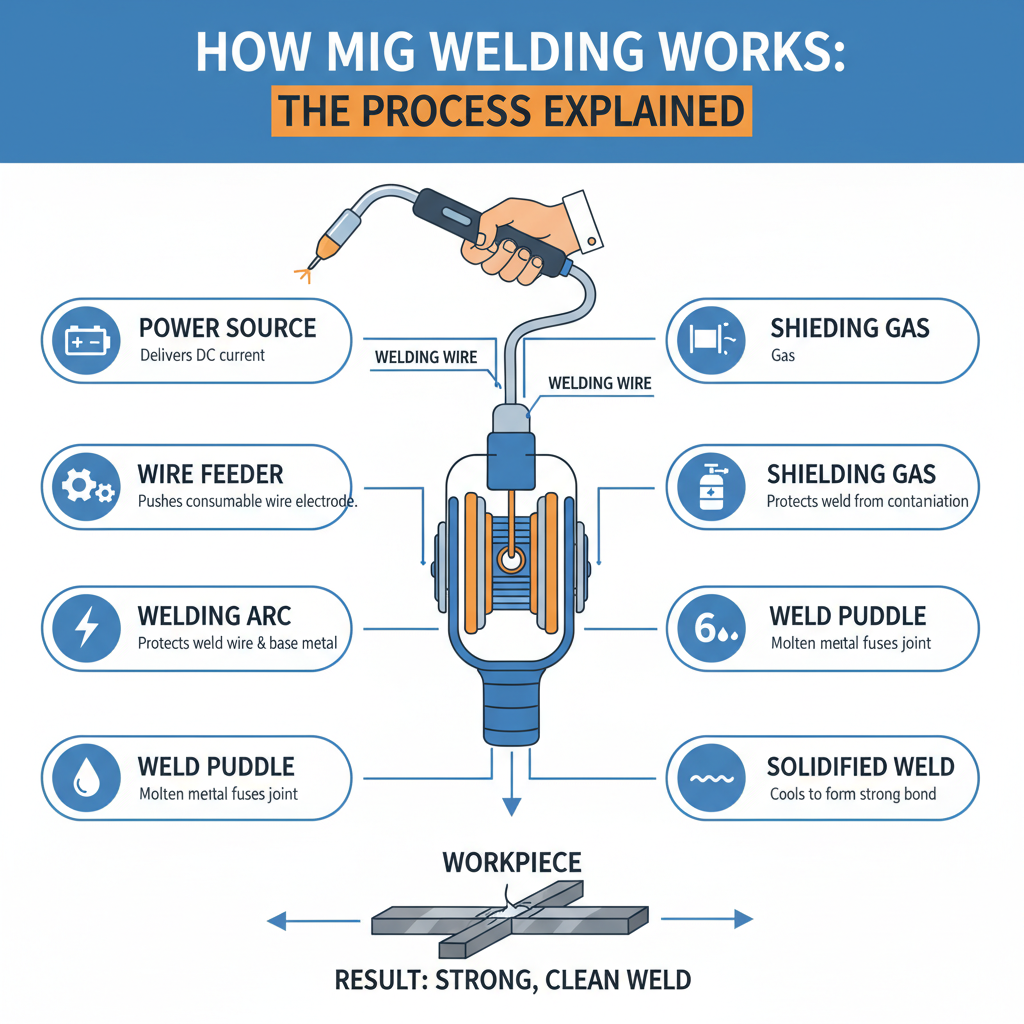
The MIG welding process involves several key components working together seamlessly. Understanding each element helps explain why this welding method has become so popular across industries.
The Wire Electrode System
The wire electrode serves as both the filler material and the conductor for the welding current. This wire continuously feeds from a spool through a drive system and out through the welding gun. The constant wire feed allows for longer, uninterrupted welds compared to stick welding methods.
Wire electrodes come in various materials and diameters, depending on the base metal being welded. Common wire types include mild steel, stainless steel, and aluminum, each formulated for specific applications and metal compatibility.
Shielding Gas Protection
The inert gas shield protects the molten weld pool from atmospheric contamination. Common shielding gases include argon, helium, and carbon dioxide, or mixtures of these gases. The gas flows through the welding gun and creates a protective envelope around the arc and weld pool.
Different gas mixtures provide varying characteristics to the weld. Pure argon offers excellent arc stability and penetration, while argon-CO2 mixtures provide good penetration with faster travel speeds.
Types of MIG Welding Processes
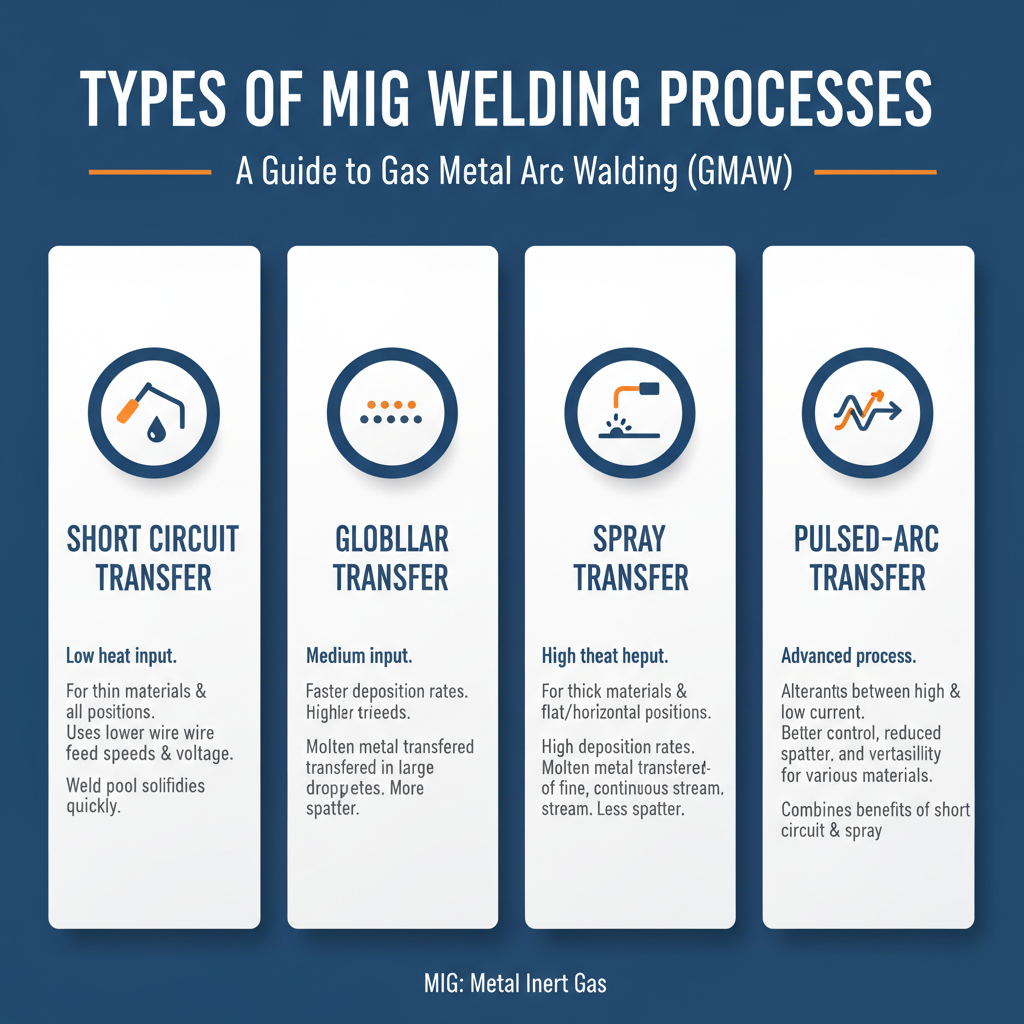
MIG welding encompasses several variations, each suited for specific applications and materials. Understanding these variations helps welders choose the right approach for their projects.
Traditional MIG Welding
Traditional MIG welding uses truly inert gases like argon or helium. This process works exceptionally well with non-ferrous metals like aluminum and stainless steel. The inert gas provides excellent protection without affecting the weld chemistry.
MAG Welding (Metal Active Gas)
MAG welding uses active gases like carbon dioxide or argon-CO2 mixtures. While technically different from pure MIG welding, many people use the terms interchangeably. MAG welding is particularly effective for carbon steel applications.
Pulse MIG Welding
Pulse MIG welding alternates between high peak current and low background current. This variation provides better control over heat input and reduces spatter, making it ideal for thin materials and out-of-position welding.
Advanced welding systems like the Miller Electric Millermatic 211 offer pulse capabilities, allowing welders to achieve professional results on challenging applications while maintaining excellent arc characteristics.
Applications and Industries Using MIG Welding
MIG welding’s versatility makes it valuable across numerous industries and applications. Its combination of speed, quality, and ease of use has made it a go-to choice for many welding scenarios.
Automotive Industry
The automotive industry heavily relies on MIG welding for body panel repairs, frame work, and manufacturing processes. The process allows for clean, strong welds on the thin sheet metal commonly used in vehicle construction.
Construction and Structural Work
Construction projects use MIG welding for structural steel work, railings, and architectural elements. The process provides the strength and appearance quality needed for both structural integrity and aesthetic appeal.
Manufacturing and Fabrication
Manufacturing facilities use MIG welding for production welding due to its speed and consistency. The continuous wire feed allows for longer weld runs, increasing productivity compared to other welding methods.
Home and Hobby Projects
DIY enthusiasts and hobbyists appreciate MIG welding for its relatively easy learning curve. Projects like automotive restoration, art sculptures, and home repairs benefit from the process’s versatility and clean results.
Advantages and Limitations of MIG Welding
Like any welding process, MIG welding offers specific advantages while having certain limitations that welders must consider.
Key Advantages
MIG welding provides several benefits that explain its widespread adoption:
– High welding speeds allow for increased productivity
– Continuous wire feed enables long, uninterrupted welds
– Minimal post-weld cleanup due to low spatter production
– Versatility across various metals and thicknesses
– Good penetration characteristics for strong joints
– Relatively easy to learn compared to other welding processes
Notable Limitations
Despite its advantages, MIG welding has some constraints:
– Equipment complexity requires more components than stick welding
– Portability challenges due to gas cylinder requirements
– Wind sensitivity can disrupt gas shielding outdoors
– Initial cost higher than basic stick welding setups
– Gas consumption adds ongoing operational costs
Essential Equipment and Setup Requirements
Successful MIG welding requires proper equipment selection and setup. Understanding these requirements helps ensure optimal welding performance and safety.
Core Equipment Components
A complete MIG welding setup includes several essential components:
– Welding power source provides the electrical energy
– Wire feed system controls electrode delivery
– Welding gun and cable direct the wire and gas
– Gas supply system delivers shielding gas
– Ground clamp and cable complete the electrical circuit
Safety Equipment
MIG welding safety requires appropriate protective equipment:
– Welding helmet with proper shade lens
– Protective clothing including leather gloves and apron
– Ventilation systems to remove welding fumes
– Fire safety equipment for spark and spatter protection
Setup Considerations
Proper setup ensures optimal welding results:
– Wire selection must match base material
– Gas flow rates typically range from 15-25 cubic feet per hour
– Voltage and wire speed settings depend on material thickness
– Work area preparation includes cleaning and positioning
Conclusion
MIG stands for Metal Inert Gas, representing one of the most versatile and widely used welding processes in modern manufacturing and fabrication. This welding method combines continuous wire electrode feed with protective gas shielding to create strong, clean welds across various materials and applications.
Understanding what MIG stands for and how the process works helps welders, engineers, and manufacturers make informed decisions about welding method selection. The process’s combination of speed, quality, and relative ease of use continues to make it a preferred choice across industries ranging from automotive manufacturing to home hobby projects.
Whether you’re considering MIG welding for professional applications or personal projects, the process offers excellent versatility and results when properly implemented with appropriate equipment and techniques. The continuous evolution of MIG welding technology ensures this process will remain relevant and valuable for diverse welding applications well into the future.