
MIG welding requires the right shielding gas to create strong, clean welds and protect the molten metal from atmospheric contamination. Choosing the correct gas affects weld quality, penetration depth, and overall project success.
For steel welding, use 75% argon and 25% CO2 (C25 gas). For aluminum, use 100% argon. For stainless steel, use tri-mix (90% helium, 7.5% argon, 2.5% CO2) or argon-CO2 blends.
This guide explains which gases work best for different materials, how gas mixtures impact your welding results, and practical tips for selecting the right shielding gas for your specific projects.
The gas choice depends on your base material, desired weld characteristics, and welding position. Different gas combinations produce varying levels of penetration, spatter, and arc stability.
Primary Shielding Gases for MIG Welding
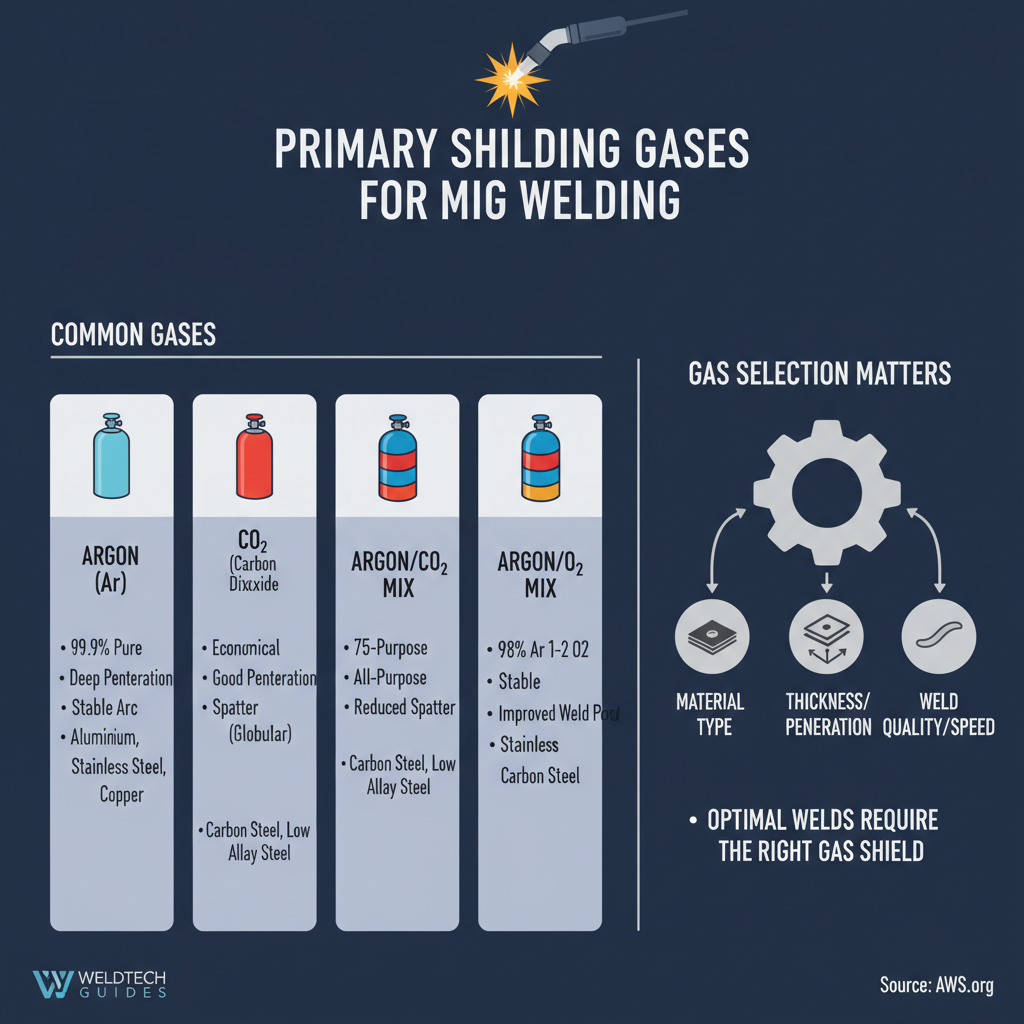
MIG welding uses inert and semi-inert gases to shield the weld pool from oxygen and nitrogen in the atmosphere. These gases prevent oxidation and contamination that would weaken the weld joint.
Argon serves as the foundation for most MIG welding applications. This inert gas provides excellent arc stability and produces smooth weld beads with minimal spatter. Argon works particularly well for non-ferrous metals like aluminum and magnesium.
Carbon dioxide (CO2) offers deep penetration and cost-effective welding for steel applications. Pure CO2 creates more spatter than argon mixtures but penetrates deeper into thick steel sections. Many fabrication shops use straight CO2 for heavy structural welding.
Helium increases heat input and arc voltage, making it valuable for welding thick sections or materials with high thermal conductivity. Helium costs more than argon but provides faster travel speeds and better penetration on aluminum and stainless steel.
Gas Mixtures for Steel Welding
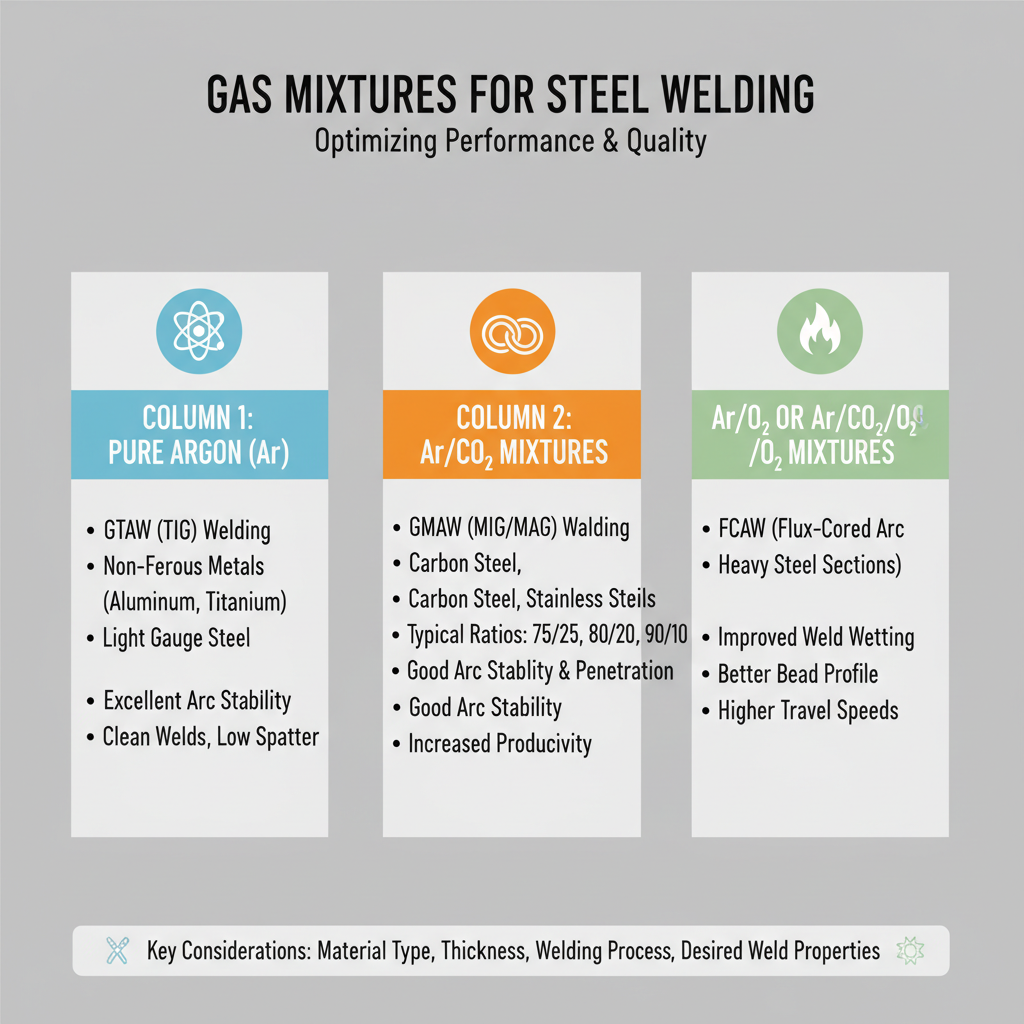
Steel welding benefits from specific argon and CO2 combinations that balance penetration, spatter control, and arc characteristics.
C25 (75% Argon, 25% CO2) represents the most popular choice for general steel welding. This mixture provides good penetration with reduced spatter compared to pure CO2. The argon component stabilizes the arc while CO2 ensures adequate penetration depth.
C15 (85% Argon, 15% CO2) produces even less spatter and smoother weld appearance. This blend works well for sheet metal and applications where weld appearance matters. The higher argon content creates a more stable arc but reduces penetration slightly.
C10 (90% Argon, 10% CO2) minimizes spatter for precision work and thin materials. This mixture excels in automotive bodywork and applications requiring minimal post-weld cleanup. The low CO2 content limits penetration on thick sections.
Field experience shows that C25 provides the best overall performance for most steel welding applications, from 1/8-inch sheet metal to 1-inch plate.
Aluminum Welding Gas Requirements
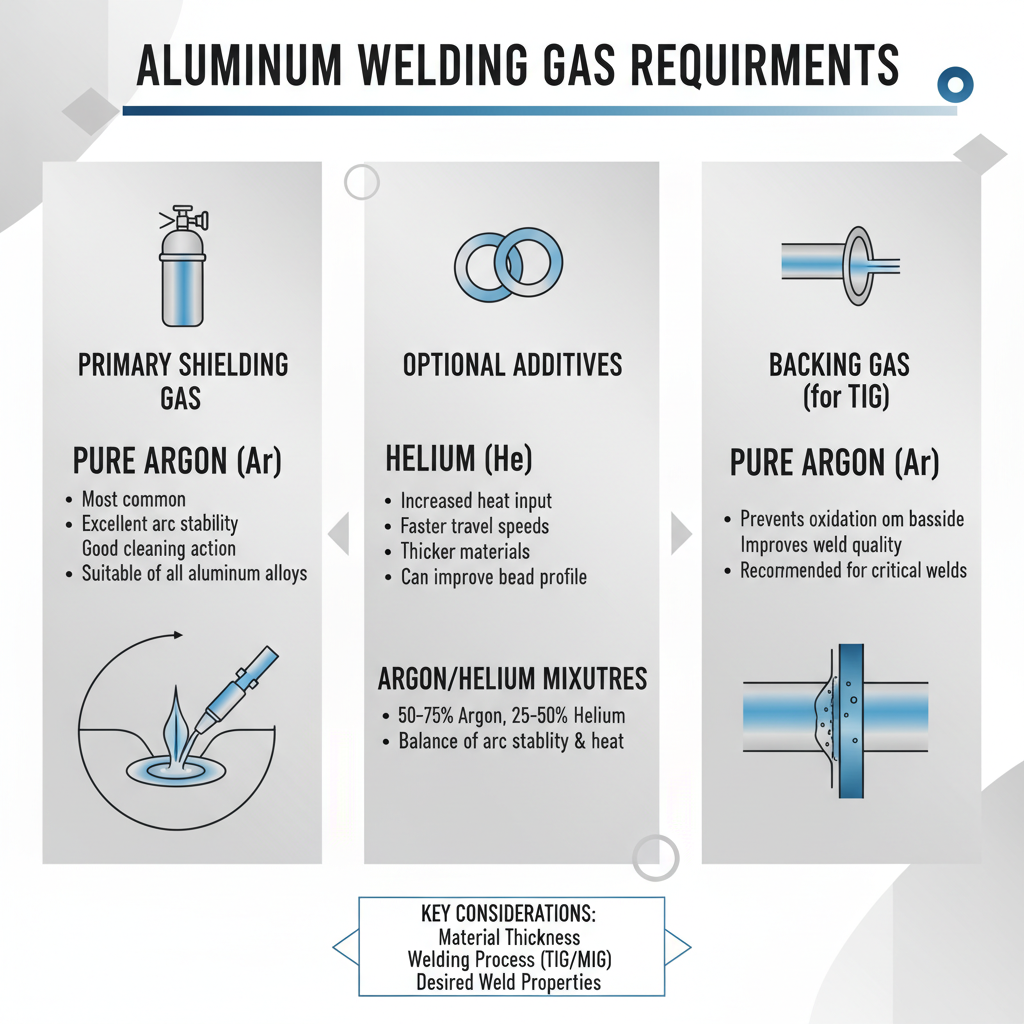
Aluminum welding demands pure argon or argon-helium mixtures to prevent contamination and achieve proper fusion characteristics.
100% Argon works best for most aluminum welding applications. Pure argon provides excellent cleaning action, stable arc characteristics, and good weld pool control. The inert properties prevent aluminum oxide formation during welding.
Argon-Helium mixtures increase heat input for thick aluminum sections. Common ratios include 75% argon with 25% helium, or 50-50 mixtures for heavy plate welding. Helium additions speed up welding on thick sections but increase gas costs significantly.
Pure argon typically handles aluminum from thin sheet up to 1/2-inch thickness effectively. Thicker sections benefit from helium additions to achieve complete penetration and faster travel speeds.
Stainless Steel Gas Selection
Stainless steel welding requires specialized gas mixtures to maintain corrosion resistance and achieve proper penetration without excessive heat input.
Tri-mix (90% Helium, 7.5% Argon, 2.5% CO2) provides optimal results for most stainless steel applications. This expensive mixture delivers excellent penetration, minimal distortion, and maintains the steel’s corrosion-resistant properties.
Argon-CO2 blends (98% Argon, 2% CO2) offer a more economical alternative for less critical applications. This mixture provides adequate results while reducing gas costs compared to tri-mix.
Pure Argon works for thin stainless steel sections where heat input must be minimized. However, penetration may be insufficient for thicker materials or structural applications.
The chromium content in stainless steel makes it sensitive to excessive heat, so gas selection directly impacts the final material properties.
Flow Rate and Pressure Settings
Proper gas flow rates ensure adequate shielding without wasting expensive gases or creating turbulence that draws in atmospheric contamination.
Standard flow rates range from 15-25 cubic feet per hour (CFH) for most MIG welding applications. Thin materials require lower flow rates around 15-18 CFH, while thick sections need 20-25 CFH for complete coverage.
Outdoor welding requires increased flow rates to compensate for wind effects. Boost flow rates by 25-50% when welding outside or in drafty conditions. However, excessive flow creates turbulence that actually reduces shielding effectiveness.
Regulator pressure should be set between 15-25 PSI for consistent gas delivery. Higher pressures don’t improve shielding and waste gas through the flowmeter. Lower pressures may cause inconsistent flow during welding.
A common issue technicians encounter is setting flow rates too high, thinking more gas provides better protection. In practice, optimal flow rates create a smooth, laminar gas stream that effectively shields the weld zone.
Gas Cylinder Selection and Storage
Choosing the right cylinder size and maintaining proper storage conditions ensures consistent gas quality and availability for your welding projects.
Cylinder sizes range from small 20-cubic-foot bottles for hobby use to large 300-cubic-foot cylinders for production welding. Medium 80-125 cubic foot cylinders provide good balance between portability and capacity for most shop applications.
Gas purity matters significantly for weld quality. Welding-grade gases contain 99.995% purity or higher, with minimal moisture and oxygen content. Industrial-grade gases may contain impurities that affect weld quality and appearance.
Storage requirements include keeping cylinders upright, secured, and away from heat sources. Temperature extremes affect gas pressure and flow characteristics. Store cylinders in dry locations to prevent regulator corrosion and contamination.
Cost Considerations and Gas Economics
Understanding gas costs helps optimize your welding budget while maintaining quality standards for different applications.
Pure gases like argon and CO2 cost less per cubic foot than specialty mixtures. CO2 provides the most economical option for steel welding, while pure argon costs more but offers superior results for aluminum.
Pre-mixed cylinders cost more than blending gases yourself but ensure consistent ratios and eliminate mixing equipment needs. Most welders find pre-mixed gases worth the extra cost for convenience and reliability.
Gas consumption rates vary significantly between processes and materials. Typical consumption ranges from 15-30 CFH during active welding time. Calculate actual usage based on arc-on time rather than total project duration.
Helium-containing mixtures represent the most expensive option, sometimes costing 3-5 times more than basic argon-CO2 blends. Reserve these premium gases for applications that specifically require their unique properties.
Troubleshooting Gas-Related Welding Problems
Gas-related issues cause many common MIG welding problems that appear as weld defects or poor arc characteristics.
Excessive spatter often indicates too much CO2 in the gas mixture or flow rates set too high. Reduce CO2 percentage or switch to higher argon content mixtures. Check for proper flow rate settings and eliminate gas leaks in the delivery system.
Poor penetration may result from insufficient active gas content or low flow rates. Increase CO2 percentage for steel welding or boost flow rates if shielding appears inadequate. Verify gas mixture matches the base material requirements.
Porosity in welds typically indicates contaminated gas supply or inadequate shielding coverage. Check cylinder gas purity, inspect delivery hoses for leaks, and verify proper flow rates. Wind or drafts can also cause shielding gas displacement.
Unstable arc characteristics often stem from incorrect gas selection or contaminated supply lines. Purge gas lines thoroughly when changing gas types and verify regulator settings match the new gas requirements.
Frequently Asked Questions
Can you use the same gas for all metals in MIG welding?
No, different metals require specific gas types. Steel uses argon-CO2 mixtures, aluminum needs pure argon, and stainless steel requires specialized tri-mix or high-argon blends for optimal results.
What happens if you use the wrong shielding gas?
Wrong gas selection causes poor penetration, excessive spatter, weak welds, or contamination. Using steel gas on aluminum creates oxide inclusions, while aluminum gas on steel produces shallow penetration and poor fusion.
How long does a gas cylinder last for MIG welding?
A standard 125 cubic foot cylinder provides approximately 5-8 hours of active welding time at typical flow rates. Actual duration depends on flow rate settings, welding technique, and arc-on time percentage.
Is pure CO2 better than gas mixtures for steel?
Pure CO2 provides deeper penetration and costs less but creates more spatter and rougher weld appearance. Gas mixtures balance penetration with improved arc stability and reduced cleanup requirements.
Can you mix your own welding gases?
While possible, pre-mixed cylinders ensure accurate ratios and consistent quality. Mixing requires specialized equipment and knowledge of proper proportions. Most welders find pre-mixed gases more reliable and convenient.
What gas pressure should I use for MIG welding?
Set regulator pressure between 15-25 PSI for most applications. Flow rate matters more than pressure – adjust the flowmeter to achieve 15-25 CFH depending on material thickness and welding conditions.
Does gas choice affect welding speed?
Yes, helium-containing mixtures increase heat input and allow faster travel speeds. Pure argon provides good control but slower welding, while CO2 mixtures offer moderate speed with good penetration characteristics.
Key Takeaways for Gas Selection Success
Selecting the right shielding gas directly impacts your MIG welding results, from weld strength to appearance and productivity. Steel welding performs best with C25 mixture (75% argon, 25% CO2) for most applications, while aluminum requires pure argon for optimal results.
Understanding gas properties helps you match the mixture to your specific needs. Consider material type, thickness, welding position, and quality requirements when choosing between different gas options. Proper flow rates and storage practices ensure consistent performance and maximize your gas investment.
Start with standard gas recommendations for your base material, then adjust based on specific project requirements and welding conditions. Quality gas selection forms the foundation for successful MIG welding across all applications.