
When working with electrical installations requiring 600-volt capacity, selecting the correct wire gauge is crucial for safety and performance. The gauge of 600-volt wire depends on the current load, installation conditions, and specific application requirements. This comprehensive guide explains everything you need to know about 600-volt wire gauging, helping you make informed decisions for your electrical projects.
The gauge of 600-volt wire depends on the current load it needs to carry, with common sizes ranging from 14 AWG (15-20 amps) for light circuits to 4/0 AWG (200+ amps) for heavy-duty applications. Wire gauge selection must also consider installation conditions like ambient temperature, conduit fill, and voltage drop requirements to ensure safe and code-compliant operation.
What is 600 Volt Wire
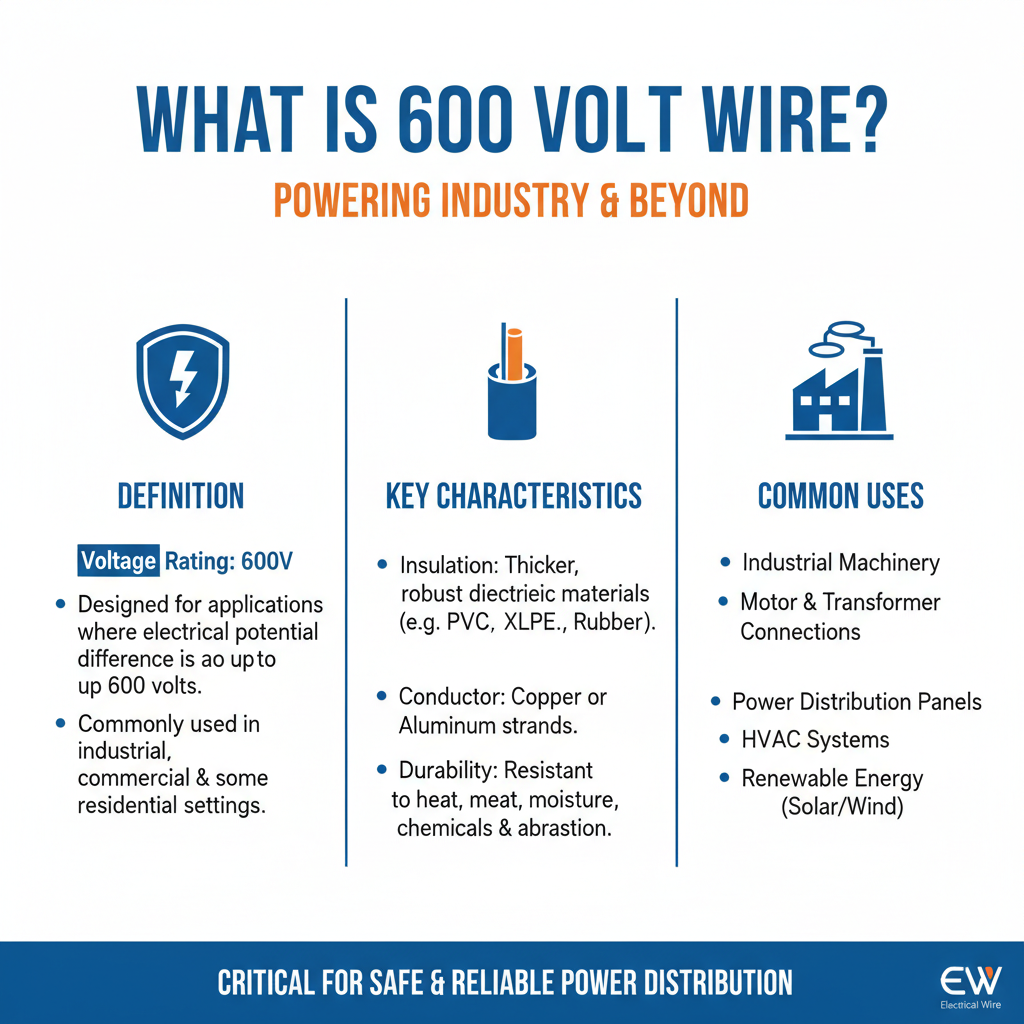
600-volt wire refers to electrical conductors rated to safely handle up to 600 volts of electrical potential. These wires are commonly used in commercial and industrial applications, including motor controls, lighting circuits, and power distribution systems.
The wire gauge, measured by the American Wire Gauge (AWG) system, determines the wire’s current-carrying capacity or ampacity. Lower AWG numbers indicate thicker wires that can handle higher current loads. For 600-volt applications, wire gauges typically range from 14 AWG for light-duty circuits to 4/0 AWG or larger for heavy-duty industrial applications.
Temperature rating is another critical factor. Most 600-volt wires are rated for 75°C or 90°C operating temperatures, with higher temperature ratings allowing for greater current capacity in the same wire gauge.
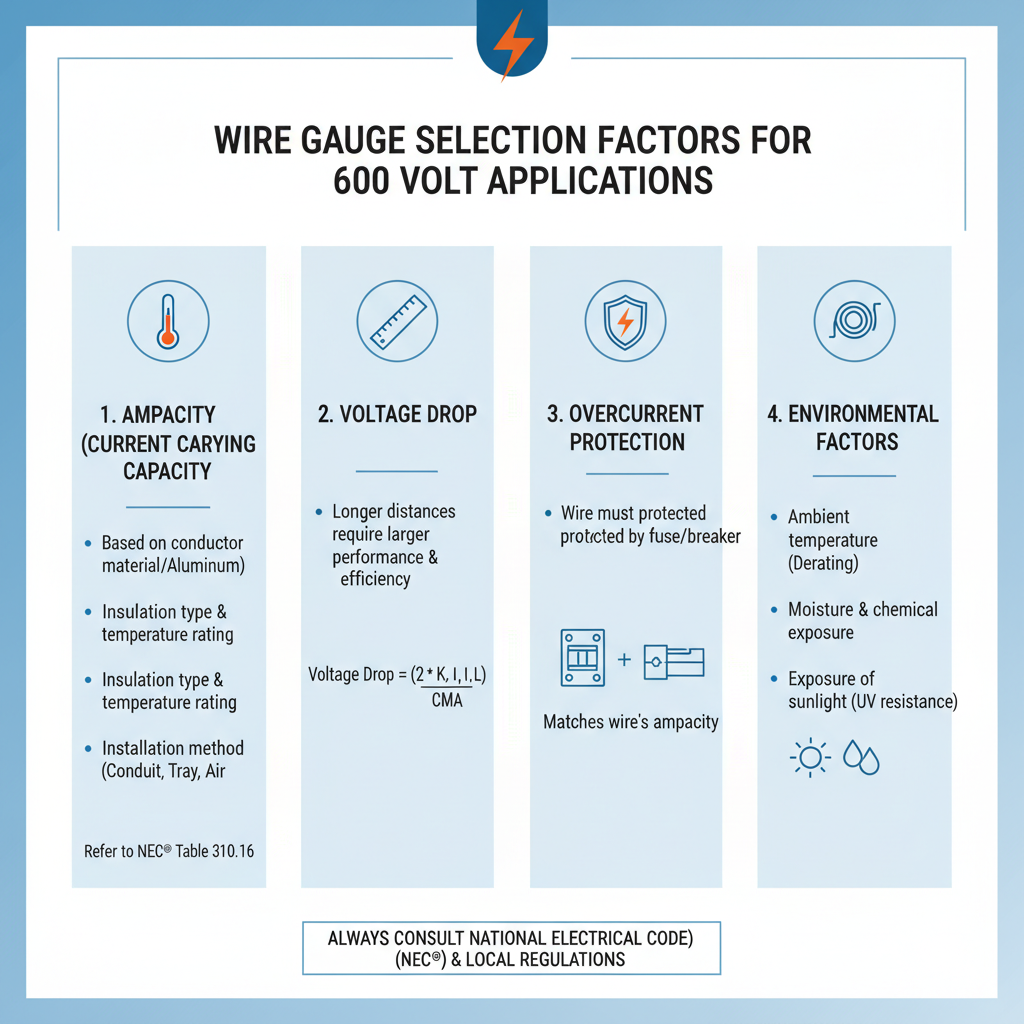
Wire Gauge Selection Factors for 600 Volt Applications
Current Load Requirements
The primary factor determining wire gauge is the current load the circuit will carry. Each wire gauge has specific ampacity ratings based on installation conditions and temperature ratings.
For 600-volt applications, common wire gauges and their typical ampacities include:
– 14 AWG: 15-20 amps
– 12 AWG: 20-25 amps
– 10 AWG: 30-35 amps
– 8 AWG: 40-50 amps
– 6 AWG: 55-65 amps
– 4 AWG: 70-85 amps
When selecting THHN/THWN-2 wire, which is commonly used for 600-volt applications, always consult the National Electrical Code (NEC) ampacity tables for precise ratings based on your specific installation conditions.
Installation Environment
The installation environment significantly affects wire gauge selection. Factors include:
Ambient Temperature: Higher ambient temperatures reduce wire ampacity, requiring larger gauge wires or derating calculations.
Conduit Fill: Multiple wires in the same conduit generate heat, reducing individual wire capacity. The NEC provides derating factors based on the number of current-carrying conductors.
Wet vs. Dry Locations: Wet locations may require different insulation types and can affect ampacity ratings.
Underground vs. Overhead: Underground installations typically have different thermal characteristics than overhead runs.
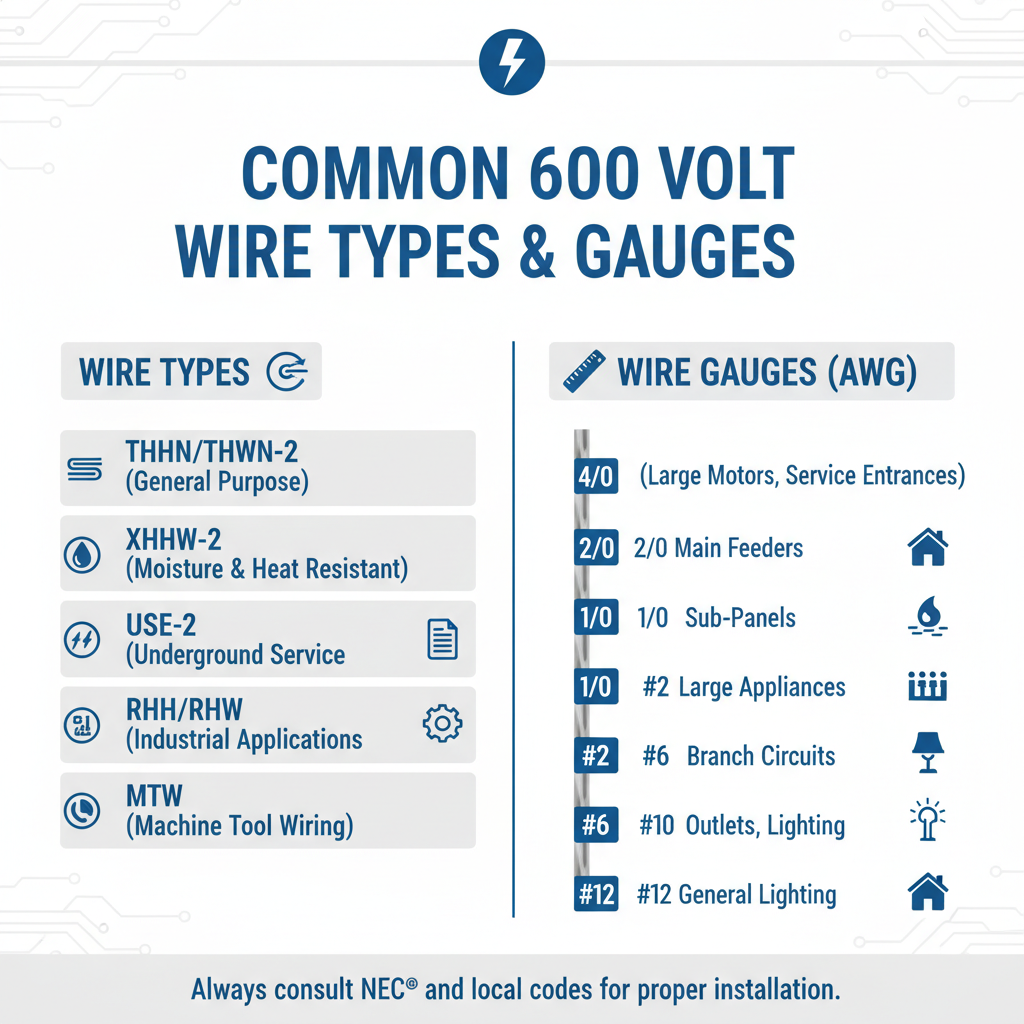
Common 600 Volt Wire Types and Gauges
THHN/THWN-2 Wire
THHN/THWN-2 wire is the most popular choice for 600-volt applications. This dual-rated wire features thermoplastic insulation suitable for both dry and wet locations. Available in gauges from 14 AWG to 1000 MCM, it offers excellent flexibility and durability.
The THHN rating indicates suitability for dry locations at 90°C, while the THWN-2 rating covers wet locations at 75°C. This versatility makes it ideal for various 600-volt installations.
XHHW-2 Wire
XHHW-2 wire provides cross-linked polyethylene insulation, offering superior heat and moisture resistance. This wire type is particularly suitable for demanding industrial environments and underground installations.
Available in similar gauge ranges to THHN/THWN-2, XHHW-2 wire often provides slightly higher ampacity ratings due to its 90°C wet location rating.
MC Cable
Metal-clad (MC) cable combines multiple conductors with an aluminum armor sheath, providing mechanical protection for 600-volt circuits. Common configurations include 12 AWG through 4/0 AWG conductors.
Calculating Wire Gauge for Specific Applications
Motor Circuit Applications
Motor circuits represent a significant portion of 600-volt wire applications. Motor wire sizing must account for starting currents, which can be 6-8 times the running current.
For a 10 HP, 480-volt three-phase motor with a full-load current of 14 amps, the minimum wire gauge would typically be 12 AWG. However, considering voltage drop and starting current requirements, 10 AWG wire is often preferred.
Lighting Circuits
Commercial and industrial lighting circuits operating at 277 volts (part of a 480-volt three-phase system) commonly use 600-volt rated wire. Typical installations use:
– 14 AWG for circuits up to 15 amps
– 12 AWG for circuits up to 20 amps
– 10 AWG for circuits up to 30 amps
Panel Feeder Circuits
Feeder circuits supplying electrical panels require careful wire gauge calculation based on the total connected load. A 100-amp feeder circuit typically requires 3 AWG wire, while a 200-amp feeder needs 4/0 AWG wire.
Voltage Drop Considerations
Voltage drop is a critical factor often overlooked in wire gauge selection. The NEC recommends limiting voltage drop to 3% for branch circuits and 5% total for branch circuits plus feeders.
Calculating Voltage Drop
The voltage drop formula for single-phase circuits is:
VD = (2 × K × I × L) / CM
Where:
– VD = Voltage drop
– K = Resistivity constant (12.9 for copper)
– I = Current in amps
– L = One-way length in feet
– CM = Circular mils of conductor
For three-phase circuits, multiply by 1.732 instead of 2.
Practical Voltage Drop Examples
For a 480-volt, 30-amp circuit with a 200-foot run:
– Using 10 AWG wire: 3.8% voltage drop
– Using 8 AWG wire: 2.4% voltage drop
The 8 AWG wire would be the better choice to minimize voltage drop.
Installation Best Practices
Conduit Fill Requirements
Proper conduit fill is essential for heat dissipation and wire pulling. The NEC limits conduit fill to:
– 53% for one conductor
– 31% for two conductors
– 40% for three or more conductors
Wire Pulling Considerations
When installing 600-volt wire, consider:
Pulling Tension: Avoid exceeding manufacturer-recommended pulling tensions to prevent insulation damage.
Bend Radius: Maintain proper bend radius to prevent conductor damage. Typically 8 times the cable diameter for single conductors.
Lubrication: Use appropriate wire pulling lubricants to reduce friction and prevent insulation damage.
Termination Requirements
Proper termination is crucial for 600-volt applications:
Torque Specifications: Follow manufacturer torque specifications for all connections.
Wire Preparation: Strip insulation to proper lengths and avoid nicking conductors.
Terminal Compatibility: Ensure terminals are rated for the wire type and size being used.
Code Compliance and Safety
NEC Requirements
The National Electrical Code provides comprehensive requirements for 600-volt wire installations:
Article 310: Covers conductors for general wiring, including ampacity tables and installation requirements.
Article 334: Addresses nonmetallic-sheathed cable requirements.
Article 330: Covers metal-clad cable installations.
Local Code Variations
Always check local electrical codes, as they may have additional requirements beyond the NEC. Some jurisdictions require:
– Specific wire types for certain applications
– Additional derating factors
– Enhanced grounding requirements
Safety Considerations
Working with 600-volt systems requires proper safety procedures:
Lockout/Tagout: Always de-energize circuits before working on them.
Personal Protective Equipment: Use appropriate PPE rated for the voltage level.
Testing: Verify circuits are de-energized with appropriate test equipment.
Troubleshooting Common Issues
Oversized Wire Problems
While using larger gauge wire might seem safer, it can create problems:
– Difficulty making proper connections
– Increased installation costs
– Conduit fill issues
– Improper protection device coordination
Undersized Wire Problems
Undersized wire creates serious safety hazards:
– Overheating and potential fire risk
– Excessive voltage drop
– Reduced equipment performance
– Code violations
Environmental Factors
Consider how environmental conditions affect wire performance:
Temperature Extremes: Both high and low temperatures can affect wire performance and ampacity.
Chemical Exposure: Industrial environments may require special insulation types.
Physical Damage: Protect wires from mechanical damage in high-traffic areas.
Conclusion
Selecting the correct gauge for 600-volt wire requires careful consideration of current load, installation conditions, voltage drop, and code requirements. The most common wire gauges for 600-volt applications range from 14 AWG for light-duty circuits to 4/0 AWG for heavy-duty applications.
Remember that wire gauge selection involves more than just meeting minimum ampacity requirements. Consider voltage drop, environmental conditions, and future expansion needs when making your selection. Always consult the latest NEC requirements and local codes to ensure compliance and safety.
Proper wire gauge selection, combined with correct installation practices, ensures reliable and safe operation of 600-volt electrical systems. When in doubt, consult with a qualified electrical professional to verify your wire gauge calculations and installation methods.