
A welding rig is a mobile welding setup mounted on a truck, trailer, or skid that brings complete welding capabilities directly to job sites. These self-contained units combine a welding machine, generator, fuel tank, and storage compartments into one transportable package. Welding rigs enable welders to perform repairs, fabrication, and construction work in remote locations where traditional shop-based welding isn’t practical.
This guide explains everything you need to know about welding rigs, from their core components to choosing the right setup for your specific welding needs.
Core Components of a Welding Rig
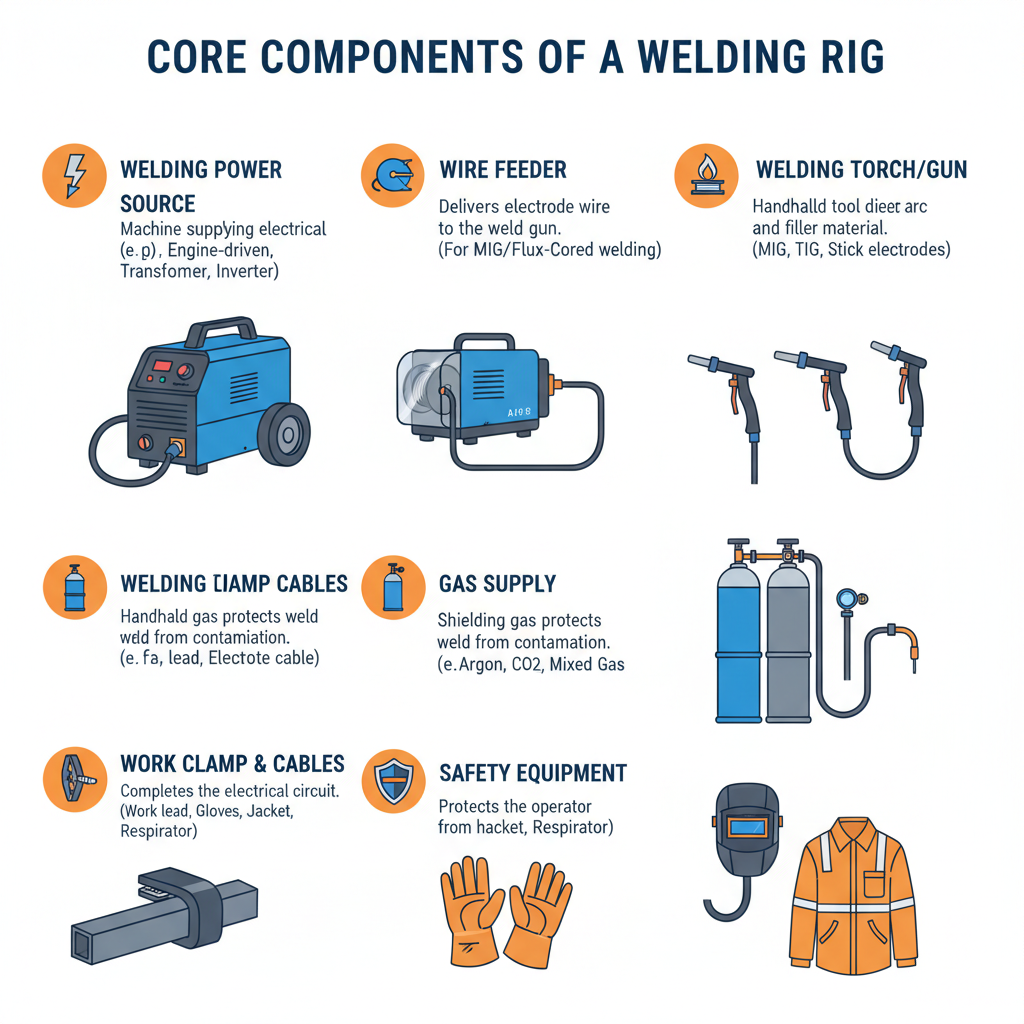
Every welding rig contains essential components that work together to provide complete welding functionality anywhere. The welding machine serves as the heart of the system, typically offering multiple welding processes like stick, MIG, TIG, and flux-cored welding. Most rigs feature multi-process machines rated between 300-600 amps to handle various welding tasks.
The engine-driven generator powers the welding machine and auxiliary equipment. These generators usually produce 10,000-20,000 watts of electrical power while simultaneously running the welding arc. Diesel engines are preferred for their fuel efficiency and reliability during extended operation periods.
Fuel storage capacity varies from 20-50 gallons depending on the rig size. Larger tanks allow for longer continuous operation without refueling, which proves crucial for remote job sites. The fuel system typically includes filters, gauges, and sometimes auxiliary fuel pumps for extended reach.
Types of Welding Rig Configurations
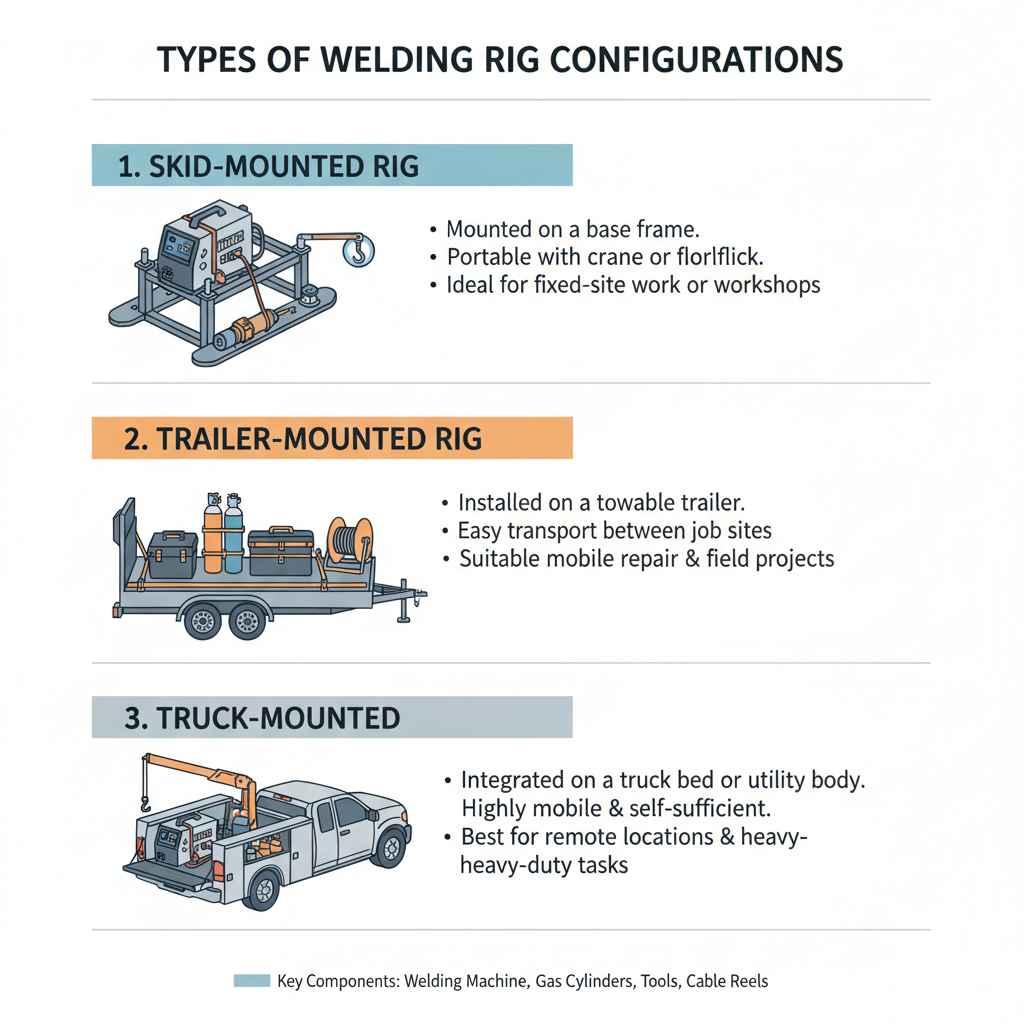
Truck-mounted welding rigs offer maximum mobility and professional appearance. These setups integrate the welding equipment into pickup truck beds or larger commercial vehicles. The truck provides transportation while the bed houses the welding machine, generator, fuel tank, and tool storage. This configuration works well for service calls and pipeline work.
Trailer-mounted rigs provide flexibility for companies with multiple vehicles. These units can be pulled by various trucks or left on-site for extended projects. Trailer rigs often feature larger fuel tanks and more storage space than truck-mounted versions. They’re particularly popular for construction and maintenance operations.
Skid-mounted welding rigs offer the most compact solution. These units sit on steel skids and can be loaded onto flatbed trucks, moved with forklifts, or positioned using cranes. Skid units work well for temporary installations or situations requiring frequent equipment repositioning.
Power Output and Welding Capabilities
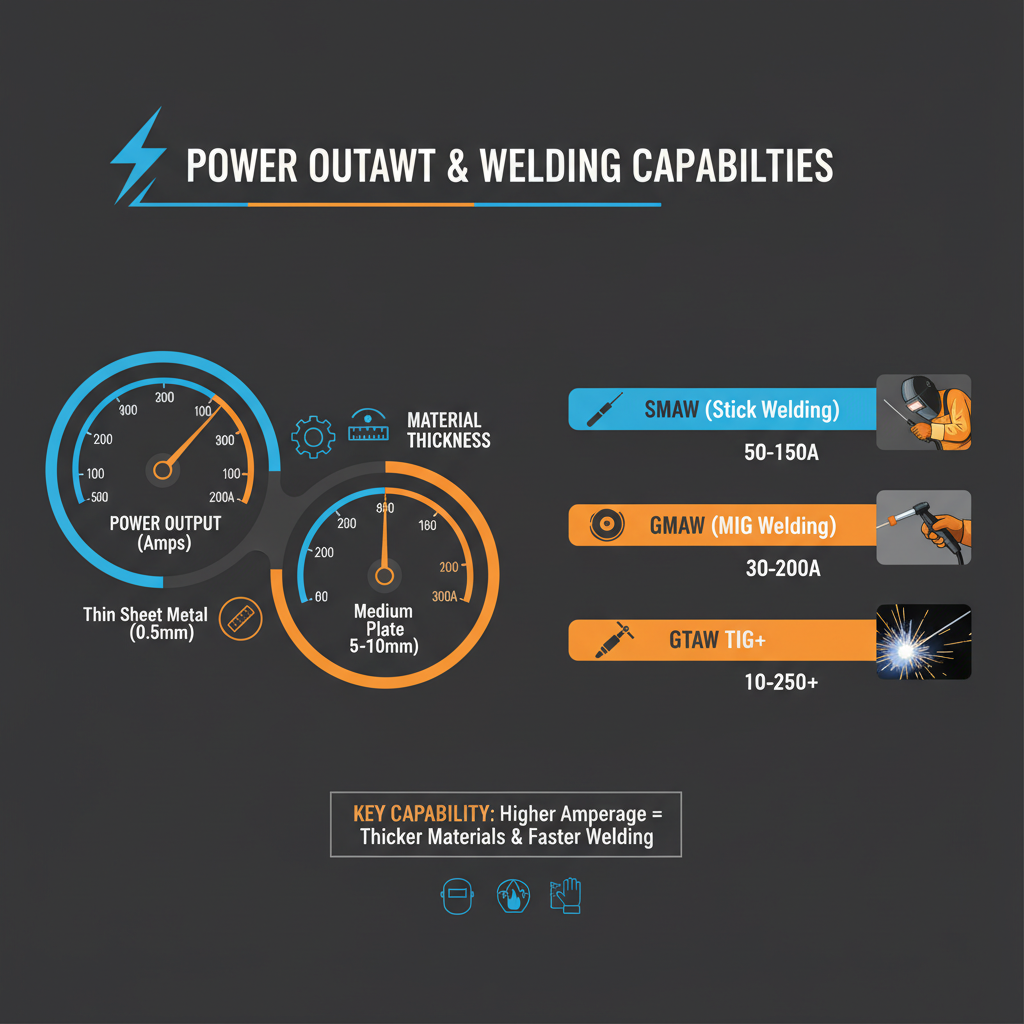
Welding rig power output directly impacts the thickness of materials you can weld effectively. A 300-amp machine handles materials up to 3/8 inch thick with stick welding, while 400-500 amp units can weld materials exceeding 1/2 inch thickness. Higher amperage ratings also enable faster welding speeds and better penetration on thick sections.
Multi-process capability allows welding rigs to handle diverse job requirements. Stick welding works well for outdoor conditions and dirty materials. MIG welding provides faster travel speeds on clean materials. TIG welding delivers precise, high-quality welds on thin materials and exotic metals. Flux-cored welding combines the benefits of stick and MIG processes.
Duty cycle ratings indicate how long the machine can weld continuously at maximum output. A 60% duty cycle at 400 amps means the machine can weld for 6 minutes out of every 10-minute period. Field experience shows that most welding applications don’t require continuous maximum output, making standard duty cycles adequate for most work.
Fuel Efficiency and Operating Costs
Fuel consumption varies significantly based on welding demand and engine load. A typical 300-400 amp diesel welding rig consumes 0.5-1.0 gallons per hour during active welding. Idle consumption drops to 0.2-0.4 gallons per hour when the machine isn’t welding but remains running for auxiliary power.
Engine load management systems automatically adjust engine speed based on welding demand. These systems reduce fuel consumption by up to 40% compared to constant-speed operation. The engine idles at low RPM when not welding and increases speed only when arc demand requires higher power output.
Operating cost calculations should include fuel, maintenance, insurance, and depreciation. A common issue technicians encounter is underestimating maintenance costs, which typically run 15-20% of fuel costs annually. Regular oil changes, filter replacements, and cooling system maintenance prevent expensive repairs and extend equipment life.
Storage and Organization Features
Tool storage compartments keep welding supplies organized and protected from weather. Most rigs include lockable compartments for electrodes, wire, gas bottles, and hand tools. Proper organization reduces setup time and prevents material contamination that can cause weld defects.
Electrode storage requires moisture protection to maintain welding quality. Many rigs feature heated electrode compartments or rod ovens that keep stick electrodes dry. Moisture-contaminated electrodes produce poor weld quality and excessive spatter, making proper storage essential for professional results.
Wire and gas storage systems protect MIG welding consumables from contamination. Enclosed wire feeders prevent dirt and moisture from affecting wire feeding performance. Gas bottle racks secure cylinders during transport while allowing easy access for connections.
Safety Systems and Compliance
OSHA compliance requires specific safety features on mobile welding equipment. Ground fault circuit interrupters (GFCI) protect operators from electrical hazards. Emergency shut-off switches allow quick power disconnection during emergencies. Proper grounding systems prevent electrical shock and ensure consistent arc performance.
Fire suppression systems become critical when welding near flammable materials. Many rigs include fire extinguisher mounts and spark arrestors to prevent fires. Hot work permits often require specific fire prevention measures that welding rigs must accommodate.
Ventilation considerations affect indoor welding operations. Portable fume extraction systems can be powered by the rig’s generator to remove welding fumes from enclosed spaces. This capability expands the rig’s versatility for maintenance work inside buildings or tanks.
Maintenance Requirements and Schedules
Daily maintenance checks prevent unexpected breakdowns during critical jobs. Oil level, coolant level, fuel level, and belt tension should be verified before each use. Air filter condition affects engine performance and fuel economy, requiring regular inspection in dusty environments.
Engine maintenance follows manufacturer specifications, typically requiring oil changes every 100-250 hours of operation. Diesel engines need fuel filter changes every 500 hours and cooling system service annually. Welding machine maintenance includes contact tip cleaning, cable inspection, and cooling system flushing.
Preventive maintenance schedules reduce operating costs and improve reliability. A common issue technicians encounter is delayed maintenance that leads to expensive repairs. Tracking operating hours and following scheduled maintenance prevents most major failures and extends equipment life significantly.
Choosing the Right Welding Rig Size
Job requirements determine the appropriate rig size and configuration. Pipeline welding typically requires 400-500 amp machines with large fuel tanks for extended operation. Maintenance and repair work often needs multi-process capability with moderate power output. Construction applications may prioritize portability over maximum welding capacity.
Material thickness directly influences power requirements. Welding 1/4 inch steel requires approximately 200 amps, while 1/2 inch steel needs 350-400 amps for single-pass welding. Multiple-pass techniques can reduce power requirements but increase welding time and labor costs.
Budget considerations include initial purchase price, financing costs, insurance, and operating expenses. In practice, higher-capacity rigs often provide better long-term value through increased productivity and versatility, even if initial costs are higher.
Frequently Asked Questions
How much does a welding rig cost?
New welding rigs range from $25,000-$80,000 depending on size and features. Used rigs start around $15,000 but require careful inspection for engine and welding machine condition. Financing options typically offer 5-7 year terms for qualified buyers.
What license do I need to operate a welding rig?
A standard driver’s license suffices for most truck-mounted rigs under 26,000 pounds. Larger rigs or trailers over 10,000 pounds may require commercial driver’s licenses depending on state regulations. Check local requirements before purchasing.
How long does a welding rig last?
Well-maintained welding rigs typically operate reliably for 15-20 years or 8,000-12,000 hours. Engine rebuilds may be needed around 6,000-8,000 hours, while welding machines often last the equipment’s entire service life with proper maintenance.
Can welding rigs run other equipment?
Most welding rigs provide 120V and 240V auxiliary power for grinders, lights, and other tools. Power output typically ranges from 5,000-15,000 watts beyond welding capacity. This versatility makes rigs valuable for general construction and maintenance work.
What fuel type is best for welding rigs?
Diesel fuel offers the best combination of fuel efficiency, reliability, and availability. Diesel engines typically consume 20-30% less fuel than gasoline engines and provide longer service life. Some smaller rigs use gasoline engines for lower initial cost.
How do I transport a welding rig safely?
Secure all loose items, check tire pressure, and verify trailer connections before transport. Weight distribution affects handling, so load heavy items low and centered. Check local regulations for wide load permits if the rig exceeds standard width limits.
What maintenance tools should I carry?
Basic maintenance tools include oil, filters, belts, fuses, and common hand tools. Spare welding cables, contact tips, and electrodes prevent job delays. A multimeter helps diagnose electrical problems, while basic engine tools handle minor repairs.
Final Thoughts
Welding rigs provide essential mobility for modern welding operations, enabling professional welding services anywhere they’re needed. The key to successful rig ownership lies in matching equipment capabilities to actual job requirements while maintaining realistic expectations about operating costs and maintenance needs.
Proper selection, maintenance, and operation of welding rigs directly impact profitability and job success. Understanding the relationship between power requirements, fuel consumption, and job demands helps operators maximize equipment value while delivering quality welding services to their customers.