
Aluminized steel is a specialized steel product that combines the strength of steel with the corrosion resistance of aluminum through a hot-dip coating process. This innovative material offers superior protection against heat, oxidation, and environmental damage, making it essential for automotive, industrial, and construction applications.
Understanding Aluminized Steel: The Basics
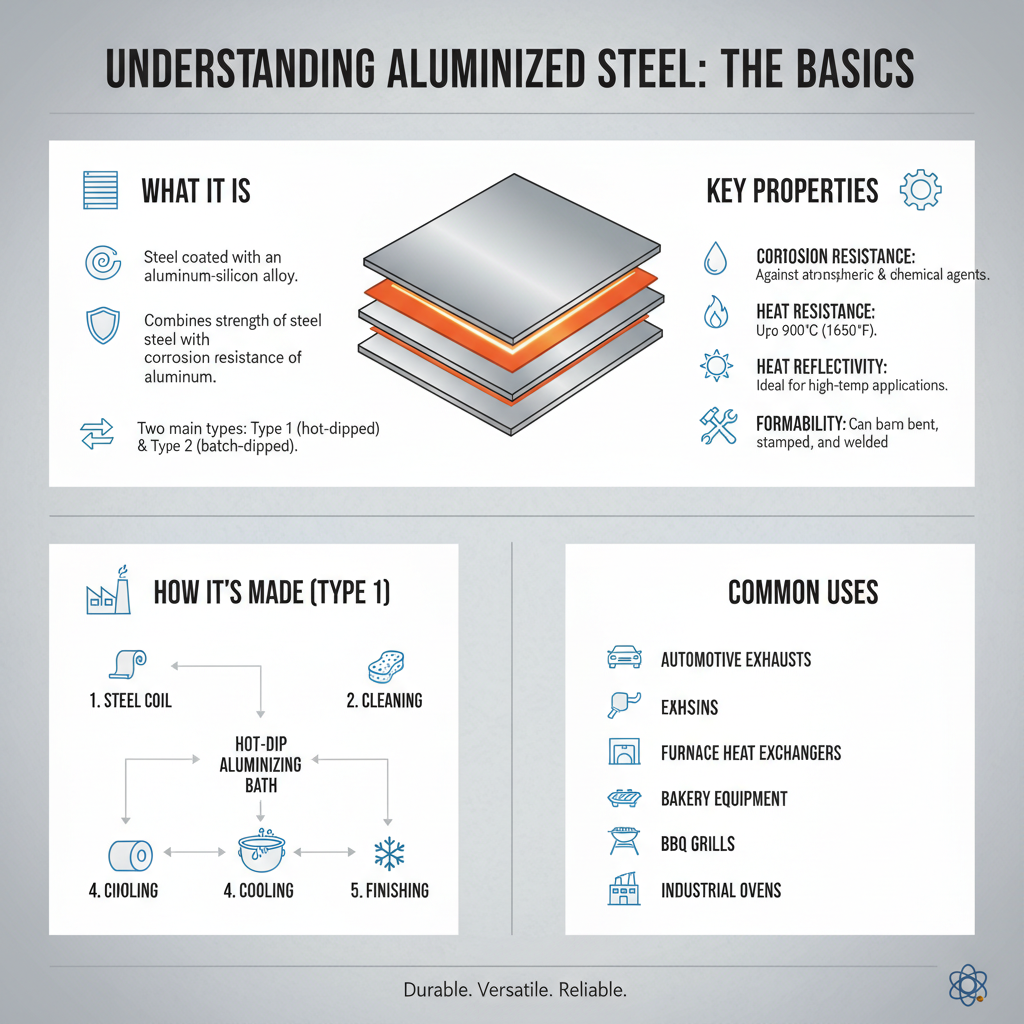
Aluminized steel consists of a steel substrate coated with an aluminum-silicon alloy layer. The coating typically contains 88-92% aluminum and 8-12% silicon, creating a protective barrier that significantly extends the steel’s lifespan.
The manufacturing process involves dipping steel sheets or coils into molten aluminum-silicon alloy at temperatures around 1300°F (704°C). This creates a metallurgical bond between the steel base and aluminum coating, resulting in a durable composite material.
Key characteristics of aluminized steel include:
– Excellent heat resistance up to 1200°F (649°C)
– Superior corrosion protection
– Maintained steel strength and formability
– Cost-effective alternative to stainless steel
– Attractive metallic appearance
Products like Aluminized Steel Exhaust Tubing demonstrate the material’s heat-resistant properties, commonly used in automotive exhaust systems where high temperatures and corrosive gases are present.
Types and Classifications of Aluminized Steel
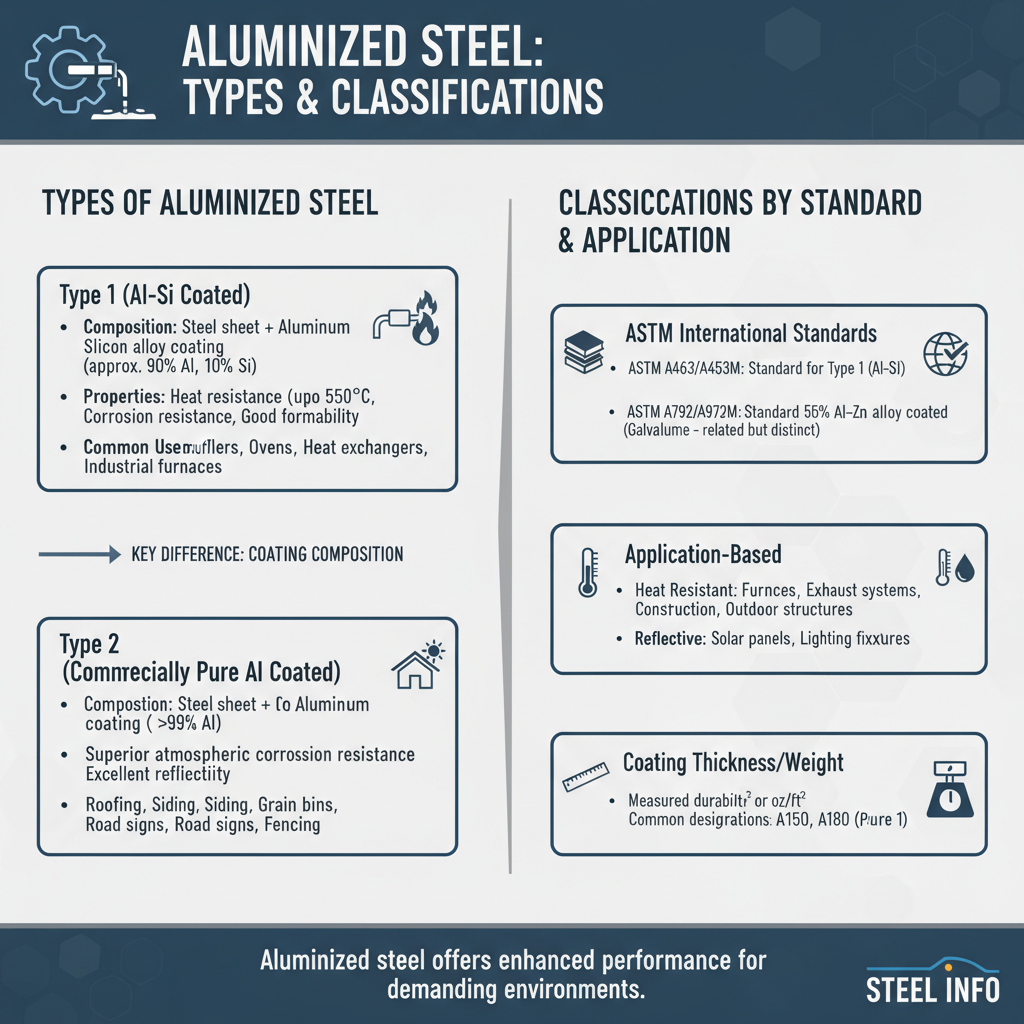
Type 1 Aluminized Steel
Type 1 features a pure aluminum coating applied through hot-dip galvanizing equipment. This type offers excellent corrosion resistance and is suitable for applications requiring superior atmospheric protection.
Type 2 Aluminized Steel
Type 2 contains the aluminum-silicon alloy coating (Al-Si) and provides enhanced heat resistance. The silicon content improves the coating’s adherence and thermal properties, making it ideal for high-temperature applications.
Coating Weights and Thickness
Aluminized steel coatings are measured in ounces per square foot or grams per square meter:
– Light coating: 0.25-0.40 oz/ft² (76-122 g/m²)
– Standard coating: 0.40-0.60 oz/ft² (122-183 g/m²)
– Heavy coating: 0.60-1.00 oz/ft² (183-305 g/m²)
The coating thickness typically ranges from 0.0005 to 0.002 inches (12-50 micrometers), depending on the intended application and performance requirements.
Manufacturing Process and Quality Control
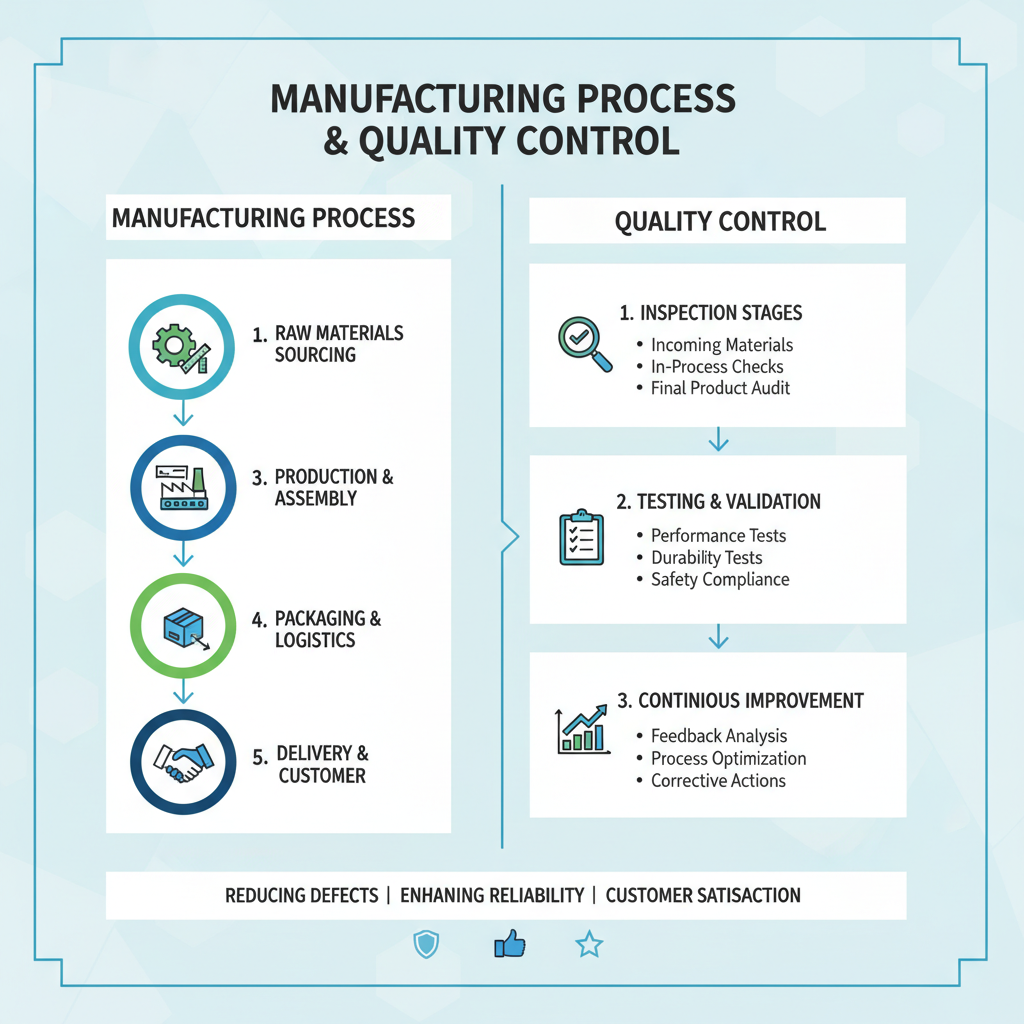
Hot-Dip Aluminizing Process
The production of aluminized steel follows a carefully controlled process:
1. Steel Preparation: Raw steel undergoes cleaning and surface preparation to remove oils, oxides, and contaminants.
2. Preheating: Steel enters a furnace where it’s heated to approximately 1200°F (649°C) in a controlled atmosphere.
3. Flux Application: A zinc ammonium chloride flux solution prepares the steel surface for coating adhesion.
4. Aluminum Bath Immersion: Steel passes through molten aluminum-silicon alloy maintained at precise temperature and composition.
5. Coating Control: Air knives or mechanical wipers control coating thickness and uniformity.
6. Cooling and Solidification: Coated steel cools gradually, allowing the aluminum coating to solidify and bond with the substrate.
7. Quality Inspection: Final products undergo testing for coating thickness, adhesion, and surface quality.
Quality Standards and Testing
Aluminized steel must meet various industry standards:
– ASTM A463: Standard specification for steel sheet, aluminum-coated by hot-dip process
– JIS G 3314: Japanese standard for aluminum-coated steel sheets
– EN 10215: European standard for continuously hot-dip aluminum-coated steel
Testing methods include coating weight measurement, bend testing, and corrosion resistance evaluation to ensure product quality and performance.
Applications and Industrial Uses
Automotive Industry
The automotive sector represents the largest market for aluminized steel, utilizing its heat and corrosion resistance properties:
Exhaust Systems: Mufflers, catalytic converters, and exhaust pipes benefit from aluminized steel’s ability to withstand high temperatures and corrosive exhaust gases. Aluminized Steel Mufflers are particularly popular due to their extended service life compared to regular steel alternatives.
Heat Shields: Protection of sensitive components from engine and exhaust heat requires aluminized steel’s thermal barrier properties.
Fuel Tanks: Some automotive fuel tanks use aluminized steel for corrosion protection while maintaining structural integrity.
Construction and Architecture
Building applications leverage aluminized steel’s weather resistance and aesthetic appeal:
– Roofing materials and flashings
– HVAC ductwork and components
– Architectural panels and cladding
– Structural components in corrosive environments
Industrial Applications
Various industries utilize aluminized steel for specialized equipment:
Heat Exchangers: Power generation and chemical processing industries use aluminized steel for heat transfer applications.
Furnace Components: Industrial furnaces incorporate aluminized steel for linings and structural elements.
Agricultural Equipment: Farm machinery benefits from aluminized steel’s corrosion resistance in harsh outdoor conditions.
Advantages and Benefits
Corrosion Protection
Aluminized steel provides exceptional protection against atmospheric corrosion, salt spray, and chemical exposure. The aluminum coating acts as a sacrificial barrier, protecting the underlying steel even when scratched or damaged.
Heat Resistance
Unlike galvanized steel, aluminized steel maintains its protective properties at elevated temperatures. The aluminum-silicon coating remains stable up to 1200°F (649°C), making it suitable for high-temperature applications.
Cost Effectiveness
Compared to stainless steel or other corrosion-resistant alloys, aluminized steel offers similar performance at a significantly lower cost. This economic advantage makes it attractive for large-scale applications.
Formability and Workability
Aluminized steel retains the formability characteristics of the base steel, allowing for standard fabrication processes including:
– Roll forming
– Brake forming
– Stamping
– Welding (with proper techniques)
– Cutting and machining
Aesthetic Appeal
The bright, reflective surface of aluminized steel provides an attractive metallic appearance suitable for architectural and decorative applications.
Comparison with Other Coated Steels
Aluminized Steel vs. Galvanized Steel
| Property | Aluminized Steel | Galvanized Steel |
|---|---|---|
| Heat Resistance | Up to 1200°F | Up to 400°F |
| Corrosion Protection | Excellent | Good |
| Cost | Moderate | Lower |
| Appearance | Bright metallic | Matte gray |
| Weldability | Requires special techniques | Standard welding |
Aluminized Steel vs. Stainless Steel
While stainless steel offers superior corrosion resistance and temperature capability, aluminized steel provides adequate performance for many applications at a fraction of the cost. The choice depends on specific performance requirements and budget constraints.
Limitations and Considerations
Welding Challenges
Welding aluminized steel requires special considerations due to the aluminum coating:
– Use of appropriate welding techniques and filler materials
– Proper ventilation due to aluminum oxide formation
– Potential for coating damage in heat-affected zones
– Need for post-weld coating repair in critical applications
Coating Damage
Mechanical damage to the aluminum coating can expose the underlying steel to corrosion. Proper handling and installation practices are essential to maintain coating integrity.
Temperature Limitations
While heat-resistant, aluminized steel has upper temperature limits. Prolonged exposure above 1200°F (649°C) can cause coating degradation and loss of protection.
Future Trends and Developments
Advanced Coating Technologies
Research continues into improved aluminum-silicon alloy compositions and application methods to enhance performance and reduce costs.
Environmental Considerations
Growing emphasis on sustainability drives development of more environmentally friendly coating processes and recyclable aluminized steel products.
Expanded Applications
New markets for aluminized steel continue to emerge, including renewable energy systems, advanced automotive technologies, and specialized industrial equipment.
Conclusion
Aluminized steel represents an excellent balance of performance, cost, and versatility for applications requiring corrosion and heat resistance. Its unique combination of steel strength with aluminum protection makes it indispensable in automotive, construction, and industrial applications. Understanding the properties, manufacturing process, and appropriate applications of aluminized steel enables engineers and designers to make informed material selection decisions. As technology advances and new applications emerge, aluminized steel will continue to play a crucial role in modern manufacturing and construction, offering reliable performance at competitive costs.