
Viewing a solar eclipse safely requires proper eye protection, and many people wonder if welding helmets can provide adequate protection. The answer is yes, but only with the correct welding shade number. Understanding what welding shade for eclipse viewing is essential to protect your vision from permanent damage.
Use welding shade 14 for safe eclipse viewing, as it blocks 99.999% of the sun’s dangerous light. Shade 12 is the absolute minimum, but shade 14 is recommended by NASA and the American Astronomical Society for optimal safety and visibility during solar eclipses.
Solar eclipses produce intense light that can cause serious eye injury, including solar retinopathy and permanent blindness. Regular sunglasses, smoked glass, or camera filters are never safe for direct eclipse viewing. Only specific welding shades meet the safety requirements for eclipse observation.
Welding Shade Numbers for Eclipse Safety
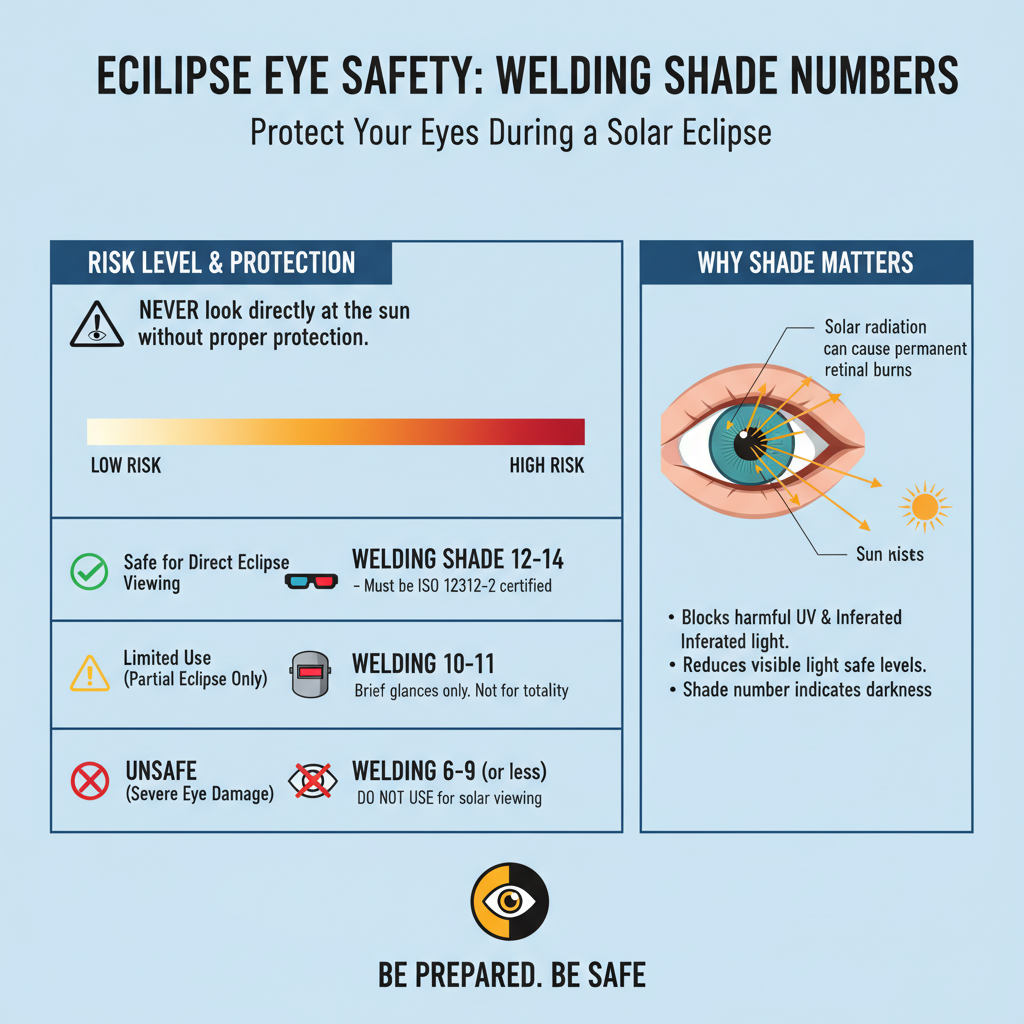
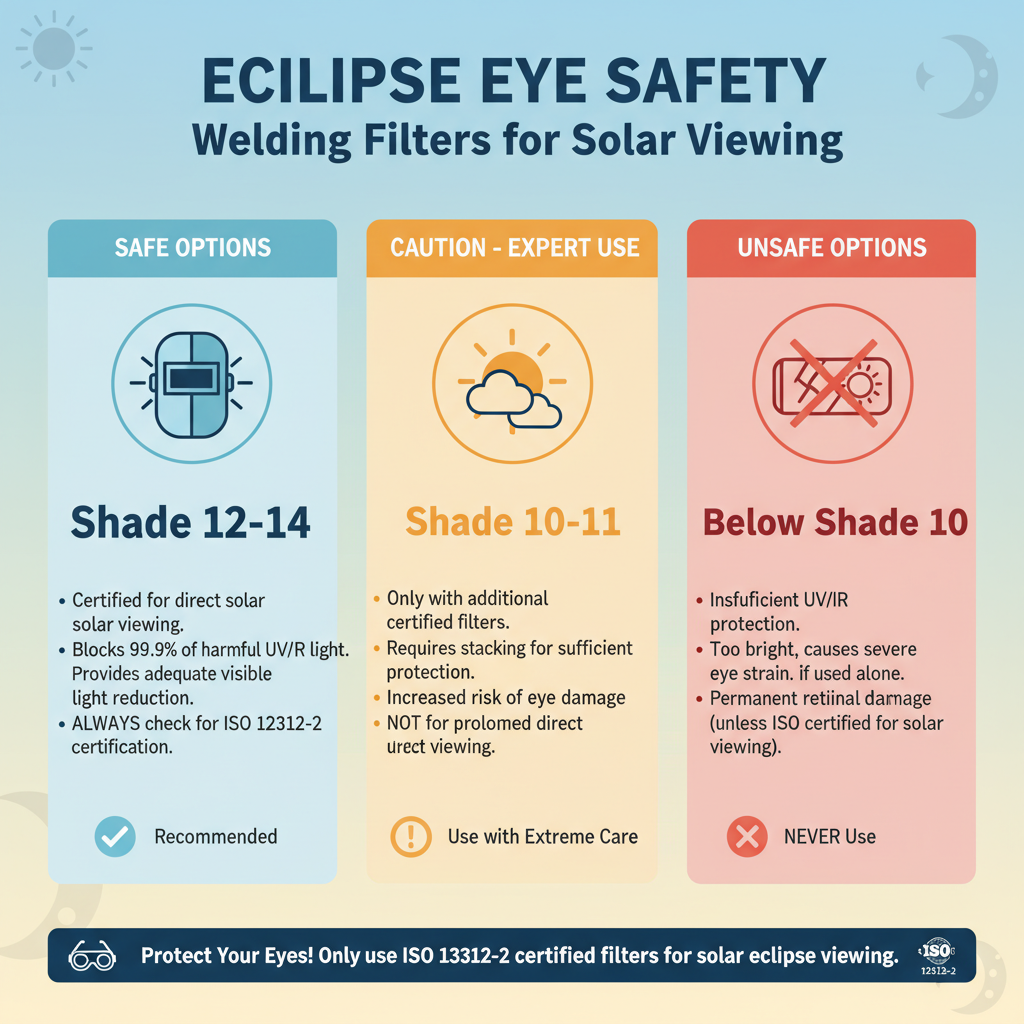
Welding shade numbers indicate how much light a filter blocks. The higher the number, the darker the filter and the more light it blocks. For safe eclipse viewing, you need a minimum shade number of 12, though shade 14 is the most commonly recommended option.
The American Astronomical Society and NASA both recommend shade 14 welding filters as the gold standard for eclipse viewing. This shade blocks 99.999% of the sun’s light, reducing it to safe levels for direct observation.
Why Shade 14 is Optimal
Shade 14 welding filters provide the perfect balance of safety and visibility. They’re dark enough to protect your eyes completely while still allowing you to see the eclipse clearly. Many professional welding helmets, including the Lincoln Electric VIKING 3350, come with adjustable shade settings that can reach shade 14.
Lower shade numbers are dangerous for eclipse viewing:
– Shade 10 and below: Completely unsafe
– Shade 11: Still too bright and dangerous
– Shade 12: Minimum safe level but not recommended
– Shade 13: Safe but may be too bright for comfort
Types of Welding Filters Suitable for Eclipse Viewing
Several types of welding filters can safely be used for eclipse observation, each with specific advantages and considerations.
Fixed Shade Welding Lenses
Fixed shade welding lenses are the most reliable option for eclipse viewing. These lenses maintain a constant shade level and don’t require batteries or electronic components that could fail.
Glass welding lenses in shade 14 are particularly effective. They provide consistent protection and clear viewing. The Miller Electric Digital Elite welding helmet uses high-quality fixed shade options that work excellently for eclipse viewing when set to shade 14.
Auto-Darkening Welding Helmets
Auto-darkening helmets can work for eclipse viewing, but they require careful consideration. These helmets automatically adjust their shade based on arc brightness, but the sun’s light may not trigger the darkening feature properly.
If using an auto-darkening helmet, ensure it’s manually set to shade 14 and doesn’t rely on automatic activation. The helmet should remain at shade 14 throughout the eclipse viewing session.
Handheld Welding Filters
Handheld welding filters offer portability and ease of use for eclipse viewing. These rectangular pieces of welding glass can be held up to your eyes like eclipse glasses.
When selecting handheld filters, choose only shade 14 options from reputable welding supply manufacturers. Ensure the filter is large enough to cover both eyes completely and has no cracks or damage.
How to Safely Use Welding Filters for Eclipse Viewing
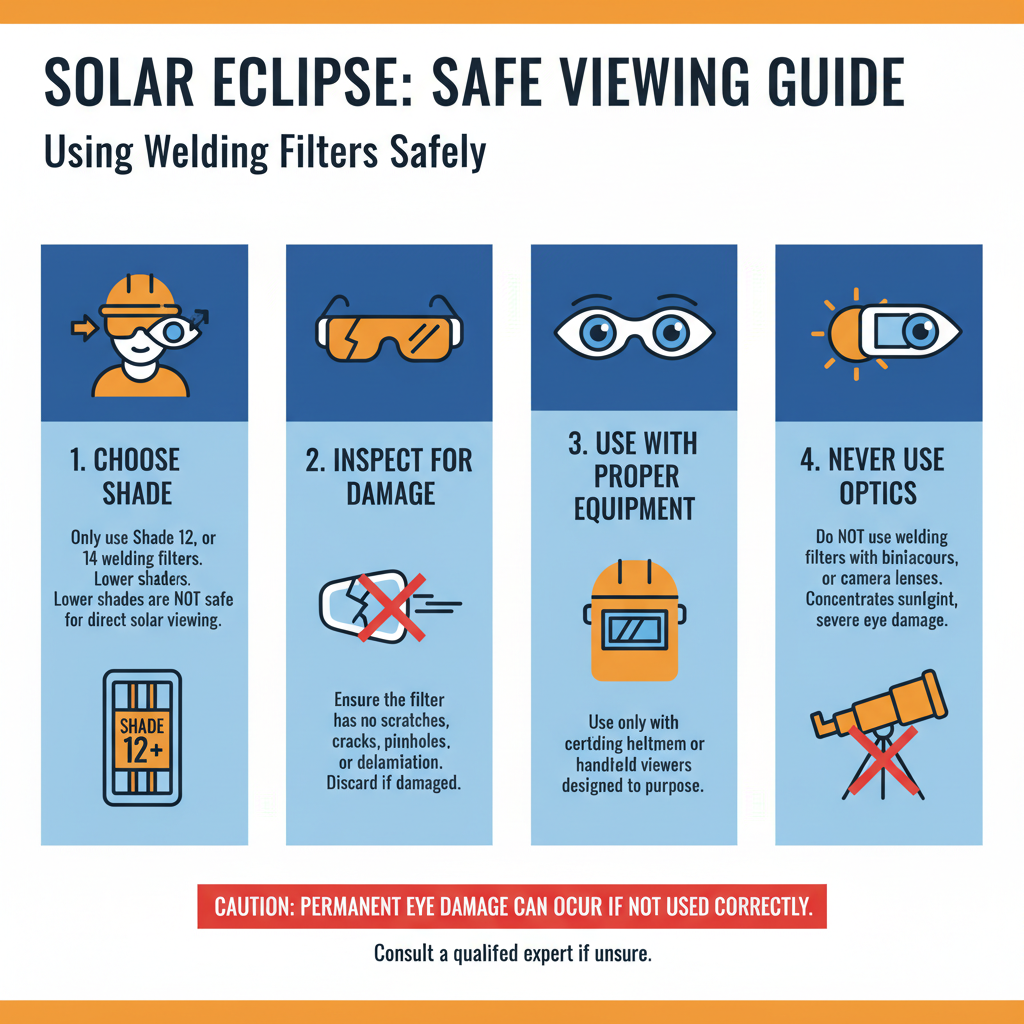
Proper technique is crucial when using welding filters for eclipse observation. Following these steps ensures maximum safety and optimal viewing experience.
Pre-Eclipse Preparation
Before the eclipse begins, inspect your welding filter thoroughly. Look for any cracks, scratches, or damage that could compromise protection. Even small imperfections can allow dangerous amounts of light through.
Test the filter by looking at bright lights indoors. You should barely be able to see very bright lights through a shade 14 filter. If lights appear too bright or clear, the filter may not be genuine shade 14.
During Eclipse Viewing
Hold the welding filter steady in front of your eyes with both hands. Don’t look around the edges of the filter, as this exposes your eyes to dangerous light levels. Keep the filter between your eyes and the sun at all times during direct viewing.
Take breaks every few minutes to rest your eyes. Even with proper protection, continuous viewing can cause eye strain. Remove the filter completely when looking away from the sun.
What You’ll See Through Welding Filters
Through a shade 14 welding filter, the sun appears as a dark orange or amber disk. During a partial eclipse, you’ll clearly see the moon’s silhouette moving across the sun’s surface. The corona becomes visible during totality, appearing as a shimmering halo around the blocked sun.
Alternative Eclipse Viewing Methods vs. Welding Filters
While welding filters work excellently for eclipse viewing, several other safe methods exist for observing solar eclipses.
Eclipse Glasses vs. Welding Filters
ISO 12312-2 certified eclipse glasses are specifically designed for solar viewing. They’re lighter and more comfortable than welding filters but may be harder to find and more expensive during eclipse events.
Welding filters offer several advantages over eclipse glasses:
– More durable and reusable
– Readily available at welding supply stores
– Often less expensive
– Larger viewing area
Pinhole Projection Methods
Pinhole projection creates a safe, indirect way to view eclipses. This method projects the sun’s image onto a surface, allowing safe observation without looking directly at the sun.
While pinhole projection is completely safe, it doesn’t provide the dramatic experience of direct eclipse viewing through proper filters like shade 14 welding glass.
Solar Telescopes and Filters
Specialized solar telescopes and solar filters for regular telescopes offer magnified eclipse viewing. These systems are more expensive but provide detailed views of solar features.
Welding filters can sometimes be adapted for use with telescopes, but this requires expertise and proper mounting to ensure safety.
Common Mistakes and Safety Warnings
Several dangerous mistakes can occur when using welding filters for eclipse viewing. Avoiding these errors is crucial for eye safety.
Using Insufficient Shade Numbers
The most dangerous mistake is using welding filters with shade numbers below 12. Shade 10 and lower filters, while suitable for welding, allow far too much solar radiation through for safe eclipse viewing.
Some people mistakenly think that stacking multiple lower-shade filters equals one higher shade. This is incorrect and dangerous. Always use a single, properly rated shade 14 filter.
Damaged or Counterfeit Filters
Cracked or scratched welding filters can allow concentrated light beams to reach your eyes, causing instant damage. Always inspect filters before use and replace any damaged ones immediately.
Counterfeit welding filters may not provide advertised protection levels. Purchase filters only from reputable welding supply dealers or manufacturers.
Improper Viewing Technique
Looking around the edges of welding filters or removing them while still looking toward the sun causes immediate eye damage. Always position the filter completely between your eyes and the sun before looking up.
Never use welding filters with optical devices like binoculars or cameras unless specifically designed for solar observation. The concentrated light can damage both equipment and eyes.
Where to Find Welding Filters for Eclipse Viewing
Welding supply stores are the best source for eclipse-suitable welding filters. These retailers stock genuine shade 14 filters and can verify their authenticity.
Local Welding Supply Stores
Most cities have welding supply stores that carry appropriate filters. Call ahead to confirm they have shade 14 filters in stock, especially as eclipse dates approach when demand increases.
Online Retailers
Many online welding suppliers offer shade 14 filters with shipping options. Ensure you’re purchasing from established welding equipment dealers rather than general retailers who may not understand shade requirements.
Hardware Stores
Some larger hardware stores carry welding supplies, including filters suitable for eclipse viewing. However, selection may be limited, and staff may not be knowledgeable about eclipse safety requirements.
Conclusion
Using the correct welding shade for eclipse viewing provides a safe, affordable way to experience these rare astronomical events. Shade 14 welding filters offer optimal protection while allowing clear observation of eclipse phenomena. Remember that only shade 12 or higher provides adequate safety, with shade 14 being the recommended standard.
Always inspect welding filters before use, ensuring they’re free from damage and properly rated. Follow safe viewing techniques, taking regular breaks and never looking around filter edges. With proper preparation and equipment, welding filters enable unforgettable eclipse viewing experiences while protecting your vision for years to come.
Whether you choose a handheld filter, welding helmet, or specialized eclipse equipment, the key is using properly rated protection every time you look directly at the sun during an eclipse. Your eyesight is irreplaceable, making proper eclipse safety equipment an essential investment for any solar eclipse observer.